For the benefit of the ordinary man in the street, what exactly is the EU–Mercosur deal?
The EU–Mercosur deal is a major trade agreement between the European Union and four South American countries, namely Brazil, Argentina, Paraguay and Uruguay(known together as Mercosur).
Its main purpose is to make trade between the two regions easier by: (1) Cutting or removing many tariffs (import taxes) on goods going both ways. (2) Opening up markets for EU cars, machinery, medicines and services in South America. (3) Giving Mercosur countries more access to the EU for products like beef, poultry, sugar and other agricultural goods. (4) Setting common rules on things like food safety, intellectual property, and government contracts, including environment and labour commitments, though critics say these may not be strong enough.
Supporterssay: It will boost trade and strengthen EU ties with South America. Opponents, especially Irish farmers, say: It will bring in cheaper agricultural imports produced under lower standards, thus harming rural economies, and could indirectly increase deforestation in South America.
The EU–Mercosur Agreement, now entering a contentious ratification phase across the European Union, represents one of the most far-reaching trade deals negotiated by the EU in decades. While the agreement promises tariff reductions, expanded market access and strategic benefits in South America, it also presents serious risks for Ireland’s agricultural sector, its environmental standards and long-term rural sustainability. For these reasons, Ireland is justified in maintaining a cautious, and in many respects critical, stance as the ratification process unfolds.
Politically, the agreement remains highly unstable. The European Parliament is deeply divided, with recent votes showing only a narrow margin between supporters and opponents. Key member states, including France, Poland, Austria, the Netherlands and Italy, have already expressed strong reservations. The European Commission has attempted to push the process forward, but the fact that ratification was paused earlier this year reflects the scale of political tension surrounding the deal. Ireland is far from isolated in its concerns.
From an Irish perspective, the most immediate threat arises in agriculture. The agreement would grant substantial additional market access for South American beef, poultry and sugar into the European Union. Even with quota limits, the increased volume of imports would land directly into the most sensitive areas of Irish farm production, particularly beef. Irish farmers compete in one of the most regulated, high-cost and environmentally scrutinised agricultural systems in the world. Allowing cheaper imports produced under lower labour, welfare and environmental standards risks undermining the viability of family farms that form the backbone of rural Ireland. The European Commission has floated an “emergency brake” to reimpose tariffs if imports surge, but farmers’ organisations in Ireland are unconvinced that such mechanisms would be swift, robust or transparent enough to prevent serious market disruption.
Environmental concerns deepen this opposition. Ireland, like all EU member states, is bound by stringent climate and biodiversity targets. Yet the Mercosur bloc includes regions facing chronic deforestation pressures, particularly in Brazil and parts of the Amazon basin. Critics fear that increased export incentives for beef, soy and other commodities could accelerate land-use change in sensitive ecosystems. Although the agreement contains sustainability clauses linked to the Paris Agreement, enforcement mechanisms remain weak. It would be inconsistent for Ireland, already struggling to meet its own climate commitments, to endorse a trade deal that may indirectly contribute to global environmental degradation.
A further issue is regulatory asymmetry. The EU maintains some of the highest standards in the world regarding food safety, traceability and animal welfare. While the agreement requires Mercosur exporters to meet EU standards at the border, there is limited assurance that production systems on the ground will adhere to equivalent requirements. This raises real concerns about fair competition and consumer confidence. Irish farmers and processors, who invest heavily in compliance, would face competitors who do not operate under the same regulatory burdens.
Ireland also has legitimate procedural concerns. The decision by some in the European Parliament to challenge the structure of the agreement before the Court of Justice highlights unresolved questions about democratic scrutiny. Attempts to rush ratification without adequate debate risk eroding public trust in EU trade policy at a time when transparency is essential.
Finally, the strategic argument advanced by the European Commission, that the deal is needed to diversify trade and secure access to raw materials, does not outweigh the potential social and economic consequences for Ireland’s rural communities. Diversification is important, but not at the expense of domestic sectors that have already absorbed significant pressures from climate policy, volatile markets and rising production costs.
For all these reasons, economic, environmental, regulatory and democratic, Ireland is justified in maintaining a firm, evidence-based opposition to the EU–Mercosur Agreement in its current form. Any trade deal of such scale must protect the interests of Irish farmers, uphold the integrity of EU environmental commitments and ensure equal standards for all producers supplying the European market. Until those conditions are met, Ireland’s stance is both prudent and necessary.
IFA calls for housing order to protect poultry as avian flu confirmed in Co Carlow.
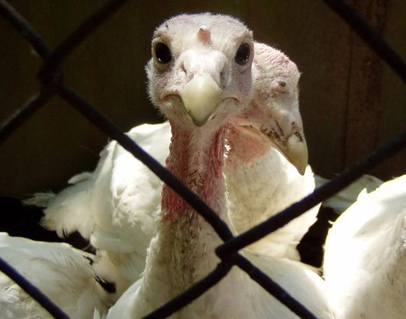
The Irish Farmers’ Association (IFA) has called for the introduction of a housing order requiring free-range poultry farmers to keep their birds indoors, as authorities confirm an outbreak of avian flu in a commercial turkey flock in Co Carlow, a county bordering on Co. Tipperary.
The virus, which causes the disease, is known as HPAI H5N1 and has been in circulation among wild birds over the past year.
Mr Nigel Sweetnam, Chair of the IFA National Poultry Committee, said the measure is urgently needed to help contain the spread of the highly contagious disease and safeguard farmers’ livelihoods. He urged all poultry farmers to be on high alert and to contact their vet and the Department of Agriculture, immediately, if they suspect any signs of avian flu.
Mr Sweetnam said farmers should watch for indicators such as high mortality and lethargic birds, and highlighted the importance of establishing exclusion zones around affected farms where movement of birds in and out is tightly controlled under veterinary supervision.
With the whole pattern of bird flu changing/mutating; the virus has appeared earlier than usual this year and in different geographical areas, with two outbreaks in Co. Cork.
Mr Sweetnam believes that a housing order should be comparable to restrictions in place during the Covid-19 pandemic, thus limiting movement and requiring birds to be kept indoors. The IFA continues to engage with the Department of Agriculture on measures to contain the outbreak and protect Ireland’s poultry sector. The Department is reminding all flock owners to maintain the highest standards of biosecurity, including disinfecting footwear and equipment, restricting visitors, and preventing contact between domestic poultry and wild birds.
Scientific facts published by Local Authority Waters Programme (LAWPRO). See HERE.
Water Quality in River Suir in Thurles only 33% satisfactory down from 61% in 2010-2012 which equals a relative drop of 46% in about 12 years.
Almost no aquatic life.Samples taken down stream of Thurles Bridge in town centre (Barry’s Bridge) on 11/09/24, result in no invertebrates typical of clean water such as Mayflies or Stoneflies – essential food for trout and salmon.
A few water shrimps (Gammarus), some biting Midge larvae (Simuliium) Extensive Cladophora algae.
Current data raises a harsh question: if our drinking water is so delicately balanced, how much “extra load” can rivers accept without tipping into crisis?
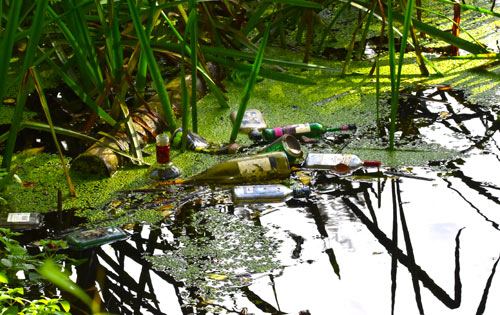
A small sample of floating bottles, River Suir, Thurles town centre. Pic: G. Willoughby. (Image taken Sept. 29th 2025)
Slurry Spreading: Tipperary’s Silent Pollution.
Hypocrisy is very much alive and well in Ireland, with the strict promotion of standards loudly proclaimed, yet quietly ignored when it comes to agriculture.
If an individual is caught illegally dumping a mattress or a bag of household rubbish, the law comes down hard. The penalties are steep: on-the-spot fines, €4,000 if convicted in the District Court, and up to €130,000 on indictment for more serious offences. Add to that the local authority’s investigation and legal costs, plus extra charges for continuing offences, and the message is crystal clear — thesepolluters will pay.
But here is the contradiction: when sewage or agricultural slurry is allowed to seep into our rivers, with the blessing of Tipperary Co. Council itself, the penalty is nothing, zero, zilch, no costs, no fines, no legal prosecution, and no accountability.
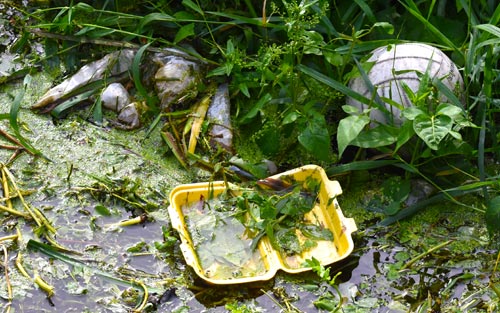
Just a small sample of the discarded litter at Barry’s Bridge, in River Suir, Thurles Town centre. Pic: G. Willoughby. (Image taken Sept. 29th 2025)
This double standard undermines public trust, punishes the ordinary citizen while shielding powerful interests, and leaves communities to live with the consequences — polluted drinking water, fish kills, and waterways turned into toxic drains. The rules are strict when it suits, yet curiously silent when the polluter is a farmer or an industry player with political influence.
Until agricultural slurry is treated as seriously as other forms of dumping, Tipperary and the rest of Ireland will continue to suffer the hidden, silent pollution that seeps into every stream and spring water well.
Tipperary was renowned for its rivers and lakes, the Suir winding through Thurles, the Shannon and its tributaries, and countless smaller streams supporting fish, wildlife, and local communities. Yet these waters are under increasing pressure, largely from the way slurry is managed on farms.
Slurry, a liquid mix of animal waste, provides a quick nitrogen boost to grass, making it popular among farmers. But its environmental costs are severe. Being liquid; slurry runs off easily during rainfall, carrying nutrients into rivers and lakes, triggering algal blooms, oxygen depletion and fish kills. Strong odours signal ammonia emissions, while heavy tankers compact soils, further increasing runoff.
By contrast, traditional dung releases nutrients slowly and enriches the soil with organic matter, improving structure, fertility, and biodiversity. Though slower to handle, it poses far less risk to water quality.
Evidence from EPA and Local Water Authorities The EPA’s 2023 report shows that many Irish rivers are failing to reach “good ecological status,” often due to nutrient pollution. In Tipperary, seven public water supplies, including Borrisokane, Nenagh, and Roscrea, are on the EPA’s Remedial Action List, meaning urgent improvements are needed. Dr. Fran Igoe from LAWPRO reports that water quality satisfaction in Tipperary has dropped from 61% to 33% over a 12 year period, with rivers around Thurles and Templemore particularly badly affected.
Voices from the Field Local anglers and fishing clubs have become strongly outspoken. Mr Joe O’Donoghue of Ormond Anglers says, “It’s doing untold damage to the river – the ecosystem is disappearing. Fly life we used to see in the evenings … it’s gone.” Inland Fisheries Ireland has prosecuted companies in Tipperary for slurry-related pollution. Ms Lynda Connor, regional director, states: “Ensuring clean and healthy water is not just a responsibility, but a necessity for the survival of fish and the ecosystems they thrive in.” Now the leading question “So why has Inland Fisheries Ireland not prosecuted Tipperary County Council for permitting sewage to flow into the River Suir?
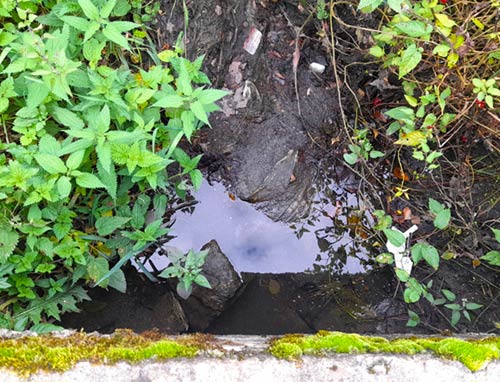
Mixed effluent flowing from a pipe on the river walk close to the rear of Thurles shopping centre. Pic: G. Willoughby (Image taken Sept. 29th 2025)
Time for Action. Tipperary as a county can no longer rely on excuses. The County Council, Uisce Éireann, and the Department of Agriculture must now act together and this will require:
Enforcement of slurry regulations with inspections and severe penalties.
Support for farmers to adopt safer alternatives, including dung use and low-emission spreading technologies.
An investment in water infrastructure, buffer zones, and monitoring.
An engagement with stakeholders such as anglers, environmental groups, and local communities in oversight and planning.
Short-term gains from slurry can no longer be allowed to outweigh the long-term damage to rivers, drinking water, and local ecosystems. Tipperary’s waters deserve decisive action now, before more fish die, more rivers are polluted, and the county’s natural heritage is irreversibly harmed.
Now regarding my last communication, which further updated details of the 12 year old River Suir pollution problem in Thurles; seven emails in total were sent 10 days ago, on Friday September 19th 2025 to:-
(1)Ms Sinead Carr(CE Tipperary Co. Council), [sinead.carr@tipperarycoco.ie]; ) Result: No Reply or acknowledgementreceivedto date.
(2)Ms Sharon Scully, (Thurles Municipal District Admin)[sharon.scully@tipperarycoco.ie]; Result: No Reply or acknowledgementreceived to date.
(3)Mr Darragh O’Brien (darragh.obrien@oireachtas.ie) (Minister for Climate, Energy and the Environment & Minister for Transport). Result: Correspondence acknowledged. (Ref: HPLG-MBO-03271-2025). Reply “Your correspondence is currently receiving attention and a further reply will issue as soon as possible”.
(4)Mr Alan Dillon (alan.dillon@oireachtas.ie) (Minister of State with responsibility for Small Businesses and Retail and Minister of State with responsibility for Circular Economy). Result: No Reply or acknowledgementreceived to date.
(5) Mr Timmy Dooley (timmy.dooley@oireachtas.ie) (Minister of State with responsibility for Fisheries, Minister of State with responsibility for the Marine). Result: Correspondence acknowledged. (Ref: CCAE-MOSD-00280-2025). Reply:“I would like to acknowledge your recent correspondence regarding Pollution of the River Suir. The contents of your email have been noted and I will bring this to the Minister’s attention and we will respond accordingly”.
(6)Environmental Complaints section EPA[E.Complaints@epa.ie], Result: Reply received as shown hereunder.
(7)Mr Robert O’Brien(A/Executive Scientist, Environment & Climate Action, Tipperary County Council, Civic Offices, Clonmel, Co. Tipperary).[robert.obrien@tipperarycoco.ie]. Result: Reply received as shown hereunder.
Hello George, You are correct to highlight the seriousness of the pollution of our rivers and the priority that must be given to public health and safety. Any immediate actions that could have been taken are completed. To address the overall issue and root cause will require a longer-term approach. The consultative process is not intended to be a talking shop, but this pilot study ensures accountability, coordination and long-term protection of the river and community. I appreciate this can be frustrating but reversing water quality decline often takes years to be realised. Any information you request must be formally applied for under the Freedom of Information Act 2014. Regards……….
Plan has been developed by the National Rural Safety Forum, in conjunction with the Department of Justice, Home Affairs, and Migration, to build safer rural communities across Ireland.
Building on the previous Plan which covered 2022-24, the latest Plan identifies four priority areas which member organisations will focus on: Community Safety & Engagement, Property Crime, Roads Safety, and Animal & Wildlife Crime.
The development and publication of the new Plan fulfils a commitment in the Programme for Government 2025.
The Irish government will launch the Rural Safety Plan 2025-27 at the National Ploughing Championships in Screggan, Co. Offaly today.
The Rural Safety Plan 2025-27 has been developed by the National Rural Safety Forum in conjunction with the Department of Justice, Home Affairs, and Migration.
This Plan’s vision is to continue to build safe communities across rural Ireland. Achieving this vision requires a multi-agency, collaborative approach, including everything from having more visible Gardaí in the community – to providing safe public spaces and amenities.
The Core objectives of the Forum are:-
Community Reassurance.
Information Sharing & Communication Network
Increased Community Engagement
Crime Prevention & Crime Opportunity Reduction
Following an analysis of the previous Rural Safety Plan 2022-24; this new Plan identifies four priorities to address: Community Safety & Engagement, Property Crime, Roads Safety, and Animal & Wildlife Crime. Under these four pillars, the 24 member organisations of the National Rural Safety Forum have committed to 18 actions which will be enabled by 53 sub-actions, all with a view to ensuring people are safe and feel safe in rural Ireland.
The National Rural Safety Forum is comprised of organisations and people with a common purpose of ensuring rural safety. The Forum is co-chaired by the IFA and An Garda Síochána, and is supported by the Department of Justice, Home Affairs, and Migration.
The Forum works to develop a nationwide network for the distribution of consistent, highly effective crime prevention advice while also increasing engagement within communities and reducing the opportunities for crime.
Assistant Garda Commissioner Ms Paula Hilman said, “An Garda Síochána remains committed to rural Ireland and our community policing ethos. Through various collaborations including the National Rural Safety Forum, Community Alert schemes and new Community Safety Partnerships, An Garda Síochána is listening to and working with rural communities. This collaboration, must be and is supported by Gardaí who work, live, socialise and are embedded as part of all our communities. Through initiatives such as Operation Thor, An Garda Síochána has targeted and taken on crime gangs who have caused significant worry to rural communities, leading to a significant decline in residential burglaries by 75% since its introduction in 2015. An Garda Síochána will continue to listen, respond and support rural communities across all four pillars on the National Rural Safety Plan, Community Safety & Engagement, Property Crime, Roads Safety, and Animal & Wildlife Crime. An Garda Síochána is steadfast that we are here to help.”
The National Rural Safety Forum will now monitor the implementation of the Plan and evaluate the progress of the Plan during its lifetime.
A copy of the National Rural Safety Plan 2025-27 can be downloadedHERE. More information can be found on the National Rural Safety ForumHERE.
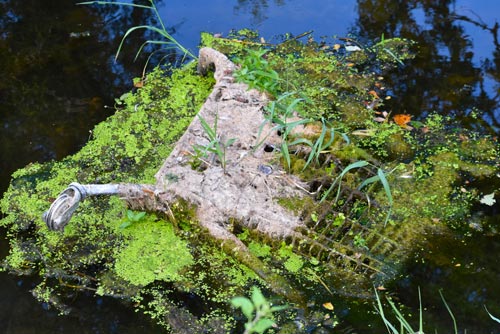
Mikey Ryan discusses the new Trolley Tax and the Great Thurles Trolley Crisis.
Cartastrophe: How We Are Wheeling Up Food Prices.
Cart-Flation: How Abandoned Shopping Trolleys Are Undermining Tipperary’s Economy.
Are Abandoned Trolleys Driving Up the Cost of Your Roast Beef?
I swear all I said to Mikey Ryan was that Seamus Hanafin’s Walkway, has once again returned to being an unkempt dump, strewn with Supermarket Trolleys and after all the public money wasted, it is like the River Suir, no longer maintained by Thurles Municipal District. But my statement was enough to get local man Mikey Ryan ‘Riled Up’.
The‘Great Trolley Tax’. Pic G. Willoughby.
“Economists, retailers, and the good people of Thurles may all be missing the obvious culprit behind Ireland’s stubbornly high food prices, the malefactor being those feckin humble shopping trolleys”, declared Mikey Ryan.
We were above in the Arch Bar, Liberty Square, last night, supping a few pints, when Mikey Ryan announced to all and sundry that he really should have applied to local councillors to support him for the position of President of Ireland; the election due to take place on October 24th, 2025.
“Sure I would get through the Presidential election nomination process without any bother, through reinventing the global climate agenda by simply expanding planetary consciousness regarding shopping trolleys”, said Mikey confidently.
“On paper”,inflation is blamed on everything from energy costs to global supply chains. But take a closer look at our rivers, hedgerows, and half-finished Liberty Square, and you’ll spot the real drain on our wallets; it’s supermarket trolleys gone rogue”, stated Mikey, who now had the ear of everyone present.
Mikey paused to wet his whistle, before announcing that the cost of same 12 trolleys came to €4,239.12 in missing hardware.
“That’s not just metal and wheels, folks. That’s the equivalent of: 2,400 loaves of bread (pre-inflation). 1,500 litres of milk (assuming the cows agree to cooperate), or, given the latest CSO figures, perhaps just two bags of shopping if you’re fond of butter, beef, and chocolate.” he continued.
“The CSO yesterday tells us food inflation reached 5.1% in August. Butter is up 18.3%, Beef 22.7%, Milk 12.4%, Chocolate 16.3%, Coffee 12.1%. Coincidence? Is every percentage point tied to a trolley floating belly-up in the Suir and other rivers around our emerald isle?”
Mickey stopped again to gulp down another mouthful.
In a room where you could hear a pin drop, Mikey continued, “For one minute, let’s consider the supermarket boardroom’s conversation:- Manager: “Profits are down this quarter Sir”. Chairperson on the Board: “Why?“. Manager: “Well, six of our €353 Euro trolleys are living in the river Suir and another half-dozen are auditioning as urban sculptureson the Thurles inner relief road“. Chairperson: “Feck it, right so, put 20 cents on the price of milk and double it for butter. The cows won’t complain“.
“And so”, said Mikey, “here we see, for the first time, the introduction of the ‘Great Trolley Tax’, samebeing quietly passed on to every struggling, underprivileged household in the land” said Mikey, now in full verbal flow to his newly acquired audience.
He continued, “Some conspiracy theorists even whisper that these trolleys aren’t stolen at all, but strategically “misplaced” to justify current inflation. After all, nothing distracts the public like a shiny bit of stainless steel glinting in the sun beside the proposed inner relief road”.
“Good Lord”, said I, “So next time we’re standing in the supermarket queue, wincing at the cost of our Sunday roast, we should spare a thought for the twelve brave trolleys dumped in Thurles. They may look abandoned, but in truth, they are hard at work, driving up inflation”.
“True for you”, said Mikey, “and if you or anyone else happen to see a trolley making a slow escape toward the riverbank, don’t just hold your nose and grab it. You might not only be helping in the saving of this polluted River Suir, but end up shaving 2% off the price of your next packet of rashers”.
This website uses cookies to improve your experience. We'll assume you're ok with this, but you can opt-out if you wish.AcceptRead More
Privacy & Cookies Policy
Privacy Overview
This website uses cookies to improve your experience while you navigate through the website. Out of these, the cookies that are categorized as necessary are stored on your browser as they are essential for the working of basic functionalities of the website. We also use third-party cookies that help us analyze and understand how you use this website. These cookies will be stored in your browser only with your consent. You also have the option to opt-out of these cookies. But opting out of some of these cookies may affect your browsing experience.
Necessary cookies are absolutely essential for the website to function properly. This category only includes cookies that ensures basic functionalities and security features of the website. These cookies do not store any personal information.
Any cookies that may not be particularly necessary for the website to function and is used specifically to collect user personal data via analytics, ads, other embedded contents are termed as non-necessary cookies. It is mandatory to procure user consent prior to running these cookies on your website.







Recent Comments