River Suir in Thurles; Fine words are not enough, while the river Suir remains in a state of further decline.
Looking skyward from Barry’s Bridge in Thurles, my eyes are drawn to the golden Laburnum I planted there in 1989, now grown into the full grace of maturity. Along the eastern bank of the River Suir, the Hawthorn too is in bloom, softening the riverside walkway with its delicate spring beauty. Yet, for all this natural splendour, the exposed bed of the Suir successfully dims the scene, drawing the eye away from the quiet enchantment of tree, blossom, bridge, and river.
Reading a local newspaper report recently, one wonders, has Cllr Mrs Kay Cahill Skehan actually walked along the River Suir in Thurles recently and has she observed the current condition it is in?
The video shown below is only a small example of what people in Thurles are expected to look at: shopping trolleys dumped, plastic, debris, waste caught along the banks, and a general appearance that is simply unacceptable for a river running through the heart of a busy historic, midland town.
Two very large piles of shredded timber are currently located, dumped within approximately half a metre of the river’s edge, following recent tree-pruning works in the area.
This presents a serious environmental and flood-related risk. In the event of heavy rainfall or flooding over the coming months, the lightweight shredded timber is likely to float and be carried downstream. Once saturated, the material may also release tannins, resins and other wood leachate into the water, which can degrade water quality and harm aquatic life. Research on wood residue near aquatic environments notes that wood leachate can have harmful effects on fish and aquatic habitats. As both piles appear to be located within a flood-risk area and immediately adjacent to the riverbank, they should be removed and relocated without delay. If immediate removal is not possible, the piles should at minimum be securely covered with heavy-duty tarpaulin and properly weighted or fastened to prevent displacement during heavy rain or rising water levels. We won’t mention the nice piles of logs, as some smart individual might decide to bag them for use as firing next winter.
Whatever other effluent is being washed into the river water, same forms a rich soapy caught by the overhanging vegetation..
We have reported this matter to the Local Authority and request that urgent action be taken to prevent potential pollution, obstruction, and downstream environmental damage.
Cllr Mrs Cahill Skehan is correct when she says the River Suir is a huge issue for Thurles. She is also correct in stating that people notice it more when water levels drop. But the people of Thurles do not need more sympathy. What they crave is action.
There is also a wider issue here. Her brother, former Fianna Fáil TD and former Chair of the Oireachtas Agriculture Committee Mr Jackie Cahill, recently appointed Chairperson of the National Milk Agency by Minister for Agriculture, Food and the Marine Martin Heydon in April 2026, was also a prominent critic of the reduction in Ireland’s nitrates derogation from 250kg to 220kg organic nitrogen per hectare, warning of serious consequences for the dairy sector.
Indeed, no one sector should carry all the blame. But we also have to be honest. Nitrogen leaching, nitrates, agricultural run-off and intensive land use are a major part of the water-quality problem in the River Suir. Farmers cannot be blamed for shopping trolleys dumped in the River Suir, but agriculture cannot be written out of the wider pollution picture either.
So where does that leave Thurles? It leaves us with a river that is visibly neglected, environmentally under pressure, and politically talked about for the last 15 years with absolutely no action being taken. Local Authority Waters Programme officials, (LAWPRO), may be sampling water. Reports may be being written. Presentations may be being given, but no one needs a scientific investigation to view shopping trolleys in the river. No one needs a catchment study to identify rubbish, plastic, clothing and debris sitting in plain sight. This is the work of highly paid Municipal District officials.
If Cllr Mrs Cahill Skehan is serious about the River Suir being an issue for Thurles, then the question must be asked; what immediate action is being demanded from Tipperary County Council and the other relevant authorities, to clean what is clearly visible today? The public are tired of hearing that “work is ongoing”, while the river remains a total eyesore.
Thurles deserves better than this. The River Suir should be an asset to the town, not something people are embarrassed to walk past, holding their noses.
Responsibility must be shared, yes; but responsibility must also be acted upon.
The controversial Water Supply Project for the Eastern and Midlands Region has cleared another major hurdle, after its business case was approved by the Uisce Éireann board and noted by Government.
The decision allows the project, which would take water from the River Shannon at Parteen Basin and pipe it towards the Greater Dublin Area, to move into its next phase, including procurement and tendering. Uisce Éireann says the scheme is needed to reduce the east coast’s dependence on the River Liffey and to provide a more secure water supply for up to half the State’s population.
Under the proposal, water would be abstracted from the lower Shannon, treated near Birdhill in Co Tipperary, and then transported through Tipperary, Offaly and Kildare to Peamount in Dublin. Uisce Éireann says the project would involve taking a maximum of 2% of the long-term average flow at Parteen Basin and insists its studies show no negative impact on Shannon water levels or water quality.
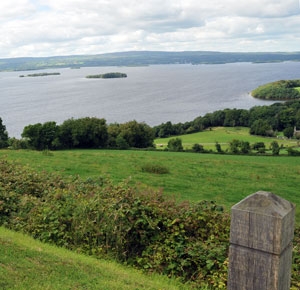
However, the plan has faced sustained opposition across Co Tipperary and the wider Shannon region. Local concerns centre on the principle of removing water from the Shannon system to serve the east of the country, with opponents questioning whether enough has been done to protect Lough Derg, the Lower Shannon, wildlife habitats, farming communities and local water needs. Others argue that Dublin’s supply problems should be tackled first through leak reduction, conservation and upgrades to existing infrastructure before a multi-billion euro pipeline is advanced.
There are also concerns among landowners along the proposed route, including disruption during construction, compulsory purchase issues, long-term restrictions on land use and the scale of works required for a 170km pipeline. Critics in Tipperary have repeatedly described the project as one that asks rural communities to carry the environmental and construction burden for the benefit of the capital.
Uisce Éireann has defended the scheme as essential national infrastructure. It says the project would not only serve Dublin, Meath, Kildare and Wicklow, but could also create a treated-water “spine” with future offtakes for communities in Tipperary, Offaly and Westmeath.
Gary Gibson, Senior Programme Manager with the Water Supply Project Eastern and Midlands Region, states that the utility is already seeking contractors as the project progresses. If planning is secured, Uisce Éireann has previously indicated that construction could begin in 2028 and take around five years to complete.
Community Water Officer Mr Darragh Kelly with LAWPRO (Local Authority Waters Programme) reports:
I am delighted to announce that the 2026 Small Grants & Events Scheme is now open for applications. I attach a copy of the revised 2026 guidelines and also a link HERE to the Small Grants and Events Scheme 2026 portal.
This grant scheme is designed for community groups seeking support for small-scale initiatives and events that fall outside of LAWPRO’s targeted funding calls. It supports activities such as World Wetlands Day, Biodiversity Week, Science Week, and similar events.
Funding may also be used for awareness-raising initiatives including surveys, action plans, citizen science projects, meetings, workshops, litter picks, publications, biodiversity signage, and other small-scale projects.
Note: All applications must demonstrate a clear focus on water quality or water awareness. Please Also Note: This application form must not be used for events taking place during Heritage Week (15th–23rd August 2026). A separate application process for Heritage Week funding will be announced in advance.
Download Guidelines for LAWPRO Small Grants and Events Scheme 2026. → Please ensure you are logged in as a registered user, before you start completing a form. ◘ You must contact your local Community Water Officer before making an application. → Contact details for LAWPRO’s CWOs can be found HERE. ◘ Each application will be assessed based on its merits as it is submitted. → There is no obligation on LAWPRO to request any outstanding or supporting information. ◘ Please read the Guidelines carefully before making an application.
In 2024, Ireland was compliant with EU Emissions Reduction targets for all five major pollutants: ammonia, non-methane volatile organic compounds, sulphur dioxide, nitrogen oxides and fine particulate matter. Consistent implementation of existing national policies is key to meeting 2030 targets.
Taking the long view, many pollutants have seen significant decreases since the 1990s. Particulate matter, which can have significant impacts on human health, is down by 67 per cent. Pollutants associated with acid rain have also reduced dramatically: sulphur dioxide is down by 96 per cent and nitrogen oxide is down by 67 per cent.
Ammonia emissions, which arise almost entirely from agriculture, remained within EU limits for the third consecutive year.
Reductions in sulphur dioxide, nitrogen oxides and fine particulate matter were largely driven by lower fossil fuel use in power generation and residential heating.
The Environmental Protection Agency (EPA) today published its assessment of five key air pollutants which impact air quality, health and the environment for 2024.
The pollutants are:
ammonia.
non-methane volatile organic compounds.
sulphur dioxide.
nitrogen oxides.
fine particulate matter.
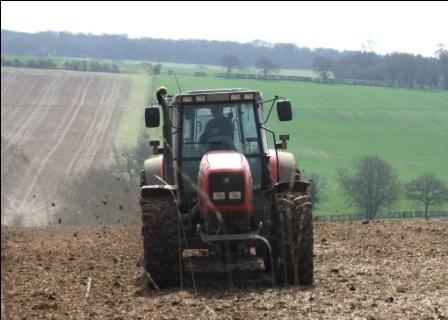
Agriculture accounts for over 99% of ammonia emissions in Ireland and was previously non-compliant with EU targets in 2020 and 2021. The ongoing adoption of low-emission slurry spreading, in combination with a reduction of dairy cattle and other cattle numbers, has brought ammonia emissions into compliance with the EU Emission Reduction target for the years 2022, 2023 and 2024. This reflects the impact of on-farm adoption of a range of good farming practices.
Commenting on the findings MsRoni Hawe, Director of the EPA’s Office of Evidence and Assessment said: “Ireland is on track to meet its 2030 EU Emissions Reduction targets for all five major air pollutants. The EPA’s assessment confirms that this progress is delivering clear benefits for air quality, human health and sensitive ecosystems, and shows that targeted policies and practical measures are achieving measurable reductions in emissions.”
She added: “Low-emission slurry spreading alone avoided an estimated 8,526 tonnes of ammonia being released to the atmosphere. That’s seven per cent of the national total, making it one of the most effective actions in reducing national ammonia emissions. Continued and wider adoption of these practices is essential to sustain progress on air quality.”
Beyond ammonia, Ireland is in compliance with EU Emission Reduction targets for the other air pollutants. In 2024, Sulphur dioxide decreased by 4.4 per cent; fine particulate matter by 1.9 per cent; nitrogen oxides by 1.3 per cent and non-methane volatile organic compounds by 1.0 per cent. Less fossil fuel use in power generation and residential heating has been key in reducing these emissions.
Commenting on these findings Dr Tomás Murray, Senior Manager of EPA Emissions Statistics said: “This is good news. We can hit our 2030 air pollutant reduction goals if we stay on course with the National Air Pollution Control Programme. By moving away from fossil fuels to generate our electricity and continued adoption of a range of good farming practices, we aren’t just achieving targets but also actively protecting our health and our environment.”
For further details on these figures, see the EPA report Ireland’s Air Pollutant Emissions: Trends and Outlook on the EPA website HERE.
A recent farmers’ protest and staged sit-in at Bord Bia’s headquarters in Dublin has cost the taxpayer an estimated €220,000, according to records released under Freedom of Information.
The then issue was about Brazilian beef imports and Bord Bia leadership concerns which was pushed into the spotlight to became a major national debate.
The demonstration, organised by members of the Irish Farmers’ Association (IFA), began as a rolling 24-hour protest before escalating into an “illegal sit-in,” causing major disruption to the agency’s operations. At its peak, Bord Bia was spending over €30,000 per week dealing with the situation. Costs were driven by the need for additional security, legal services, alternative meeting arrangements, and media-related expenses.
Because Bord Bia does not have security on site, private firms had to be urgently hired due to concerns around staff safety and access to the building. Staff were instructed to work remotely, while meetings and client engagements were cancelled, postponed, or relocated.
Breakdown of Key Costs:
€61,500 paid to Integrity Security, with a further €16,700 later.
An estimated €56,000 allocated for Bidvest Group services.
Over €9,000 in legal fees.
Nearly €35,000 on advertising and media.
Around €2,600 for external meeting rooms.
€1,250 to facilitate a board meeting at another location.
Bord Bia stated that the situation escalated rapidly and posed a “material risk” to staff safety, requiring continuous monitoring and restricted access to the building.
Although not all invoices had been finalised, the agency confirmed total costs are expected to reach approximately €220,000including VAT, once all accounts are settled.
Outcome of the Protest. The protest ultimately led to an agreement to carry out an independent governance review of Bord Bia, which was the basis for ending the demonstration. However, the farmers’ central demand, which was the removal of Chairperson Mr Larry Murrin, was not achieved, as he remained in his position with government backing. As part of the compromise, the protest was stood down after several weeks while a review of Bord Bia’s governance was commissioned. The chairman agreed to step back from chairing board meetings during the review, but did not resign.
This website uses cookies to improve your experience. We'll assume you're ok with this, but you can opt-out if you wish.AcceptRead More
Privacy & Cookies Policy
Privacy Overview
This website uses cookies to improve your experience while you navigate through the website. Out of these, the cookies that are categorized as necessary are stored on your browser as they are essential for the working of basic functionalities of the website. We also use third-party cookies that help us analyze and understand how you use this website. These cookies will be stored in your browser only with your consent. You also have the option to opt-out of these cookies. But opting out of some of these cookies may affect your browsing experience.
Necessary cookies are absolutely essential for the website to function properly. This category only includes cookies that ensures basic functionalities and security features of the website. These cookies do not store any personal information.
Any cookies that may not be particularly necessary for the website to function and is used specifically to collect user personal data via analytics, ads, other embedded contents are termed as non-necessary cookies. It is mandatory to procure user consent prior to running these cookies on your website.






Recent Comments