The recent meeting concerning the River Suir, held at Cahir House Hotel in Cahir, County Tipperary, on Wed 26th last, attracted a packed room of anglers, Tidy Towns personnel and environmentalists all united by their concern for the future of the river Suir. The meeting was chaired by Mr Derek Cagney, (National Secretary of the Trout Anglers Federation of Ireland and Chairman of the Cashel, Golden and Tipperary Anglers Association). Despite the strong public attendance and the importance of the issues under discussion, no politicians, elected councillors or other local Thurles representatives were seen to be present.
Meanwhile, independently a formal complaint has now been made once again by myself, directed at the Environmental Protection Agency (EPA) concerning the continuing condition of the River Suir in Thurles town centre and the failure to respond by the known responsible body, namely Tipperary County Council.
The complaint, (EPA reference COM021813), concerns the stretch running from Eircode E41 NX94(Barry’s Bridge) along the full stretch of river running to and including the area Eircode E41 C6K7, (Slievenamon Road River Walk entrance).
Concerns have been raised about this watercourse repeatedly since approximately November 2013. Recent photographs, vidoes and observations indicate that serious problems remain, including:
abnormal, opaque or grey-looking water;
foam or surface scum;
dark material or sludge in the channel;
water suspected of containing domestic wastewater or run-off;
extensive rush and vegetation growth, sucking the oxygen from the shallow water;
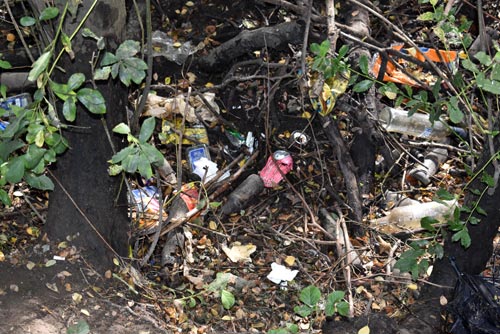
bottles, drinks containers and other litter throughout the riverbed and floating on now stagnant, polluted water.
Loss of the River Suir Fountains at Barry’s Bridge It is deeply regrettable that Tipperary County Council removed the two fountains from the River Suir These fountains were more than decorative features. They enhanced this prominent riverside area, while helping to circulate and aerate the water. Although fountains cannot themselves remedy pollution or replace proper river management, their operation can improve local water movement and dissolved-oxygen levels. At a time when residents are reporting stagnant-looking water, excessive vegetation, algae, sludge and litter, their removal represents the loss of both a valued public amenity and a potentially beneficial source of aeration.
Tipperary County Council should now explain why the fountains were removed, what assessment preceded the decision and whether they will be again restored. Their return should form part of a wider, properly funded programme to investigate pollution, clean the channel and restore this neglected stretch of River,
Photographs alone cannot fully establish the composition or exact source of the water or material contained. That requires a professional inspection, laboratory testing and proper source-tracing. However, the visible conditions are sufficiently abnormal to justify an urgent investigation.
In September 2025, the EPA referred the matter to Tipperary County Council as I requested. The Council subsequently outlined immediate and planned actions, including a proposed catchment-management plan and pilot study, details of which I am not privy. In November 2025, the EPA informed me that it was satisfied, based on the Council’s response, that the Council was taking appropriate steps to fulfil its environmental responsibilities.
Alas however, the continuing conditions during 2026 now raises serious questions about whether those promised measures were ever implemented and whether they produced any measurable environmental improvement.
On 23rd August 2026, the EPA acknowledged my further correspondence. It has again referred the matter to Tipperary County Council and has stated that it will assess what further EPA action may be appropriate after reviewing the Council’s next response. An update has been promised within the next four weeks.
It has been made clear that another referral and exchange of correspondence will not, by themselves, clean this river, identify the source of any discharge or prevent the problem from recurring. The Council’s handling of the matter is itself a central part of this complaint. Independent oversight now requires verification of what is happening on the ground.
Dried-up riverbed in Thurles town centre.
It has been formally requested that a suitably qualified EPA officer conduct an unannounced inspection while the conditions are visible. I am available to meet an officer at the site and identify the affected locations.
The EPA have also been asked to:
inspect and photograph the affected watercourse;
arrange properly documented upstream and downstream sampling;
analyse the water for appropriate chemical, biological and microbiological indicators;
trace relevant drains, pipes, culverts and outfalls;
establish whether any discharge exists and whether it is authorised;
examine Tipperary County Council’s complaint, inspection and enforcement records;
obtain evidence that Tipperary County Council’s promised actions were completed;
specify deadlines for investigation, cleaning and remediation;
consider its statutory supervisory powers if the evidence shows that Tipperary County Council has not performed its environmental duties adequately.
The EPA’s own guidance states that people may complain about a council’s environmental performance where a problem has not been addressed within a reasonable period or properly investigated. It also states that the EPA may issue legal notices or direct a council to take action where its duties have not been performed adequately. Under section 63 of the Environmental Protection Agency Act 1992, as amended, the EPA oversees local authorities’ performance of their environmental-protection functions.
The EPA are being asked to prejudge whether an offence has occurred. A rigorous, evidence-based and independent investigation is being sought. If the EPA decides that an inspection is unnecessary, a reasoned written decision has been asked for, explaining what verified evidence supports that conclusion.
After approximately thirteen years of complaints, plans, promises and political assurances are no longer enough. The public is entitled to a clean watercourse, accountable environmental governance and clear answers about what has entered this section of the River Suir.
From today, August 30th, I will make the substantive correspondence and official responses publicly available, subject to the appropriate protection of personal information. Further photographs and updates will follow.
Most of Cabragh Road in Thurles was resurfaced over the past week, following the deterioration and collapse of sections of the road surface after water-service works were carried out some years ago.
Much of the new surface appears to have been finished to a good standard. However, several sections near homes and businesses; including the area entrance to O’Meara Oil, now appear to be incomplete and potentially hazardous.
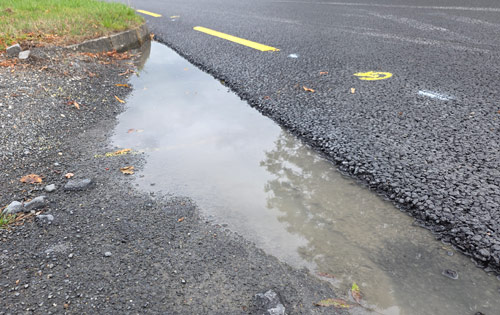
As our photographs show, the newly laid asphalt ends in a rough, abrupt and raised edge beside an uneven pedestrian margin. Anyone walking out from town may suddenly encounter a section where the resurfacing covers only part of the available roadside space.
Pic: G. Willoughby.
This presents particular difficulties for:
► wheelchair and mobility-scooter users; ► parents pushing children in buggies; ► people using walking aids; ► older pedestrians and those with impaired balance; ► cyclists moving close to the road edge; and ► residents entering or leaving adjoining properties.
Small wheelchair castors or buggy wheels could catch against the raised lip or loose stone. A pedestrian attempting to avoid the uneven surface could also be forced closer to moving traffic.
Pic: G. Willoughby.
The unfinished edge may create further problems if it is not corrected promptly. Water could collect along the change in level instead of draining freely, increasing the risk of puddles, splashing and deterioration. Water entering an unsealed pavement edge can weaken it, while passing traffic may loosen the exposed aggregate and cause the asphalt to ravel or break away progressively.
The resulting loose stones could become an additional slipping or skidding hazard. Repeated vehicle loading may also widen the damaged edge, leaving potholes, crumbling margins and an even greater difference in level.
Pic: G. Willoughby.
Serious questions therefore arise: Why were these sections left at a different level? Was pedestrian and wheelchair access assessed before the work was accepted? Were drainage and connections to entrances properly examined? Has the resurfacing received a final inspection? Is the contractor expected to return and complete the margins?
Fresh road markings and a new running surface do not make a project complete if unsafe edges remain beside homes, businesses and pedestrian routes.
These locations should now be inspected urgently by Tipperary County Council, made safe without delay and brought to a properly finished, accessible and well-drained standard. The council provides an official service for reporting damaged roads and footpaths, including an online “Fix-it”facility, [which today same consultation portal, despite every attempt, refused access].
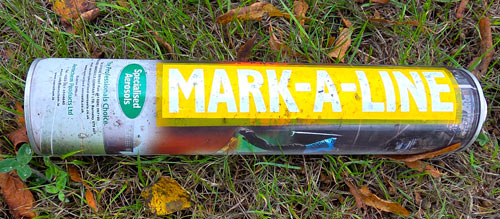
Which begs another question; Where have “Refresh Thurles” members vanished to? Note: Refresh Thurles members have failed to note that those working on this re-surfacing project, forgot to take their litter with them.
The public should not have to wait until somebody falls, a wheelchair becomes trapped or the newly laid surface begins to disintegrate before action is taken.
Tipperary residents and visitors are being advised to prepare for unsettled weather, with heavy rain and thunderstorms forecast this weekend.
Met Éireann has issued a nationwide weather advise, valid from 3am on Sunday, 30th August, until 3am on Monday, 31st August 2026.
Heavy showers and longer spells of rain are expected to spread from the southwest on Saturday night and become widespread during Sunday. Some areas may experience torrential downpours, thunderstorms, lightning and gusty winds.
Although the most severe conditions are expected to be localised and intermittent, surface water and localised flooding are possible. Road users should allow additional travel time and exercise particular care in areas affected by heavy rainfall.
The weather is expected to remain unsettled into next week, with further rain, occasionally heavy showers and breezy conditions.
The public should continue to monitor updates from Met Éireann and Tipperary County Council.
A midge-borne livestock virus previously reported mainly in Africa and Japan has now reached Europe.
During summer 2026, the Shamonda virus; or a closely related European variant, was identified in cattle in France, Germany, Switzerland, Liechtenstein, the Netherlands and Austria. Scientists expect further spread to be possible while blood-feeding Culicoides midges* remain active.
* A Culicoides midge is a tiny biting fly, usually only 1–3 millimetres long. Female midges feed on the blood of cattle and other animals and can carry viruses from one animal to another, much like mosquitoes. They are especially active during warm, damp conditions and around dusk; some species transmit livestock diseases such as Shamonda and the already identified bluetongue virus.
Plausible routes for entry into Europe include infected midges being transported long distances by wind or inadvertently through trade and transport, or the movement of an infected animal.
In adult cattle, infection generally causes short-lived illness, including: High fever. Diarrhoea and appetite loss. Lethargy. A sudden, sometimes severe, reduction in milk yield.
Although most adult cattle appear to recover, affected dairy farms could face lost production, veterinary expenses and additional monitoring costs. The greatest concern involves pregnant animals. The virus can cross the placenta and has been detected in aborted bovine foetuses in Switzerland. Shamonda and related viruses may cause abortion, stillbirth or calves with serious limb, spinal and brain abnormalities when infection occurs during a vulnerable stage of pregnancy. Researchers are still determining how frequently this happens with the European variant.
The virus is thought to spread mainly through biting midges; not through ordinary direct contact between cattle. There is currently no specific treatment or vaccine, although sick animals can receive supportive veterinary care. Reducing exposure to midges may lower the risk but cannot provide complete protection.
Farmers should watch closely for clusters of fever, diarrhoea or abrupt milk loss and contact their veterinarian immediately. Early blood sampling is important because the virus may remain detectable in adult cattle for only a short time. Abortions, stillbirths and malformed calves should also be investigated.
There is currently no evidence that Shamonda virus causes disease in humans. It has not been identified as a food-safety threat from milk or meat.
The situation is evolving, and the virus’s origin, complete geographic distribution and long-term reproductive impact remain uncertain. Farmers should follow updates from their veterinarian and national animal-health authority rather than relying on social-media rumours.
Households across County Tipperary are being asked to continue conserving water after Uisce Éireann extended the Water Conservation Order until the end of September.
The nationwide hosepipe ban was introduced on 24 July following an extended period of hot, dry weather, increased demand and mounting pressure on public water supplies. Although improving conditions mean the restrictions will end in 13 counties at 11.59pm on 26 August, Tipperary is among 13 counties where supplies need additional time to recover. RTÉ News
Under the order, households in Tipperary must not use hosepipes for non-essential activities such as watering gardens, washing private vehicles or filling swimming and paddling pools.
Uisce Éireann said water sources in parts of southern and eastern Ireland remain under strain. Continuing the restrictions will help safeguard supplies for homes, businesses, farms, hospitals, vulnerable customers and other essential services.
The ban has also been extended in Carlow, Cork, Dublin, Kildare, Kilkenny, Laois, Limerick, Meath, Offaly, Waterford, Wexford and Wicklow.
Uisce Éireann thanked communities for reducing unnecessary water use, saying public cooperation has already lowered demand and helped protect essential supplies. However, customers in Tipperary are being urged to maintain those efforts, as every drop saved will support the recovery of local water sources.
A garden hose or sprinkler used for one hour can consume more water than an average family uses during an entire day. Residents can help by taking shorter showers, repairing leaks, running washing machines and dishwashers only when full, and using watering cans instead of hoses.
This website uses cookies to improve your experience. We'll assume you're ok with this, but you can opt-out if you wish.AcceptRead More
Privacy & Cookies Policy
Privacy Overview
This website uses cookies to improve your experience while you navigate through the website. Out of these, the cookies that are categorized as necessary are stored on your browser as they are essential for the working of basic functionalities of the website. We also use third-party cookies that help us analyze and understand how you use this website. These cookies will be stored in your browser only with your consent. You also have the option to opt-out of these cookies. But opting out of some of these cookies may affect your browsing experience.
Necessary cookies are absolutely essential for the website to function properly. This category only includes cookies that ensures basic functionalities and security features of the website. These cookies do not store any personal information.
Any cookies that may not be particularly necessary for the website to function and is used specifically to collect user personal data via analytics, ads, other embedded contents are termed as non-necessary cookies. It is mandatory to procure user consent prior to running these cookies on your website.










Recent Comments