The Environmental Protection Agency has confirmed that it is awaiting a written response from Tipperary County Council before deciding whether further EPA action is warranted concerning continuing complaints about the River Suir.
In correspondence received following a further complaint submitted on August 27th, 2026, the EPA’s Office of Environmental Enforcement stated:
Dear Mr Willoughby, The Environmental Protection Agency (EPA) acknowledges receipt on 27/08/2026 of your further correspondence below relating to the issue referenced above. Our Ref: COM021813.
As previously advised, with respect to the scope of your concerns as listed below, we note that the majority of the concerns and questions raised relate to matters that fall within the remit and functions of Tipperary County Council as the competent authority for these matters.
We have requested a written response from the Council on any actions taken or planned on this matter. Until we have reviewed the response from Tipperary County Council, we will then assess any appropriate actions that may be required by the EPA and communicate our decision to you.
We trust this outlines the approach undertaken by the EPA with regard to this matter and, as advised, we will contact you again in due course.
Kind regards, Mary Murphy (Programme Officer, Office of Environmental Enforcement, Wexford.)
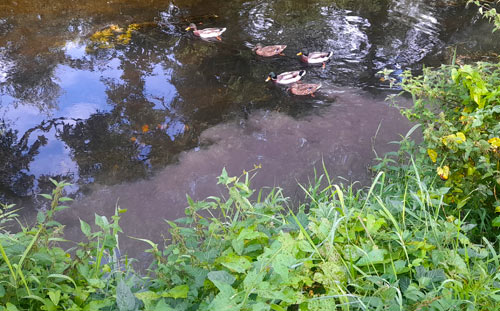
Effluent flowing into River Suir, at Thurles Town centre. Pic: G. Willoughby.
The reply is important because it confirms that the complaint remains under consideration. It also places Tipperary County Council firmly at the centre of the response: the EPA has asked the Council to account in writing for what it has done and what it proposes to do.
However, the correspondence provides no deadline for the Council’s response, no timetable for the EPA’s assessment and no indication of what evidence or remedial programme has been requested. “In due course” is not an adequate substitute for a transparent schedule, particularly after concerns about pollution, excessive vegetation, restricted flow and the condition of the river have been raised repeatedly for more than a decade.
Another River Suir organisation proposed. Meanwhile, NoreVision has been consulting communities, landowners, river users and businesses about establishing a River Suir Trust. The proposed organisation would seek to improve the river’s ecological health, develop practical projects and increase public understanding of the river ecosystem. Consultation invitations concerning the proposed trust were publicly circulated in May 2026 through local community channels, including Holycross/Ballycahill.
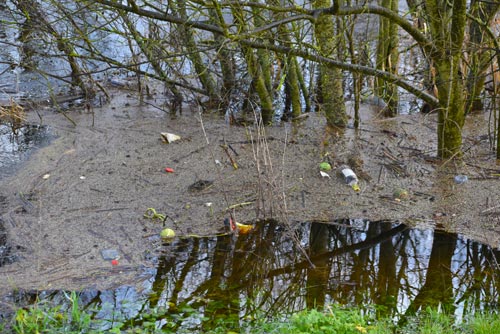
Suir Riverbed, Thurles town centre. Pic: G. Willoughby.
A properly constituted trust, supported by qualified scientific staff and sustainable funding, could provide valuable coordination, education and practical restoration work. It might also offer communities a stronger voice when dealing with public authorities.
Nevertheless, a trust remains a proposal until its governance, funding, staffing and work programme are published. Its success should eventually be judged by measurable ecological improvements, not by the number of consultations held, partnerships announced or aspirations expressed.
Most importantly, a community trust must supplement statutory action, not become a substitute for it. Volunteers and charitable organisations cannot be expected to assume the legal responsibilities of local authorities, regulators, public utilities or other State agencies.
“Save Our Suir” also established.
A separate community initiative, “Save Our Suir”, emerged following a public meeting held at Cahir House Hotel on August 26th. Contemporary notices from the Cashel, Golden and Tipperary Anglers Association and local social-media accounts confirm that the meeting took place, with a packed attendance.
This mobilisation demonstrates the depth of public concern. It could also help maintain pressure for disclosure, investigation and action. However, the appearance of several overlapping initiatives now creates a risk of fragmented effort unless their respective objectives and responsibilities are clearly defined.
A static River Suir, Thurles, Town Centre. Pic: G. Willoughby.
The River Suir does not require another layer of meetings in which every organisation participates, but no single body accepts responsibility for delivery.
Responsibilities must not become blurred. It is also important to describe the agencies’ roles accurately. The Local Authority Waters Programme was officially renamed the River Basin Management Service in July 2026. It works on behalf of Ireland’s 31 local authorities, providing catchment science, community engagement, funding and coordination. The renaming did not create a new enforcement authority or change the organisation’s underlying purpose. The official announcement expressly states that its purpose, services and commitments remain the same.
The EPA coordinates national water-quality monitoring, assessment and reporting. It also regulates EPA-licensed activities and oversees local-authority environmental performance. Tipperary County Council remains the competent authority for many local pollution, drainage, maintenance and enforcement matters, the position now restated in the EPA’s reply.
Inland Fisheries Ireland has responsibilities relating to fisheries protection, habitat and fish passage. Its national barrier programme has funded five projects in County Tipperary, but the published list does not by itself establish that these projects will resolve the particular problems reported in the River Suir at Thurles. Cooperation among these bodies is necessary and essential, but cooperation without named responsibility, deadlines and published outcomes can too easily become a mechanism for delay.
The public now needs answers. The EPA’s intervention is welcome, as are the River Suir Trust proposal and the formation of Save Our Suir. Yet none of these developments, by itself, amounts to river restoration.
After some 13 years of documented local complaints and warnings, the public should now be given:
Tipperary County Council’s complete written response to the EPA;
A published scientific assessment of the affected sections of the river;
Identification and investigation of pollution and nutrient sources;
Relevant water-quality, flow, oxygen and ecological-monitoring results;
A costed programme of remedial and maintenance work;
A clear allocation of responsibility among the Council and State agencies;
Environmental assessment of any proposed vegetation or obstruction removal;
Firm commencement, completion and public-reporting dates.
The proposed River Suir Trust and Save Our Suir may become constructive forces. They should be supported where their work is evidence-based, transparent and properly coordinated.
But the critical question remains unchanged:-What practical work will now be undertaken, who will be responsible for it, and by what date will the public see measurable improvement in the River Suir?
Carbon Dioxide: What It Is and How We Can Reduce It.
Firstly, Carbon dioxide, known as CO₂, is a colourless and odourless gas. It consists of one carbon atom and two oxygen atoms.
CO₂ occurs naturally. People and animals breathe it out, plants use it to grow, and decaying vegetation also releases it. At normal outdoor levels, it is not poisonous. CO₂ also helps keep Earth warm by trapping some heat in the atmosphere. The problem is that human activity is now releasing far more CO₂ than nature can absorb. This strengthens the greenhouse effect and causes global warming. Most additional CO₂ comes from burning coal, oil and natural gas for electricity, heating, transport and industry. Cement production and cutting down forests are also major sources.
We cannot, and do not need to stop producing all CO₂. Natural emissions are part of life. Instead, we must reduce the extra CO₂ created by human activity.
CO₂. One carbon atom + two oxygen atoms.
We can do this by:
replacing fossil fuels with wind, solar, nuclear and other low-carbon energy;
using electric vehicles and public transport;
insulating buildings and using heat pumps;
making factories and machinery more efficient;
protecting and restoring forests, peatlands and wetlands;
repairing, reusing and recycling more materials;
reducing unnecessary energy and material consumption.
Some industries, including cement and chemicals, are difficult to make completely carbon-free. Projects such as Greensand may capture their remaining CO₂ and store it underground.
Carbon storage can help, but it should support, not replace cleaner energy and direct emission reductions. The main goal is to reduce human-made emissions as close to zero as possible and safely store only those that cannot yet be avoided.
Burying Carbon Beneath the North Sea. To this end, a specially built ship called Carbon Destroyer 1 is preparing to carry liquefied carbon dioxide from the Danish port of Esbjerg to the Nini West oil field in the North Sea. There, the CO₂ will be pumped into porous rock about 1,800 metres beneath the seabed. This operation is part of Project Greensand, led by INEOS Energy with Harbour Energy and the Danish state company Nordsøfonden. Commercial storage is expected to begin around mid-2026.
The idea appears simple:– Instead of allowing carbon dioxide from biogas plants and other industries to enter the atmosphere, it is captured, purified and cooled until it becomes liquid. It is then transported to Esbjerg, a city in Denmark and stored temporarily in tanks and loaded onto Carbon Destroyer 1.
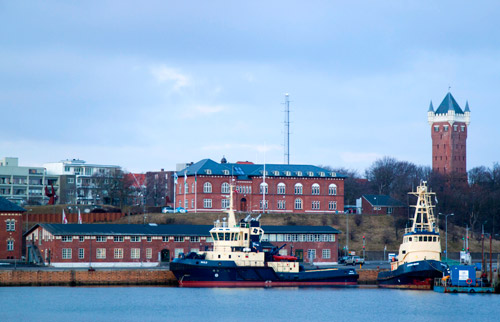
Esbjerg Harbour, Denmark.
The ship can carry approximately 5,000 tonnes of liquid CO₂ on each voyage, although some reports describe a full load of about 5,300 tonnes. It will sail to the offshore platform, connect to the injection system and pump the CO₂ through a well into the depleted oil reservoir.
The carbon dioxide is not stored in a large underground cave. It spreads through tiny spaces inside porous sandstone. A layer of solid, impermeable rock above the reservoir is intended to prevent it from escaping.
Project Greensand completed a smaller trial in 2023. Its first commercial phase aims to store about 400,000 tonnes of CO₂ each year. Eventually, the operators hope to expand capacity to between four million and eight million tonnes annually. Achieving that target would require more ships, wells and capture facilities. Supporters describe ships such as Carbon Destroyer 1 as “virtual pipelines.” They could collect carbon dioxide from industries in different countries and take it to suitable offshore storage sites without constructing pipelines across the whole of Europe.
However, the operation is not free from danger. Carbon dioxide does not burn, but a large leak can push oxygen out of the surrounding air. Because CO₂ is colourless, odourless and heavier than air, it can collect in low or enclosed spaces. A serious release at a port, aboard a ship or on an offshore platform could cause suffocation. Gas detectors, ventilation, emergency shutdown systems and restricted safety areas are therefore essential. There is also a risk of a pipe or transfer hose breaking while the ship is connected to the platform. Rough seas, equipment failure or loss of the ship’s position could increase this danger. Carbon Destroyer 1 has a redundant dynamic-positioning system to hold it in place, while emergency valves and breakaway connections are intended to stop the flow if something goes wrong.
Underground storage creates longer-term questions. CO₂ might escape through a damaged injection well, an old oil well, a fault or a weakness in the sealing rock. Excessive injection pressure could also damage the reservoir. Operators must therefore inspect old wells, limit pressure and monitor the movement of the stored CO₂ for many years. Project Greensand is subject to Danish and European licensing, environmental assessment and monitoring requirements. The Danish Energy Agency says geological storage must be shown to be safe and environmentally suitable.
Finally, carbon storage should not be treated as permission to continue all existing emissions. Capturing, cooling, transporting and injecting CO₂ uses energy and produces some emissions of its own. The technology is likely to be most valuable for industries such as cement and chemicals, where emissions are especially difficult to remove.
Project Greensand could become an important new way of dealing with industrial carbon emissions. But its success must be judged by transparent monitoring, verified permanent storage, honest reporting of accidents and leakage, and the amount of carbon it prevents from reaching the atmosphere; not simply by how many shiploads disappear beneath the North Sea.
A very powerful El Niño is developing in the Pacific Ocean. Experts believe it could be one of the strongest recorded in modern times.
But what exactly does that mean for Ireland?
El Niño happens when part of the Pacific Ocean becomes much warmer than usual. This extra heat can change winds, rainfall and weather patterns around the world. The present event is expected to strengthen later in 2026 and could continue into early 2027. For Ireland, it may increase the chance of a mild, wet and stormy autumn or early winter. However, this is not guaranteed.
Met Éireann says El Niño’s effect on Ireland is weaker and less predictable than in many other parts of the world. Our weather is mainly controlled by the Atlantic Ocean, the jet stream and nearby areas of high and low pressure. These can change quickly and may either strengthen or cancel out El Niño’s influence.
In simple terms: Temperatures may be milder than normal. We could have more periods of heavy or persistent rain. There may be a greater chance of unsettled or stormy weather. Cold snaps and frost can still happen. Some other countries face a much clearer risk of drought, flooding or extreme heat.
El Niño will also add a temporary burst of natural warmth to the long-term warming caused by climate change. Because of this combination, experts believe 2027 could become the world’s hottest year on record. The important word is “chance.” A seasonal outlook tells us what type of weather has become more likely, it cannot tell us exactly when storms will arrive or how much rain every part of Ireland will receive. So, there is no need to panic. People should simply keep an eye on Met Éireann’s regular forecasts and weather warnings, particularly those living in places that are vulnerable to flooding.
The bottom line: A major El Niño is happening, and Ireland may experience a milder, wetter and stormier season. However, press headlines claiming that this weather is certain are going just a bit too far, but time will tell.
When Does Somebody Else’s Pollution Become Our Responsibility?
Since yesterday September 1st 2026, Ireland’s fixed, on-the-spot fine for littering has increased from €150 to €250. This includes rubbish thrown from cars; whether it is a cigarette butt, bottle, food container or takeaway wrapper.
But fines raise a bigger question: At what point does somebody else’s pollution become our responsibility, especially when it enters a local river or waterway?Responsibility begins with the person who discarded the waste. Irish law prohibits causing or permitting polluting matter to enter waterways. Local authorities can investigate pollution, require remedial action and prosecute offenders.
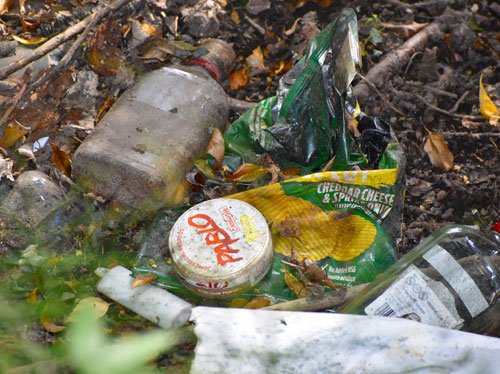
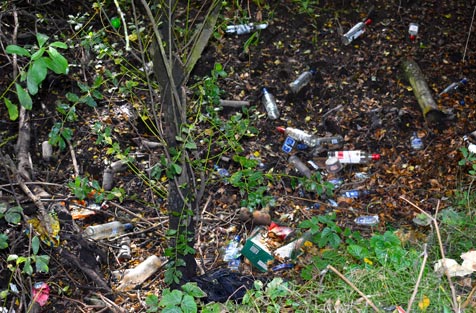
Suir Riverbed Thurles town centre, mainly caused by failure to provide a nearby litter bin.
However, responsibility cannot end with the individual. Many communities like Thurles town, point to too few conveniently located litter bins, or bins that are full or poorly maintained, in town centres, recreational areas and beside popular walking routes. Public-bin provision and maintenance are local-authority services, so councils also have a role in supplying suitable infrastructure where litter is regularly generated.
However, a lack of bins is never an excuse to throw rubbish from a car or throw it in or beside a river. If no bin is available, we must take our waste home. Nevertheless, enforcement works best when it is accompanied by adequate bins, regular collections, public education and convenient recycling facilities. Fining people without addressing obvious gaps in infrastructure tackles only part of the problem.
Once discarded, litter rarely remains where it falls. Rain washes roadside waste into drains, streams and rivers often promoted by Co. Councils. Currents carry it through neighbouring communities and towards lakes and the sea, where it can harm wildlife, obstruct waterways and leave the public paying for its removal. Ordinary residents are not legally responsible for another person’s offence. But once we see pollution threatening a shared waterway, we acquire a civic responsibility; report it, refuse to ignore it and support safe efforts to protect the area.
In the Republic of Ireland, litter, illegal dumping, overflowing public bins and local water pollution can be reported to the relevant city or county council. The EPA also recommends its “See It? Say It!” app, which sends photographs and location details to the appropriate authority.
The person who pollutes should pay. Councils must provide sensible disposal facilities and enforce the law. Communities should not be expected to continually clean up after repeat offenders, but silence allows the damage to travel downstream.
The litter may belong to somebody else, but the river belongs to all of us. Personal responsibility, proper infrastructure and effective enforcement must work together.
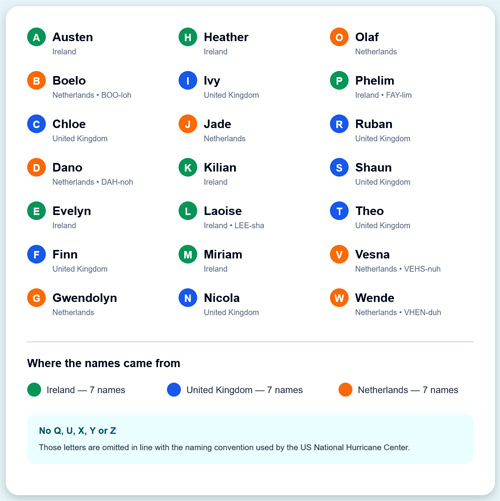
Austen, Boelo and Chloe are first in line to name major storms affecting Ireland, the UK and the Netherlands during the 2026/27 season.
Met Éireann unveiled the list alongside the UK Met Office and Dutch forecasting service KNMI after the public submitted more than 40,000 suggestions. The official list contains 21 names, beginning with Austen and ending with Wende.
Met Éireann confirmed the names on 1st September 2026.
Many of the nominations pay tribute to loved ones, pets and notable figures from meteorological history.
Chloe, the third name on the list, was suggested more than 120 times. One nomination came from the mother of a five-year-old weather enthusiast who is fascinated by forecasts but, according to her family, can “create a storm by herself” when tired.
Finn was proposed for a two-year-old boy described by his family as wild and a force to be reckoned with. Ivy commemorates a nine-month-old Labrador puppy affectionately nicknamed “the absolute destructor”.
Nicola honours a mother who has “weathered many a storm and only come out stronger”, while Theo was inspired by a cat that would hide before thunderstorms, leading its owner to joke that it could predict the weather.
Shaun also appears on the list after winning a public vote held through a partnership between the Met Office and Aardman, the British animation studio behind Shaun the Sheep and Wallace & Gromit. The collaboration is intended to introduce weather preparedness to new audiences through Aardman’s storytelling.
Met Éireann selected several names connected to the history of Irish weather forecasting as it celebrates the 90th anniversary of the establishment of the Irish Meteorological Service.
Austen honours Austen Nagle, its first director, while Evelyn recognises Evelyn Murphy, the first woman to present a weather forecast on RTÉ.
KNMI chose its names from more than 3,000 public suggestions. They include Boelo,pronounced “Boo-loh”—a traditional but now almost extinct name from the eastern Groningen region. The name has been passed through the nominator’s family for generations.
Although the stories behind the names are often warm and personal, meteorologists emphasise that storm naming serves a serious purpose. Giving a potentially dangerous weather system a distinctive name helps the public follow forecasts, understand warnings and prepare for possible disruption.
A storm is named when forecasters believe it could produce medium or high impacts in Ireland, the UK or the Netherlands. Strong winds remain the main consideration, although the potential effects of heavy rain and snow are also assessed.
The three forecasting organisations have named storms jointly since 2015. Each annual list operates from the beginning of September until the following August.
The letters Q, U, X, Y and Z are omitted in keeping with North Atlantic naming conventions.
This website uses cookies to improve your experience. We'll assume you're ok with this, but you can opt-out if you wish.AcceptRead More
Privacy & Cookies Policy
Privacy Overview
This website uses cookies to improve your experience while you navigate through the website. Out of these, the cookies that are categorized as necessary are stored on your browser as they are essential for the working of basic functionalities of the website. We also use third-party cookies that help us analyze and understand how you use this website. These cookies will be stored in your browser only with your consent. You also have the option to opt-out of these cookies. But opting out of some of these cookies may affect your browsing experience.
Necessary cookies are absolutely essential for the website to function properly. This category only includes cookies that ensures basic functionalities and security features of the website. These cookies do not store any personal information.
Any cookies that may not be particularly necessary for the website to function and is used specifically to collect user personal data via analytics, ads, other embedded contents are termed as non-necessary cookies. It is mandatory to procure user consent prior to running these cookies on your website.





Recent Comments