Met Éireann also listed a grass minimum (“Gmin”) for Gurteen of -6.0°C for the same reporting period.
Tipperary Weather forecast for Tomorrow (Tue Jan 6th 2026): A cold start with lots of cloud, patchy showers developing around early morning (about 7–8am), then generally brighter in the afternoon with sunny spells, before a few showers return around early evening. High around 6°C, low around -1°C to 0°C overnight/early morning.
Weather warning: A Met Éireann Yellow warning for low temperature/ice is in effect until 9:00am.
Note: Sharp frost and icy stretches/black ice risk, so lets be careful out there if you are driving.
With Tipperary skies cloud free tonight, the first full moon of 2026, known as the Wolf Moon, lights up our skies.
Why is it called the Wolf Moon, I hear you ask? The name “Wolf Moon” is traditionally used to name the January full moon. It’s commonly linked to winter folklore, particularly the idea of wolves howling more often in midwinter, and belongs to a wider set of seasonal full-moon names popularised in North America and echoed in other traditions. It’s also been known historically by other names in some traditions, including the “Moon After Yule.”
“Wolf Moon” or “Moon After Yule”.
The term “supermoon” is not a formal astronomical definition, but is widely used in public skywatching guides. Ireland’s first full moon of the year, the Wolf Moon, reached peak illumination this morning (10:02am Irish time/GMT), with skywatchers getting their best viewing opportunities from Friday evening (January 2nd 2026) through the weekend, weather permitting.
This January 26 full moon is also widely being described as a “supermoon”, an informal term used when a full moon occurs relatively close to Earth in its orbit, which can make it appear a little larger and brighter than average. Even if you have already missed the exact peak time earlier this morning, not to worry, the moon will still look full to the naked eye across this weekend, all you need is a clear horizon, and a few minutes outside away from bright street lighting.
Best ways to see it in Ireland. Look for moonrise at dusk: the moon will rise in the east around sunset and climb higher as the evening goes on, with times varying by location. Try an open viewpoint: parks, beaches, higher ground, or anywhere with a clear eastern sky. Use binoculars or a small telescope; while the “full” phase flattens shadows on the lunar surface, it can still be striking, especially near the horizon.
Derelict site levies: €26.3m outstanding nationwide as councils collect small fraction of charges.
Local authorities imposed levies of almost €8.6 million on the owners of 778 derelict sites nationwide last year, but collected less than 10% of the amount billed in-year, according to newly published figures.
A report published by the Department of Housing, Local Government and Heritage shows that €26.3 million was outstanding in respect of unpaid levies at the end of 2024, while 1,916 sites were recorded on the statutory derelict sites register.
Under the Derelict Sites Act, councils may apply a levy of up to 7%, and unpaid amounts accrue interest at 1.25% per month. The report also records a total of 2,869 notices or demands issued by local authorities under the legislation, with Cork City accounting for more than 10% of that total.
Limerick City and County Council issued 267 notices or demands, while Dublin City Council issued 245. No notices or demands were issued in Leitrim, while only two were issued in Wicklow, and six each in Donegal, Offaly and Sligo.
By county and city, Limerick recorded the highest number of derelict sites on the register (427), followed by Mayo (284), Cork City (158) and Dublin City (109). The lowest numbers were recorded in Wicklow (two) and County Galway (three).
The report indicates that €7.9 million was owed to Dublin City Council in respect of levies imposed under the Derelict Sites Act 1990, with a further €5.9 million owed in Cork City.
In terms of outcomes, issues were resolved and no further action was required in 566 cases following the issuance of notices or demands. The report also records five sites acquired by agreement and 126 acquired compulsorily.
Tipperary: local levies and revenue measures in 2025. We understand that in 2025, Tipperary County Council issued derelict site levy notices to the owners of 77 properties on the county’s Derelict Sites Register.
Levy Notices: In July 2025, the council prepared to issue levy notices to 77 property owners. These notices involve an annual levy amounting to 7% of the property’s market value. Derelict Sites Register: As of October 15th, 2025, the Tipperary Derelict Sites Register listed a total of 115 properties. This represents a significant increase from the 71 properties registered at the end of 2023. Recent Additions: In late 2025, 25 houses in the Glen Court Estate in Emly were added to the register on October 1st. Earlier in July 2025, 22 properties in Clonmel were added. Enforcement Actions: In addition to levies, the council issued legal letters to 84 site owners in early 2025 reminding them of their obligations to carry out remedial works. Total Official Demands: According to data presented in the Oireachtas in November 2025, the total number of sites in Tipperary for which a notice or demand under the Derelict Sites Act was issued (historically up to that point) was 140.
Tipperary County Council to invite public consultation on Harmonised Parking Bye-Laws 2026.
Tipperary County Council will commence a public consultation on January 12th 2026 regarding the proposed “Harmonised Parking Bye-Laws 2026”. These bye-laws aim to deliver a fair, consistent and modern county-wide parking system, moving away from the nine separate systems, which currently exist in each of our towns where there is a charge for parking.
The key proposed changes are as follows:
Three-tier charging structure for the nine towns reflecting the diverse character of each town.
Formal 20-minute free parking period in short and medium-stay parking zones; (perfect for that person in flat shoes, who can complete a full town-centre errand, involving running at Olympic pace; to post a letter; collect a prescription; grab a loaf; que at a Supermarket check-out; then find the one shop you actually needed is closed, and be back at the car before the engine properly cools). Standard parking location maps for all pay parking areas across all Tipperary towns. Parking zones at different rates will still be decided by the Elected Members at District level, if they can avoid their full time teaching posts and other occupations, in order to attend.
The new county-wide bye-laws seek to:
Support our town centres by encouraging parking turnover and the associated footfall.
Provide equity county-wide with equal charges for similar parking services for the towns in each of the 3 tiers.
Introduce a formal 20-minute free parking period in short and medium-stay town centre zones.
Ensure that off-street car parking will be cheaper than on-street parking.
Provide clarity and consistency with standardised permit categories and charging times county-wide.
Provide clear and consistent mapping of the parking system across all nine towns for public display.
The proposed bye-laws will replace multiple existing regulations and bye-laws and, subject to adoption, are expected to come into effect on September 1st 2026.
In parallel to the new bye-laws a scheme is proposed to return a percentage of parking income to each of the nine towns where that income is generated: same to support and fund town centre projects, initiatives and developments, e.g. Straighten sign posts and replace bollards removed by high sided vehicles the week before, or correct errors previously designed by money wasting town engineers. On wonders where such funds generated were allocated previously. However, focusing on Thurles; many will note a small mathematical complication: you can’t generate much parking income in a town centre where car parks remain unavailable and areas, like our town centre, where there are little to no spaces left to generate it from. It’s a bit like running a swimming pool fundraiser, after the water has been removed.
And while Thurles town centre may be short on parking, retail consumers point out it doesn’t seem short on enforcement, with two traffic wardens still in place, giving the impression that Thurles has perfected a rare civic innovation: a town centre where parking is scarce, but getting a ticket remains reliably available.
Tipperary County Council will have these draft Bye Laws available for inspection from January 12th 2026, for a period of one month, and will be inviting comments and submissions on these bye-law proposals for a further two weeks.
Members of the public are encouraged to participate, safe in the knowledge that their views, as is usual, will be carefully received, respectfully acknowledged, and then placed in the traditional local authority filing system marked as “Please Ignore”.
Uisce Éireann is to submit a Strategic Infrastructure Development planning application, alongside a Compulsory Purchase Order (CPO) application, to An Coimisiún Pleanála for the Water Supply Project Eastern and Midlands Region, described as the largest-ever water project in Irish history.
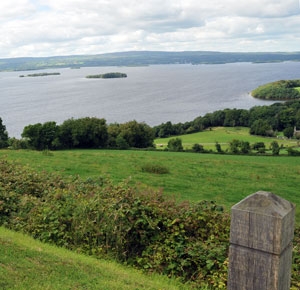
What does the project propose? Uisce Éireann plans to abstract water from Parteen Basin (Lower River Shannon), treat it near Birdhill, Co Tipperary, and pipe treated water about 170km through counties Tipperary, Offaly and Kildare to a new termination reservoir at Peamount, Co Dublin, connecting into the Greater Dublin Area network.
How much water would be taken? Uisce Éireann says the scheme would abstract a maximum of 2% of the average/long-term average flow at Parteen Basin.
Why is it being pursued? Uisce Éireann says the Eastern & Midlands region is over-reliant on a single source (the River Liffey system) and that population/economic growth and climate pressures will increase demand; it says a new source is needed for resilience.
What is the cost and timeline? Subject to planning, Uisce Éireann proposes construction starting in 2028, completing within five years, with an estimated budget of €4.58bn–€5.96bn and more than 1,000 direct jobs at peak construction.
How many landowners are affected? Reporting on the scheme states the underground pipeline would cross lands belonging to about 500 owners.
What are objectors saying? 1) Environmental impact on the Shannon / Natura 2000 protections. A key objection is potential ecological impact on the Shannon system. Parteen Basin is within the Lower River Shannon SAC (site code 002165), and critics argue abstraction/infrastructure must be proven not to adversely affect protected habitats/species.
2)“Fix the leaks first”. Opponents argue Dublin’s deficit should be tackled primarily through leakage reduction and network upgrades. Uisce Éireann’s own figures state about 37% of treated water is lost through leaks nationally. (Analysis has cited 37% nationally and 33% in the Greater Dublin Area lost to leaks.)
3)Demand and climate assumptions. Some stakeholders have challenged the robustness and horizon of demand forecasts,raising issues such as planning beyond 2050, climate impacts and high-demand users (including data centres and large energy users), particularly during drought.
4) Cost escalation and value-for-money. Objectors highlight the multibillion price tag (often described as “about €6bn”) and warn of further escalation; reporting has referenced a worst-case risk scenario exceeding €10bn in official correspondence.
5) Land access, CPO concerns, disruption and compensation/tax. Landowner objections include disruption during construction, long-term land constraints, and concerns about compensation treatment (including tax/VAT implications).
What is Uisce Éireann’s response ?
It says the abstraction would be capped at 2% of Parteen Basin flows and that the application includes an EIAR and Natura Impact Statement. It says leakage reduction is part of the solution, but that a new source is still required for resilience. It points to landowner liaison and a negotiated voluntary wayleave/land package agreed with farming bodies.
What happens next ? Uisce Éireann says planning notices run from 12 December 2025 and planning documents will be available from 19 December 2025 once lodged. The project page states submissions/observations to An Coimisiún Pleanála may be made from January 6th 2026 until February 25th 2026 at 5.30pm.
This website uses cookies to improve your experience. We'll assume you're ok with this, but you can opt-out if you wish.AcceptRead More
Privacy & Cookies Policy
Privacy Overview
This website uses cookies to improve your experience while you navigate through the website. Out of these, the cookies that are categorized as necessary are stored on your browser as they are essential for the working of basic functionalities of the website. We also use third-party cookies that help us analyze and understand how you use this website. These cookies will be stored in your browser only with your consent. You also have the option to opt-out of these cookies. But opting out of some of these cookies may affect your browsing experience.
Necessary cookies are absolutely essential for the website to function properly. This category only includes cookies that ensures basic functionalities and security features of the website. These cookies do not store any personal information.
Any cookies that may not be particularly necessary for the website to function and is used specifically to collect user personal data via analytics, ads, other embedded contents are termed as non-necessary cookies. It is mandatory to procure user consent prior to running these cookies on your website.








Recent Comments