|
|
According to the Environmental Protection Agency (EPA), home owners need to take action to protect themselves, their families and their neighbours from risks posed by septic tanks.
- Half of all septic tanks, failed local authority inspections in 2016, posing a potential health risk to home owners and their neighbours
- Half of sites with a septic tank and a private drinking water well on site, also failed inspection.
- Quarter (25%) of septic tanks failed due to owners not removing sludge build-up from their tanks, an issue that can be easily rectified by home owners.
 The Environmental Protection Agency today released a review of the implementation of the National Inspection Plan for Domestic Waste Water Treatment Systems for the period 1st January to 31st December 2016. The National Inspection Plan is being implemented by local authorities under the supervision of the EPA.
The review shows that 49 per cent of septic tanks failed inspection in 2016, up from 45 per cent in 2015. Septic tank failures were mainly due to a lack of proper operation and maintenance. The failure by home owners to maintain and operate a septic tank system adequately can pose a health and environmental risk through the pollution of private drinking water wells or water courses. Many septic tank owners source their water from their own private well.
Commenting on the results Mr. Darragh Page, Programme Manager of the EPA’s Office of Environmental Enforcement said, “Home owners may be putting themselves, their families and their neighbours at risk of ill health if they do not maintain their septic tank system adequately. There are simple steps that home owners can take to ensure their system is managed properly and will pass an inspection. These include: having the sludge emptied from the tank on a regular basis, using a permitted contractor and retaining the receipt and, if the home owner has a package treatment system, having it regularly serviced and keeping a record of servicing.”
By taking these simple steps home owners can protect themselves and their environment from contamination.
The results of the review of the 2016 inspection plan are available on the EPA’s website.
Environmental Protection Agency (EPA) calls on home owners to test their dwellings for cancer-causing Radon Gas.
Note:
(1) Radon is a radioactive, cancer-causing gas.
(2) Radon is the second greatest cause of lung cancer, after smoking.
(3) Some 250 lung cancer cases each year, here in Ireland, are linked to the exposure to Radon.
(4) It is easy and inexpensive to test your home for Radon Gas.
(5) It is easy to reduce Radon levels in your home.
On European Radon Day, 7th November, the Environmental Protection Agency (EPA) are calling on all householders to test their homes for this cancer-causing radioactive gas. Radon is second only to smoking as the leading cause of lung cancer. It is estimated that some 250 lung cancer cases each year, here in Ireland, are linked to Radon Gas exposure.
Radon comes from rocks and soils and can get into your home through the small cracks and openings in the foundations of a house or indeed the gaps around service pipes. Because Radon has no colour, taste or smell; the only way to know how much radon is in your home is to take a simple radon test.
The test costs about €50 and can be ordered from one of the services registered with the EPA. Two small detectors, about the size of a biscuit, are delivered to you by post and placed in your home. After three months, they are then posted back to the laboratory, where they are analysed to see how much Radon they have been exposed to. The results are then posted back to you.
More than 62,000 homes in Ireland have been tested for Radon so far. If you haven’t already done so, the EPA would urge you to protect your family’s health by taking this simple and inexpensive test as soon as possible. So far, the EPA have identified almost 8,800 homes with levels of Radon above the acceptable level – some homes have had extremely high levels.
The good news is that Radon is easy to test and simple solutions are available to reduce high levels where necessary.
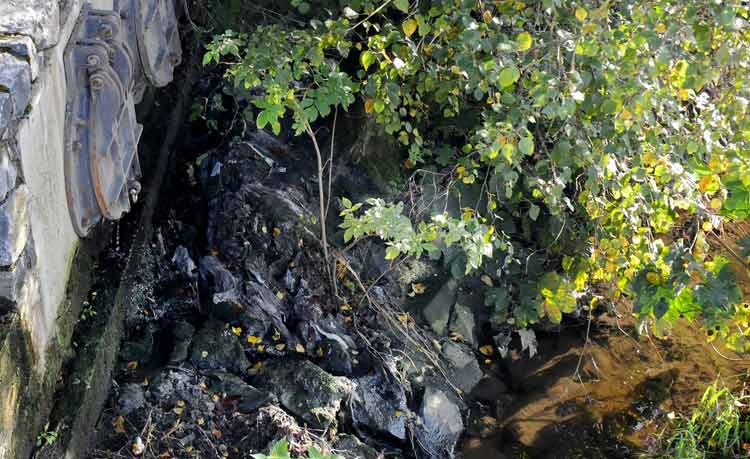 River Suir, Thurles, Co. Tipperary. According to Environmental Protection Agency Ireland (EPA), the failure to address waste water deficiencies causes an unacceptable risk to not just Ireland’s environment but also to Ireland’s public health.
Waste water treatment at 50 of Ireland’s 185 large towns and cities fail to comply with standards set to prevent pollution and protect public health.
Sewage from the equivalent of 120,000 people across 44 areas still enters the environment untreated each day. Plans to install treatment at some of these areas is delayed by up to three years and most will not be completed until 2021.
Four bathing water areas were deemed unsafe for swimming due to health risks caused by sewage.
The EPA report on Urban Waste Water Treatment in 2016, released today, highlights the need for significant funding to address the legacy of underinvestment in infrastructure needed to collect and treat our waste water effectively. The report finds that treatment is inadequate in many areas.
Commenting on the report Mr Gerard O’Leary, Director of the EPA’s Office of Environmental Enforcement said,
“Waste water from over half our population failed to meet environmental standards. For many years Ireland has failed to address the deficiencies in waste water treatment. Substantial and sustained investment is now required to protect our valuable waterways and protect public health.”
Environmental Priorities
Here in Co. Tipperary, Mullinahone, Roscrea, and Thurles are all regarded as areas where improvements are required to resolve environmental priorities, with Thurles cited as an example of a large Urban Area where the collection and treatment of urban waste water is not meeting European Union standards.
Waste water is one of the principal threats to water quality in Ireland. The EPA identifies the this thteat as a priority area where resources must be targeted to bring environmental improvements where they are most needed.
50 large towns and cities where waste water treatment failed to meet EU standards. This includes Dublin, which needs a major upgrade of Ringsend treatment plant.
44 areas discharging untreated sewage. Counties Cork and Donegal account for nearly half of these areas. Five areas currently discharging untreated waste water are expected to be connected to treatment plants by the end of 2017. These areas are Youghal, Belmullet, Rush, Bundoran and Killybegs.
59 areas where waste water is the sole threat to rivers, lakes and coastal waters that are at risk of not achieving good status. Almost one quarter of these are in Counties Donegal and Galway.
4 areas where waste water contributed to poor quality bathing water. The affected beaches include Merrion Strand and Loughshinny Beach.
12 areas where improvements are needed to protect critically endangered freshwater pearl mussels in rivers such as the Blackwater and the Nore.
3 areas where disinfection of waste water is required to safeguard shellfish habitats.
Mr Darragh Page, Programme Manager of the EPA’s Office of Environmental Enforcement commented that;
“Ireland’s environment is at risk because waste water is not treated to the necessary standards, even though the final deadline to meet these standards was 2005. New or upgraded treatment systems are required in some areas. In other areas, there is already sufficient treatment capacity in place, but the management of the treatment systems needs to improve.
“Blow, winds, and crack your cheeks! rage! blow!
You cataracts and hurricanoes, spout
Till you have drench’d our steeples, drown’d the cocks!”
Extract from the play ‘King Lear’ – by William Shakespeare.
Having endured storm ‘Ophelia’ and ‘Brian’, in recent days, Ireland could be in line for a further brutalising wind pommelling, as forecasters predict that we can expect threats from storms named ‘Hector’, ‘Octavia’, ‘Tali’ and ‘Winifred’, all due in the coming months.
Names for the Wind Storm Season – 2017/18 – Ireland & UK
Aileen; Brian; Caroline; Dylan; Eleanor; Fionn; Georgina; Hector; Iona; James; Karen; Larry; Maeve; Niall; Octavia; Paul; Rebecca; Simon; Tali; Victor, and Winifred.
Names for the Atlantic Tropical Cyclone Season – 2017 – United States
Arlene; Bret; Cindy; Don; Emily; Franklin; Gert; Harvey; Irma; Jose; Katia; Lee; Maria; Nate; Ophelia; Philippe; Rina; Sean; Tammy; Vince, and Whitney.
 To be granted a name, a storm must give rise to either a ‘Status Orange’ or ‘Status Red’ weather warning. Some 21 names are chosen from suggestions submitted by the public; sent to the United Kingdom and to Met Éireann, jointly. One name is picked for each letter of the alphabet, (apart from Q, U, X, Y and Z). Each categorised storm is then named according to the agreed list, having been alternated between genders and before being ordered alphabetically, e.g. Aileen; Brian; Caroline, Dylan etc.
Front Line Repair Crews and Contractors
In the wake of storm ‘Ophelia’, ESB repair crews made up of some 2,500 persons and some 1,000 contractors were mobilised to report to their local depots to engage with 6,000 separate locations requiring repairs, with an unprecedented 385,000 homes and business premises, devoid of power. Crews mustered at 6.30am each morning at their depots, working until 10.00pm each night. Hot breakfasts were supplied by Caterers to feed those assembled before going out. Many cancelled holiday leave to meet the needs of the emergency.
An extra 250 crew members were brought in from Northern Ireland, Scotland, France and the UK.
Priority was given to essential services, e.g. Water treatment plants, Health networks and Garda services; all backed up by the Irish army.
To all persons involved on the front line goes our thanks.
“And then my heart with pleasure fills, And dances with the daffodils.”
[Extract from the poem “Daffodils” by William Wordsworth.]
The season of Autumn 2017, here in our Northern Hemisphere, truly began just 9 days ago, on Friday, 22nd September at 9.54pm, and will come to an end on Thursday, 21st December 2017, as the dark winter days once again emerge.
But fear not; remember the words of the poet Percy Bysshe Shelley “O, wind, if winter comes, can spring be far behind?”; so, let’s forget about winter and prepare for spring.
Later, towards the end of this month, will be the time to plant spring flowering bulbs, like the Crocus, Snowdrops, Bluebells and Tulips; but right now, is the best time to plant those Daffodils with their wonderful characteristic six petal-like sepals, surmounted by their trumpet-shaped corona; the flower that symbolizes ‘Friendship’.
Among the earliest blooms to appear in our Irish spring; Daffodils have been around for a long, long time, getting mentioned as far back as two hundred years B.C.. Indeed, it was a group of Englishmen in the early 17th century who plucked the Daffodil out of the windflower category; positioned it firmly, because of its charm, for inclusion into our domestic flower garden and rockery. Originating in Spain and Portugal, the Daffodil bulb, thankfully, was brought to the British Isles by the Romans, who foolishly believed that the sap from Daffodils had certain healing powers; alas the sap contains crystals that in some cases can irritate the skin.
When sowing Daffodils note that unlike some other bulbs (e.g. Tulips, Garlic), they do not require to be refrigerated. Each should have at least 2 to 3 inches of soil cover (deeper in sandy soil) and be planted a minimum of 4–5 inches apart over the next week, before really hard ground frost materialises.
After a Daffodil has finishes blooming, it still requires its foliage to gather and store energy for the following year’s bloom, so do watch the video shown above and remember if you want beautiful blooms next year, do not cut them back until the green of their foliage has fully disappeared, (usually late May or June). You can remove the spent flower head, but do remove the leaves.
You will observe from year to year how densely packed your Daffodils have become, so it is recommended that in June about every 5 years, that you grant the bulbs a little more growing space. Once finished blooming and when their leaves have turned brown, do dig them up and divide them by carefully plying them apart from one another, keeping their remaining leaves attached. They can then be replanted, as stated earlier with 2 to 3 inches of soil cover, 4–5 inches apart, or washed and dried by hanging in, if needs must, ladies panty hose, or an onion sack (if you can locate same from your local greengrocer), in a cool, airy location, until they are ready to be replanted. Remember, Mulch can be tremendously beneficial when growing Daffodils, so do not dump all your tea leaves, coffee grinds, tree leaves, grass clippings, sawdust etc in your brown bin for removal by your recycling company.
|
Support Us Help keep Thurles.info online by donating below. Thank you.
Total Donated 2026: €300.00
Thank You!
Daily Thurles Mass Livestream
|



Recent Comments