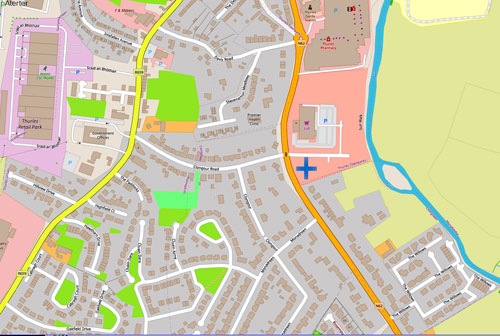
Site clearance works have begun in recent days to facilitate the construction of a drive-thru McDonald’s restaurant on Slievenamon Road, Thurles, Co. Tipperary — a development which has generated strong local reaction, particularly among homeowners living nearby.
According to information published by Tipperary County Council, the proposed works are scheduled to run from February 2nd, 2026 to July 8th, 2026.
A Blue Cross Marks The Spot.
The development is described as follows:
Development Type: Assembly and Recreation
Overview: Construction of a 478.8 sq. m. single-storey drive-thru restaurant, including:
Access from the existing access road serving the Lidl and Insomnia units to the north
Drive-thru infrastructure including a height restrictor and customer order points with canopies
Outdoor seating area
Corral area with bins and general storage
Plant and associated infrastructure works
All related site works above and below ground
“Over the moon”… apparently. While the development has been termed “controversial” by some, a number of local residents, particularly those with mortgages in the immediate vicinity, have been described as “over the moon” about the works, albeit in a tone that suggests the “moon” in question may be made of concrete, brake lights and late-night engine noise.
Speaking informally, several locals said they were “delighted” at the prospect of increased convenience food, traffic movements and, potentially, the sort of atmospheric ambience only a busy drive-thru can provide, especially at peak times.
In what residents stressed was “pure excitement”(and absolutely not weary sarcasm), some even expressed hope that the area could be further “enhanced” over time, with suggestions including an underground techno club, an industrial music venue, or a large-scale rave facility, should anyone (who needs to go to work in the morning), feel the neighbourhood needed more “vibrancy” after midnight.
Election season expectations: Others said they were eagerly looking forward to the next local and general elections, when they expect to have an opportunity to express, in their own words, their “genuine, sincere and unfeigned gratitude” to whoever they believe most deserves it.
For now, the diggers are in, the clearing has started, and residents say they will be watching the project closely, if only because it may become difficult not to.
Emergency Preparedness Booklet to be Delivered to every Irish household, with new guidance on Community Support Centres.
Every household in Ireland is set to receive an emergency-preparedness publication in the coming weeks, as Irish Government moves to strengthen national readiness for severe weather and other disruptive events.
Large tree blown over on the N62 close to Thurles Golf Club entrance, during Storm Éowyn, last January 2025. Picture: G. Willoughby.
The “household resilience” booklet, prepared by the Office of Emergency Planning (OEP) in the Department of Defence, will provide practical guidance for households on preparing for and coping with emergencies, particularly extreme weather events such as major storms and the potential loss of essential services including electricity, water, heat and communications.
The booklet’s publication follows a recommendation from the review group that examined Ireland’s response to Storm Éowyn, which struck on January 24th, 2025 and triggered nationwide red wind warnings. The Storm Éowyn review notes that 768,000 electricity customers lost power, with peak gusts reaching 184 km/h at Mace Head, and that disruption was particularly severe in remote and rural communities.
Uprooted tree at junction with Littleton and the N62, on Mill Road, to the rear of Thurles Golf Club, during Storm Éowyn, last January 2025. Picture: G. Willoughby.
According to reporting, the review group highlighted the importance of households having a clear checklist of actions to remain safe, warm, fed and hydrated during an extended outage, with practical steps aimed at helping families to manage disruption.
Community Support Centres guidance issued to councils.
In parallel, local authorities have been issued with guidelines for establishing Community Support Centres (CSCs) to provide the public with essential services when major outages and disruption occur.
The guidelines indicate CSCs may be set up in a range of premises, including sports halls, community centres, town halls and leisure centres, and list practical requirements such as a large main room, tables and chairs, a kitchen or food-preparation area, toilets, reliable Wi-Fi, and sufficient extension cables. Accessibility requirements and provision for private space for specific needs are also referenced.
Press reports are understood to indicate CSCs are not intended to be used as overnight rest facilities, and that a key operational requirement is that locations should be generator-ready (or capable of being made ready), with local authorities covering electrician costs and supplying generators.
An Oireachtas committee opening statement in late 2025 also referenced that a Guide to Community Support Centres is now in place for use by all local authorities.
Community groups across Tipperary are being invited to celebrate and showcase their local wetlands, following the appointment of Mr Darragh Kelly as Tipperary’s new Community Water Officer.
Mr Kelly has spent the past number of years working in the Environment Section of Kilkenny County Council and has said he is delighted to take on this new role, supporting communities to protect and enhance local waters and wetlands.
Coming from a farming background, Mr Kelly said he has a strong interest in the outdoors, including fishing and hiking, and is particularly fond of exploring Slievenamon.
World Wetlands Day — 2 February 2026. This year’s World Wetlands Day will be marked on Monday, 2nd February 2026, the International Day that commemorates the signing of the Ramsar Convention♦ on Wetlands.
♦ The Ramsar Convention(or Convention on Wetlands) is an International Treaty for wetland conservation, signed in Ramsar, Iran, in 1971, promoting the “wise use” of wetlands for sustainable development, especially for waterfowl habitats.
The 2026 theme is: “Wetlands and traditional knowledge: Celebrating cultural heritage”, highlighting the links between wetlands, communities, and the knowledge passed down through generations.
Funding now open for World Wetlands Day promotions. Mr Kelly has confirmed that the Small Grants and Events Scheme 2026 portal opened for applications on Monday, 19th January at 11.00am, specifically for World Wetlands Day promotion.
Groups and organisations are encouraged to make contact if they would like to organise an event to celebrate a local wetland — from guided walks and talks to school visits, clean-ups, wildlife sessions or community information events. Revised scheme guidelines for 2026 are also available.
How to apply. The information portal is now available HERE, so do get in touch. Anyone wishing to organise an event or looking for support is invited to contact Mr Kelly directly @ Darragh Kelly, Community Water Officer (Tipperary), Mobile: 085 8333383.
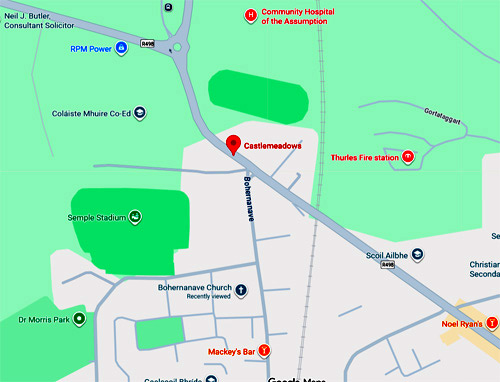
Tipperary County Council: Road Alert – Temporary Traffic Management on the R-498 at Castlemeadows, Thurles, Co. Tipperary.
From January 19th 2026 next until June 7th 2026, Temporary Traffic Management will take place on the R-498 at Castlemeadows, Thurles, Co. Tipperary and the junctions with Racecourse Road (L-4039) and Bohernanave (L-4027), Thurles, Co. Tipperary.
Same is to facilitate construction of the R-498 Castlemeadows Active Travel Scheme. The project will include the installation of cycle and pedestrian infrastructure to improve active travel connectivity along the R498.
The Active Travel Scheme is a government-supported initiative, primarily in Ireland, focused on developing infrastructure (like segregated cycle lanes, wider footpaths, new crossings) to encourage walking, cycling, and “wheeling” (scooters, skateboards) for purposeful journeys, aiming to boost health, cut congestion, and meet climate goals by making sustainable transport safer and more accessible. Key programs include the National Transport Authority (NTA), funding local authorities to deliver projects, and specific initiatives like the “Safe Routes to School Programme”.
Two way traffic will be maintained on the R498, with an intermittent Stop/ Go system being put in place. Commuters are warned to please expect delays.
From Ultra-Processed Foods To Hormone Residues: Food Safety, Public Health & Corporate Accountability Collide.
A landmark lawsuit filed by the City of San Francisco against major food and drink manufacturers has signalled a new phase in public health enforcement, one that treats diet-related harm not as an individual failing, but as a market and regulatory failure demanding immediate accountability.
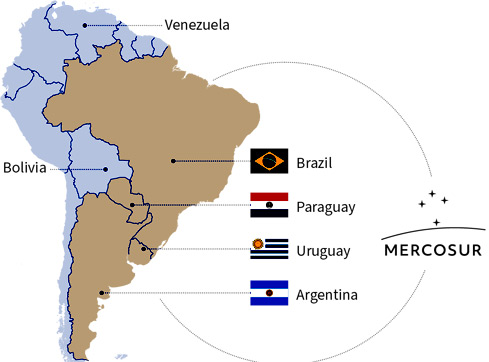
San Francisco alleges that ultra-processed foods were engineered and marketed in ways that encourage over-consumption, especially among children, and that the public ultimately pays the price through higher rates of chronic disease and spiralling healthcare costs. While that case will be tested in court, its wider message is already echoing across the Atlantic: Europe is facing its own “trust test” over what we allow into our food chain, particularly under the EU–Mercosur trade agreement.
Why this matters in Europe now: On 9 January 2026, EU member states greenlit the signature of the EU–Mercosur agreements, with the European Parliament’s consent still required before conclusion.
The European Commission states that EU rules apply equally to domestic and imported food, and that the agreement “upholds” EU food safety and animal/plant health standards.
However, confidence in “standards on paper” depends on something more basic: verifiable controls and traceability in practice.
Banned substances are not theoretical: recent Irish and EU recalls. The EU prohibits the use of hormones for growth promotion in farm animals. EFSA has also noted that ractopamine, a beta-agonist, is banned for use in food-producing animals in the EU and that the ban applies to meat produced in the EU and imported from third countries. Against that backdrop, Irish and EU reporting in recent weeks has documented the recall of Brazilian beef products after banned hormone residues were detected, including confirmation that a quantity entered the Irish market and was subject to official recall and follow-up.
The enforcement gap: what the EU’s own audit found. A 2024 European Commission DG SANTE audit of Brazil’s residue controls concluded that while many aspects of residue control plans were broadly consistent with EU principles, arrangements to guarantee that cattle destined for the EU market had never been treated with oestradiol 17β were “ineffective”. The audit stated the competent authority could not guarantee the reliability of operators’ sworn statements on non-use, and was not in a position to reliably attest to compliance with the relevant EU health certificate section.
This is the crux of the Mercosur anxiety: not whether Europe has rules, but whether Europe can consistently verify compliance, when supply chains are long, oversight differs, and commercial incentives are strong.
Ultra-processed foods and “addictive design”: the parallel problem. The San Francisco case centres on claims of deceptive marketing and products engineered to drive consumption. Meanwhile, the health evidence base around UPFs continues to expand. A major BMJ umbrella review reported that greater UPF exposure is associated with higher risk of adverse health outcomes, particularly cardiometabolic outcomes, across many studies. Controlled research has also shown that ultra-processed diets can increase calorie intake and weight gain compared with minimally processed diets under tightly controlled conditions.
The common thread is accountability: when products (or supply chains) are designed to maximise throughput and profit, public health cannot rely on consumer vigilance alone.
Calls to action Tipperary is now calling for a joined-up response that protects consumers, supports credible producers, and restores trust in our food chain: (1) A tougher “trust-but-verify” regime on imports). Full use of the EU’s Official Controls framework to ensure import compliance is proven through audits, sampling, and enforceable consequences, not assurances alone. (2)Mandatory transparency on audit findings and corrective action plans. Where EU audits identify weaknesses in residue controls or traceability, the public must see timelines, milestones and proof of remediation. (3)Stronger protections for children in the food environment. Restrictions on marketing tactics that normalise high-sugar, high-salt, heavily engineered foods to children—mirroring the direction of the San Francisco action. (4)Clearer front-of-pack information and health claims enforcement. Consumers should not need a chemistry degree to understand what they are buying, or whether “healthy” claims stand up. (5)A level playing field for farmers and processors meeting EU rules. Irish and EU producers operating under strict bans and controls must not be undercut by imports where verification is demonstrably weaker.
San Francisco has drawn a line under the era of ‘hands off’ regulation when public health harms are foreseeable and widespread. Europe is now at a similar crossroads. The EU–Mercosur debate cannot be reduced to tariffs and quotas: it is also about trust, enforcement and the credibility of our bans on hormones and other restricted substances. Public health must not be negotiated away, nor should consumers be asked to carry the risk.
This website uses cookies to improve your experience. We'll assume you're ok with this, but you can opt-out if you wish.AcceptRead More
Privacy & Cookies Policy
Privacy Overview
This website uses cookies to improve your experience while you navigate through the website. Out of these, the cookies that are categorized as necessary are stored on your browser as they are essential for the working of basic functionalities of the website. We also use third-party cookies that help us analyze and understand how you use this website. These cookies will be stored in your browser only with your consent. You also have the option to opt-out of these cookies. But opting out of some of these cookies may affect your browsing experience.
Necessary cookies are absolutely essential for the website to function properly. This category only includes cookies that ensures basic functionalities and security features of the website. These cookies do not store any personal information.
Any cookies that may not be particularly necessary for the website to function and is used specifically to collect user personal data via analytics, ads, other embedded contents are termed as non-necessary cookies. It is mandatory to procure user consent prior to running these cookies on your website.







Recent Comments