As Halloween approaches, communities are being reminded of the very real dangers associated with illegal fireworks.
Fireworks can cause devastating burns, serious eye and facial injuries, permanent damage to hands and fingers, and other life-changing injuries. Their unpredictable nature means they can ignite unexpectedly, explode while being held or carried, or become dangerous projectiles when thrown or placed on bonfires.
The impact goes far beyond the person using them. Sudden explosions can cause significant distress to older people, young children, people with disabilities and other vulnerable members of the community. They can also place additional pressure on firefighters, paramedics, Gardaí and other emergency services during an already busy period.
Animals can suffer greatly too. The loud and unpredictable bangs can cause extreme fear and anxiety for pets, horses, livestock, birds and other wildlife. Frightened animals may bolt, escape from homes or gardens, or injure themselves while trying to get away. For Guide Dogs, Assistance Dogs and other working dogs, the effects can be particularly serious. Fireworks-related trauma can affect a dog’s ability to work, potentially impacting the independence and mobility of the person who relies on them.
There can also be serious legal consequences. Illegal possession, supply and misuse of fireworks can result in prosecution. Certain offences can carry penalties of up to €10,000 in fines and five years’ imprisonment. Parents and guardians are encouraged to speak to young people about these risks and not to purchase illegal fireworks for them. Instead, enjoy Halloween safely by attending professionally organised and authorised fireworks displays in your local area.
Halloween should be memorable for the right reasons.Think before using fireworks. Protect yourself, protect animals, respect your neighbours and help keep your community safe.
Lyrics: American contemporary Christian music songwriter, singer, and worship pastor Cory Asbury, American country music songwriter Tom Douglas, and Grammy-winning Australian songwriter, producer, and drummer Paul Mabury. Vocals:Cory Asbury.
Cory Asbury.
There are some people we carry with us, no matter how far apart life may take us. The song hereunder is a beautiful reminder that goodbye doesn’t always have to mean the end; that we can entrust the people we love into God’s hands, hold them in our hearts, and look forward with hope to the day our paths will once again cross.
Until We Meet Again
Until We Meet Again.
May the road rise up to meet you, the wind be at your back, May the sun shine warm upon you, may there be nothing that you lack, And may your heart be forgiving even when they do you wrong, And let your lonely soul be filled with a song. Until we meet again, I know you’re in good hands, The road may wind, and the river, she bends, But I’ll hold you in my heart, Until we meet again. In this land of milk and honey, don’t forget the hungry child, Hey, man, it’s only money, love’s the one thing you can’t buy. May the rain fall soft upon your fields, bless the fruit of the vine, Heaven gather all your tears and turn them into wine. Until we meet again, I know you’re in good hands, The road may wind, and the river, she bends, But I’ll hold you in my heart, Until we meet again. Until we meet again. Let’s don’t say goodbye, Just say, “God speed”, my friend, Until we meet again, I know we’re in good hands. The road may wind, and the river, she bends. I’ll hold you in my heart, Until we meet again. Until we meet again.
Ms Maura Barrett Reports From Cashel Library, Co. Tipperary:
See below for list of library events happening in Cashel Library for the coming week – NOTE:All events are FREE, butthey do need to be booked with the Library – Tel: 062 63825 please, or by emailto maura.barrett@tipperarycoco.ie.
Monday September 28th: At 11:00am – Comhrá sa Leabharlann. Bain triail as do chúpla focal sa leabharlann Chaiseal Mumhan. Tá fáilte roimh gach duine. (Translation – Conversation in the Library. Try out your Irish at the Cashel Library. Everyone is welcome).
Monday September 28th: At 2:30pm – Learn English. Join our free conversational English classes in a friendly and welcoming environment.
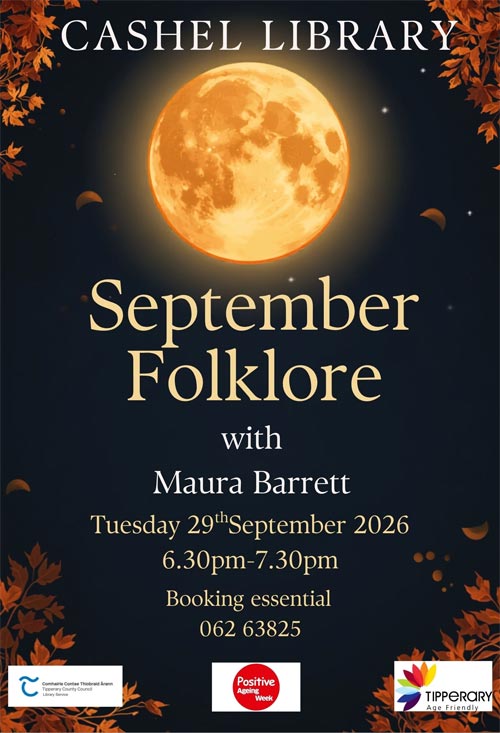
Tuesday September 29th: At 6:30pm – September Folklore with Ms Maura Barrett. Join us for our Positive Ageing Week talk on September in Folklore.
Wednesday September 30th: At 10:00am – Craft Circle – Join the Cashel Craft Circle every Wednesday from 10:00am–12:00pm for their social gathering.
Wednesday September 30th: At 12:30pm – Dance through the Decades – Chair Zumba Dance through the decades with Ms Eimear Byrne and her Chair Zumba class
Saturday October 3rd: At 10.30am; 11:45am and 2:00pm – “The King of Many Cloaks & Crowns“. A fun interactive story-time for children ages 3-5 years.
You canlocate Cashel Library building, situated on Friar Street, Lady’s Well, Cashel, Co. Tipperary, HERE. [Eircode E25 K798].
“Two roads diverged in a yellow wood, And sorry I could not travel both And be one traveler, long I stood And looked down one as far as I could To where it bent in the undergrowth;“
(Extract from poem “The Road Not Taken”, by the late Robert Frost, (1874-1963).
Wildflowers.
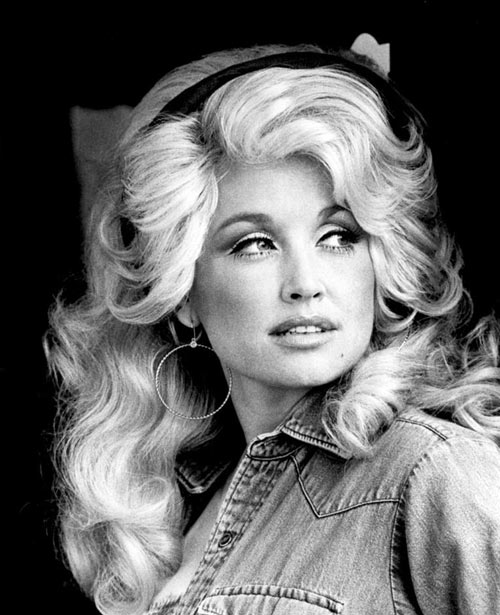
Lyrics and Vocals: American singer-songwriter, actress, and businesswoman, the late great Dolly Rebecca Parton Dean (née Parton)[1946 – 2026].
The Late Ms Dolly Parton.
Like Robert Frost’s poem above, Ms Dolly Parton’s song “Wildflowers” is also a gentle celebration of independence and the courage to seek and find a place where you can grow. Written by Ms Parton this song uses the image of a wildflower to explore leaving familiar ground and following your own road. Its central image offers a hopeful way of thinking about belonging. Sometimes, growth means venturing beyond the place where you began.
Wildflowers.
Wildflowers.
The hills were alive with wildflowers and I, Was as wild, even wilder than they. For at least I could run, They just died in the sun, And I refused to just wither in place. Just a wild mountain rose, Needing freedom to grow, So I ran fearing not where I’d go. When a flower grows wild, It can always survive, Wildflowers don’t care where they grow, And the flowers I knew, In the fields where I grew, Were content to be lost in the crowd. They were common and close, I had no room for growth, And I wanted so much to branch out, So I uprooted myself from my home ground and left, Took my dreams and I took to the road. When a flower grows wild, It can always survive, Wildflowers don’t care where they grow. I grew up fast and wild, And I never felt right, In a garden so different from me I just never belonged, I just longed to be gone, So the garden one day set me free. I hitched a ride with the wind, And since he was my friend, I just let him decide where we’d go, When a flower grows wild, It can always survive, Wildflowers don’t care where they grow. Just a wild rambling rose seeking mysteries untold, No regret for the path that I chose, When a flower grows wild, It can always survive, Wildflowers don’t care where they grow. Wildflowers don’t care where they grow.
A Possible Budget Leak – With Questions Still Unanswered.
Reports ahead of Ireland’s Budget 2027 suggest that all 16-year-olds could receive a €100 voucher for arts and cultural activities, with a possible extension to 17-year-olds in Budget 2028. The estimated first-year cost is €7.5 million. This remains a reported proposal, rather than a confirmed entitlement. Whether the announcement has emerged through a deliberate leak has not been established.
Helping young people experience culture most certainly is a worthwhile ambition. But taxpayers are entitled to ask what this particular measure would achieve, and whether another approach would achieve much more.
Cultural Spending on those aged 16 year does not automatically mean education A play, concert or creative workshop can spark an interest that can last a lifetime. Enjoyment and shared experiences have value also. However, redeeming a voucher does not prove that someone has learned something new or discovered an activity they would otherwise have missed.
France’s experience offers a warning. Its national auditors found that the ‘Culture Pass’ mainly reinforced established cultural habits, while its ability to broaden participation remained limited. Ireland should learn from that experience, before assuming a voucher will overcome barriers to culture. The test is whether the Government sets clear objectives, publishes the costs and commissions an independent evaluation. Success should mean reaching young people who currently miss out, not simply announcing how many vouchers were spent.
Could It Free Money For Alcohol or Drug Abuse? If a teenager already planned to buy a concert ticket, a voucher could leave their own money available for something else. But it would be unfair to assume that the money would go towards alcohol or drugs. It might pay for transport, food or savings. There is no evidence presented here establishing that this proposal would increase substance use. Will Ticket Prices Rise And Who Gets the Money? Extra purchasing power could put upward pressure on prices where popular events already sell out. At venues with empty seats, it could instead increase attendance without raising prices. Most popular bands on Tour entering Ireland already cost well over €100 Some spending could benefit wealthy performers, major promoters and ticketing platforms. Other spending could support local theatres, musicians and cultural organisations which command much less cost. The Government should monitor prices and publish where the money goes. Public subsidy deserves scrutiny even when the product being sold is culture.
Could €7.5 Million Expected Spend Achieve More Elsewhere? A comparison might be sustained music tuition, youth clubs, instrument lending, school cultural visits and transport for disadvantaged or rural teenagers. A voucher cannot solve the problem of having no accessible venue or no way to get there. Supporting participation may require people, facilities and transport as well as purchasing power. Poorer children deserve cultural opportunities too. The question is which approach gives them the most meaningful access.
“For Ye Have the Poor Always With You” The moral question remains relevant for Christians; does this prospective spending meaningfully help those excluded, or mainly subsidise those already well able to participate? Matthew 26:11 should be read in context; Jesus defends a woman’s anointing of him, with expensive perfumed oil, which he connects with his burial. We should not interpret it as permission to neglect poverty. Deuteronomy 15:11 (Second Law) acknowledges that poverty persists while calling for generosity towards those in need.
My Own Personal View: Let’s Test this Before Expanding It. I would support a limited, independently evaluated pilot, with extra support for disadvantaged teenagers and opportunities to take part in local creative activities. France’s experience shows why this matters. Its national auditors found weaker participation among young people from less advantaged backgrounds and questioned how far a primarily financial scheme could overcome existing inequalities.
Create Opportunities to Make and Perform To my mind the pilot should offer opportunities to learn an instrument, join a drama group, make a short film, try photography or attend a series of creative workshops. Taking part in an activity over several weeks offers a much better chance to develop skills,friendships and confidence. The pilot should test both approaches, while preserving young people’s choice. Here in Thurles Co. Tipperary, as in many other Irish communities, we already have organisations that could greatly inform this work. Music Generation, for example, supports local access to vocal and instrumental tuition for children and young people. Partnership opportunities should be explored, with funding for any additional places and teaching required.
Measure What Changes Because of the Support. The independent evaluation should ask:
Did teenagers start activities they would otherwise have missed?
Did the scheme reach those with the greatest barriers?
Did participation continue six or twelve months later?
What did participants learn, enjoy or find difficult?
What was the full cost, including administration, transport and additional support?
Did spending support local provision, and were there changes in prices or fees?
Researchers should record participation before any pilot and use a fair comparison, such as a phased rollout, to help distinguish the scheme’s effects from changes that would have happened anyway. They should also speak to teenagers who never used the offer or stopped attending. If the results are strong, expansion would have a credible foundation. If benefits mainly go to teenagers already participating, the scheme should be redesigned. Support would rest on a clear purpose; giving young people a fair chance to discover, enjoy and develop their creativity and showing that public money greatly helped make that possible.
Before expansion, the Government should demonstrate new participation, fair access and reasonable value for money.
This website uses cookies to improve your experience. We'll assume you're ok with this, but you can opt-out if you wish.AcceptRead More
Privacy & Cookies Policy
Privacy Overview
This website uses cookies to improve your experience while you navigate through the website. Out of these, the cookies that are categorized as necessary are stored on your browser as they are essential for the working of basic functionalities of the website. We also use third-party cookies that help us analyze and understand how you use this website. These cookies will be stored in your browser only with your consent. You also have the option to opt-out of these cookies. But opting out of some of these cookies may affect your browsing experience.
Necessary cookies are absolutely essential for the website to function properly. This category only includes cookies that ensures basic functionalities and security features of the website. These cookies do not store any personal information.
Any cookies that may not be particularly necessary for the website to function and is used specifically to collect user personal data via analytics, ads, other embedded contents are termed as non-necessary cookies. It is mandatory to procure user consent prior to running these cookies on your website.






Recent Comments