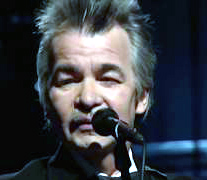
Lyrics and Vocals: The late American singer and songwriter of country-folk music John E. Prine (1946–2020)
John Prine.
One of the things that made John Prine such a wonderful songwriter was his ability to take something completely ridiculous and turn it into something funny, thoughtful, and strangely moving. The song hereunder came about because John was genuinely annoyed when scientists decided that Pluto wasn’t a planet any more. He figured Pluto had been doing a perfectly good job for years, and it seemed a bit unfair to suddenly demote the poor thing. But underneath the humour, there’s something deeper here about a world that’s always changing, people who think they know everything, and the comfort of having your own little place to escape to. Only John Prine could bring all that together in one song.
The Lonesome Friends of Science.
The Lonesome Friends of Science.
The lonesome friends of science say, “The world will end most any day”. Well, if it does, then that’s okay, ‘Cause I don’t live here anyway. I live down deep inside my head, Where long ago I made my bed. I get my mail in Tennessee, My wife, my dog, and my family. Now poor planet Pluto now, He never stood a chance no how, When he got uninvited to, The interplanetary dance. Once a mighty planet there, Now just an ordinary star, Hangin’ out in Hollywood, In some ol’ funky sushi bar. The lonesome friends of science say, “The world will end most any day”. Well, if it does, then that’s okay, ‘Cause I don’t live here anyway. I live down deep inside my head, Where long ago I made my bed. I get my mail in Tennessee My wife, my dog, and my kids and me. The Vulcan lives in Birmingham. Sometimes he just don’t give a damn. His head is full of bumblebees, His pride hangs down below his knees. Venus left him long ago, For a guy named Mars from Idaho. The Vulcan sent a wedding gift, Three-legged stool and a wheelchair lift. The lonesome friends of science say, “This world will end most any day”. Well, if it does, then that’s okay, ‘Cause I don’t live here anyway. I live down deep inside my head, Where long ago I made my bed. I get my mail in Tennessee My wife, my dog, my kids and me. Those bastards in their white lab coats, Who experiment with mountain goats, Should leave the universe alone, It’s not their business, not their home. I go to sleep and it never rains. My dog predicts hurricanes, She can smell a storm a mile away, That’s all the news we have today. The lonesome friends of science say, “The world will end most any day”. Well, if it does, then that’s okay, ‘Cause I don’t live here anyway. I live down deep inside my head, Where long ago I made my bed. I get my mail in Tennessee, My wife, my dog, my kids and me.
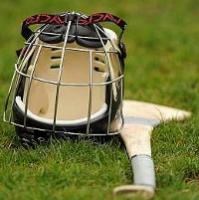
Thurles Sarsfields are back on top of Tipperary club hurling after an impressive eight-point victory over neighbouring rivals Moycarkey-Borris at FBD Semple Stadium. This victory brings a nine-year wait for county honours to an end, securing a remarkable 37th Tipperary Senior Hurling Championship title for the Thurles club.
In front of a crowd of 9,398, Pádraic Maher’s side delivered a commanding performance, combining clinical attacking play with outstanding defensive organisation.
Dream start for Sarsfields. The contest could hardly have begun better for Sarsfields, with Eoin Purcell finding the net just 11 seconds after throw-in. The lightning-fast goal immediately put Moycarkey-Borris on the back foot, and Sarsfields quickly established control. With Kieran Rossiter, Aidan McCormack and Purcell making their presence felt, the Thurles men raced into a 1-05 (8pts) to 0-01 (1pt) advantage. Moycarkey-Borris, appearing in their first county final since 1984, battled back when Joe Maher struck a fine goal in the 23rd minute. However, Sarsfields responded confidently and carried a commanding 1-12 to 1-05 lead into half-time.
Defensive steel seals the title. Moycarkey-Borris began the second half with renewed determination, with Joe Maher and Killian Cantwell reducing the deficit. But any hopes of a dramatic comeback were quickly extinguished. Paddy Creedon produced an excellent score to spark another dominant spell for Sarsfields, with Euan Murray and the outstanding Purcell adding further points.
At the other end, the Sarsfields defence remained disciplined and organised, repeatedly frustrating Moycarkey’s attempts to build momentum. One of the most memorable moments arrived when corner-back Paul Maher landed a superb point from near the Old Stand sideline.
There was also a huge reception for Tipperary captain Ronan Maher, who returned to championship action following his ankle injury and contributed a late free.
A special day for sarsfields veteran The triumph was particularly memorable for goalkeeper Patrick McCormack. At 42 years of age, the experienced netminder celebrated his ninth county senior hurling medal, having now started an extraordinary 15 county final encounters, including replays. His achievement reflects the experience and dedication that have helped Sarsfields bridge the gap between their previous championship-winning generation and this emerging team.
Purcell leads a new generation. Eoin Purcell’s excellent attacking display earned him Man-of-the-Match honours, while Pádraic Maher marked a major milestone in his managerial career, by guiding Sarsfields back to the summit of Tipperary hurling.
For Moycarkey-Borris, the defeat will be disappointing, but reaching their first county final in 42 years represents significant progress for the club. For Thurles Sarsfields, however, this was a day to remember. Nine years after their four-in-a-row success in 2017, the famous blue and white colours are once again flying proudly over Tipperary hurling. With county title number 37 secured, attention now turns towards the Munster Club Championship on November 15th next.
Referee: C. O’Donovan (Burgess).
Thurles Sarsfields: P McCormack; P. Maher (0-01), D. Maher, H. Fogarty; K. Loughnane, Conor Stakelum, Cian Stakelum; D. Rossiter (0-01), E. Murray (0-02); A. McCormack (0-04, 4f), D. Stakelum, A. Stakelum (0-02); E. Purcell (1-04), P. Creedon (0-01), K. Rossiter (0-03). Subs: S. Maher for H. Fogarty, J. Armstrong for S. Maher (Temporary), and for Cian Stakelum (Permanent), R. Maher for P. Creedon , T. Maher for A. McCormack and R. Stapleton for K. Rossiter.
Moycarkey-Borris: R. Shelly; K. Hayes, T. Hayes, T. Ryan; K. Cantwell (0-01f), E. Hayes, P. Molloy; S. Walsh, N. Heffernan (0-01); J. Maher (1-01), J. Egan, D. Costigan; M. Hackett (0-03), K. Morris (0-02, 2f), J. Hayes (0-03). Subs: P. Melbourne for T. Ryan, K. Cummins for P. Molloy, R. Darmody for N. Heffernan, K. O’Reagan for J. Hayes, B. Maher for T. Hayes and B. Flanagan for S. Walsh.
RTÉ’s TV Licence Crisis – Poor Programming, Lost Trust and a Public Asking Where Its Money Goes.
RTÉ is facing a growing crisis of confidence, and falling television licence revenue should be a wake-up call for both the broadcaster and the Government. New figures reveal that TV licence income fell by €5.7 million, during the first nine months of 2026, with 35,748 fewer licences sold compared with the same period last year.
But why are people turning away from the licence system? The financial controversies surrounding RTÉ have undoubtedly damaged public confidence. Questions about management; excessive costs; accountability and transparency; have left many licence payers questioning whether their money is being spent wisely.
Then there is the quality of television programming itself. Many viewers regard RTÉ’s regular television output as disappointing, with complaints about repeats, predictable entertainment formats, limited original programming and a lack of fresh ideas. While RTÉ still attracts substantial audiences for major sporting occasions, news and special events, that does not necessarily mean viewers are satisfied with its everyday television schedules. Critics believe the broadcaster should invest more in quality Irish drama, documentaries, investigative journalism, regional programmes, arts and culture, and fresh entertainment that reflects modern Irish society.
RTÉ also faces fierce competition from streaming platforms, which offer viewers extensive on-demand choice. Younger audiences in particular are increasingly moving away from traditional television. Yet Irish households with a qualifying television are still legally required to pay €160 annually, regardless of how often they watch RTÉ. The fundamental question is simple: Is RTÉ providing sufficient quality, choice and value for the money it receives?
The answer cannot simply be to pursue more people for unpaid licences or demand additional public funding. RTÉ needs to demonstrate meaningful reform, stronger accountability, responsible spending and a programming schedule that audiences genuinely want to watch. Public service broadcasting remains important to Ireland, but public funding must come with public accountability. Perhaps the biggest challenge facing RTÉ is not simply collecting the licence fee. It is rebuilding public confidence and convincing viewers that the service is worth supporting.
What do you think? Has the quality of RTÉ’s television programming declined, and does it still offer value for money?
The Irish Government has decided that RTÉ will receive €240 million in public funding in 2027 instead of the €260 million previously promised.
That statement raises two important questions: Is the Government justified in holding back the extra €20 million? And has RTÉ delivered the reforms it promised in return for such substantial public funding?
RTÉ Director General Mr Kevin Bakhurst strongly disagrees with the Government’s decision. He says RTÉ planned its future on the basis of a three-year Government funding commitment and that changing the figure at this late stage will affect its five-year strategy. And he has a point. But taxpayers are also entitled to look at what RTÉ promised to deliver in return. What happened to the promised staff reductions? One of RTÉ’s major reform commitments was to become a smaller and more efficient organisation. RTÉ’s strategy proposed reducing its workforce by up to 400 positions, roughly 20% of its workforce, over the five-year transformation programme. Its 2025 Voluntary Exit Programme was therefore an important first test. RTÉ received 325 applications from staff wishing to leave, and RTÉ itself said its target for 2025 was “over 100” exits under the voluntary scheme. What actually happened? Only 67 employees left through the Voluntary Exit Programme in 2025. RTÉ also abolished or “suppressed” another 30 posts, giving a headline figure of 97 positions removed.
But there is an important distinction. Sixty seven people actually left through the redundancy programme. The additional 30 were posts removed following other departures or organisational changes. Therefore, against RTÉ’s own stated target of more than 100 voluntary exits in 2025, only 67 were achieved. That means the actual redundancy programme delivered roughly two-thirds of its first-year target. And RTÉ still has a very considerable distance to travel if it is to achieve its overall ambition of reducing staff numbers by up to 400.
RTÉ’s own internal review subsequently acknowledged that the voluntary exit scheme failed to produce departures on the scale required. It found that the criteria were restrictive, the application period was too short and that, if the experience were repeated, RTÉ might have to make around 500 offers to achieve 300 exits. That surely strengthens the Government’s argument that the promised transformation has not progressed as quickly as expected.
What about RTÉ’s €22.5 million surplus?
RTÉ reported a €22.5 million surplus for 2025. At first glance that produces an obvious question: Why does an organisation reporting a €22.5m surplus need another €20m from Government? The answer is more complicated. RTÉ says some planned expenditure was postponed into 2026 and that part of the surplus arose from accounting adjustments rather than cash sitting unused. It also says €9.6 million resulted from the release of accounting provisions and accruals, so that portion should not simply be regarded as spare cash.
Nevertheless, taxpayers are entitled to ask:
Exactly which projects were postponed?
How much did each project cost?
How much of the €22.5m surplus represented genuine underspending?
And why isn’t that information presented in a simple, easily understood breakdown?
RTÉ receives much more than €240 million overall. There is another important point often overlooked in this debate. RTÉ does not operate on €240 million alone. In 2025 its total revenue was approximately €383.4 million. That included licence-fee income, additional Government funding and substantialcommercial income from advertising and other activities. So the €240m being discussed is RTÉ’s public-funding allocation, is not the broadcaster’s entire annual income. RTÉ operates television channels, radio stations, news services, RTÉ Player, digital services, regional reporting, Irish-language broadcasting, sport, drama, entertainment, documentaries and cultural programming. Nobody seriously suggests all of this can be provided for nothing. But when hundreds of millions of euro of public money are involved, the public is entitled to know exactly what it is buying.
Where is all the money going? There should be a straightforward annual statement telling taxpayers:
How much goes on staff?
How much goes on management?
How much goes on television and radio programmes?
How much goes on sports rights?
How much goes to independent producers?
How much goes on buildings and property?
How much goes on technology?
How much has actually been saved?
And crucially, How many of the promised redundancies and staff reductions have actually happened?
The Government certainly has questions to answer. It publicly committed itself to predictable multi-year funding and RTÉ understandably made plans on that basis, but RTÉ also made commitments. It promised a smaller, more agile organisation and proposed reducing staffing by up to 400 positions. In the first major voluntary redundancy programme, RTÉ sought more than 100 exits. Despite receiving 325 applications, only 67 people ultimately departed under that scheme. That cannot reasonably be described as the level of progress originally envisaged. Public funding should come with public accountability. So perhaps the real question is not simply whether RTÉ should receive €240m or €260m.
It is this: Before another €20 million of taxpayers’ money is handed over, shouldn’t RTÉ be required to show clearly how the money already provided has been spent, why its redundancy programme fell short of its own target, how it intends to achieve the promised reduction of up to 400 positions and exactly what measurable reforms the public/taxpayer is getting in return?
Two of County Tipperary’s most famous visitor attractions, Cahir Castle and the Rock of Cashel, have an unexpected connection to a new showbusiness love story after “The Wayfinders” co-stars Issy Knopfler(English television actress and producer) and Sam Buchanan(English television and film actor) announced their engagement.
Issy, the daughter of ‘Dire Straits’ legend Mark Knopfler, and actor Sam Buchanan met while working on the fantasy adventure series, which made extensive use of Ireland’s and Tipperary’s historic landscapes.
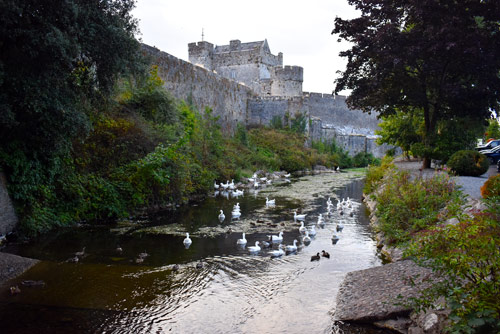
Cahir Castle.
Of particular interest to Tipperary is the fact that filming for “The Wayfinders” took place at Cahir Castle and beside the spectacular Rock of Cashel. The production also filmed around counties Limerick and Clare, using the Mid-West’s castles, woodland and ancient sites to create its medieval fantasy world. Battle scenes were among those shot in the Cashel area.
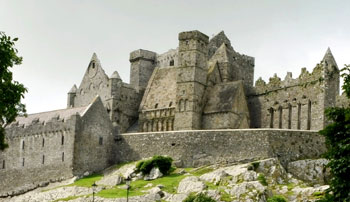
That gives two of Tipperary’s best-known tourist landmarks another screen credit. Cahir Castle, dramatically positioned on a rocky island in the River Suir, is one of Ireland’s largest and best-preserved medieval castles, while the Rock of Cashel is among the country’s most instantly recognisable historic sites. Their imposing towers, stone walls and remarkable settings make both natural choices for a fantasy production centred on a medieval world.
Rock of Cashel.
“The Wayfinders” follows three high-school students who are transported into a dangerous realm of swords, magic and monsters and must find a route home. Issy plays ‘Aurora’, while Sam stars as ‘Kavan’. Their working relationship developed into romance, and the couple have now revealed their engagement following Sam’s proposal during a romantic break. The announcement was made in early October 2026, two years after the pair first met while working on the series. Both actors were already familiar faces. Sam previously appeared as ‘Fitzy’ in EastEnders, while Issy’s television credits include “Silent Witness” and “Before We Die”. The couple have also moved behind the camera together, launching independent production company ‘Silent Knight Productions’, in November 2025.
For Tipperary, however, the story provides another reminder of the extraordinary screen potential of Cahir Castle and the Rock of Cashel; two historic attractions now forming part of the backdrop to a fantasy series and the real-life romance that grew from it.
This website uses cookies to improve your experience. We'll assume you're ok with this, but you can opt-out if you wish.AcceptRead More
Privacy & Cookies Policy
Privacy Overview
This website uses cookies to improve your experience while you navigate through the website. Out of these, the cookies that are categorized as necessary are stored on your browser as they are essential for the working of basic functionalities of the website. We also use third-party cookies that help us analyze and understand how you use this website. These cookies will be stored in your browser only with your consent. You also have the option to opt-out of these cookies. But opting out of some of these cookies may affect your browsing experience.
Necessary cookies are absolutely essential for the website to function properly. This category only includes cookies that ensures basic functionalities and security features of the website. These cookies do not store any personal information.
Any cookies that may not be particularly necessary for the website to function and is used specifically to collect user personal data via analytics, ads, other embedded contents are termed as non-necessary cookies. It is mandatory to procure user consent prior to running these cookies on your website.





Recent Comments