Archives

2009 – Peace, Happiness, Health And Prosperity

Some facts about New Year Celebrations:

  1. The celebration of  New Year is the oldest of all public holidays.
  2. It was first observed in ancient Babylon about 4000 years ago and was believed to be an eleven days celebration. The early Babylonian’s most popular resolution was to return borrowed farm equipment.
  3. The early Catholic Church condemned the festivities as pure paganism.
  4. January 1st.has been celebrated as a holiday by Western nations for only about the past 400 years.
  5. The tradition of using a baby to signify the new year was begun in Greece around 600 BC.
  6. Traditional New Year foods are also thought to bring luck. Many cultures believe that anything in the shape of a ring is good luck, because it symbolizes “coming full circle,” completing a year’s cycle.
  7. Dutch people believe that eating donuts on New Year’s Day will bring good fortune.
  8. The song, “Auld Lang Syne,”  is sung at the stroke of midnight in almost every English-speaking country in the world to celebrate the new year. At least partially written by Robert Burns in the 1700’s, it was first published in 1796 after Burns’ death. Early variations of the song were sung prior to 1700 and inspired Burns to produce our modern rendition.
  9. “Auld Lang Syne” literally means “old long ago,”
  10. Here in Thurles, New Year is a time for congregating  with family and close friends before midnight and seeing the new year arrive  in a spirit of togetherness, thus demonstrating  strength for the year ahead and what it may bring to each and everyone of us.

Auld Lang Synenewyear

Should auld acquaintance be forgot
and never brought to mind?
Should auld acquaintance be forgot
and days of auld lang syne?
For auld lang syne, my dear,
for auld lang syne,
we’ll take a cup of kindness yet,
for auld lang syne.

Should auld acquaintance be forgot
and never brought to mind?
Should auld acquaintance be forgot
and days of auld lang syne?
And here’s a hand, my trusty friend
And gie’s a hand o’ thine
We’ll tak’ a cup o’ kindness yet
For auld lang syne

From all at Thurles.Info, may we take this opportunity to wish you all , where ever you may be, a peaceful, happy, healthy and a prosperous New Year.

The World We live In – Some Interesting Facts

worldDid you Know?

  • The inhabitants of Uruguay are guaranteed free medical care because public hospitals are free of charge.
  • The Kingdom of Bhutan is a smoke-free country. In 2004, Bhutan became the world’s first country to ban smoking in public places and the selling of tobacco.
  • Andorra has no airport or rail network.  The only forms of public transport in Andorra are taxis and buses.
  • In the country of Oman, all cars are fitted with an alarm that sounds if the driver exceeds 120kn/h. (Gay Byrne take note.)
  • It was not until 1924 that Native Americans were awarded full citizenship in America.
  • Russia has the second highest level of immigration in the world.
  • Nepal is the only country in the world whose state religion is Hinduism.
  • On the Solomon Islands there’s no T.V. because the islanders feel T.V. could damage their culture.
  • Europe’s largest city is Moscow.
  • Nigeria is Africa’s biggest petroleum exporter.
  • In 2007 the world’s most expensive city was Oslo.
  • Approximately 85% of New Zealand’s indigenous plant species cannot be found anywhere else in the world.
  • It is now believed that the world’s oldest writing system originated in the area presently covered by Serbia, western Romania, southern Hungary and eastern Bosnia.
  • Cyprus is the warmest island in the Mediterranean. Its average summer temperature is 46°F.
  • The word “Asia” means “sunrise”.
  • Australia is the world’s flattest continent.

Slates Up – Making History Come Alive For Primary Students

‘Slates Up!” (ISBN: 9780950928944) enables pupils to discover what life was like in a nineteenth century primary school. It is a publication designed to support the 1999 Primary History Curriculum. It aims is to better equip teachers with true primary sources relating to schools in early nineteenth century Ireland.

A primary source is a piece of historical evidence that was created at the time to which it relates. The primary sources in ‘Slates Up!’ are from the little known archives of the famous Kildare Place Society, Rathmines, Dublin.

The Kildare Place Society (Society for Promoting the Education of the Poor in Ireland) was a pioneering charitable institution involved in early Irish education. It was founded in 1811 by a group or philanthropic men in Dublin, including Samuel Bewley of the Quaker (Society of Friends) merchant family and J.D. La Touche of the Huguenot banking family.

Reviews:

Dr Christopher Stray, Honorary Research Fellow at the University of Wales, Swansea wrote: “This book is an admirable and well-conceived teaching tool. The space taken up by questions to be answered by (modern) pupils, make it both more and less than a straightforward compilation of historical evidence. But anyone interested in the crucial detail of curriculum and teaching in the past would enjoy reading ‘Slates Up!’. To quote again from one of the posters it shows us: Oh! How pretty! Ah! How wise!’ “. (review in Paradigm: Journal of the Textbook Colloquium, Volume 3 Issue 2 July 2007)

In his review of ‘Slates Up’, Dr. Kenneth Milne the eminent Church of Ireland Historiographer wrote: “Good history teachers have long understood that we need to bring the subject to life for pupils if they are to engage with it. The Primary School Curriculum advocates an approach to the teaching of history that reflects the nature of history itself, in which documents play a vital part. But when educationalists encourage the use of documentary evidence in the classroom, teachers are sometimes at a loss to find suitable material for the purpose. Here it is, splendidly presented, and full of suggestions”.

John Fahy of Inis wrote: “This well-produced book enables pupils of today to act as real investigative historians as they explore the everyday educational experience of pupils at the beginning of the 19th century.  This is how history should be experienced, as exciting discovery of a past which has something to say to our present” (review in Inis No 15, Spring 2006).

Contents Overview:

‘Slates Up!’ includes a wealth of resources for teachers and pupils. The topics explored include:

An examination of a typical nineteenth century schoolhouse.
Lessons 19th century children experienced: spellings, mathematics, poetry, grammar and more!
Investigations explore rewards and punishments for 19th century primary pupils.
Guidelines and resources to assist the re-enactment of a typical 19th century school day.
Teachers’ guidelines and a wealth of pupils’ activity sheets.

This excellent publication is compiled by Thurles born Karen Willoughby B. Ed. and former pupil of the Ursuline Convent ,Thurles, Co.Tipperary, with consultant editors Valerie Coghlan, Geraldine O’Connor and Susan Parkes all lecturers at CICE and Trinity College Dublin

Slates Up! is well worth investing in, because all of the publication’s contents can be photocopied. Thus one copy can cater to the needs of multiple classes.

Where to Buy:

To purchase ‘Slates Up!’ go to www.cice.ie/AboutCICE/CICEPublications.aspx or www.readireland.ie

Presentation Secondary School Wins Europe Debate

Schools CompetitionThe Presentation Secondary School in Thurles has won the Tipperary heat of the European Schools Public Speaking competition which was recently held in Nenagh.

The Thurles school debated against Saint Mary’s Secondary School (Nenagh), Loreto School (Clonmel) and the Ursuline Convent (Thurles). The Presentation School emerged the overall winner of the county final of the National Forum on Europe Schools Debates.

The Presentation Secondary School will go forward to represent Tipperary in the Euro South Constituency Final in Cork City Hall on the 12th December.

The National Final is due to take place in St. Patrick’s Hall, Dublin Castle on 2nd March 2009.

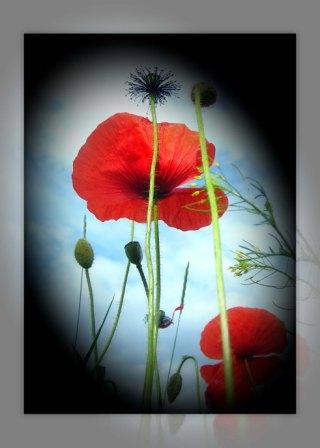
Poppy Sunday – If Ye Break Faith We Shall Not Sleep

The 11th November, each year, we remember our dead from the two Great World Wars, 1914-18 and 1939-45. This date is the day that World War I ended in 1918, and when the armistice was signed in Compiègne, Northern France, at 5am.  On the closest Sunday to this November date, we remember the dead in our Church ceremonies. This Sunday is known as Remembrance Sunday or Poppy Sunday.

It was on the 7th. November 1919, King George V first issued a proclamation which called for a two-minute silence, having read a letter published in the London Evening News of the 8th. May 1919, by a Melbourne journalist, Edward George Honey. It was Honey who first proposed a two minute silence in memory of those, who so willingly sacrificed their lives for the relative peace and freedom we enjoy today. The proclamation reads “All locomotion should cease, so that, in perfect stillness, the thoughts of everyone may be concentrated on reverent remembrance of the glorious dead”.

Thanks to research, first undertaken by a local Holycross resident Tom Burnell, we have been able to trace seventy two military personnel, born in the town of Thurles who gave their lives in World War One. Their names are now carved on a limestone wall, funded and erected by Thurles Urban District Council. Like most war memorials, that famous forth stanza, by war poet Laurence Binyon (1869 – 1943), taken from his poem ‘For the Fallen’, takes pride of place in the centre of all those named.

They shall grow not old, as we that are left grow old:
Age shall not weary them, nor the years condemn.
At the going down of the sun and in the morning
We will remember them.

As stated, Remembrance Sunday is also known as Poppy Sunday, because, since 1921, it is traditional for people to wear an artificial poppy in their lapel. Very few poppies are worn in Ireland mainly because of politicians, community leaders and press not being in possession of the facts and who fall short in attempts to ascertain truth. Indeed a recently aired programme by RTE One, last week, supports this former statement. Due to this misinformed debate many people in Ireland see the humble majestic poppy as a symbol of some kind of British Imperialism which of course it can never and will never be.

The poppy was first worn by an American, one Moira Michael. Moira wore the poppy in an act of remembrance. She bought some poppies, wore one, and sold others, raising money for ex-servicemen. Her colleague, French YMCA Secretary, Madame E. Guerin, greatly impressed with Miss Michael’s idea of the Flanders poppy as a badge of remembrance, decided that upon her return to France, she would sell handmade Flanders Poppies as a relief project for war orphans and poor children. Thus the red poppy, worn to keep faith and in remembrance of the War Dead, began in France. So where is the British Imperialism connection?. Perhaps it stems from the fact that the idea from these simple actions spread and the Royal British Legion, a charity dedicated to supporting war veterans and their families, began to offer these poppies for sale at no stated price, in November 1921, with total proceeds going to their worthy cause. Indeed many deserving Irish residents have reaped the benefits of this charitable work. To claim that the red poppy is associated with British Imperialism demonstrates only ignorance and greatly belittles the truth.

Poppy seed remains dormant deep within the soil until disturbed. On the Western Front this seed would have lain dormant for years, but the battles being fought in Flanders had churned up the ground bringing this seed to the surface. The most magnificent profusion of poppy bloom reported in World War One was in Ypres, a town in Flanders, Belgium, which then was so important to allied defences. It was also here that the new chlorine gas with which the Germans experimented, was first used. Disturbance of the soil brought forth the poppies in greatest abundance, thus inspiring a Canadian soldier, Major John McCrae,(1872-1918) to write his most famous poem “In Flanders Fields”.

Major John McCrae was a Canadian physician and fought on the Western Front in 1914. He was later transferred to the medical corps and assigned to a hospital in France. While on active duty he died of pneumonia in 1918, the final year of World War One.
Those of you who still remain unsure, for whatever reason as to what the poppy represents, please humour me, by reading this poem at least once.

In Flanders Fields
In Flanders fields the poppies blow
Between the crosses, row on row
That mark our place; and in the sky
The larks, still bravely singing, fly
Scarce heard amid the guns below.
We are the Dead. Short days ago
We lived, felt dawn, saw sunset glow,
Loved and were loved, and now we lie
In Flanders fields.
Take up our quarrel with the foe:
To you from failing hands we throw
The torch; be yours to hold it high.
If ye break faith with us who die
We shall not sleep, though poppies grow
In Flanders fields.