|
|
 S. Hennessey, Cloughjordan,with B. Seoige, Marketing Officer at NUI Galway Secondary school students interested in attending NUI Galway are invited to an information evening in Thurles Co Tipperary on Thursday, 14 April.
Parents and guardians are also particularly welcome to the event which runs from 7.00 to 9.00pm in the Anner Hotel, Thurles.
The evening will begin with short talks about NUI Galway and some of the 60 courses it currently offers students. Afterward, current students and NUI Galway staff will be on hand at information stands to answer any individual questions visitors may need to have further clarified.
Seamus Hennessy, from Cloughjordan, is currently studying Commerce with Accounting at NUI Galway and will be there on the night to answer some of your questions.
My thanks to Carol Ryan, who passed on this excellent idea to us from the Ambulance Service.
We all carry our mobile phones with names and numbers stored in its memory. If we were to be involved in an accident or were taken ill, the people attending to our needs, while having access to our mobile phone, wouldn’t know who to call. Yes, there are hundreds of numbers stored, but which one is the contact person in case of an emergency?
Hence this ‘ICE‘ (In Case of Emergency) Campaign.
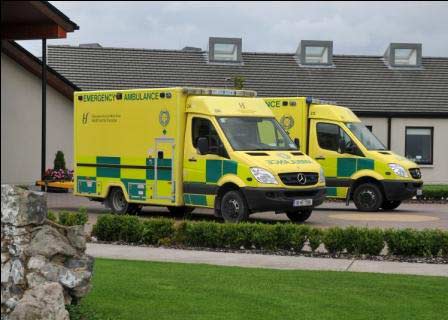 Ambulance Self Help The concept of ‘ICE’ is catching on very quickly. It is a method of contact during emergency situations. As mobile phones are carried by the majority of the population, all you need to do is store the number of a contact person or persons who should be contacted during emergency, under the name ‘ICE’ ( In Case Of Emergency).
The idea was thought up by a paramedic who found that when he went to the scenes of accidents there were always mobile phones with patients, but they didn’t know which number to call. He, therefore, thought that it would be a good idea if there was a nationally recognised name for this purpose.
In an emergency situation, Emergency Service personnel and hospital staff would be able to quickly contact the right person by simply dialing the number you have stored as ‘ICE‘. For more than one contact name simply enter ICE1, ICE2 and ICE3 etc
Please Email this advice from this site to all your friends. It really could save lives or put a loved one’s mind at rest.
Note: To all those with passwords on your phone. I have been informed there are stickers and iPhone applications that can remedy this situation.
Thanks Carol for pointing out this excellent, yet logical advice.
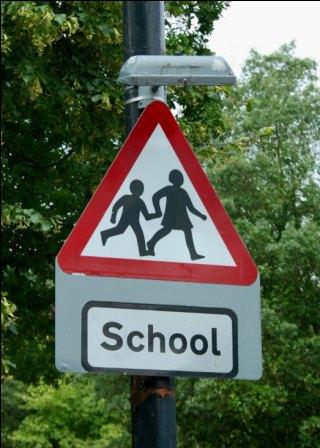 Summer Works Scheme A total of 21 Tipperary Schools, 10 of which are in North Tipperary, to date have benefited under the Summer Works Scheme, the closing date for receipt of applications for which was 21st January 2011.
The cost of engaging professional advice to prepare a technical report for such applications has to be met, in full, from a school’s own personal resources.
Local Schools to benefit are:- Two Mile Borris N/S Thurles, Borrisoleigh N/S, St Josephs College Borrisoleigh, St Anne’s Special needs School Roscrea and Scoil Naisiunta Na Maighne,Thurles.
For a list of successful projects under this 2011 Summer Works Scheme please Click Here
The purpose of the Summer Works Scheme is to devolve funding to individual school authorities to undertake small-scale building works which, ideally, can be carried out during the summer months or at other times, thus avoiding disruption to the daily operation of the school. Under the terms of the Scheme, school authorities are empowered to manage these works with guidance from, and minimal interaction, with the Department of Education.
Funding of €41.2m under the summer works scheme should see major improvements undertaken in primary and post primary schools around the country.
 Dr. Maria G. Hinfelaar, President LIT. Tipperary Institute, with a campus here in Thurles, Co. Tipperary has recorded a further impressive increase in student applications in 2011, following a record intake of students in 2010. Figures, recently released from the Central Applications Office (CAO) demonstrate this remarkable 32% increase in the colleges applications from students, applying for courses in the college, this year.
The Institute has recorded a mammoth 50% increase for first preferences for its courses and this increase comes despite a national reduction in overall applications to the CAO this year. The numbers of students accepting places at Tipperary Institute has now more than doubled over the last three years, making the local Institute one of the fastest growing third level colleges in Ireland.
Acting Tipperary Institute CEO, Michael O’Connell stated: “This rapid growth in our student applications reflects the growing profile of our innovative courses which will provide our graduates with a rich educational experience and real career prospects. It is particularly encouraging that applications for Tipperary Institute have grown so much this year even though overall numbers applying to CAO are marginally down. It is also encouraging that increasing numbers of local Leaving Certificate students are also choosing Tipperary Institute, where they know they will receive a recognised third level qualification and benefit from a great student experience, but without the costs associated with living away from home.”
Dr. Maria Hinfelaar, President of LIT has welcomed the news and states: “Tipperary Institute has been aligning with LIT since December 2009 and following a Government decision in June 2010 will integrate formally with LIT on 1st September.We are delighted with the progress being made by the soon to be LIT (Tipperary). We are closely collaborating on expanding the range of educational opportunities available across all our campuses, and will contribute to the social and economic development of the entire region. Mature learners continue to return to education in large numbers and applications from PLC students to Tipperary Institute have alone increased by some 20%. This year, the Institute will make more places available than ever before to cater for the growing demand for third level education locally.”
This fantastic growth in applications includes the BSc.(Hons) in Computer Games Design and Development, which had a bumper year with first preferences increased by 77%, while community based organisations has seen a 21% increase in applications for Tipperary Institute’s Social and Community Studies Degree.
Students Note: Tipperary Institute will accept late applications through CAO for all courses until May 1st and CAO applicants can also avail of the ‘Change of Mind’ facility until July 1st.
So for a quality third level education on your doorstep, without the heavy burden of accommodation costs to parents and tailored to your specific needs, look no further than Tipperary Institute!
For further information on courses, check Here or simply Tel: 0504 28072, or why not Email: amcbride@tippinst.ie
 Dyslexia Seminar in Thurles Rosaleen Durkin will be hosting a seminar titled “Practical strategies for dealing with dyslexia in children in educational environments” in the Tipperary Education Centre, Slievenamon Road, Thurles, Co. Tipperary.
This seminar will take place on Thursday 31st of March at 19:00.
While this seminar is targeted at Primary School Teachers ONLY, do please feel free to contact the Tipperary Education Centre if you are a parent or an SNA who would like to attend a similar seminar in the future.
This seminar will cover practical ideas for working with primary school children with dyslexia. The content covers a wide range of topics including whole brain learning, imagination, relaxation techniques, self-esteem issues, stress management, emotional balance, concentration and nutritional information.
For more information, please contact Tipperary Education Centre on Tel: 086-6008860 .
|
Support Us Help keep Thurles.info online by donating below. Thank you.
Total Donated 2026: €300.00
Thank You!
Daily Thurles Mass Livestream
|



Recent Comments