Archives

A Tipperary Contradiction That Needs Answers – What Happened Factual Backbone?

Funding the fallout, voting down the fix; a Tipperary contradiction that now needs immediate answers from elected representatives.

Tipperary is far from short when it comes to finding people with big hearts. You see it in the dog rescues and sanctuaries that keep going on often bare fumes, using volunteers who juggling jobs, families and fundraising, while trying to pick up the pieces for neglected animals nobody else will take responsibility.

So it lands badly, to put it mildly, when our county’s TDs can applaud welfare funding with one hand and, with the other, vote down a measure many people see as a basic line in the sand, when it comes to animal cruelty.

See Link Here: An act to amend the Animal Health and Welfare Act 2013 to ban the hunting of a fox or
foxes; and to provide for related matters
.

On Wednesday, December 17th 2025, Dáil Éireann rejected the Animal Health and Welfare (Ban on Fox Hunting) Bill 2025 at Second Stage, by 124 votes to 24.

Irish for a Fox – ‘Madra Rua (translates into english literally as “Red Dog”).
Sionnach also Irish word for “Fox”. Its etymology is sometimes linked to the word “shenanigans,” meaning “I play the fox”.

Was this an attempt by TDs at catching the farming vote?
The Bill aimed to outlaw the use of dogs to hunt or flush out foxes, and to prohibit trapping or snaring foxes in order to eradicate them.

In County Tipperary, the Dáil voting record was as clear as it was discomforting.

According to Tipperary local Press & Radio, Mr Séamus Healy was the only Tipperary TD to vote in favour of the Bill. Mr Mattie McGrath, Mr Michael Lowry, Mr Ryan O’Meara, and Mr Michael Murphy voted against the Bill. Mr Alan Kelly as usual sat on the fence, abstaining.

That’s not a “difference of emphasis”. That’s Tipperary’s Dáil delegation, overwhelmingly, either opposing the ban outright or declining to back it. And here’s where the contradiction bites: only days earlier, government announced what it described as the highest-ever allocation under the Animal Welfare Grants Programme, €6,434,803 to 94 charities nationwide.
Tipperary’s share, some of our elected representatives reported, was less than €134,000 across six groups this year; down from “just shy of €200,000” for same six groups granted funding last year.

The six Tipperary allocations named were:

  • Mo Chara Animal Rescue (Thurles): €38,000.
  • Roscrea SPCA: €37,650
  • Haven Rescue (Roscrea): €25,000
  • Great Hounds in Need (Kilcash): €12,000
  • Cappanagarrane Horse Rescue (Mullinahone): €11,175
  • PAWS (Mullinahone): €10,000, (down from over €76,000 last year according to local radio).

Let me be crystal clear: those groups deserve every cent and more. They are doing essential public-good work, rescuing, rehabilitating, rehoming, some educating.
But that is exactly why voters are entitled to ask a tougher question than the usual “aren’t the grants grand?” photo-op.

Why is “animal welfare” easy when it’s tidy, but difficult when it’s political?

Grants are safe. Everyone likes a grant. A minister gets to say “record funding”; a TD gets a local headline; the public gets to feel the county is decent and compassionate. And yes, to be fair, it is.

But fox hunting legislation forces a proper choice. Not a vague sentiment. A vote.

Supporters of the ban argue it’s simple: using packs of dogs to chase and tear apart a wild animal for sport, belongs in the past. Opponents dress it up as “rural reality” and “pest control”. Yet reporting on the Bill is clear on one crucial point: it would not have outlawed the shooting of foxes on one’s land for the purpose of protecting livestock.
This was not, in black-and-white terms, a proposal to leave farmers helpless. It was a proposal to stop a specific practice: using dogs to hunt, flush out foxes, before tearing them into pieces, and other certain killing methods by trapping/snaring.
So when four Tipperary TDs voted against it and one abstained, people are entitled to ask: what, exactly, are you defending and why?

“No” is not a policy. If the argument is that the Bill was flawed, then where is the alternative from our representatives?

  • Where is the concrete plan for stronger animal welfare rules that reduce suffering in practice, not just in speeches?
  • Where is the push for enforceable oversight, transparent standards, independent monitoring, real penalties?
  • Where is the willingness to say, publicly, that certain traditions don’t get a free pass any more because they are vote catching, loud, organised, or longstanding?

Because while Leinster House argues, it’s local communities that carry the consequences of a lax welfare culture, and the rescues that pick up the pieces. The same county that depends on Mo Chara, Roscrea SPCA, Haven, Great Hounds in Need, Cappanagarrane, and PAWS to cope with the everyday reality of neglect, abandonment and injury is being asked to accept political leadership that stops short the minute the issue becomes controversial.

A simple ask for 2026: explain yourselves.

Tipperary doesn’t need performative compassion. It needs consistency.
If you’re Mattie McGrath, Michael Lowry, Ryan O’Meara or Michael Murphy, tell people plainly why you voted against the ban, given it did not prevent farmers from shooting foxes to protect livestock.
If you’re Alan Kelly, tell people why you abstained when the county’s position was being written into the record.
And if you’re Séamus Healy, tell people what you think should happen next, now that the Bill has been defeated.

Here’s the call to action: contact your TD, not with slogans, but with two questions:

  1. If you oppose this ban, what specific alternative will you support to strengthen animal welfare in this area?
  2. Will you commit to voting for stronger protections the next time the issue comes before the Dáil?

Because funding the rescues is the right thing to do. But it is not enough to keep funding the fallout while voting down efforts, however imperfect, to reduce cruelty at source.

Sinn Féin Activist Among Three Held Following €4m Cocaine Seizure.

A Sinn Féin activist is reported to be among three people arrested following the seizure of an estimated €4 million worth of suspected cocaine during searches in the south east of the country.

Gardaí said the operation, involving the Garda National Drugs and Organised Crime Bureau and Revenue Customs, took place on Wednesday, December 17th, as part of Operation Tara targeting organised crime groups.
A business premises in Co. Kildare and a residential address in Co. Wexford were both searched, with officers seizing 58kg of suspected cocaine valued at approximately €4.06 million (subject to analysis).

Two men aged in their 30s and 40s and a woman in her 40s were arrested. Gardaí said they were detained under provisions of the Criminal Justice Acts in connection with alleged facilitation of drug trafficking for an organised crime group.

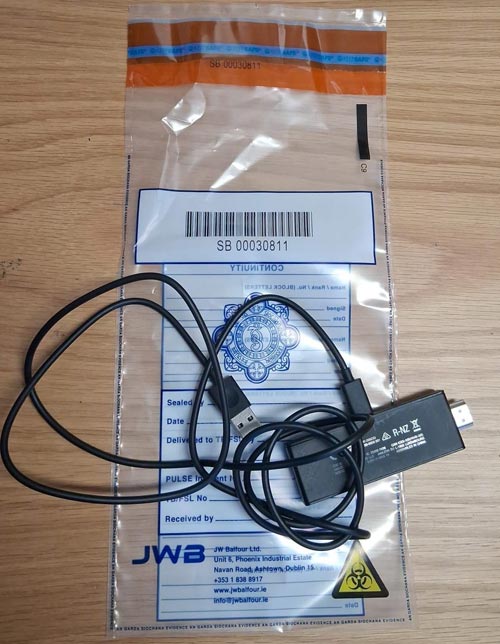
The suspected drugs are to be sent to Forensic Science Ireland, and investigations are continuing.

Bank Highlights Six Leading Fraud & Scam Trends Seen In 2025.

Fraudsters are becoming more sophisticated year on year, and scams are increasingly difficult to spot.
AIB is urging customers and the wider public to stay vigilant by knowing the warning signs and taking a moment to verify unexpected messages, calls and offers.

AIB’s Financial Crime Prevention team has outlined the six most common fraud and scam types observed during 2025, along with practical tips to help people protect themselves.

The six top fraud scams seen in 2025.
1) Smishing — text message fraud.
Fraudsters send convincing texts claiming to be from banks, delivery firms or government agencies, urging you to click a link, call a number, or share security codes.
Tip: Never click links or call numbers in unexpected texts. Contact the organisation directly using trusted contact details.

2) Safe account scams.
Scammers pose as bank staff and claim your account is compromised, pressuring you to move funds to a “safe” account that they control.
Tip: AIB will never ask you to move your money for security reasons. Hang up immediately.

3) Investment scams.
Fraudsters promise high returns to lure victims into fake schemes, often involving cryptocurrency, bonds or precious metals.
Tip: If it sounds too good to be true, it probably is. Seek independent financial advice before investing.

4) Romance scams.
Scammers create fake online identities to build emotional relationships, then ask for money or personal information.
Tip: Never send money or gifts to someone you haven’t met in person.

5) Money mule recruitment.
Criminals recruit people to move stolen funds through their accounts, often marketed as “easy money” jobs.
Tip: Never agree to transfer money for someone else or allow anyone to use your bank account — this is illegal.

6) Shopping scams.
Fraudsters create cloned websites or social media “shops” offering goods that don’t exist.
Tip: Stick to platforms you trust, check independent reviews, and ask: is the price too good to be true?

AIB help.
If you think you’ve been scammed, contact AIB immediately on the 24/7 fraud reporting line: 1800 24 22 27 (or +353 1 771 5639 from outside Ireland). You can also find further guidance and contact options in the AIB Security Centre.

Security reminder.
Unfortunately, some fraudsters send emails pretending to be from AIB.
Please remember:
AIB will never ask you to provide your Personal Access Code (PAC) by email or via links in an email.
AIB will never ask for Code Card or AIB Card Reader codes by email or via links in an email.
AIB will never ask you to provide debit or credit card details by email or via links in an email.

Treat unsolicited requests for money, codes or personal information as a red flagWait a Sec, Double Check.

Government To Publish Bill Allowing Garda Use Of Biometric Technology.

The Government is to publish new legislation that will allow An Garda Síochána to use biometric recognition technologies, including facial image analysis, in the investigation of serious crime; matters relating to State security and missing persons cases.

The Garda Síochána (Recording Devices) (Amendment) Bill 2025 will provide a clear legal basis for the retrospective analysis of images and footage already in Garda possession, such as CCTV and mobile phone recordings. The technology will allow Gardaí to sort, filter and compare relevant images far more quickly than is currently possible.

This move will save Gardaí thousands of work hours and speed up complex investigations where officers can currently spend months manually reviewing large volumes of footage. It is also expected to reduce the exposure of Garda members to distressing material, particularly in cases involving child sexual abuse and human trafficking.

The use of biometric analysis will be tightly controlled and operate only as an investigative tool, with no automated decision-making. All results will be reviewed by a trained Garda member, and use of the technology must be necessary and proportionate in each case.

The Bill also provides for a statutory Code of Practice, to be drafted by An Garda Síochána in consultation with stakeholders and approved by the Oireachtas. The Code will set out detailed safeguards, including strict data protection and human rights standards, and will be published to ensure transparency.

The Government has separately approved the drafting of a General Scheme to provide for retrospective and live biometric identification, in line with the EU AI Act, including for use in missing persons investigations and in protecting the security of the State and protecting those at risk.

Guilty Verdict In Murder of Kerry Pensioner Patrick O’Mahony.

A verdict has been delivered at the Central Criminal Court, sitting in Limerick, in the case of The People (DPP) v Mr Thomas Carroll.

Mr Thomas Carroll aged 67, with an address at Brookway, Clonmel, Co Tipperary, has been found guilty of the murder of 84-year-old Patrick O’Mahony at Ballyreameen, near Castlemaine, Co Kerry, on February 24th 2024.

Mr O’Mahony, a retired Defence Forces Captain and registered firearms dealer, was discovered dead at his home on that date. A post-mortem examination determined that he died as a result of haemorrhage and shock caused by a single gunshot wound, the bullet passing through his body.

Mr Carroll, a retired member of the Defence Forces, had pleaded not guilty to murder. A jury of eight men and four women began deliberations yesterday and resumed their considerations this morning, returning a unanimous guilty verdict, after a total of three and a half hours of deliberations.

The case had opened with evidence that Mr Carroll travelled from Co Tipperary to visit his long-time friend for the weekend, and that the two men socialised together in the days leading up to Mr O’Mahony’s death. The prosecution alleged that events between the friends “took a foul turn” and that Mr Carroll pointed a handgun at Mr O’Mahony with intent to kill or cause serious harm. It was further alleged that Mr Carroll’s initial account that his friend had suffered a fall was “self-serving”.

Sentencing has been adjourned to a later date, when victim impact statements from Mr O’Mahony’s family will be heard.