The Office of the Irish Attorney General has appointed a leading Senior Counsel to independently review the conviction of Tipperary farmer Harry Gleeson, 72 years after he was hanged. Justice Minister Alan Shatter has sanctioned a cold-case review following a request by Gleeson’s surviving relatives and friends, who have amassed what is believed to be new forensic evidence and which they believe will now clear Gleeson’s name.
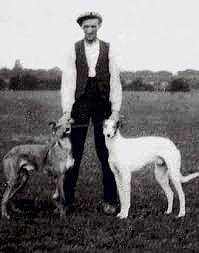 Harry Gleeson, a bachelor, whose favourite pastime was hare coursing, was found guilty of the murder of his neighbour, Mary (Moll) McCarthy, whose mutilated body he found on November 21st 1940, in a remote spot on his uncle’s farm near New Inn, Co Tipperary. Miss McCarthy had been shot twice, once in the face by her assailant or assailants .
A fresh pathologist’s report has been conducted which may undermine the prosecution’s case regarding the timing of the death of Miss McCarthy, who was decried from the altar by a local priest, because she was an unmarried mother.
The Justice for Harry Gleeson Group based at Dublin’s Griffith College, turned to the Irish Innocence Project, part of the global wrongful conviction organisation, to help strengthen its exoneration case. The Innocence Project, wrote to Mr Shatter last year seeking a pardon after reviewing Gleeson’s case.
Dean of Law at Griffith and director of the Irish Innocence Project Barrister David Langwallner stated that he believed the new evidence was now sufficient to establish that the Harry Gleeson case was a miscarriage of justice.
Previously this story was documented by the late broadcaster and journalist Cathal O’Shannon (1928 – 2011) in a TV series entitled “Thou Shalt Not Kill, ” back in 1995.
Henry “Harry” Gleeson was born in 1897 at the family homestead at Galbertstown Lower, Holycross, Thurles, Co. Tipperary. He was the ninth child of farmer Thomas Gleeson and Catherine (Maiden name Caesar). His parents were married in 1883 and had a family of 12 children. Harry went to work for his mother’s brother John Caesar, at Marlhill Farm, near New Inn. Harry’s younger brother Patrick would ultimately inherit Marlhill after John Caeser’s death, aged 83, in 1951.
According to a fictional Novel The Dead Eight by Carlo Gebler, Moll McCarthy’s story truly begins with her mother, who was reportedly a woman of ‘ill repute,’ and who sold sex to improve her impoverished lifestyle during a sojourn in Dublin city. Moll, her daughter, lived in a children’s home here in Thurles for the first sixteen years of life and was never acquainted with her actual father. Carlo Gebler paints Moll, like her mother, as somewhat of a promiscuous woman, even by the then standards of her time, having had numerous relationships with local men, both married and unmarried and also used these encounters to gain basic economic support, e.g. Unexplained Loads of Turf, Bags of Spuds, Groceries paid for at local shop etc..
“Foxy Moll’s” believed demise appears to have begun with a new discreet tryst with one Sergeant Anthony Daly, a married man, almost immediately upon his arrival to a new post at New Inn Garda station early in 1940. According to the novel Moll had been previously in a relationship with a local IRA activist, one Mr Johnny (JJ) Spink. He reportedly had possibly fathered her seventh and last child, latter who died as an infant and as with possibly previously relationships, this pregnancy appears to have ended her affair, due possibly to the scandal which almost certainly would have surrounded it.
Sergeant Daly’s then role in the Gardaí was to find and eradicate the remnants of the IRA who were still active in the Tipperary area. The Sergeant had been stationed at several locations over the course of his career and was notorious for the rough justice he had previously handed out. His now relationship with Moll presented a threat to Spink, who possibly feared that pillow talk might be passed on about the latter’s activities, thus this may have provided a motive for murder.
The novel suggests that Spink and two of his IRA associated brought Moll to a deserted house near Marlhill on the Wednesday evening, got her drunk, shot her and then planted her body where they knew Harry Gleeson would stumble on it the following morning. Spink then may have blackmailed Sergeant Daly, threatening to reveal his relationship with the deceased unless Sergeant Daly was prepared to frame Harry Gleeson. Sergeant Daly stands accused of coaching one of Moll’s sons to say that Harry Gleeson was the father of Moll’s last child and the whole case now pointed to Gleeson as having a motive for murder.
Early in 1941, Harry “Badger” Gleeson was convicted of Moll McCarthy’s murder. It appeared that justice had been done however everyone in New Inn was aware that Gleeson had never had a relationship with Moll McCarthy, they also knew that Moll McCarthy never had a child by him. Harry also had a cast iron alibi in the company of others. Her killer, as was also widely speculated on and was more than likely the father of her seventh child.
British Hangman Albert Pierrepoint (1905 – 1992) executed Harry Gleeson in Mountjoy jail in April 1941. Pierrepoint executed at least 433 men and 17 women during his time as a hangman.
A decision on a pardon, based on new believed evidence, is expected to be made within a matter of months.






Recent Comments