|
|
Ten suspected illegal IPTV resellers across Ireland have been served with legal warnings as authorities step up efforts to disrupt the sale and distribution of unauthorised television subscriptions.
The latest action by the Federation Against Copyright Theft and Sky targeted suspected operators in Carlow, Cork, Dublin, Kildare, Galway, Laois and Limerick.
The individuals were identified following investigations into services allegedly providing customers with unlawful access to premium television channels, films and live sporting events.
Cease-and-desist notices have instructed the suspected resellers to stop supplying illegal IPTV subscriptions immediately. Those who continue operating could face civil proceedings or be referred to An Garda Síochána.
The services are believed to have supplied thousands of customers. Users have also been warned that information held by illegal providers, including names, contact details and payment records, could potentially be identified during investigations and passed to the relevant authorities.
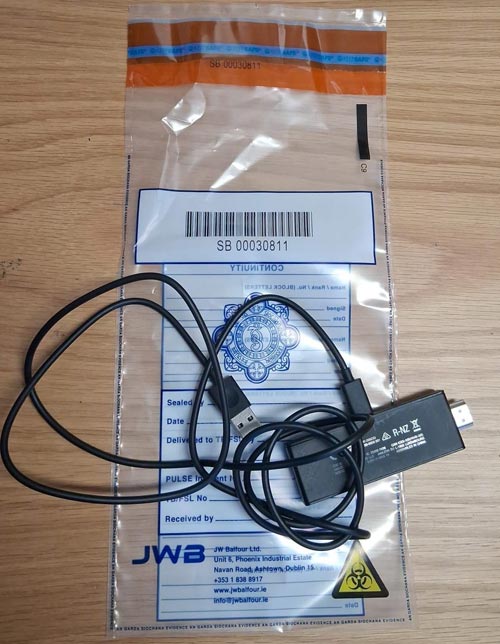
The action follows a Garda operation in Thurles, County Tipperary, in March. Gardaí searched a residential property as part of an investigation into suspected illegal streaming and money laundering offences. Electronic equipment was seized for examination and more than 500 accounts believed to be receiving illegal streaming services were shut down.
No arrests were made during the Tipperary search, but a file was being prepared for the Director of Public Prosecutions.
The latest developments show that enforcement is expanding beyond major suppliers to include local resellers and the customers connected to their services. Illegal IPTV operations are frequently promoted through social media, messaging applications and personal recommendations.
Authorities and broadcasters have also highlighted the risks associated with these services, including fraud, malware, theft of personal information, sudden loss of access and possible legal consequences.
The operation is part of a continuing nationwide campaign aimed at dismantling the networks that advertise, sell and distribute unauthorised television, film and sports content.
Ten charter deportation operations carried out from Ireland between February 2025 and June 2026 returned 377 people at a combined departmental cost of just over €3.9 million.
The flights, which travelled to destinations including Georgia, Nigeria, Pakistan, Romania, Poland, Lithuania and South Africa, involved 988 Garda escorts. Based on the Department of Justice’s detailed expenditure figures, the operations cost an average of approximately €10,355 for each person returned.
The figures were provided to the Oireachtas Public Accounts Committee by Department of Justice, Home Affairs and Migration Secretary General Doncha O’Sullivan in correspondence dated July 2nd, 2026.
The Department said escort numbers were determined by the assessed risks associated with each operation. Factors included the number of adults travelling, whether passengers had criminal backgrounds, the likelihood of resistance and the need to maintain a reserve team in case of injury, illness or another unexpected incident.
Garda escort leaders receive training through the EU border agency Frontex and follow its operational guidance. Their role is to ensure that forced returns are completed safely and professionally, with particular care required when children or family groups are among the passengers.
The largest Garda deployment was recorded on a flight to South Africa on February 28, 2026, when 133 officers accompanied 63 returnees. A further 119 Garda members escorted 34 people on a flight to Poland and Lithuania on May 24, 2026.
Aircraft charter costs accounted for most of the expenditure, totalling €3.55 million. The single most expensive operation was a South Africa flight on June 19, 2026, for which the aircraft cost €904,050.
Other departmental expenditure included almost €162,917 for doctors and paramedics, €106,348 for commercial return travel and €60,165 for flight-management services.
Additional charges of €21,740 included €8,653 associated with an emergency landing during a Nigeria operation in June 2025 and €13,087 for de-icing the aircraft used for a Poland and Lithuania flight in January 2026.
Each group was also accompanied by a human-rights observer. The observer service cost €36,307 for nine of the operations, with the cost relating to the most recent flight unavailable when the Department prepared its response.
Routine Garda escort duties are generally funded through the annual Garda budget. However, the Department has also awarded funding to the Garda National Immigration Bureau through the EU Asylum, Migration and Integration Fund to support non-EU deportation operations.
The funding agreement covers the period from January 2025 until the end of 2027. Two payments worth a combined €1.84 million had been made to the GNIB at the time of the Department’s correspondence. Eligible expenses include additional Garda pay, accommodation, travel, subsistence and interpreter services.
Up to 75 per cent of qualifying expenditure may be recovered through the EU fund. The Department expects the overall repayment to the Exchequer to be in the region of €3.45 million and is seeking reimbursement for eligible charter and commercial-flight costs.
Justice Minister Mr Jim O’Callaghan must surely deserve full support for refusing to abandon the Government’s new criminal legal aid payment system, simply because it has encountered organised opposition.
This reform replaces the previous payment-per-appearance arrangement with a flat fee of €520 for representing one accused person from the beginning to the conclusion of a District Court case. Under the former model, solicitors received €239.38 for an initial appearance and €59.86 for each subsequent hearing.
The minister’s central argument is reasonable; a public payment system should not financially reward cases for remaining before the courts longer than necessary. That does not mean solicitors deliberately seek adjournments. Court delays arise for many legitimate reasons, including difficulties with evidence, prosecution readiness and overcrowded lists. Nevertheless, the State is entitled to remove a fee structure that links additional payments directly to additional appearances.
The Department of Justice says the reform is intended to improve efficiency by paying one fee from the beginning to the end of a case. It also forms part of a wider Government commitment to restore and reform criminal legal aid fees.
Mr O’Callaghan has already demonstrated a willingness to compromise. The original proposed fee of €455 was increased to €520 before the new system took effect. This was a substantial movement by the minister and should be recognised by those accusing him of refusing to engage.
Ireland’s former criminal legal aid system, which paid solicitors an initial fee followed by another payment for each subsequent District Court appearance, differed from the more structured approach used in much of Europe. England and Wales generally use standard fees for categories and stages of lower-court work, Scotland combines fixed payments with scheduled and supplementary fees, while Germany regulates lawyers’ remuneration through statutory fee frameworks. Ireland’s new €520 payment for representation from the beginning to the end of a District Court case therefore brings the country closer to the European preference for case-based or fixed remuneration and removes the direct link between State payments and repeated adjournments. However, many European systems also provide supplements or separate assessment for unusually complex or demanding cases, suggesting Ireland should retain the reform while allowing additional payments in genuinely exceptional circumstances.
The concerns raised by solicitors should, of course, be taken seriously. The Law Society argues that a single payment may not adequately reflect cases involving numerous hearings or exceptional complexity. Its survey also indicated that many practitioners feared the model would make criminal legal aid work financially unattractive.
Those concerns justify continued monitoring and carefully targeted adjustments. They do not justify immediately reversing a reform before there has been sufficient time to assess its operation.
Withdrawing from legal aid panels and disrupting court business risks placing defendants, victims and the wider justice system under additional pressure. Public policy cannot be decided by whichever professional group can create the greatest disruption.
Mr O’Callaghan must be seen as therefore correct to keep the regulations in place while reviewing their impact. If unusually long or complicated cases require supplementary payments, sensible exceptions can be introduced.
But the basic principle remains sound; taxpayers should fund fair legal representation, not an outdated payment structure that can increase costs as cases are repeatedly adjourned. The minister is right to pursue greater efficiency and right not to surrender reform in response to political pressure.
Former Circuit Court judge Mr Gerard O’Brien has lost an appeal seeking to overturn his convictions for attempted rape and the sexual assault of six young men while he was working as a secondary-school teacher in Dublin during the 1990s.
Mr O’Brien, aged 61years with an address at The Old School House, Slievenamon Road, Thurles, Co Tipperary, was convicted by a Central Criminal Court jury in December 2023 of one count of attempted anal rape and eight counts of sexual assault. He had denied all nine charges.
During Garda interviews, Mr O’Brien initially denied the allegations. He later supplied prepared statements acknowledging sexual activity with two complainants but maintaining that it had been consensual.
He also admitted performing oral sex on another complainant, claiming that he had mistakenly believed the young man was consenting. However, he denied attempting to have anal sex with him.
The offences are understood to have occurred at locations in Dublin between March 1991 and November 1997, when Mr O’Brien was aged between 27 years and 33 years and teaching at CBC Monkstown. Four of the six complainants were students or former students of his. The men were aged between 17 years and 24 years when the offences took place.
Giving evidence at his trial, O’Brien said he initially lied to Gardaí because he felt ashamed and panicked at the possibility of being charged with a sexual offence. He accepted that allowing students to visit his home and share his bed had been inappropriate and should never have happened.
O’Brien’s appeal centred largely on the trial judge’s directions to the jury. His senior counsel, Mr Hugh Hartnett, argued that the instructions were confusing, unfairly weighted against the defence and capable of suggesting that the judge had formed a personal view of the evidence. The Court of Appeal however rejected those arguments.
Delivering the court’s decision, presiding judge Ms Tara Burns said the jury had been repeatedly reminded that all factual decisions, including whether O’Brien was guilty, were exclusively matters for its members.
The appeal court also rejected criticism of the trial judge’s warning that jurors should not enter a “parallel universe of make-belief”, when considering the evidence. Judge Burns said those remarks applied to all witnesses and were not directed solely at Mr O’Brien.
The court found no error in asking jurors to consider Mr O’Brien’s legal knowledge when evaluating his initial false account and his later prepared statements. Ms Justice Burns said his professional background could reasonably have influenced the jury’s assessment of those accounts.
Further grounds concerning the refusal to hold separate trials for the six complainants and the directions given about lies told by a defendant were also dismissed.As none of the grounds of appeal succeeded, the convictions were upheld.
Mr O’Brien resigned from the Circuit Court after his conviction. He had been appointed to the judiciary in 2015 but had been on leave after the allegations emerged.
On May 31st, 2024, Mr Justice Alexander Owens had imposed a sentence of five years and nine months, suspending the final 21 months. O’Brien therefore received an effective four-year prison term.
The sentencing judge said Mr O’Brien had been unsuitable to hold judicial office and criticised what he described as his tendency to blame others for his situation.
A 29-year-old Polish man has been sentenced to six years in prison after admitting responsibility for the manslaughter of his friend, Maciej Nowak, who died following a violent incident at a house in Co Tipperary on St Stephen’s Day in 2023.
Mr Tomasz Rozpeda, who had no fixed address, was sentenced at the Central Criminal Court after previously pleading guilty to manslaughter. He had originally faced a murder charge in connection with Mr Nowak’s death, which occurred on or around 26th or 27th December 2023, at Ballycranna, Kilross, near Tipperary Town.
The court heard that Mr Nowak, aged 32, suffered extensive injuries to his head and neck. A pathologist concluded that he died from blunt force trauma and that the injuries were not consistent with being self-inflicted. Medical evidence also indicated that Mr Nowak’s head had been struck repeatedly, either with an object or against a flat surface.
During the sentencing, Justice Ms Eileen Creedon said the violence involved was significant. The court was told that Mr Nowak sustained 27 separate injuries and bruises to his head and neck, while there were around 70 areas of bruising across his body.
Mr Rozpeda had contacted emergency services in the early hours of 27th December, telling the operator that his friend had “gone crazy” and was hitting things and himself. However, the later medical findings did not support that explanation. When ambulance personnel arrived at the house at approximately 5.02am, Mr Nowak was found lifeless on the kitchen floor.
Evidence before the court showed that the two men, who were friends, had arranged to spend time together over the Christmas period. CCTV placed Mr Rozpeda in the area on the afternoon of St Stephen’s Day, and the pair were later seen at a service station before returning to Mr Nowak’s home.
The court also heard that both men had consumed alcohol and drugs that evening. Although toxicology results showed a high level of amphetamines in Mr Nowak’s system, this was ruled out as the cause of death.
Mr Rozpeda initially denied involvement and gave Gardaí an account that investigators said contained a number of falsehoods. The court heard that he later contacted Mr Nowak’s fiancée and said he had put him in hospital.
In a victim impact statement, Mr Nowak’s fiancée, Ms Joanna Biszof, described the devastating effect of his death on her and her children. The court was told that Mr Nowak had been due to marry her on June 27th 2024.
Ms Justice Creedon set a headline sentence of nine years, taking into account the level of violence and the seriousness of the injuries. However, she reduced the sentence to six years after considering Rozpeda’s guilty plea, his apology, his acceptance of responsibility, and the fact that he had no relevant previous convictions in Ireland.
The sentence was backdated to 28th December 2023, the date Mr Rozpeda first went into custody.
|
Support Us Help keep Thurles.info online by donating below. Thank you.
Total Donated 2026: €300.00
Thank You!
Daily Thurles Mass Livestream
|






Recent Comments