The Central Statistics Office has released its Recorded Crime figures for Quarter 1 2026, covering incidents recorded in January, February and March.
The figures show a rather mixed picture. In the 12 months to Q1 2026, recorded crime incidents fell in 6 of the 15 main offence groups. The largest decreases were seen in Homicide & Related offences, Sexual offences, Burglary & Related offences, and Robbery, Extortion and Hijacking offences.
However, some offence groups continued to rise. The largest increases were recorded for Dangerous or Negligent Acts and Weapons & Explosives offences. The report also highlights an increase in victims of Assaults & Related offences. Female victims rose by 8% to 2,460 in Q1 2026 compared with Q1 2025, while male victims rose by 1% to 3,334. Overall, victims in this category increased by 4% to 5,794.
The CSO also advises caution when interpreting fraud figures. Current published figures for Fraud, Deception & Related offences include only incidents directly reported to An Garda Síochána by members of the public and recorded on the PULSE system. Certain referrals from financial institutions are still excluded while work continues on reporting and recording systems.
These statistics are important because they show recorded crime incidents, not necessarily the full level of crime in society. Some offences may be under-reported, particularly crimes such as fraud, sexual offences, and assault.
Rise In Assaults On Healthcare Workers Raises Urgent Safety Questions.
New figures show that 2,373 assaults against healthcare workers have already been recorded this year, including 23 sexual assaults.
The data, provided by the HSE, confirms that up to June 4th there were: ► 1,765 direct physical assaults. ► 585 verbal assaults. ► 23 sexual assaults. ► 103 incidents classified as “moderate”.
Thankfully, no incident so far this year has been classified as “major”, but that should not hide the seriousness of what frontline staff are facing every day.
A “moderate” incident can mean a significant injury requiring medical treatment, counselling, a report to the Health and Safety Authority, more than three days off work, or a hospital stay of several days. Healthcare workers should not have to accept violence, intimidation or sexual assault as part of their job.
One question that now needs to be examined more openly is whether alcohol and illegal drug use are contributing to some of these incidents. The current figures do not break down how many assaults involved intoxication, but the HSE’s own safety guidance recognises that people under the influence of alcohol or drugs can create sudden risks for staff.
If substance misuse is part of the problem, it must be part of the solution too, alongside safer staffing levels, proper security, better reporting, staff supports, and a zero-tolerance approach to violence in healthcare settings.
Our healthcare workers care for us in our most vulnerable moments. They deserve to be protected in theirs.
For more than four decades, the kidnapping of Shergar has stood as one of the darkest and strangest crimes in Irish racing history. The Derby-winning stallion, whose ten-length victory at Epsom in 1981 remains the widest winning margin in the race’s long history, was stolen from Ballymany Stud in County Kildare, on the night of February 8th, 1983.
Now Princess Zahra Aga Khan, daughter of the late Aga Khan, has spoken publicly about the trauma for the first time. Her account adds a chilling new detail; Shergar was not kept alive for a long ransom negotiation. She says he was killed within two days of being taken, and that his death was carried out “in an awful way.”
The ransom demand was £2 million, but it was never paid. Princess Zahra has explained that the decision was not as simple as one wealthy owner refusing to hand over money. Shergar had been syndicated, meaning the Aga Khan did not own him outright. The other shareholders had to be considered, and there was also a deeper moral question: if the money was going to the IRA, could it later be used against human beings?
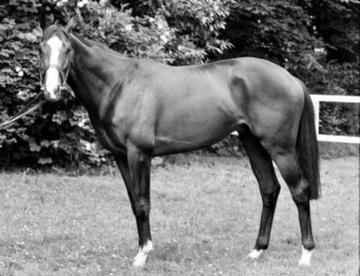
Shergar.
That question helps explain why the ransom was withheld. It was not just about money, insurance, or ownership structure. It was about refusing to fund violence. Shergar had not been insured against kidnapping. As Princess Zahra put it, who would ever have imagined that someone would kidnap a horse? Yet that is exactly what happened. Armed men broke into the stud, took the horse, and briefly abducted groom Mr Jim Fitzgerald, before releasing him. Shergar’s body to date has never been found.
The IRA has long been suspected of carrying out the kidnapping. The commonly accepted version is that the operation was amateurish and badly planned. The kidnappers were prepared for a ransom demand, but not for the reality of handling a valuable, nervous, full-grown thoroughbred stallion. Shergar was a national symbol of Irish breeding and racing, but to the gang that took him, he seems to have been a fundraising target they did not know how to control.
This is where Mr Sean O’Callaghan (Irish Republican Army’s Southern Commander) enters the story. Mr O’Callaghan was a former Provisional IRA member who later became an informer for the Gardaí. In later accounts, he claimed the Shergar plot was an IRA fundraising operation that went wrong almost immediately. His version was that the kidnappers could not manage the horse, that Shergar panicked, and that he was killed shortly after being taken. Princess Zahra’s new account appears to strengthen the general outline that Shergar died early in the abduction rather than after a prolonged captivity.
In 2008, The Sunday Telegraph reported claims from another IRA member that Shergar was killed after a planned vet failed to appear and the ransom was not paid. With Gardaí searches making release difficult, allegedly decided it was too risky to let the horse go and ordered him shot four days after the kidnapping. The source said two men entered the stable, one with a machine gun, and Shergar died a violent, bloody death.
“There was blood everywhere and the horse even slipped on his own blood. There was lots of cussin’ and swearin’ because the horse wouldn’t die. It was a very bloody death.”
But Mr O’Callaghan’s role also raises an important political point: what, if anything, is the Sinn Féin connection? The true Sinn Féin connection is not that Sinn Féin has been proved to have ordered or carried out the Shergar kidnapping. No such proof has been established, and no one was ever convicted over Shergar’s disappearance. The documented Sinn Féin connection is Mr Sean O’Callaghan himself. He was not only a former IRA figure and later informer; he was also elected in 1985 as a Sinn Féin councillor in Tralee, County Kerry. That means one of the best-known sources for the IRA account of Shergar’s death, had a real political connection to Sinn Féin.
That distinction matters. Sinn Féin was widely regarded during the Troubles as the political wing of the republican movement, while the Provisional IRA was the armed organisation. The two were closely associated in public perception and republican politics, but they were not the same legal entity. So the accurate statement is this: the Shergar kidnapping has long been attributed to the Provisional IRA, and one of the key later sources on the alleged IRA role, Mr Sean O’Callaghan, was also a Sinn Féin councillor. That is the real Sinn Féin link personal, political, and historical, not a proven party role in the crime itself.
Princess Zahra’s comments bring the story back from conspiracy and folklore to its human and moral core. Shergar was not an abstract symbol, a ransom asset, or a political bargaining chip. He was a remarkable animal, described by those who knew him as kind and gentle, and he was killed because criminals tried to turn him into money.
The tragedy is sharpened by what he represented. Shergar was one of the greatest racehorses of his generation, a symbol of Irish racing excellence, and a source of national pride. His kidnapping was not only a blow to the Aga Khan’s family and racing operation; it was an act that shocked Ireland and Britain because it violated something people regarded as beyond politics.
More than forty years later, the essential facts remain grim. Shergar was kidnapped. A ransom was demanded. The money was not paid, partly because it could have funded violence. The IRA has long been suspected. Mr Sean O’Callaghan, a former IRA man, Garda informer, and later Sinn Féin councillor, gave one of the most influential accounts of what happened. Princess Zahra has now added that Shergar was killed within two days, and in a terrible way.
Shergar’s remains have never been recovered. His killers were never brought before a court. But the latest account from Princess Zahra makes one thing clearer than ever; the kidnapping was not a clever political operation. It was a cruel, bungled crime that destroyed one of racing’s greatest horses.
History does not repeat itself exactly, but it often rhymes in the ways hatred is excused, renamed, or redirected.
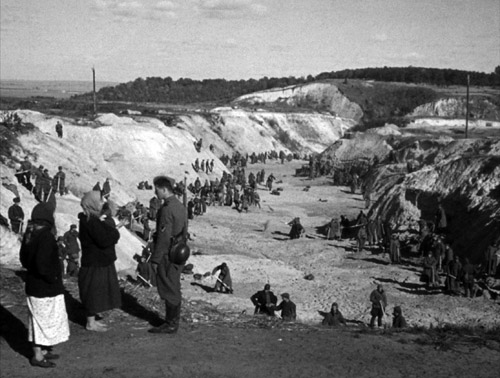
In the autumn of 1941, a ravine on the edge of Kyiv became one of the most devastating killing sites of the Holocaust. German forces had occupied the city on September 19th, and within days the Nazi campaign of persecution turned into mass murder. Notices appeared ordering Kyiv’s Jews to report with documents, clothing, money, and valuables. Many believed they were being deported or resettled. Instead, they were being led to Babi Yar.
On September 29th and 30th, Jewish families moved through the city in long, fearful columns. Parents carried children. Elderly people walked beside relatives. Others brought small bundles containing whatever remained of their lives. At the ravine, they were stripped of their possessions and clothing, forced toward the edge in groups, and shot. In only two days, 33,771 Jewish men, women, and children were murdered there, making Babi Yar one of the largest single massacres of the Holocaust.
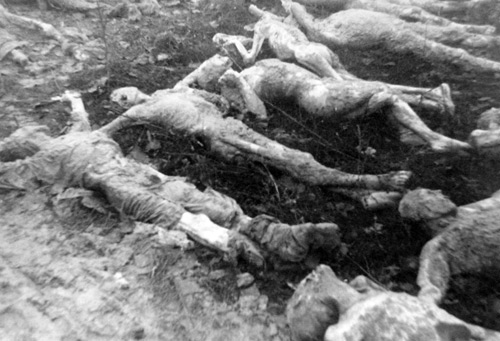
Section of bodies photographed at the mass grave in Babi Yar, Ukraine, by Soviet researchers, three years later in 1944.
The killing did not end with those two days. During the Nazi occupation, Babi Yar continued to be used as an execution site. Jews who had survived or hidden were later brought there and killed. Soviet prisoners of war, Roma people, resistance members, civilians, and others targeted by the occupiers were also murdered in or near the ravine. What had once been a natural landmark became a mass grave and a symbol of the “Holocaust by bullets,” the campaign of open-air shootings carried out across Nazi-occupied Eastern Europe.
After the war, Babi Yar’s memory was itself subjected to silence. Under Soviet rule, public commemoration often avoided naming the Jewish victims specifically, presenting the dead mainly as Soviet citizens. For survivors, relatives, and historians, this omission deepened the wound. The ravine held not only the bodies of the murdered but also a history that official memory struggled to acknowledge.
Soviet POWs being used by Germany to cover the mass grave after the massacre, on October 1st 1941. Pic: Johannes Hähle.
Today, Babi Yar stands as a place of mourning and warning. Its story reveals how quickly ordinary streets can become routes to destruction when hatred is organised by the state and human beings are reduced to targets. Behind the number 33,771 were families, neighbours, children, workers, students, grandparents, and entire communities whose lives were ended together at the edge of a ravine. To remember Babi Yar is to restore their humanity against the machinery that tried to erase them.
That silence also speaks to the present. History does not repeat itself exactly, but it often rhymes in the ways hatred is excused, renamed, or redirected. Anti-Semitism rarely begins with violence at the edge of a ravine. It begins with language that turns Jews into a collective blame, with suspicion cast over Jewish identity, with the idea that Jewish fear is exaggerated, or that hostility toward Jews can be justified by events elsewhere. In Ireland today, where public feeling about Israel and Gaza is often intense, there must still be a clear moral line; criticism of any government is legitimate, but blaming Irish Jews for the actions of the Israeli state, intimidating Jewish people, distorting Holocaust memory, or treating Jewish belonging as conditional is antisemitism.
To remember Babi Yar is therefore not only to look back at 1941, but to ask what kind of society we are becoming now. The lesson is not that today is the same as then; it is that dehumanisation must be challenged long before it becomes catastrophe. A country can defend Palestinian lives and rights while also defending Jewish safety, dignity, memory, and belonging.
The measure of moral seriousness is whether we can hold both truths at once, refusing to let grief for one people become hatred of another.
If Irish political leaders from Sinn Féin and the Social Democrats want to speak about justice, human rights and moral responsibility, then they should be willing to condemn all terror, including Hamas’s terror against Palestinians, with the same force.
For years, too many people including members of Sinn Féin have labelled the present Hamas as “freedom fighters,” as if brutality becomes noble when it is wrapped in political language. But a new United Nations report makes the reality impossible to ignore: Hamas does not only terrorise Israelis. It terrorises Palestinians too.
The UN Independent International Commission of Inquiry has now documented a pattern of executions, torture, maiming and public punishment inside Gaza. This is not Israeli propaganda. This is not rumour. This is the United Nations describing Palestinians as “victims of all sides,” trapped between mass atrocities, repression and armed groups willing to rule through fear.
According to the report, the Commission identified 249 cases of executions and severe physical violence in Gaza during 2024–2025, resulting in at least 108 deaths and 384 injuries. The report says Hamas-affiliated forces were involved in at least 60 incidents, including public executions and brutal punishments carried out in front of communities.
The details are horrific. Men were reportedly blindfolded and shot in public squares. Others were beaten with metal pipes. Bones were deliberately broken. Victims were kneecapped, maimed, humiliated and punished in ways designed not only to injure the individual, but to send a message to everyone watching: obey, or this could be you.
The UN report describes these acts as amounting to the “war crimes of murder and torture.” That sentence should stop everyone in their tracks. Public executions are not justice. Beatings with metal pipes are not resistance. Breaking the bones of Palestinians in the streets of Gaza is not liberation. It is terror. And it matters that these crimes were carried out publicly. The Commission itself expressed alarm at the “severity and public nature” of the violence. Public punishment is a political tool. It is designed to spread fear, silence dissent, intimidate rivals, and remind ordinary civilians that the armed men are in control.
This is the truth many Irish people have refused to face: Hamas’s cruelty is not reserved for Israelis. It extends to Palestinians living under its rule. Palestinians in Gaza have been used as human shields, denied political freedom, exposed to ruinous wars, and now, according to the UN’s own findings, subjected to executions and torture by Hamas-affiliated forces. None of this reduces the suffering of civilians in Gaza. It explains part of it. Palestinians are not served by pretending Hamas is a heroic movement. They are betrayed by that lie.
The UN has now put more evidence on the record. The question is whether those who excused Hamas for years will finally listen. There is no freedom in being dragged into a square and shot. There is no dignity in being beaten with pipes. There is no liberation in broken bones. Hamas is not a movement of freedom. It is a movement of fear.
A genuine concern for Palestinian lives must include concern for Palestinians abused by Hamas. A genuine defence of human rights must condemn torture whether the victim is Israeli or Palestinian. A genuine commitment to justice must reject the fantasy that armed extremists become moral actors simply because they claim to speak for an oppressed people. Hamas has shown the world what it is through its actions: massacre, hostage-taking, repression, torture and public executions. It has brought misery to both Israelis and Palestinians alike.
That is why the latest Dáil debate on Ireland’s fixtures against Israel should trouble anyone who cares about moral consistency. Sinn Féin and the Social Democrats pushed motions aimed at stopping the Ireland-Israel matches and seeking Israel’s exclusion from international sport, but the Dáil rejected those proposals after Government amendments stated that the fixture is a matter for the Football Association of Ireland, not Government. The amended motions passed by 81 votes to 68.
The FAI is now considering whether the October 4th fixture should go ahead in Dublin or be moved to a neutral venue, with Hungary reported as a possible alternative, subject to UEFA approval. But the wider question remains: why is there such political energy devoted to isolating Israel from sport, while far less attention is paid to the UN’s own findings that Hamas-affiliated forces have executed, tortured and maimed Palestinians in Gaza?
If Irish political leaders want to speak about justice, human rights and moral responsibility, then they should be willing to condemn all terror, including Hamas’s terror against Palestinians, with the same force.
The Dáil vote at least recognised that sporting fixtures are not for Government to dictate, but the debate also exposed how often the crimes of Hamas are treated as secondary, even when the victims are Palestinians themselves.
This website uses cookies to improve your experience. We'll assume you're ok with this, but you can opt-out if you wish.AcceptRead More
Privacy & Cookies Policy
Privacy Overview
This website uses cookies to improve your experience while you navigate through the website. Out of these, the cookies that are categorized as necessary are stored on your browser as they are essential for the working of basic functionalities of the website. We also use third-party cookies that help us analyze and understand how you use this website. These cookies will be stored in your browser only with your consent. You also have the option to opt-out of these cookies. But opting out of some of these cookies may affect your browsing experience.
Necessary cookies are absolutely essential for the website to function properly. This category only includes cookies that ensures basic functionalities and security features of the website. These cookies do not store any personal information.
Any cookies that may not be particularly necessary for the website to function and is used specifically to collect user personal data via analytics, ads, other embedded contents are termed as non-necessary cookies. It is mandatory to procure user consent prior to running these cookies on your website.



Recent Comments