|
|
The Government is to publish new legislation that will allow An Garda Síochána to use biometric recognition technologies, including facial image analysis, in the investigation of serious crime; matters relating to State security and missing persons cases.
The Garda Síochána (Recording Devices) (Amendment) Bill 2025 will provide a clear legal basis for the retrospective analysis of images and footage already in Garda possession, such as CCTV and mobile phone recordings. The technology will allow Gardaí to sort, filter and compare relevant images far more quickly than is currently possible.
This move will save Gardaí thousands of work hours and speed up complex investigations where officers can currently spend months manually reviewing large volumes of footage. It is also expected to reduce the exposure of Garda members to distressing material, particularly in cases involving child sexual abuse and human trafficking.
The use of biometric analysis will be tightly controlled and operate only as an investigative tool, with no automated decision-making. All results will be reviewed by a trained Garda member, and use of the technology must be necessary and proportionate in each case.
The Bill also provides for a statutory Code of Practice, to be drafted by An Garda Síochána in consultation with stakeholders and approved by the Oireachtas. The Code will set out detailed safeguards, including strict data protection and human rights standards, and will be published to ensure transparency.
The Government has separately approved the drafting of a General Scheme to provide for retrospective and live biometric identification, in line with the EU AI Act, including for use in missing persons investigations and in protecting the security of the State and protecting those at risk.
A verdict has been delivered at the Central Criminal Court, sitting in Limerick, in the case of The People (DPP) v Mr Thomas Carroll.
Mr Thomas Carroll aged 67, with an address at Brookway, Clonmel, Co Tipperary, has been found guilty of the murder of 84-year-old Patrick O’Mahony at Ballyreameen, near Castlemaine, Co Kerry, on February 24th 2024.
Mr O’Mahony, a retired Defence Forces Captain and registered firearms dealer, was discovered dead at his home on that date. A post-mortem examination determined that he died as a result of haemorrhage and shock caused by a single gunshot wound, the bullet passing through his body.
Mr Carroll, a retired member of the Defence Forces, had pleaded not guilty to murder. A jury of eight men and four women began deliberations yesterday and resumed their considerations this morning, returning a unanimous guilty verdict, after a total of three and a half hours of deliberations.
The case had opened with evidence that Mr Carroll travelled from Co Tipperary to visit his long-time friend for the weekend, and that the two men socialised together in the days leading up to Mr O’Mahony’s death. The prosecution alleged that events between the friends “took a foul turn” and that Mr Carroll pointed a handgun at Mr O’Mahony with intent to kill or cause serious harm. It was further alleged that Mr Carroll’s initial account that his friend had suffered a fall was “self-serving”.
Sentencing has been adjourned to a later date, when victim impact statements from Mr O’Mahony’s family will be heard.
Electronic Monitoring service provider, for 12 month pilot, requested through tender process.
The Irish Government is moving forward on its commitment to introduce electronic monitoring (EM) for appropriate categories of offenders.
Minister O’Callaghan committed to the publication of a Request for Tender (RFT) for the provision of an electronic monitoring service provider, same being sought by the end of 2025.
This Request for Tender has now been published.
The Department of Justice is tendering for an EM service provider for a 12-month pilot phase, which will focus on individuals on temporary release nationally and those admitted to bail in a pilot area.
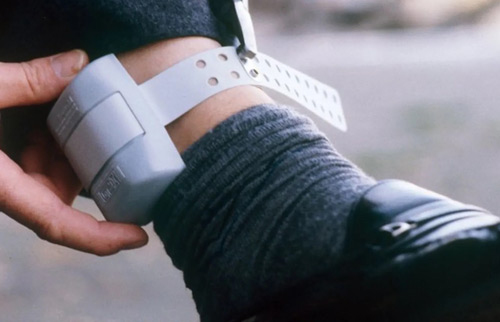
It is proposed to utilise up to 50 electronic tags during this pilot phase. Electronic tagging is a form of surveillance that uses an electronic device affixed to a person to monitor their location or physiological state. It is a specific application of asset tracking technology where the “asset” being monitored is a person.
In some jurisdictions, an electronic tag fitted above the ankle is used for individuals as part of their bail or probation conditions. It is also used in healthcare settings and in immigration contexts. Electronic tagging can be used in combination with a GPS tracking unit for wide-area monitoring, but for short-range monitoring of a person, radio frequency technology is often used.
The pilot approach will allow for processes and procedures to be tested before a wider scale national rollout, while also supporting the agencies involved to build capability and knowledge of the EM system. Insights from the pilot will inform any future national rollout and procurement.
A fund of €2.1m in Budget 2026, for the project, will allow for staffing, procurement, and other set up costs.
The closing date for the RFT is January 16th 2026 at 5:00pm.
The Request for Tender can be accessed at: European Dynamics – View CfT Workspace HERE.
The Government has approved a €2.18 billion Sectoral Investment Plan for Justice for the period 2026–2030, with Tipperary set to benefit significantly through the delivery of the new Clonmel Garda station and further investment in Templemore Garda College.
The five-year capital package; an increase of more than €800 million on the previous National Development Plan for justice, will fund new Garda stations and courthouses, expanded prison capacity, major upgrades to Garda technology and cyber security, and modern infrastructure across the wider justice sector.
Major investment in Clonmel Garda Station
Under the plan, the construction of the new Garda station at Kickham Barracks in Clonmel is confirmed as a priority capital project for An Garda Síochána.
Construction is already under way on the Clonmel station, with works to continue into the early years of the 2026–2030 programme. The new facility will replace the existing Emmet Street station, long acknowledged as no longer fit for purpose, and will provide modern, fit-for-purpose accommodation for Garda members and staff serving the Clare/Tipperary Garda Division.
The development will deliver:
- A new district headquarters for Clonmel and its hinterland.
- Enhanced custody and operational facilities to support frontline policing.
- Dedicated space for community policing and engagement with local organisations and vulnerable groups.
- Modern IT and security infrastructure in line with national Garda technology upgrades.
Templemore Garda College to benefit.
The plan also confirms substantial capital investment in Garda College, Templemore, strengthening its role at the heart of Garda training and continuous professional development. This will support the recruitment and training of additional Gardaí and ensure facilities in Templemore remain modern and fit for growing class sizes over the lifetime of the NDP.
Nationally, the €2.18 billion Sectoral Investment Plan for Justice will deliver:
€495 million for the Irish Prison Service to increase prison capacity, including major construction projects at facilities such as Castlerea, Cloverhill, Mountjoy, Portlaoise, Wheatfield, Midlands, Dóchas and Cork prisons, as well as planning for a new prison at Thornton, Co Dublin
A further €32 million for prison fleet and technology.
€460 million for Garda technology, including the nationwide roll-out of body-worn cameras, a digital evidence management system, core policing systems and upgraded HR and corporate ICT.
€364 million for Garda buildings, funding the completion of new stations in Portlaoise, Newcastle West and Bailieborough, and progressing new builds in Clonmel, Macroom, Castletroy, Carndonagh and a new Dublin North regional headquarters, alongside investment in Templemore Garda College.
€35 million for a rolling programme of minor refurbishments to Garda stations nationwide – including accessibility, health and safety and essential infrastructure works – and
€69 million for the Garda fleet, supporting expansion, modernisation and electrification, as well as the delivery of a second new Garda helicopter, further drone capability and upgraded facilities for the equine and canine units.
Strengthening community safety in Tipperary.
For Tipperary, the combination of a new divisional headquarters in Clonmel and ongoing investment in Templemore Garda College represents the largest single capital boost for policing in the county in decades. The Government says these projects will:
- Enhance visible policing and response capability across South Tipperary and the wider Clare/Tipperary Division
- Provide modern working conditions for Garda members and staff
- Support recruitment and training of additional Gardaí destined for frontline duties in Tipperary and beyond
- Underpin the delivery of safer, stronger communities through better facilities, technology and infrastructure
The Department of Justice has said that the overall plan will ensure that communities in Tipperary, urban and rural, will see tangible benefits from the record national investment in the justice sector over the coming five years.
National Cyber Security Centre Launches 2025 National Cyber Risk Assessment revealing Escalating Threat Landscape.
Rapidly evolving cyber risks put country’s critical infrastructure at risk.
Today (December 2nd) the National Cyber Security Centre (NCSC) launched its 2025 National Cyber Risk Assessment. This is a comprehensive review of the cyber threats, systemic risks, and sectoral vulnerabilities facing the State.
Launched at the NCSC’s annual conference, the assessment provides the most detailed national overview to date of Ireland’s cyber risk environment and builds on the foundation laid by the 2022 assessment.
The assessment identifies key developments in the national and global cyber threat landscape, including increasingly sophisticated nation-state activity, the accelerating pace of cybercrime, and the growing likelihood of cascading impacts across interconnected sectors such as energy, transport, healthcare, and financial services.
Key findings of the 2025 National Cyber Risk Assessment include:
As technology has advanced and reliance on digitalisation has intensified, the cyber threat landscape has become more complex with an increased risk of incidents, leading to significant cross sectoral impacts.
Taking an all-hazards approach, the 2025 National Cyber Risk Assessment has identified three key systemic risks:
- The dynamic geopolitical environment,
- Evolving technology and its implications on security.
- Supply chain security.
If any or all these risks were to be realised, it could undermine Ireland’s delivery of essential services, disrupt its critical sectors, and erode trust in government, institutions, and organisations.
To mitigate Ireland’s identified risks, five recommendations have been identified:
- Strengthen visibility and detection – investing systems and structures to enhance national visibility will reduce systemic blind spots and allow the State to be better positioned to anticipate and respond to risks before they escalate.
- Implement proactive cyber defence capabilities – reactive responses alone are not sufficient to protect society and the economy from the potential cascading effects of attacks on critical systems. Ireland must enhance its proactive cyber defence posture, disrupting the cyber-attack lifecycle earlier to prevent incidents at scale.
- Enhance national resilience –by implementing EU frameworks in full and extending resilience beyond infrastructure to society itself, Ireland will ensure that both services and democratic institutions remain robust in the face of systemic cyber risks.
- Secure critical supply chains – the State must strengthen our supply chain through strengthening procurement rules in government, embed security-by-design and risk management practices, and increase visibility of vendor ownership.
- Invest in national cyber resilience – investment in people, innovation and our indigenous industrial base will ensure that Ireland has the capacity not just to respond to today’s threats but to anticipate and shape the next generation of resilience measures.
These recommendations provide a framework for the next National Cyber Security Strategy, ensuring that systemic vulnerabilities are reduced and national resilience strengthened.
The 2025 National Cyber Risk Assessment is now available HERE.
|
Support Us Help keep Thurles.info online by donating below. Thank you.
Total Donated 2026: €290.00
Thank You!
Daily Thurles Mass Livestream
|








Recent Comments