A series of events will take place in Waterford city this weekend to commemorate the life and legacy of Thomas Francis Meagher, with particular reflection on his role in the Young Ireland rebellion, the rising at Ballingarry in South Tipperary, and the dramatic events that led to his arrest and transportation to Van Diemen’s Land.
Signatures of Thomas Francis Meagher and Patrick O’Donoghue, both arrested at Rathcannon, Holycross, Thurles, Co. Tipperary, following the 1848 Ballingarry (SR) rebellion. Both signatures are written on the back of a prison library book called “Wreath of Friendship”. Picture: G. Willoughby.
Although Meagher is forever associated with raising the tricolour at the Wolfe Tone Confederate Club at No. 33 The Mall in Waterford on Tuesday 7th March 1848, his place in Irish history was shaped just as powerfully by what happened later that year. As one of the leading figures of the Young Irelanders, he became involved in the 1848 rebellion, culminating in the confrontation at Ballingarry, Thurles, Co. Tipperary, in July.
The Ballingarry rising, though unsuccessful, became one of the defining episodes of the Young Ireland revolt. In its aftermath, Meagher was arrested at Rathcannon, Holycross, Thurles, Co. Tipperary, tried for treason, and sentenced to death, a sentence later commuted to transportation to Van Diemen’s Land*. His exile marked a crucial chapter in his life and secured his place among the most significant Irish nationalist figures of the nineteenth century.
* Van Diemen’s Land was the original European name for the island of Tasmania, Australia, used from its 1642 discovery by Abel Tasman, until renamed in 1856. Settled by the British in 1803, it served as a notorious, harsh penal colony for convicts. It is now a state of Australia known for its rugged landscape.
Earlier that same year, Meagher had unveiled what would later become the national flag of Ireland in his native Waterford. The tricolour flew for eight days and nights before being removed by the then British authorities. Speaking about the flag in April 1848, Meagher said: “The white in the centre signifies a lasting truce between Orange and Green and I trust that beneath its folds the hands of Irish Protestants and Irish Catholics may be clasped in generous and heroic brotherhood.”
The tricolour was adopted as the flag of the Irish Free State in 1922 and formally confirmed as the national flag in the 1937 Constitution.
This weekend’s Thomas Francis Meagher 178th Anniversary Tricolour Celebration will see a three-day festival of talks and events take place in Waterford city. Organisers say the festival offers an opportunity not only to reflect on the proud history of the flag, but also to consider Meagher’s wider legacy as a revolutionary, a political exile, and a symbol of Irish resilience.
Sadly, our local Thurles Tourist Office promoters have seen fit to ignore this same 178th Anniversary Tricolour Celebration. Same seem to be keeping themselves busy promoting Facebook posts about local children’s and men’s clothing shops, local nail bars, pubs, cafés, Easter camps, college open days, and Mother’s Day; clearly the kind of world-famous attractions that have international tourists booking flights as we speak. After all nothing says ‘must-visit destination’ quite like a last-minute Easter camp and a half-price manicure. Seriously, while all these Thurles advertised businesses are unquestionably among the very best in their field, same can hardly be seen as unique selling points (USP’s), as far as foreign tourism attractions are concerned, and therefore are about as useful as an ashtray on a motorcycle.
The commemorative weekend opens this evening with the Thomas Francis Meagher Fife and Drum Band performing at the Granville Hotel on Meagher Quay.
Chairperson of the organising committee, Mr Éamonn McEneaney, said the weekend will feature many highlights, including the Friday evening walking tour of the city, four guest speakers at the Medieval Museum on Saturday morning, a gala dinner on Saturday night, and the military parade, wreath-laying ceremony and raising of the flag on Sunday morning.
The Revenue Commissioners have processed gross tax adjustments totalling €26.7 million arising from cases where workers were incorrectly treated as self-employed rather than employees.
Revenue Commissioners
Revenue said 280 voluntary disclosures were made, covering more than 6,600 employees. The disclosures relate to situations where some businesses classified staff as self-employed contractors when, in practice, the individuals should have been on payroll as employees.
Revenue Chairperson Mr Niall Cody is scheduled to appear before the Oireachtas Public Accounts Committee on today, where he is expected to outline the findings and the compliance activity behind them.
Mr Cody is also due to highlight that, while misclassification has long been a known compliance risk, the Supreme Court decision in Revenue Commissioners V Karshan, in October 2023 has significantly altered the operating environment for employers. The case, commonly referred to as the Domino’s Pizza delivery drivers judgment, upheld Revenue’s position that the workers involved were employees rather than independent contractors.
The ruling has been widely viewed as a landmark moment in addressing bogus self-employment, where individuals carry out work comparable to employees but without access to standard employment protections and benefits such as paid leave, sick pay and pension contributions. Historically, the issue has been particularly associated with sectors including construction and media.
Application Ref: 2560703. Applicant: Darragh Fitzpatrick. Development Address: Cloghmartin, Thurles, Co. Tipperary. Development Description: the construction of a new dwelling house, effluent treatment system, works to existing entrance together with all associated site works. Status: Conditional. Application Received: 18/07/2025. Decision Date: 11/02/2026. Further Details:http://www.eplanning.ie/TipperaryCC/AppFileRefDetails/2560703/0.
With €170bn on deposit, Simon Harris targets new savings incentive to open investing to ordinary families.
The Tánaiste, Mr Simon Harris, plans to bring a framework to Government in the first half of 2026 for an incentivised savings scheme, aimed at people who feel shut out of investing by complexity, tax rules and high minimum entry points.
The proposed retail investment strategy is intended to help households build stronger financial resilience, while also channelling more money into the productive economy. Mr Harris has pointed to the scale of cash sitting in deposit accounts in Ireland, estimating it at about €170 billion, and has argued that policy should help those savings work harder for individuals and families as well as supporting small and medium-sized businesses.
Speaking in Brussels during meetings of EU finance ministers, he signalled that the plan would be developed quickly, with an early Cabinet discussion, followed by a dedicated savings and investment forum to gather views from stakeholders and industry. Engagement with the Central Bank of Ireland is also expected as part of the design work.
The Tánaiste has indicated he wants proposals ready for the next Finance Bill, while acknowledging that key issues include the overall tax treatment and the lack of accessible retail investment products through mainstream banks. He has also linked the domestic plan to the push at European Union level for a Savings and Investment Union, arguing that Ireland should align with that agenda in a way that delivers clear benefits for Irish savers.
A North Tipperary councillor has warned that Tipperary County Council must “come out strongly” with regard to its position on the proposed Shannon-to-Dublin water transfer scheme, as the multi-billion euro project moves through the planning process.
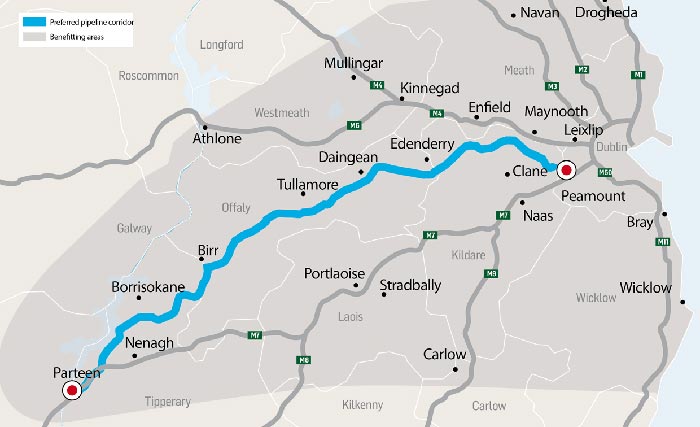
Uisce Éireann states the abstraction would be a maximum of 2% of the long-term average flow at Parteen Basin. The volume most commonly cited in public reporting is roughly 330–350 million litres per day(depending on the source and whether a rounded “up to” figure is used).
Cost estimates are varied. Uisce Éireann has referenced a preliminary indicative range in the €4.58bn–€5.96bn bracket, while other reporting has noted higher “worst-case” risk scenarios discussed in official correspondence.
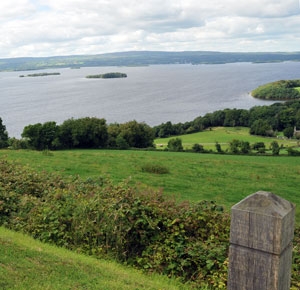
“A legacy of a beautiful lake that’s destroyed” Speaking on local radio, Councillor Bugler said she fears the council will not oppose the project strongly enough when it finalises its submission. She said she raised her concerns directly with council Chief Executive Ms Sinéad Carr, warning against any temptation to prioritise potential local “community benefit” funding over environmental impact. She has urged the council not to “sell us out” and said she was worried about damage to Lough Derg for future generations.
Uisce Éireann has said it is proposing a “bespoke Community Benefit Scheme” linked to communities hosting construction and permanent infrastructure.
Criticism after Killaloe meeting. The councillor also criticised Uisce Éireann’s public engagement after a recent information meeting in Killaloe, saying she was dissatisfied with the answers provided on how the project would operate during low-flow or drought periods. In particular, she questioned how a 2% abstraction figure based on long-term averages would translate during dry spells and whether abstraction would be reduced or suspended, and what that would mean for the reliability of supply to Dublin and the wider region.
Proposed Tipperary – Dublin Pipeline.
“What turns this from local frustration into national hypocrisy is the scale of spending Ireland is willing to contemplate elsewhere. The Irish Government has backed the Water Supply Project for the Eastern and Midlands region, intended to bring a new long-term water source from the Shannon system towards the greater leaking Dublin area“. See Link Here
Ms Bugler further claimed that some representatives displayed limited familiarity with local water and wastewater infrastructure, including the source of supply for towns Ballina and Newport from the Mulcair River, and raised concerns about treatment levels at Ballina’s wastewater facility. These are allegations made by the councillor in media reports; Uisce Éireann has not, in the published material cited here, issued a point-by-point response to those specific claims.
Council submission in preparation. Meanwhile, Tipperary County Council is preparing its formal submission to the planning authority. Separate coverage has reported that consultants have been appointed to assist the council in drafting its response. With the application now before An Coimisiún Pleanála, we learn that stakeholders and members of the public can also make submissions as part of the statutory process, ahead of a decision on whether the project proceeds and, if so, under what conditions.
This website uses cookies to improve your experience. We'll assume you're ok with this, but you can opt-out if you wish.AcceptRead More
Privacy & Cookies Policy
Privacy Overview
This website uses cookies to improve your experience while you navigate through the website. Out of these, the cookies that are categorized as necessary are stored on your browser as they are essential for the working of basic functionalities of the website. We also use third-party cookies that help us analyze and understand how you use this website. These cookies will be stored in your browser only with your consent. You also have the option to opt-out of these cookies. But opting out of some of these cookies may affect your browsing experience.
Necessary cookies are absolutely essential for the website to function properly. This category only includes cookies that ensures basic functionalities and security features of the website. These cookies do not store any personal information.
Any cookies that may not be particularly necessary for the website to function and is used specifically to collect user personal data via analytics, ads, other embedded contents are termed as non-necessary cookies. It is mandatory to procure user consent prior to running these cookies on your website.








Recent Comments