Ireland’s free hot school meals programme is set for changes aimed at improving nutrition, offering more suitable portions and reducing the amount of food left uneaten.
Minister for Social Protection Mr Dara Calleary outlined the proposed reforms after Cabinet discussed two Government-commissioned reviews of the scheme. A cold lunch option, a standardised three-week menu and better provision for children with additional dietary needs are among the measures being considered. Discussions with schools and suppliers will now take place, with changes intended for the 2027/28 cycle.
Attention Turns From Expansion to Food Quality Following its nationwide extension in September 2025, the programme covers approximately 3,200 primary schools and more than 550,000 school children. Mr Calleary defended the scheme’s rapid growth and said it continues to provide valuable support to families. However, he acknowledged that improving the food itself must now become a central priority. The programme is estimated to save a household with two primary school children about €1,152 annually. An Taoiseach Mr Micheál Martin also recognised the scheme’s benefits while accepting that its quality and waste levels need attention.
Uneaten Meals Raise Difficult Questions The reviews indicate that roughly one in five meals supplied; approximately 100,000 a day, goes uneaten when pupil absences are taken into account, the proportion falls to 11.1%. Mr Calleary said his department takes food waste seriously, while noting that children being absent explains part of the problem. There are also questions about how waste is measured. Food Policy Ireland chief executive Ms Ruth Hegarty cited an estimated 6.3 million kilogrammes of food wasted over a school year, but questioned the basis for the reported uneaten-meal percentage because direct food waste audits had not been conducted in schools. The parent survey suggests that unfinished lunches predate the programme; almost half of respondents said their children previously brought food home uneaten.
Smaller Portions for Younger Pupils, More for Older Children A nutritional assessment examined 360 meals from 15 suppliers and included visits to 54 schools. It identified a problem with serving the same portion size across different age groups. Meals that may be sufficient for younger pupils can provide too few calories for older children. The review also found that children tended to select foods higher in fat, salt and sugar when those choices appeared alongside healthier alternatives. Proposed changes would introduce portions suited to different ages and a standardised menu rotating over three weeks. Menus would also be adapted for special schools, special classes and children with specific dietary requirements.
Parents Want Greater Lunch Flexibility A possible cold lunch option emerged as a strong theme in the feedback, with 84% of parents supporting its availability. The review recommends allowing children to choose a hot or cold meal on a given day, suggesting that greater flexibility could help reduce waste. The Ipsos/Behaviour & Attitudes research gathered responses from 86,637 parents and guardians, 6,884 children, 2,420 teachers and principals, and 47 suppliers, with 747 schools participating. Three-quarters of children said they ate at least some of their meal, while 63% of teachers and principals considered the programme’s overall impact positive. Meal ordering was strongest among younger children. Participation averaged 97% from Junior Infants to First Class, compared with 81% in Fifth and Sixth Class. The overall average was 85%.
The Government remains committed to extending the programme to secondary schools during its term. Mr Calleary has yet to announce a timetable for that expansion.
A Possible Budget Leak – With Questions Still Unanswered.
Reports ahead of Ireland’s Budget 2027 suggest that all 16-year-olds could receive a €100 voucher for arts and cultural activities, with a possible extension to 17-year-olds in Budget 2028. The estimated first-year cost is €7.5 million. This remains a reported proposal, rather than a confirmed entitlement. Whether the announcement has emerged through a deliberate leak has not been established.
Helping young people experience culture most certainly is a worthwhile ambition. But taxpayers are entitled to ask what this particular measure would achieve, and whether another approach would achieve much more.
Cultural Spending on those aged 16 year does not automatically mean education A play, concert or creative workshop can spark an interest that can last a lifetime. Enjoyment and shared experiences have value also. However, redeeming a voucher does not prove that someone has learned something new or discovered an activity they would otherwise have missed.
France’s experience offers a warning. Its national auditors found that the ‘Culture Pass’ mainly reinforced established cultural habits, while its ability to broaden participation remained limited. Ireland should learn from that experience, before assuming a voucher will overcome barriers to culture. The test is whether the Government sets clear objectives, publishes the costs and commissions an independent evaluation. Success should mean reaching young people who currently miss out, not simply announcing how many vouchers were spent.
Could It Free Money For Alcohol or Drug Abuse? If a teenager already planned to buy a concert ticket, a voucher could leave their own money available for something else. But it would be unfair to assume that the money would go towards alcohol or drugs. It might pay for transport, food or savings. There is no evidence presented here establishing that this proposal would increase substance use. Will Ticket Prices Rise And Who Gets the Money? Extra purchasing power could put upward pressure on prices where popular events already sell out. At venues with empty seats, it could instead increase attendance without raising prices. Most popular bands on Tour entering Ireland already cost well over €100 Some spending could benefit wealthy performers, major promoters and ticketing platforms. Other spending could support local theatres, musicians and cultural organisations which command much less cost. The Government should monitor prices and publish where the money goes. Public subsidy deserves scrutiny even when the product being sold is culture.
Could €7.5 Million Expected Spend Achieve More Elsewhere? A comparison might be sustained music tuition, youth clubs, instrument lending, school cultural visits and transport for disadvantaged or rural teenagers. A voucher cannot solve the problem of having no accessible venue or no way to get there. Supporting participation may require people, facilities and transport as well as purchasing power. Poorer children deserve cultural opportunities too. The question is which approach gives them the most meaningful access.
“For Ye Have the Poor Always With You” The moral question remains relevant for Christians; does this prospective spending meaningfully help those excluded, or mainly subsidise those already well able to participate? Matthew 26:11 should be read in context; Jesus defends a woman’s anointing of him, with expensive perfumed oil, which he connects with his burial. We should not interpret it as permission to neglect poverty. Deuteronomy 15:11 (Second Law) acknowledges that poverty persists while calling for generosity towards those in need.
My Own Personal View: Let’s Test this Before Expanding It. I would support a limited, independently evaluated pilot, with extra support for disadvantaged teenagers and opportunities to take part in local creative activities. France’s experience shows why this matters. Its national auditors found weaker participation among young people from less advantaged backgrounds and questioned how far a primarily financial scheme could overcome existing inequalities.
Create Opportunities to Make and Perform To my mind the pilot should offer opportunities to learn an instrument, join a drama group, make a short film, try photography or attend a series of creative workshops. Taking part in an activity over several weeks offers a much better chance to develop skills,friendships and confidence. The pilot should test both approaches, while preserving young people’s choice. Here in Thurles Co. Tipperary, as in many other Irish communities, we already have organisations that could greatly inform this work. Music Generation, for example, supports local access to vocal and instrumental tuition for children and young people. Partnership opportunities should be explored, with funding for any additional places and teaching required.
Measure What Changes Because of the Support. The independent evaluation should ask:
Did teenagers start activities they would otherwise have missed?
Did the scheme reach those with the greatest barriers?
Did participation continue six or twelve months later?
What did participants learn, enjoy or find difficult?
What was the full cost, including administration, transport and additional support?
Did spending support local provision, and were there changes in prices or fees?
Researchers should record participation before any pilot and use a fair comparison, such as a phased rollout, to help distinguish the scheme’s effects from changes that would have happened anyway. They should also speak to teenagers who never used the offer or stopped attending. If the results are strong, expansion would have a credible foundation. If benefits mainly go to teenagers already participating, the scheme should be redesigned. Support would rest on a clear purpose; giving young people a fair chance to discover, enjoy and develop their creativity and showing that public money greatly helped make that possible.
Before expansion, the Government should demonstrate new participation, fair access and reasonable value for money.
Autumn in Thurles Co. Tipperary brings golden leaves, cooler mornings and shiny brown conkers found beneath horse-chestnut trees.
For many, they recall the childhood game; a conker threaded onto a string, swung against an opponent’s until one cracked. These familiar seeds also have an unexpected connection to the First World War, a story linking plant starch, bacteria and soap-making to the production of ammunition.
The story begins with starch. Conkers store starch to support a developing seedling. During WWI, that starch attracted interest as a possible raw material for producing acetone, a solvent needed in British cordite manufacture.
Chemist Dr Chaim Weizmann♦(Wife Dr Vera Khatzmann MD), developed a process that used bacteria to turn starchy materials into useful industrial solvents. In broad terms, bacterial enzymes broke down starch into smaller sugars, which the bacteria then metabolised. The resulting fermentation produced acetone alongside alcohols, particularly butanol. Latter butanol is a permitted artificial flavour used in butter, cream, fruit, rum, whiskey, ice ices, candy, baked goods and cordials. Distillation separated the useful liquids from the fermented mixture by exploiting differences in their volatility. Dr Weizmann’s patent describes this combination of fermentation and separation HERE.
As wartime shortages put pressure on maize supplies, Britain looked for other sources of starch to produce acetone. In autumn 1917, schoolchildren, Scouts and other volunteers collected conkers in the hope that horse chestnuts could replace some of the grain being used in the process. Despite enthusiastic collecting, transport and processing difficulties hampering the scheme, many such conkers went unused.
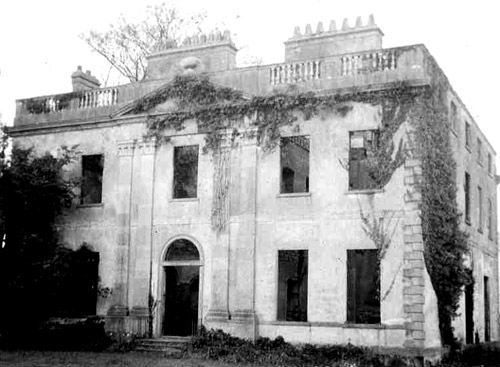
♦ Same Dr Chaim Weizmann was an Israeli statesman, biochemist, and Zionist leader who served as the first president of Israel. His elder son, Mr Benjamin (Benjie) Weizmann (1907–1980), with wife Minnie “Madeline”(Mady) Pomerantz, would later settled here in Ireland, following his service in the British Royal Artillery during World War II, settling just across the west Tipperary border in ‘Doonass House’, Clonlara, Co. Clare, just 62km (38.5 miles) from Thurles; becoming a dairy farmer, before selling out and moving to retire in Jerseyin the Channel Islands.
Doonass House, Clonlara, Clare, whichtoday is a burnt out ruin.
Where did cordite come in? Cordite was a smokeless propellant; its burning generated gases that drove a bullet or shell along a gun barrel. Its principal energetic ingredients included nitrocellulose, also called guncotton, and nitroglycerine. For cordite formulations using acetone, the solvent helped turn the ingredients into a workable material that could be shaped into cords. It was subsequently removed during drying, with factories recovering solvent for reuse. Acetone’s role was therefore in processing the propellant.
Soap-making supplied another part of the story. In traditional soap manufacture, fats or oils react with an alkali in a process called saponification. This produces soap and glycerine, also known as glycerol. Manufacturers could recover that glycerine and supply it to the munitions industry, where it became a raw material for nitroglycerine.
Conkers have a further washing connection of their own. They contain saponin, naturally occurring compounds with detergent-like properties. These molecules have both water-attracting and water-repelling parts, helping explain their ability to foam and assist cleaning. This is a different chemical story from either starch fermentation or conventional soap manufacture.
A conker beneath a Tipperary tree can prompt questions reaching far beyond childhood games, into plant biology, industrial fermentation and the demands that war places on everyday materials.
The Heritage Council is pleased to announce that “Expressions of Interest” for the Community Heritage Grant Scheme 2027 are now open.
The scheme supports community and voluntary groups and non-governmental organisations undertaking projects that protect, conserve, celebrate, understand and share Ireland’s heritage. New for 2027, the scheme introduces a two-stage application process designed to make it easier for groups to apply. At Stage 1, applicants submit a short Expression of Interest outlining their project idea. Shortlisted projects will then be invited to submit a full application.
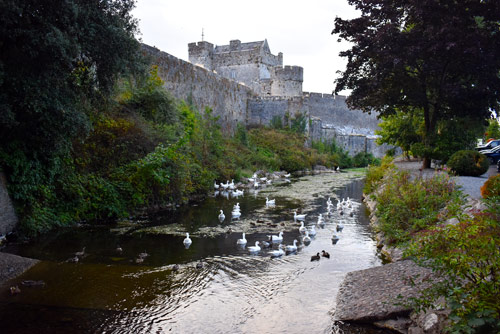
Cahir Castle, Co. Tipperary.
The Expression of Interest stage allows applicants to submit an outline of their project idea without the need to prepare detailed budgets, quotations or supporting documentation at the outset. This helps groups explore project ideas and receive feedback before investing time in a full application.
Funding is available for projects under five themes:
Heritage at Risk
Biodiversity and Nature Restoration
Traditional Skills & Conservation
Digital Heritage, Access and Storytelling
Diversity, Equity & Inclusion
Funding available:
Minimum grant: €800
Maximum grant: €25,000
Key Dates Expression of Interest Deadline:16th October 2026 at 5.00pm. Stage 1 Results:Early November 2026. Full Application Deadline (shortlisted applicants only): 15th January 2027 at 5.00pm
Lyrics and Vocals: American singer-songwriter, actress, and businesswoman, the late great Dolly Rebecca Parton Dean (née Parton)[1946 – 2026].
Late Dolly Parton Dean (née Parton)[1946 – 2026].
Dolly Parton’s lesser-known “Chicken Every Sunday” carries a proud message about dignity, belonging and the hurt of being judged by money. Its young narrator faces a wealthy family’s disapproval, while her mother reminds her that humble circumstances never make anyone inferior. The Sunday chicken dinner becomes a symbol of a home sustained by care, shared pleasures and self-respect. To my ears, the song’s deepest meaning lies in that refusal to feel ashamed; a modest life has value, and nobody’s wealth gives them the right to look down on yours.
Chicken Every Sunday.
Chicken Every Sunday.
Just because all my dresses are just cotton hand-me-downs, His family calls me the lower class. ‘Cause we’re only poor folks on the other side of town, They won’t let him walk up my path.
But my mama says, “Don’t worry when they say those things about you, You remember you’re just as good as him. Just because they got that big house sitting way up on the hill, Why, you don’t have to look up to them”.
[Chorus]
“We’ve got chicken every Sunday and the preacher comes around, And every Saturday morning, daddy takes us all to town, And we go to the picture show, have picnics on the ground, Oh, if that’s the lower class, then I’m glad that’s what I am”.
‘Cause my mama don’t belong to the ladies social set, And my daddy can’t afford the country club. His folks look down on me and they won’t let us date, ‘Cause they think that I’m not good enough.
But my mama says, “Forget him, honey, he ain’t worth it all, And if anything, you’re too good for him. Just because they got money and a big fine house, Why, we won’t take no sass off of them”.
This website uses cookies to improve your experience. We'll assume you're ok with this, but you can opt-out if you wish.AcceptRead More
Privacy & Cookies Policy
Privacy Overview
This website uses cookies to improve your experience while you navigate through the website. Out of these, the cookies that are categorized as necessary are stored on your browser as they are essential for the working of basic functionalities of the website. We also use third-party cookies that help us analyze and understand how you use this website. These cookies will be stored in your browser only with your consent. You also have the option to opt-out of these cookies. But opting out of some of these cookies may affect your browsing experience.
Necessary cookies are absolutely essential for the website to function properly. This category only includes cookies that ensures basic functionalities and security features of the website. These cookies do not store any personal information.
Any cookies that may not be particularly necessary for the website to function and is used specifically to collect user personal data via analytics, ads, other embedded contents are termed as non-necessary cookies. It is mandatory to procure user consent prior to running these cookies on your website.






Recent Comments