Senator Frances Black’s maximalism is no substitute for serious government and Micheál Martin is right to put Ireland’s interests before current Sinn Féin and opposition political theatre.
Taoiseach Micheál Martin deserves much credit for bringing a measure to Cabinet that is possibly legally focused, diplomatically serious, and economically responsible. In limiting the Israeli Settlements Bill to goods rather than extending it to services, he has done what responsible governments are supposed to do; distinguish between what is politically satisfying and what is actually implementable.

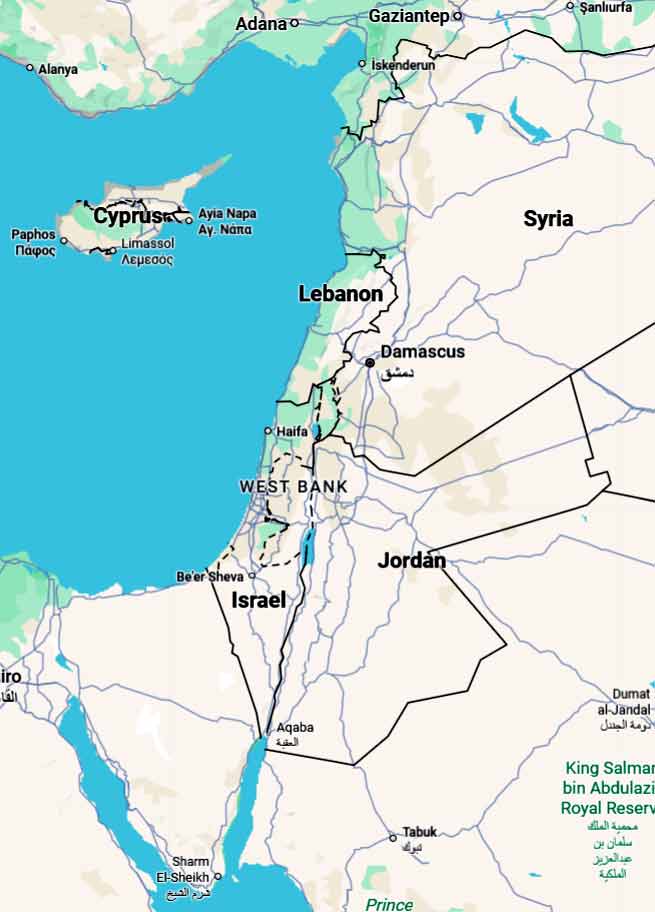
There is a world of difference between taking a symbolic stand and passing workable law. A ban on goods from Israeli settlements can be monitored through customs, import records, product origin and enforcement mechanisms already known to the State. It is narrow, targeted and legally intelligible. A services ban, by contrast, would be a minefield. What exactly is a settlement-linked service? A hotel booking? A cloud contract? A software licence? A payment platform? A professional service? A mapping tool? A multinational with branches in Ireland, Israel and the United States could easily be caught in a web of uncertainty.
That is why Micheál Martin’s warning matters. Ireland is not an isolated moral debating society. It is a small, open economy whose prosperity depends heavily on foreign direct investment, especially from American multinationals. To dismiss those concerns is not bravery; it is total recklessness. A government that casually exposes Irish jobs, tax revenue and diplomatic relationships to avoidable risk is not acting in solidarity with anyone. It is indulging in gesture politics at the taxpayers expense.
What has the now recovering but once alcohol dependent Senator Frances Black actually achieved in nearly ten years in the Seanad, apart from making opposition to Israel the centrepiece of her political identity? She has introduced bills and spoken on worthy causes, but there is little evidence of major, enacted legislation bearing her name that has transformed life for ordinary Irish people.
On the otherhand, Micheál Martin is accountable for the national interest; Senator Black is free to pursue activist politics without carrying the same responsibility for Irish jobs, Irish investment, diplomacy or Ireland’s relationship with the United States. That is the difference between government and protest.
This is where Senator Frances Black and others in the opposition are wrong. Their demand to include services may sound stronger, but stronger rhetoric is not the same as stronger law. It is easy, from the opposition benches, to denounce, condemn and demand the maximum possible measure. It is harder to govern, to take legal advice seriously, and to protect the national interest, while still making a principled foreign policy statement.
Senator Black has been consistent on this issue, and consistency is not in itself a fault. But her criticism of the Government’s bill as a “partial ban” misses the central point. Partial laws are often better than performative laws that collapse under legal challenge or produce unintended economic damage. The question is not whether a services ban sounds morally satisfying. The question is whether it can be defined, enforced and defended without harming Ireland more than the target it is aimed at. Micheál Martin has answered that question honestly.
Ireland also needs to be careful not to slide from criticism of settlements into an attitude of hostility toward Israel itself. Israel is a democratic state facing real security threats, including terrorism, regional hostility and the trauma of repeated attacks on its citizens. One does not have to agree with every Israeli government policy to recognise Israel’s right to exist, defend itself, trade, innovate and maintain normal diplomatic relations with democratic countries like Ireland.
Too much of the Irish debate has lost that balance. There is often immense passion for condemning Israel, but far less energy for acknowledging Israeli suffering, Israeli security fears, or the fact that peace will require negotiation, not one-sided denunciation. When Irish politicians speak as though pressure on Israel alone will solve the conflict, they offer the public a dangerously simplified picture.
Micheál Martin’s approach is more mature. He has supported Palestinian statehood. He has backed international legal processes. He has criticised Israeli actions where he believes criticism is warranted. But he has also recognised that Ireland must act within the limits of law, competence and economic reality. That is real statesmanship. It is not cowardice. It is the difference between governing or campaigning in support of terrorism.
The opposition’s approach risks turning Ireland’s foreign policy into a theatre of moral absolutism. The loudest voice is not always the wisest. The most punitive proposal is not always the most just. The most dramatic amendment is not always the most effective law. Senator Black and her allies should ask themselves whether they want legislation that can actually pass and operate, or whether they prefer a slogan that makes them feel righteous while leaving Ireland exposed.
There is also a wider diplomatic danger. Ireland has already developed a reputation in Israel and among many supporters of Israel as being disproportionately hostile. A goods-only bill is controversial enough. Expanding it to services could deepen that perception, damage Ireland’s relationship with Israel, and invite serious concern from the United States. A small country must choose its battles carefully. Moral conviction is important, but so is prudence.
Supporting Micheál Martin on this issue does not require abandoning compassion for Palestinians. It requires accepting that good intentions are not enough. Law must be clear. Enforcement must be realistic. Economic consequences must be weighed. Diplomatic relationships must be protected. And Israel, whatever criticisms may be made of its government, should not be treated as a pariah by a country that benefits enormously from international trade, technology and democratic alliances.
Micheál Martin has taken the responsible course. He has advanced a small targeted measure, while refusing to be pushed into an unworkable services ban. Senator Frances Black; Sinn Féin and that dwindling Trotskyist political party known as “People Before Profit”, together with others in opposition may prefer the politics of maximalism, but Ireland needs the politics of seriousness.
Mr Micheál Martin should travel to Israel, not to apologise for Ireland’s principles, but to repair a badly damaged relationship and make clear that Ireland is not anti-Jewish, anti-Israel, or indifferent to Israeli suffering. He should meet Israeli leaders, hostage families, survivors of the October 7th attacks, Irish-Israeli citizens, and Jewish community representatives. Such a visit would show that Ireland can criticise particular Israeli policies without demonising Israel itself, and that serious diplomacy means speaking directly to both sides rather than grandstanding from a distance.
A Taoiseachial visit to Israel, ideally alongside some engagement with Palestinian representatives, would be an act of real statesmanship; firm on Ireland’s values, respectful of Israel’s security and trauma, and determined to rebuild trust, where Irish political opposition rhetoric has done real damage.
But for God sake leave the gullible Mr Simon Harris; Mrs Helen McEntee and our President Mrs Catherine Connolly at home.





Leave a Reply