A new law to legalise nuclear energy is set to come before the Dáil in the coming months.
On the surface, it is framed as a pragmatic response to high energy prices and climate pressure. But scratch beneath that surface, and what emerges is something far less reassuring; a political system once again flirting with an idea it has repeatedly rejected, often for reasons that remain unresolved.
The Ghost of Chernobyl Still Matters
Any serious discussion of nuclear power in Ireland that does not grapple with Chernobyl disaster is either incomplete or deliberately selective.
Ireland’s anti-nuclear stance did not appear out of thin air. It was shaped by a combination of domestic protest and global catastrophe. The planned nuclear plant at Carnsore Point, Co. Wexford collapsed not just because of local activism, but because nuclear accidents abroad fundamentally changed public perception.
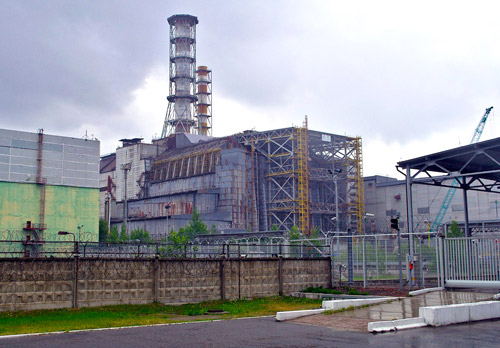
Chernobyl turned nuclear energy from a technical question into a moral one. It cemented a widespread belief that the risks, however statistically small, were politically unacceptable. That legacy still lingers, even if proponents now prefer to speak as though it belongs to a “different era.”
A Pattern of Crisis-Driven Thinking.
What is striking about the current proposal is not its novelty, but its timing. Ireland tends to rediscover nuclear energy whenever its energy model comes under stress.
In the 1970s: oil shocks → nuclear proposed.
In the 1980s: public backlash + global disasters → nuclear notion abandoned.
In the 2020s: energy prices + climate targets → nuclear once again revived.
This is not strategic thinking—it is reactive policymaking.
Even today, nuclear power remains explicitly banned under the Electricity Regulation Act 1999.
So before any plant is even discussed, the State must first undo decades of settled law; a process that signals just how far removed this proposal is from practical delivery.
The Uncomfortable Contradiction.
Supporters often point out that Ireland already imports electricity generated by nuclear power. That is true, and it exposes a possible contradiction in policy. Ireland bans domestic nuclear generation while quietly relying on it through interconnectors.
But this argument cuts both ways. If nuclear energy is acceptable when produced elsewhere, why has there been no sustained effort to build domestic capability in the past 25 years?
The answer is simple, because when the issue moves from abstraction to implementation, political support tends to evaporate.
The Cost Illusion.
There is also a persistent tendency to present nuclear power as an Irish solution to high energy prices. This is, at best, misleading.
Modern nuclear projects in Europe have been plagued by delays and spiralling costs. The UK’s Hinkley Point C, for example, has seen its projected cost balloon dramatically over time.
For Ireland, a small grid, limited capital capacity, and no nuclear infrastructure; the barriers would be even higher. Even optimistic timelines suggest nuclear would not deliver power for well over a decade. That makes it irrelevant to the current cost-of-living crisis it is being used to attempt justification.
History Has Already Tested This Idea.
Ireland did not “miss out” on nuclear power by accident. No it tested the idea thoroughly before rejecting it.
The Nuclear Energy Board, established in the 1970s, pursued nuclear development seriously. Plans were advanced, sites selected, and policy aligned.
Yet the project ultimately failed due to:-
- Public opposition.
- Safety concerns amplified by global events.
- Overestimation of future energy demand.
These are not trivial footnotes, they are structural barriers. And many of them still exist.
A Debate Without Honesty.
What is missing from the current discussion is intellectual honesty.
Proponents frame nuclear as:- (1) A solution to high prices. (2) A route to energy independence. (3) A necessary complement to renewables.
But they often underplay:- (A) The decade-plus delivery timeline. (B) The multi-billion euro upfront costs.
(C) The lack of domestic expertise or infrastructure and (D) Continued public scepticism.
Even recent polling shows a divided public, not a mandate for change.
Conclusion: Reopening or Repeating?
The upcoming Dáil debate may feel like a turning point, but it risks becoming something more familiar: another cycle of political curiosity followed by practical retreat.
Ireland is not debating nuclear energy for the first time, it is revisiting a question it has already answered, under pressure, multiple times.
The shadow of Chernobyl still looms, not because the technology hasn’t evolved, but because the political, economic, and societal challenges it exposed were never fully resolved.
Until those are addressed directly, rather than sidestepped, the latest push to legalise nuclear energy may prove less a bold new direction, and more a repetition of history.





Leave a Reply