“Look up at the stars, not down at your feet. Try to make sense of what you see, and be curious.”
Quote: late Stephen Hawking [1942 – 2018].
“We are all in the gutter, but some of us are looking at the stars.”
Late Irish author Oscar Wilde, [1854 – 1900], (Lady Windermere’s Fan).
Residents across Tipperary are being encouraged to look skyward this evening as Ireland prepares for one of its most memorable astronomical displays in decades.
A deep partial solar eclipse will unfold between approximately 6.10pm and 8.10pm, reaching its maximum shortly after 7pm. Exact timings and the amount of the Sun covered will vary slightly from place to place as the Moon’s shadow travels across the country.
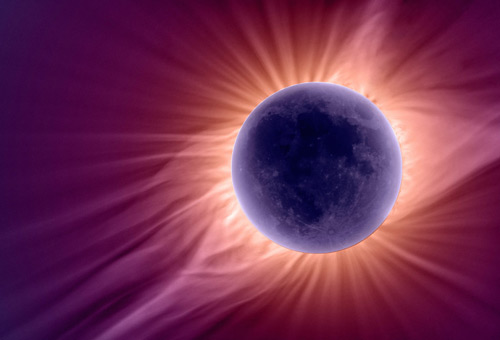
Although Ireland lies outside the path of totality, the spectacle will still be dramatic. The Moon is expected to hide well over 90 per cent of the Sun from Irish observers. Only a thin, bright crescent will remain visible at the height of the event, producing an unusual change in daylight and possibly a noticeable dip in temperature.
The eclipse is especially important because Ireland will not experience another comparable solar event until 2090. It offers families, schools and amateur astronomers a rare opportunity to witness the movements of the Sun, Moon and Earth directly.
People in Tipperary should choose a viewing location with a clear outlook facing towards the western sky. Open countryside and elevated areas may provide better prospects, provided they can be reached safely. Clouds are forecast in parts of the Premier County, but even brief breaks could reveal the shrinking solar crescent.
Eye protection is essential throughout the eclipse.
Looking directly at the Sun, even when most of it is hidden, can cause permanent damage to eyesight. Ordinary sunglasses, smoked glass and homemade filters are not safe. Observers should use undamaged eclipse glasses meeting the ISO 12312-2 safety standard or watch indirectly with a pinhole projector. Cameras, binoculars and telescopes require purpose-made solar filters attached securely to the front. Eclipse glasses alone do not make magnifying equipment safe.
Ireland will see a partial eclipse because the narrow path in which the Sun is completely concealed passes through areas including Greenland, Iceland and northern Spain. Nevertheless, the Royal Observatory Greenwich says roughly 90 to 96 per cent of the Sun will be covered across Ireland and the UK, making this the deepest partial eclipse seen from these islands in almost 27 years. Royal Observatory Greenwich
The entertainment will not end at sunset.
During the night of August 12th into the morning of August 13th, the annual Perseid meteor shower will reach its peak.
The Perseids occur when Earth passes through debris left behind by Comet 109P/Swift-Tuttle. Tiny particles strike the atmosphere at tremendous speed, heat up and produce the bright streaks commonly called shooting stars. Under ideal dark-sky conditions, observers may see dozens of meteors in an hour, although actual numbers can vary.
Conditions are unusually favourable in 2026 because the shower coincides with a new Moon. Thus, with virtually no strong moonlight washing out the fainter meteors, cloud cover and artificial lighting will only be the main obstacles. The strongest viewing window is expected between midnight and dawn.
No telescope is needed for the Perseids. Viewers should find a safe, dark location away from street lights; allow at least 20 minutes for their eyes to adjust and watch as much of the sky as possible. A reclining chair and patience will make the experience more comfortable.
If Tipperary’s clouds cooperate, residents could witness two remarkable spectacles within a matter of hours; an almost vanished Sun in the evening and a stream of meteors after midnight.





Leave a Reply