Why Accountability Must Now Rest at the Top of Inland Fisheries Ireland.
Once held up as a model of best practice, Inland Fisheries Ireland (IFI) is now facing one of the most serious governance controversies in recent Irish public sector history. So what went wrong, and how did it go unchecked for so long?
A Reputation Built on Safety Leadership Back in 2018, IFI stood as a benchmark for excellence. The organisation earned national recognition for its fleet safety standards, with its Logistics Manager receiving a prestigious Road Safety Authority “Leading Light” award. Alongside this, IFI secured a “Van Safe” award, reflecting strong operational controls across a fleet of approximately 200 vehicles supporting critical environmental and enforcement work. At the time, IFI wasn’t just compliant; it was leading.
A Very Different Picture Emerges Fast forward to recent years, and that reputation has been fundamentally challenged. Investigations by the Comptroller and Auditor General and scrutiny from the Public Accounts Committee (PAC) have revealed deep-rooted issues, raising serious questions about governance, transparency, and leadership.
The Uninsured Vehicle Incident At the centre of the controversy is a 2021 road collision in County Donegal involving an IFI vehicle that was not insured. The fallout has been significant, with the employee involved not informed that the vehicle lacked insurance and An Garda Síochána not notified of the issue. The employee only discovered the truth later through legal correspondence. Even more concerning, multiple uninsured vehicles were also identified during the same period
Misleading Information and “Drip-Feeding” of Facts. IFI’s engagement with oversight bodies has also come under sharp criticism. The PAC was told that the organisation provided “inaccurate” evidence, while committee members raised alarm about incomplete disclosures and a pattern of withholding information. This has led to serious concerns about credibility at senior levels.
A Breakdown in Governance. What initially appeared to be an isolated incident has instead exposed systemic failures. A “near-total collapse of governance” was highlighted during PAC hearings. Internal controls were found to be inadequate, undermining confidence in IFI’s operations. Governance issues have persisted for years, prompting multiple investigations and repeated committee hearings. In short, this is not a one-off error, it is a structural problem.
Potential Legal and Financial Consequences. The implications extend beyond governance. A protected disclosure report linked to the incident has, we understand, been referred to the Garda Commissioner. The uninsured collision alone resulted in repair costs of approximately €230,000. However, the reputational cost may be even greater.
Where the Responsibility Lies. It is increasingly difficult to view these failures as administrative oversights. Instead, they point to:-
A breakdown in risk management.
A failure of duty of care toward staff.
A lack of transparency with statutory oversight bodies.
And most critically, a failure of leadership at senior management and board level. These are the individuals responsible for ensuring compliance, safeguarding employees, and maintaining public trust. Yet, as PAC hearings have shown, confidence in IFI’s leadership has been significantly eroded, with elected representatives openly questioning the organisation’s honesty and competence.
Rebuilding Trust: What Must Happen Next. IFI now faces a defining moment. Restoring credibility will require more than procedural fixes, it demands decisive action:-
Clear accountability at senior level.
Full transparency with oversight bodies and the public.
Structural reform to prevent recurrence.
Without these steps, trust cannot, and will not, be restored.
Final Thought. The contrast is stark. From a “leading light” in road safety, to an organisation under scrutiny for governance failures, uninsured vehicles, and misleading disclosures. The real question now is not just how this happened, but why it was allowed to continue for so long without intervention at the highest levels.
FSAI publishes guidance for the control of Listeria monocytogenes in the production of ready-to-heat meals.
The Food Safety Authority of Ireland (FSAI) today published a new Guidance Note, Control of Listeria monocytogenes and Ensuring Food Safety in the Production of Certain Cook/Chilled Ready-To-Heat Meals, providing practical recommendations to help food businesses strengthen their food safety management systems and better detect and control Listeria monocytogenes.
Listeria monocytogenes is a pathogenic bacterium that causes listeriosis, a serious foodborne illness that can have significant impacts on health, particularly in older people, people with certain existing medical conditions and pregnant women. The guidance was issued as part of the FSAI’s ongoing response to recent outbreaks of listeriosis, including the outbreak in Ireland in 2025 and one in the United States the same year, both linked to ready-to-heat meals. These outbreaks of listeriosis highlight the risks associated with these products, if effective food safety controls are not in place.
Ready-to-heat meals are fully cooked during manufacturing but still require thorough cooking by consumers to make them safe before consumption. Although these products are not classified as ready-to-eat foods under EU legislation, food businesses have a responsibility to ensure all food placed on the market is safe to eat. The FSAI advises that certain types of ready-to-heat meals* can still pose significant risks if contaminated with Listeria monocytogenes despite carrying instructions for cooking by the consumer.
Mr Greg Dempsey, Chief Executive, FSAI, said: “Listeriosis is a rare but potentially serious infection caused by the bacterium Listeria monocytogenes, which poses a particular risk to older people, people with certain existing medical conditions, and pregnant women. It is essential that consumers ensure that they handle these ready-to-heat meals as instructed on the pack and cook them thoroughly until piping hot, and in line with manufacturer’s instructions.”
“Protecting consumers from foodborne illness is a fundamental responsibility for all food businesses. This guidance highlights the importance of a proactive approach to controlling Listeria monocytogenes in ready-to-heat meals. Food businesses must consider how these products are likely to be used in practice and ensure that appropriate controls are in place throughout the production process. By strengthening food safety management systems to better control Listeria monocytogenes, there will be less reliance on adequate cooking of the product by the consumer to make these products safe. We encourage all relevant food businesses to review this guidance and implement the recommended practices.”
The new guidance reminds food businesses that Listeria monocytogenes is a hazard that must be controlled during the production of these foods. The guidance will support the safe and consistent production, storage, handling and labelling of ready-to-heat meals. It emphasises that food businesses must take account of the “reasonably foreseeable use” of these products, recognising that some consumers do not always handle or fully cook them, as required by the manufacturer’s instructions on the pack.
The FSAI states that Listeria monocytogenes can survive and persist in food processing environments and may contaminate food after cooking, if effective hygiene and environmental controls are not in place. Ready-to-heat meals containing several components e.g. meat, vegetables, are particularly vulnerable where they are assembled after cooking and exposed to the processing environment prior to final packaging. If contaminated at this stage, domestic cooking may not always be sufficient to eliminate the risk, particularly where cooking instructions are not followed.
EPA reports good compliance at licensed sites, but persistent challenges remain across the food and waste sectors.
The EPA carried out 1,681 inspections in 2025. This was an increase of 28 per cent compared to 2024.
Overall compliance among industrial and waste licensed sites is good. However, in 2025, ten licensed sites (1 per cent of the total) were identified as National Priority Sites.
The food and drink sector and the waste sector continue to feature prominently as a focus for EPA enforcement.
Sites in the waste sector had the highest rates of non-compliance with EPA licence conditions in 2025.
In 2025, the food & drink sector continued to receive the most complaints, mostly regarding odour and noise.
Odour emissions and discharges to water remain the most common compliance issues at licensed sites.
The Environmental Protection Agency (EPA) has today published its Industrial and Waste Licence Enforcement Summary 2025. It shows that the EPA carried out 1,681 inspections at 656 licensed sites across all 26 counties in 2025. This was an increase of 28 per cent compared to 2024.
The report shows that there is a good level of compliance overall among EPA licensed industrial and waste sites. However, ten sites, or 1 per cent of all licensed sites, were identified on the EPA’s National Priority Sites List in 2025. The food and drink sector and the waste sector continue to feature prominently as National Priority Sites. Odour and discharges to water were the primary compliance challenges.
Sites in the waste sector had the highest rates of non-compliance with EPA licence conditions in 2025, particularly anaerobic digestion sites, non-hazardous waste transfer stations and landfill sites. Some anaerobic digestion sites had persistent issues relating to the control of odour emissions.
Emissions to water remain a compliance challenge across a limited number of sites. Corrective actions are being actively enforced at sites that pose a risk to water quality, with one site being directed by the EPA to cease their effluent discharge in November 2025 until necessary corrective actions were taken.
Commenting on the report Ms Pamela McDonnell, Programme Manager in the EPA Office of Environmental Enforcement said: “While the overall level of compliance continues to be good, the EPA has seen a continued pattern of non-compliance in a small number of sites. The consequences of non-compliance can be significant for the environment and those living locally. The EPA will continue to maintain strong on-the-ground presence across our licensed community to target those failing to comply.”
The EPA received 1,181 complaints from the public in 2025, most of which related to odour emissions. The food and drink sector accounts for 51 per cent of all complaints received by the EPA during 2025. Just five sites accounted for nearly two-thirds (59 per cent) of all complaints received. The EPA has investigated these sites and is taking appropriate enforcement actions.
Commenting on the levels of complaints received in 2025, Ms McDonnell continued: “Odour is a persistent issue at a small number of licensed sites. Operators must be good neighbours by preventing nuisance odours from impacting on people in their local communities. The EPA will continue to take action where odour nuisance occurs, including escalating enforcement measures. Site operators must run their facilities without causing nuisance by applying all appropriate odour‑control measures and, where needed, investing in additional odour‑control infrastructure.”
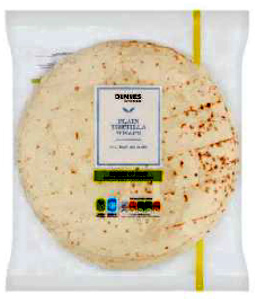
Recall of specific batches of Dunnes Stores Plain Tortilla Wraps due to the possible presence of metal pieces.
Alert Summary dated Friday, 20th March 2026.
Category 1: For Action. Alert Notification: 2026.11. Product Identification: Dunnes Stores Plain Tortilla Wraps; pack size: 512g. Batch Code Best before: 29/5/2026, 30/5/2026 and 31/5/2026. Country Of Origin: Netherlands.
Message: Dunnes Stores is recalling the above batches of its Plain Tortilla Wraps due to the possible presence of metal pieces.
Recall notices will be displayed at point-of-sale.
Action Required:Retailers and Customers. Retailers: Same are requested to remove the implicated batches from sale and display recall notices at point-of-sale. Consumers: Consumers are advised not to eat the implicated batches.
Incorrectly declared allergens in Ketoclassic 3:1 Porridge, Muesli and Savoury.
Alert Summary dated Tuesday, 24th February 2026.
Allergy Alert Notification: 2026.A10 Allergens: Cereals containing gluten, Sulphur dioxide and sulphites, Milk Product Identification: Please see table below for details. Batch Code: All batches and best before dates where allergens are incorrectly declared. Country Of Origin: United Kingdom
Message: As per the table below, the affected Ketoclassic 3:1 Foods for Special Medical Purposes (FSMPs) contain allergens listed in the ingredient declarations that are incorrectly declared. This may make the implicated products unsafe for consumers or who are allergic to or intolerant of cereals containing gluten (wheat), sulphur dioxide and sulphites and / or milk. Therefore these consumers should not eat the implicated products.
This website uses cookies to improve your experience. We'll assume you're ok with this, but you can opt-out if you wish.AcceptRead More
Privacy & Cookies Policy
Privacy Overview
This website uses cookies to improve your experience while you navigate through the website. Out of these, the cookies that are categorized as necessary are stored on your browser as they are essential for the working of basic functionalities of the website. We also use third-party cookies that help us analyze and understand how you use this website. These cookies will be stored in your browser only with your consent. You also have the option to opt-out of these cookies. But opting out of some of these cookies may affect your browsing experience.
Necessary cookies are absolutely essential for the website to function properly. This category only includes cookies that ensures basic functionalities and security features of the website. These cookies do not store any personal information.
Any cookies that may not be particularly necessary for the website to function and is used specifically to collect user personal data via analytics, ads, other embedded contents are termed as non-necessary cookies. It is mandatory to procure user consent prior to running these cookies on your website.








Recent Comments