Icarus Robotics Signs Landmark Agreement with Voyager Technologies to Deploy AI-Powered Robot on International Space Station.
Icarus Robotics, a pioneering space robotics company co-founded by Irish entrepreneur Jamie Palmer, who grew up in Co. Tipperary, has announced a major agreement with Voyager Technologies to test its innovative robotic platform aboard the International Space Station (ISS).
Under the newly signed mission management contract, Voyager Technologies will support the deployment of Icarus Robotics’ free-flying robot, Joyride, with a demonstration mission scheduled for early 2027. The agreement represents a significant milestone in advancing autonomous robotics capabilities in space.
Voyager will provide end-to-end mission services, including payload integration, safety certification, launch coordination, on-orbit operations planning, and real-time mission execution support.
The Joyride platform is designed to operate in microgravity environments, using artificial intelligence to enable human-controlled robots that can learn from demonstrations and progressively perform complex tasks independently. The ISS mission will serve as a critical step in validating the system’s navigation, maneuverability, and operational performance in space.
“Icarus Robotics represents the next generation of space builders, providing a turnkey solution for reliable, flight-proven access to space,” said Mr Matt Magaña, President of Space, Defense & National Security at Voyager Technologies.
Founded in 2024, Icarus Robotics is focused on developing a robotic workforce for space applications. Its systems aim to address growing labour constraints in orbit, where astronauts often spend valuable time on routine tasks such as maintenance and cargo handling. By deploying intelligent robotic systems, the company seeks to free astronauts to focus on high-value scientific research and mission-critical operations.
The company’s first-generation robots are operated remotely by humans, forming the foundation for “embodied AI”; systems capable of learning from human input and eventually carrying out tasks autonomously in complex environments.
Co-founder Ethan Barajas highlighted the significance of the partnership, noting its connection to his early experience in Voyager’s NASA HUNCH programme. “It is a full-circle moment to now deliver a robotic platform that will help make the ISS and future commercial stations smarter, autonomous, and capable of operating where humans cannot easily go,” he said.
Looking ahead, Icarus Robotics envisions its technology playing a key role in a wide range of space activities, including intravehicular operations, satellite servicing, and large-scale orbital construction.
The upcoming ISS demonstration marks a critical step toward that future, laying the groundwork for more autonomous, efficient, and scalable space operations.
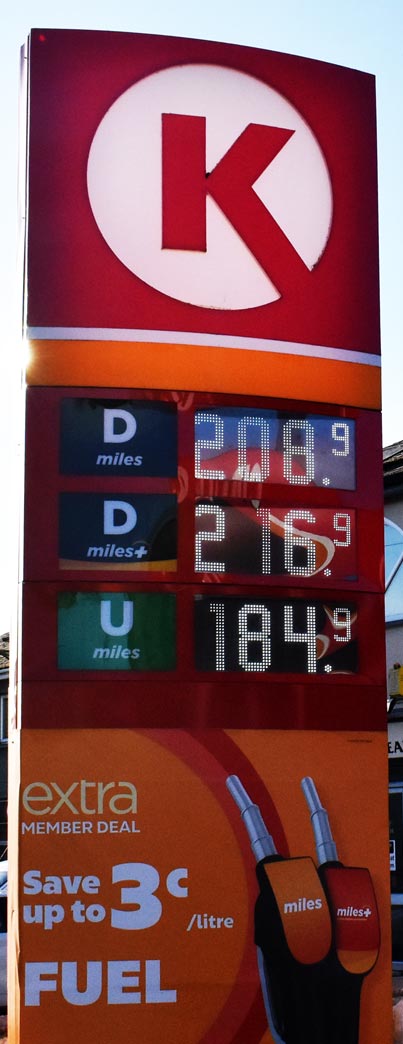
There is a familiar rhythm to fuel prices in Ireland. Costs rise sharply, headlines point to global crises, and frustration builds at petrol stations across the country. Recently, that cycle has repeated itself, with rising tensions involving Iran blamed for sudden spikes that pushed prices close to, and in some cases beyond, €2 per litre.
At first glance, the explanation seems straightforward. Oil is a global commodity, and when conflict threatens supply; particularly in critical regions like the Middle East, prices rise everywhere. In early 2026, motorists saw increases of over 30 cent per litre in a matter of days as markets reacted to geopolitical uncertainty.
But if global events are only part of the story, what explains why Ireland consistently feels more expensive than many of its neighbours? To understand that, you have to look beyond the headlines, and into the structure of the price itself.
The Price Beneath the Price. Strip away the pump display and something striking emerges. In Ireland, the majority of what drivers pay for fuel has little to do with oil at all. According to AA Ireland data, approximately 65% of the price of petrol and 60% of diesel is made up of taxes and levies.
Put simply, when you pay around €1.75 per litre:
Roughly 60 cent reflects the actual fuel cost.
More than €1 goes to the State.
This is not a marginal difference. It fundamentally changes how global shocks are experienced at a local level. If oil prices rise, Irish motorists don’t just pay more for fuel, they pay more tax on that higher price as well. Value Added Tax (VAT), set at 23%, is applied on top of the entire cost, including excise duty and carbon tax. The result is a compounding effect, often described as a “tax on tax,” where price increases are amplified rather than simply passed through. It is here that the gap between global explanation and domestic reality begins to widen.
Global Markets, Local Multipliers. There is no question that international events matter. The recent surge in prices, following Middle East tensions, reflects genuine concern about supply disruption. Oil markets are notoriously sensitive, and even the perception of risk can trigger immediate price increases. But the same global oil price applies across Europe. The difference lies in how each country translates that price into what consumers actually pay.
In Ireland, that Translation is Particularly Heavy. Before tax, Ireland sits roughly in the middle of European fuel costs. After tax, it often ranks among the most expensive. This explains a common experience for motorists near the border, as crossing into Northern Ireland can reduce the cost of a full tank by €15–€20, despite the fuel itself being sourced from the same global market. The conclusion is difficult to avoid, global events may set the baseline, but domestic policy determines the final impact.
The Case for High Taxes Of course, there is a logic behind Ireland’s approach. Fuel taxation is not simply a revenue tool, though it certainly provides substantial income for the Exchequer. It is also a central pillar of climate policy. Carbon tax, currently aligned with a rate equivalent to €71 per tonne of CO₂, is designed to discourage fossil fuel use and encourage a transition to cleaner alternatives. In theory, the principle is sound, make carbon-intensive behaviour more expensive, and people will gradually shift toward more sustainable choices. The revenue generated is also partially reinvested into Ireland’s energy efficiency programmes and social supports, aimed at offsetting fuel poverty. From a policy perspective, this reflects a broader European trend. Governments are increasingly using price signals to drive behavioural change.
Where Policy Meets Reality. The difficulty lies in how that theory plays out in practice. Ireland is not a country where driving is easily optional. Outside major urban centres, public transport options are limited, distances are longer, and reliance on private vehicles is often unavoidable. For many households, fuel is not a discretionary expense; it is a necessity. In this context, higher fuel prices do not significantly reduce consumption. Instead, they increase financial pressure. The burden is not evenly distributed either. Rural households, tradespeople, and lower-income workers are disproportionately affected. A commuter travelling 50 kilometres each day cannot simply switch to an electric vehicle overnight, nor can a small business absorb rising diesel costs indefinitely. What emerges is a tension between long-term policy goals and short-term lived experience.
The Ripple Effect Through the Economy. Fuel costs do not exist in isolation. They flow through the entire economy. When diesel prices rise, transport becomes more expensive. That, in turn, increases the cost of goods, food distribution, construction and services. A sustained increase of just 30 cent per litre can cost the average motorist over €300 per year, but the indirect costs spread far wider. This is why fuel prices often feel like a multiplier of the broader cost-of-living crisis. They do not just affect drivers; they affect everything.
Government Response: Reactive or Strategic? When prices spike sharply, governments tend to intervene. In recent weeks, temporary cuts to excise duty, (up to 20 cent per litre), have been introduced to ease pressure on households and businesses. These measures provide immediate relief, but they also highlight an uncomfortable truth; the government has significant control over fuel prices and can reduce them quickly when it chooses to do so. Critics argue that this reinforces the idea that high prices are, at least in part, a policy choice rather than an inevitability. Supporters counter that such interventions must remain temporary, or risk undermining climate commitments and public finances, and both perspectives have merit.
A System Under Strain – Ireland’s fuel pricing system is not broken, but it is under strain. On one side, there is a clear need to reduce emissions, meet climate targets, and transition toward a more sustainable energy system. On the other, there is the immediate reality of households struggling with rising costs in a country where alternatives are not yet fully in place. The current approach attempts to balance these competing pressures. But balance is difficult to maintain when external shocks, such as global conflicts, push prices sharply higher. In those moments, the structure of the system becomes more visible, and more contested.
So Who Is Responsible? The honest answer is not simple. Global events like the Iran conflict undeniably influence fuel prices. They set the direction of travel and can trigger rapid increases. But Ireland’s tax structure determines how steep that journey feels. It is not a question of either/or, it is both.
At a Crossroads Ireland now faces a deeper question about the future of its fuel policy. Should taxes remain high to drive long-term change, even if that increases short-term hardship? Or should the burden be eased, at least until viable alternatives are available for all? There are no easy answers. But one thing is clear: for many Irish drivers, the issue is no longer abstract. It is not about global markets or climate targets in isolation.
It is about the price on the pump, the cost of getting to work, and the growing sense that something in the system is no longer quite in balance.
Newly emerging data has highlighted significant concerns around public expenditure controls in Ireland, with substantial social welfare overpayments and weaknesses in fraud prevention systems within the Health Service Executive (HSE) drawing increased scrutiny.
Recent figures confirm that millions of euro in social welfare payments have been incorrectly issued, including cases where payments continued after recipients had died. At the same time, a separate audit has identified structural vulnerabilities in the HSE’s payroll systems, raising concerns about the potential for fraud to go undetected.
Social Welfare Overpayments: Scale and Causes. Official figures show that social welfare overpayments remain a persistent issue, with tens of millions of euro identified annually. In 2025 alone, over €24.6 million in overpayments linked to suspected fraud were recorded across more than 5,000 cases. However, fraud represents only a portion of the overall problem. The majority of overpayments arise from administrative or customer-related errors. In recent years, over 60% of overpayments were attributed to customer error, such as failing to report changes in income or personal circumstances.
A notable proportion of unrecovered funds relates to payments made after a recipient’s death. Audit data shows that, in certain schemes, up to 85% of written-off debts are linked to deceased claimants, reflecting delays in notification or system updates. While public discussion has referenced figures as high as €25 million paid to deceased individuals, there is no single official statistic confirming that exact amount. Instead, available data indicates that losses linked to deceased recipients form part of broader overpayment totals accumulated across multiple categories and years.
Recovery Challenges and Financial Exposure. Recovering overpaid funds remains a significant challenge for the State. As debts age, the likelihood of recovery declines sharply, with only a small percentage typically recouped after several years. In some cases, recovery may be pursued through estates after death, but where no assets are available or administrative costs are too high, the State may be forced to write off the debt entirely.
The scale of outstanding overpayments; running into hundreds of millions cumulatively, illustrates the ongoing financial exposure facing public finances.
HSE Audit Highlights Fraud Control Weaknesses.
Separate to welfare concerns, a recent audit into HSE payroll systems has identified “significant risks of fraud” due to weaknesses in oversight and governance.
The HSE payroll system manages billions of euro annually, making it a high-risk environment. Auditors found that:–
There is no comprehensive fraud risk assessment framework in place.
Roles and responsibilities for fraud prevention are not clearly defined.
Existing controls are often informal or inconsistently applied.
These gaps create conditions where fraudulent activity could occur without being promptly detected.
Governance and Accountability Under Pressure. The findings point to broader governance challenges across public systems. In the case of social welfare, delays in data sharing, particularly around deaths or changes in eligibility, can lead to continued payments that are difficult to recover. Within the HSE, the absence of structured risk management processes has raised concerns about accountability and oversight in one of the State’s largest financial operations.
Conclusion: Systemic Issues, Not Isolated Incidents Taken together, the evidence suggests that these issues are not isolated but reflect systemic weaknesses in administrative processes and control systems. While there is no indication of widespread organised fraud across either system, the combination of high transaction volumes, fragmented oversight, and delayed reporting creates an environment where errors, and potential abuses, can occur.
Strengthening data integration, improving real-time reporting, and implementing robust fraud risk frameworks are likely to be key priorities in addressing these vulnerabilities and protecting public funds going forward.
A major new report from the Ombudsman for Children’s Office has delivered a stark assessment of Ireland’s child care system, describing it as “broken” and failing to act in the best interests of vulnerable young people.
The report finds that, in some cases, children experience greater harm after entering State care. Serious concerns include instances of sexual grooming and assault, children going missing for days, and repeated moves between unregulated placements.
It also highlights situations where children have been held in secure care for extended periods, despite not committing any offences, due to a lack of suitable placements. In one case, two young siblings were placed in a facility with teenagers and a large staff presence because no foster home was available.
The Ombudsman, Dr Niall Muldoon, questioned how the State has reached a point where it cannot guarantee safe and stable care for highly vulnerable children.
The report identifies key systemic issues, including shortages of social workers, insufficient placement options, and ongoing difficulties in recruiting and retaining care staff. It also points to an increasing reliance on private providers and the growing use of unregulated accommodation.
Funding pressures remain a central concern. Despite a significant rise in child protection referrals over the past decade, the agency responsible, Tusla, is described as chronically under-resourced and receiving substantially less funding than required.
With nearly 6,000 children currently in care, the Ombudsman is calling for urgent reform. A forthcoming national consultation and the development of Ireland’s first National Alternative Care Plan are being framed as a critical opportunity to overhaul the system and better protect children’s rights.
Tipperary County Council has been allocated €1.4 million under the latest round of the Government’s Voids Programme, in a move expected to help bring more vacant local authority homes back into use across the county.
The funding forms part of a wider €40 million national investment announced by Housing Minister Mr James Browne, which will support the refurbishment and re-letting of around 2,200 local authority homes across the country in 2026.
The latest allocation is expected to provide a significant boost for Tipperary as demand for housing remains strong and pressure continues on local authority stock. The funding will be used to prepare vacant council-owned properties for new tenants, helping to increase housing supply through the reuse of existing homes.
The announcement also signals a major policy shift in how future funding under the Voids Programme will be distributed.
Under a revised performance-based model introduced by the Minister, future allocations will be linked to how effectively local authorities reduce vacancy levels and improve turnaround times for re-letting homes.
From 2027, local authorities, including Tipperary County Council, will be expected to maintain a vacancy rate of no more than 2% and achieve a maximum average turnaround time of 18 weeks for vacant properties. The turnaround target will tighten further to 15 weeks in 2028 and 12 weeks in 2029.
Councils that meet those targets will qualify for full funding under the revised model, placing a stronger emphasis on delivery, efficiency and the rapid reuse of existing housing stock.
The funding will be seen as a positive development for Tipperary, particularly given the ongoing need to maximise available housing and reduce the time homes remain vacant between lettings.
Nationally, the Government says the Voids Programme has played a significant role in bringing empty social homes back into use over the past decade. Since the scheme began in 2014, a total of €385 million has been invested, supporting the return of 27,860 homes to active use.
The 2026 allocation is also a 29% increase on the previous year’s funding, reflecting what the Department says is a continued focus on tackling vacancy and increasing housing availability through refurbishment.
For Tipperary, the €1.4 million allocation is expected to support further progress in returning vacant homes to use, while positioning the local authority to meet the tougher targets that will shape future funding in the years ahead.
This website uses cookies to improve your experience. We'll assume you're ok with this, but you can opt-out if you wish.AcceptRead More
Privacy & Cookies Policy
Privacy Overview
This website uses cookies to improve your experience while you navigate through the website. Out of these, the cookies that are categorized as necessary are stored on your browser as they are essential for the working of basic functionalities of the website. We also use third-party cookies that help us analyze and understand how you use this website. These cookies will be stored in your browser only with your consent. You also have the option to opt-out of these cookies. But opting out of some of these cookies may affect your browsing experience.
Necessary cookies are absolutely essential for the website to function properly. This category only includes cookies that ensures basic functionalities and security features of the website. These cookies do not store any personal information.
Any cookies that may not be particularly necessary for the website to function and is used specifically to collect user personal data via analytics, ads, other embedded contents are termed as non-necessary cookies. It is mandatory to procure user consent prior to running these cookies on your website.








Recent Comments