Roscrea seizures by Gardaí highlight confusion around CBD, cannabis and Vape products.
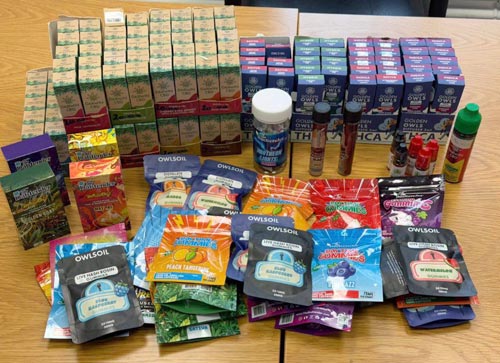
Today’s searches of two vape shops in Roscrea, Co. Tipperary, by the Tipperary Divisional Drugs Unit, where cannabis and cannabis-infused products valued at over €14,000 were seized pending analysis, raise an important question for the public: what exactly is CBD, and is it legal in Ireland?
CBD, short for cannabidiol, is a compound found in the cannabis/hemp plant. Unlike THC, it is not the main intoxicating compound associated with the “high” from cannabis. However, that does not mean every product labelled “CBD”, “hemp”, “cannabis-infused” or “natural” is automatically legal or safe to sell.
Cannabis Infused Products.
In Ireland, the key issue is often whether a product contains THC or another controlled cannabinoid. Cannabis remains illegal to possess, supply, produce, import or export except under licence. CBD itself is not classed as a controlled drug, but CBD products can still fall foul of Irish and EU rules, depending on what they contain, how they are made and how they are sold.
This is especially relevant when it comes to vapes, oils, edibles, jellies and so-called cannabis-infused products. A product may be marketed as CBD, but if analysis shows it contains THC or other controlled substances, it may be treated very differently under Irish law.
That is why today’s Roscrea, Co. Tipperary seizure matters. The final legal position will depend on laboratory analysis, but the incident is a reminder that consumers and retailers need to be extremely careful. Labelling alone is not enough. A product being available over the counter does not necessarily mean it is compliant, safe, or legal.
For members of the public, the message is simple: know what you are buying, be wary of cannabis-infused products, and do not assume that “CBD” means fully legal. For retailers, the responsibility is even greater. Products must be properly sourced, compliant, and free from controlled substances.
Roscrea Co. Tipperary, is not alone in seeing enforcement action around these products. Across Ireland, Gardaí continue to focus on cannabis, THC vapes, oils and edibles, where there are concerns about illegal cannabinoids, public safety, and the sale or supply of controlled drugs.
The bottom line: CBD is not the same as cannabis, but CBD products are not a legal free-for-all. The difference between a lawful product and an illegal one may come down to what is actually inside it.
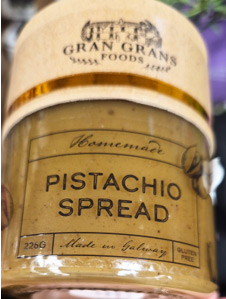
Incorrectly declared pistachios in specific batches of Gran Grans Foods Homemade Pistachio Spread.
Alert Summary dated Wednesday, June 3rd 2026.
Allergy Alert Notification: 2026.A16 Allergen: Nuts Product Identification: Gran Grans Foods Homemade Pistachio Spread; pack size: 226g Batch Code: Please see table below. Country Of Origin: Ireland
Message: Nuts (pistachios) are not emphasised in the ingredients list of the above batches of Gran Grans Foods Homemade Pistachio Spread. This may make these batches unsafe for consumers who are allergic to or intolerant of nuts (pistachios) and therefore, these consumers should not eat the implicated batches. The affected batches are being recalled.
Pre-deceased by his parents Michael and Kathleen; Mr Purcell sadly passed away unexpectedly at his place of ordinary residence.
His passing is most deeply regretted, sadly missed and lovingly remembered by his sorrowing family; loving wife Dymphna (née Hogan), sons Mark and David, daughter Laura, brothers P.J., Adrian, Dara and Rory, sisters Antoinette, Cáit, Rosemarie, Audrey and Aisling, aunt Lil, nephews, nieces, brothers-in-law, sisters-in-law, extended relatives, neighbours and friends.
For those persons who would wish to attend Requiem Mass for Mr Purcell, but for reasons cannot, same can be viewed streamed live online, HERE.
The extended Purcell and Hogan families wish to express their appreciation for your understanding at this difficult time, and have made arrangements for those persons wishing to send messages of condolence, to use the link shown HERE.
In her 93rd year and predeceased by her husband Philip, brother Liam and sister Bridget; Mrs Maher passed away peacefully, while in the care of staff at Ardeen Nursing Home, Abbey Road, Thurles, Co. Tipperary.
Her passing is most deeply regretted, sadly missed and lovingly remembered by her sorrowing family; loving sons Gerard and Fergus, daughter Anne, grandchildren Joanne, Daniel, Caithlin and Orlaith, great-grandchildren Jade, Kaden, Grace and Saffy, daughters-in-law Catherine and Deirdre, son-in-law Joe, nephews, nieces (especially Annita), Don and Aidan, sister-in-law Bridget, extended relatives, the Ardeen Nursing Home community, neighbours and friends.
For those persons who would wish to attend Requiem Mass for Mrs Maher, but for reasons cannot, same can be viewed streamed live online, HERE.
The extended Maher family wish to express their appreciation for your understanding at this difficult time, and have made arrangements for those persons wishing to send messages of condolence, to use the link shown HERE.
Pre-deceased by her parents Seamus and Stacia, Mrs Conway passed away peacefully, while in the care of staff at Tipperary University Hospital, Clonmel, Co. Tipperary.
Her passing is most deeply regretted, sadly missed and lovingly remembered by her sorrowing family; loving husband Michael, adored family, daughters Michelle and Ashling, sons Kevin and Mark, Ashling’s partner Robbie, her twin sister Marion (Hennessy, Mallow), sister Geraldine (Egan, Loughmore) and brother Jim (Ballagh, Co. Tipperary), sister-in-law, brothers-in-law, nieces, nephews, cousins, extended relatives, neighbours and friends.
Requiescat in Pace.
Funeral Arrangements.
The earthly remains of Mrs Conway will repose in Kennedy’s Funeral Home, Upper Kickham Street, Dublin Road, Thurles, (Eircode E41 XY47) on Thursday afternoon, June 4th, from 5:00pm until 7:00pm, before being received into the former Cistercian Monastery Abbey, Holycross, Thurles, Co. Tipperary, (Eircode E41 PH01) at 8:00pm, same evening. Requiem Mass for Mrs Conway will be offered on Friday morning, June 5th at 11:30am, followed by interment, immediately afterwards, in the adjoining graveyard.
For those persons who would wish to attend Requiem Mass for Mrs Conway, but for reasons cannot, same can be viewed streamed live online, HERE.
The extended Conway family wish to express their appreciation for your understanding at this difficult time, and have made arrangements for those persons wishing to send messages of condolence, to use the link shown HERE.
This website uses cookies to improve your experience. We'll assume you're ok with this, but you can opt-out if you wish.AcceptRead More
Privacy & Cookies Policy
Privacy Overview
This website uses cookies to improve your experience while you navigate through the website. Out of these, the cookies that are categorized as necessary are stored on your browser as they are essential for the working of basic functionalities of the website. We also use third-party cookies that help us analyze and understand how you use this website. These cookies will be stored in your browser only with your consent. You also have the option to opt-out of these cookies. But opting out of some of these cookies may affect your browsing experience.
Necessary cookies are absolutely essential for the website to function properly. This category only includes cookies that ensures basic functionalities and security features of the website. These cookies do not store any personal information.
Any cookies that may not be particularly necessary for the website to function and is used specifically to collect user personal data via analytics, ads, other embedded contents are termed as non-necessary cookies. It is mandatory to procure user consent prior to running these cookies on your website.





Recent Comments