Bullán stones (From the Irish word meaning a bowl, describing the bowl-like depressions in the stone), were used as ‘Cursing stones’ or ‘Curing stones’. They consist of a stone with one or more depressions in it and date from the Neolithic period. They are sometimes located near early monastic sites.
As ‘Curing Stones’ women sometimes cured people by rolling these stones.
However, when used as a ‘Cursing stone’; did you know the last time the stone were ‘turned’ on Inishmurray Island, latter 7km off the coast of Co. Sligo, they were ‘turned’ to curse Hitler and resulted in the fall of the 3rd Reich?
Did you know the ‘Cursing Stone’ was ‘turned’ against the HMS Wasp, when it tried to evict non rent paying families on Tory Island, latter off the north-west coast of Co. Donegal, during the Great Famine (1845- 1849); same resulting on the ship being wrecked on the rocks, with just 6 of its 48 passengers only being saved?
“We in Cashel Library, would be delighted to see you, if you can make this informative lecture. I’ve done a lot of research on this subject, so all are welcome on Friday morning, October 28th next @ 11:00am, to Cashel Library, but do remember to RSVP Cashel Library by Telephone please, to 062-63825.”
In the meantime, should you accidently stumble across ‘Cursing stones’ that may have been previously overlooked, be sure not to disturb same, as they may already have been cursed. Warning: Turning these stones anti-clockwise or against the sun, who knows what could happen.
The Food Safety Authority of Ireland (FSAI) last week welcomed the EU-wide research conducted by the European Food Safety Authority (EFSA). The 2022 Eurobarometer on food safety, the first to be commissioned since 2019, and focused on a range of topics including concerns about food safety, trust in sources of information on food risks, and personal interest in food safety.
When asked about factors affecting food purchases, Irish consumers ranked cost (63%) as the most important consideration, with taste (54%) and food safety (52%) following close behind. Strikingly, these results are higher overall than the average top concerns across the whole EU of cost (54%), taste (51%) and food safety (46%).
Other findings from the Eurobarometer include:
Chief among Irish food safety concerns are food poisoning from food or drinks contaminated by bacteria, viruses, and parasites (39%); pesticide residues in food (36%); and additives like colours, preservatives or flavourings used in food or drinks (29%).
A strong majority of Irish consumers (82% of men and 83% of women) would change their behaviour if made aware of a foodborne disease outbreak news story, with 90% of those aged 15–24 stating they would do so.
When asked for their reasons for not engaging with the EU food safety system, Irish consumers (47%) responded; “I take it for granted that the food sold is safe”.
Dr Pamela Byrne, Chief Executive, FSAI said, “In the current high cost of living climate and with rising household bills, it is not surprising to see that Irish consumers report cost as the main factor when purchasing food, up 6% since 2019. However, from a food safety perspective, it is encouraging to see that Irish consumers place food safety as the third most important factor when buying food.
Over 1,000 Irish consumers were interviewed as part of this research, and 90% of those agreed that regulations are in place to ensure that the food we eat is safe, with 84% of the same respondents trusting national authorities as a source of information on food risk, a figure almost 20% higher than the EU average (66%).
75% of Irish people interviewed said they had a personal interest in the topic of food safety. We want every Irish consumer to know that the FSAI is responsive and understanding of their concerns regarding food safety. We continue to work with food businesses in Ireland to ensure that food safety regulations are complied with and that Ireland maintains its positive reputation for producing safe food. Working in conjunction with the food inspectorate and other EU food safety authorities, we will continue to protect consumers and raise compliance through partnership, science, and food law enforcement,” Dr Byrne concluded.
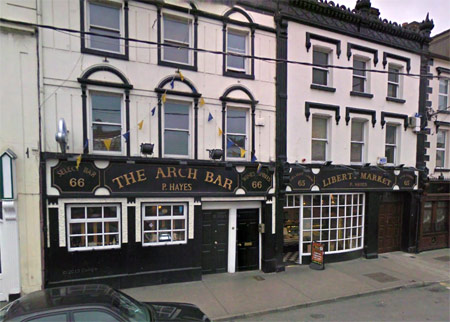
True for Sean O’Casey’s character ‘Captain Boyle’ in ‘Juno and the Paycock’, quote “Th’ whole county of Tipperary is in a terrible state o’ chassis”, said Mikey Ryan. Mikey had just finished reading a copy of one of the local rag newspapers, which he had pulled from behind the counter, when I caught up with him, after his 4th pint of the evening, in The Arch Bar, Liberty Square.
“I believe his phrase wasTh’ whole world’s in a terrible state o’ chassis”, said I, sounding intelligent.
“Same difference”, said Mikey.
“Ah to be fair, Tipperary was the only county in Ireland to show a decrease in the numbers on the Live Register in the last 12 months”, said I, “with an overall drop of some 1%”.
“What that figure really represent is 1% of our residents, anxious to seek work, eventually took the hint and moved overseas”, said Mikey, “Why do you think they’ve sprayed the graffiti image of a Swallow on our town’s cark park wall?They are hoping that the same 1% will come back like the swallows next summer on holidays, and prop up Fáilte Ireland’s imaginary tourist figures. One wonders why we continue to pay Mick Lowry and Jackie Cahill salaries of 2 million Euro’s, including expenses, every 5 year period, despite their consistent inadequacy in producing even one single job in Thurles, during their lengthy period in office”, Mikey continued.
“No argument there Mikey”, said I, “but then that doesn’t stop them from regularly demonstrating their delusions of adequacy. Anyway, tell us this and tell us no more, did you ever think of emigrating yourself Mikey” I continued.
“Several times” said Mikey, “I wanted to move to Australia once, but the immigration officer started asking awkward questions. Have you any criminal convictions? says he. Sure I, as an Irishman wasn’t to know that crime was still an Australian requirement for immigrants, after Michael Collins had helped the British to escape out of this country”.
“I never told you this before”, continued Mikey, “but I tried to get a visa for America, earlier this year. The immigration official asked where was I hoping to go, and when I said San Jose, Northern Californiabefore the immigration officer corrected me saying that San Jose was pronounced ‘San Hose’; It seems their ‘J’ is pronounced as a ‘H’. “So how long do you intend staying in San Hose?” says he. “In my efforts” said I “to impress, I said six months; from Hanuary to Hune. “Then”, said Mikey, “sure in filling out the immigration form I was asked “Sex“. I tried to answer truthfully, as I had already ticked the ‘married‘ box, so I wrote ‘just occasionally’. Then while I was there in the immigration office, disaster, didn’t I interrupt the interviewing officer, who was answering his mobile phone, informing him that “They should be shipped back where they came from, as they have a tendency to cause explosions”. The illegitimate son of a b..ch accused me of being racist and was about to call security, before I eventually persuaded him, that I was referring to the Samsung Galaxy Note 7 phone, he was using. Still he wrote me a lovely letter a few days later, stating that my visa was denied on the grounds of fears that the level of the current IQ, present in ‘San Hose’would double”.
“Tell me this Mikey”, said I, “is Thurles the only town in the world not suffering from a severe energy crisis?”
“Indeed it appears so” said Mikey, “sure aren’t 57 street lights burning currently in Thurles town, during day light hours, and for the last 4 months. Yet, a senior Tipperary council official has beenurging community and business groups elsewhere in the county, to reduce the hours that Christmas lights are left turned on during the forthcoming festive season, (Note: only another 11 Saturdays left until Xmas Eve), as energy costs continue to soar. Thank God the Director of Services Mr Brian Beck doesn’t get up as far as Thurles or he would really “blow a fuse”, Mikey ranted on.
“When you’re ready Pat, you can give Mikey another pint,” said I, “we’ll be walking home every night from now on, since they’ve tripled the width of Thurles town pavements”.
Mrs Corbett sadly passed away suddenly, following a short illness.
Her passing is most deeply regretted by her loving husband Timothy (formerly Ballycurrane, Thurles), daughters Marguerita (Mags, Castleiney, Templemore) and Johannah (Staffordshire), sons Laurence (Gloucestershire) and John (Navan), grandchildren, daughters-in-law Susan and Jo, Mag’s partner William and Johannah’s partner James, brother Pat, nephews, nieces, sisters-in-law, brothers-in-law, extended relatives, neighbours and friends.
Requiescat in pace.
Funeral Arrangements.
The earthly remains of Mrs Corbett will repose at her place of residence on Tuesday evening, October 11th, from 4:00pm to 7:00pm. Her body will be received into the former Cistercian Monastery Abbey, at Holycross, Thurles, on Wednesday morning, October 12th, at 11:00am to further repose for Requiem Mass at 11:30am. (Burial arrangements to be announced later).
For those unable to attend Requiem Mass for Mrs Corbett, same can be viewed online HERE.
The extended Corbett family wish to express their appreciation for your understanding at this difficult time and have made arrangements for those wishing to send messages of condolence, to use the link shown HERE.
Firstly, shame on Thurles Elected Politicians, Councillors and the senior officials who over-rule them, within Thurles Municipal District and County Council, all of whom have allowed this beautiful river Suir asset, to fall into a state which resembles that of an unkempt sewer, while claiming to have lost the power to control its continuing deterioration.
The Suir From Its Source to the Sea.
Extract from the book by author L. M. McCreith, (Author of “Cashel of the Kings”.)
“………The gentle Suir, that, making way by Sweet Clonmel, adorns rich Waterford”. Quote taken from Spencer’s “Faerie Queene”*.
OriginallyPrinted by the Clonmel Chronicle Newspaper and Printing Works Ltd. (1848 – 1935)
*The “Faerie Queene” referred, is an English epic poem by Edmund Spenser, with over 36,000 lines and over 4,000 stanzas. It remains one of the longest poems in the English language and was presented to Queen Elizabeth I in 1589, probably sponsored by Sir Walter Raleigh, latter who was one of the principal landowners and colonists in Munster and who was later beheaded by English King James I.
This extract written in 1912,(110 years ago)states: –
“Some 8 miles from Templemore, spreading itself on both banks of the Suir, is the ancient town of Thurles. The town has a distinctive, old world, almost ecclesiastical, character of its own.
Its name is a corruption of the Irish Durlas, a fortress. In the “Annals of the Four Masters”, we read of a chief of Durlas, by name Maelduin, who was slain in 660 A.D. Thurles was the scene of one of the few signal defeats of the Danes by the Irish. This took place in the 10th century and was long remembered and recorded locally. As has been said, Thurles was also the scene of the defeat of Strongbow, by a coalition of Irish Chiefs in 1174. When Strongbow heard that Connor and Donal Mor we’re advancing against him, he sent to Dublin for help. A contingent of Danish settlers and Norman soldiers, natural allies, came to his assistance. They endeavoured to join him at Thurles, but there, by the banks of the Suir, 1700 of Strongbow,s men were slain. Donal Mor O’Brien was in command that day and it would seem that the field was a fortunate spot to him; for when he returned to that same place 17 years later, to fight another battle against the English, he was again victorious. In 1197 however, 6 years afterwards the English took Thurles and “burnt many churches and temples”.
Among the many notable Norman’s who established themselves in Ireland (and in time became “more Irish than the Irish”), where the Butler’s. Theobald FitzWalter came in the train of Henry II, in 1172. He was kin to Thomas A’ Becket, and it was part of the King’s accepted penance that he should ennoble all the murdered Archbishop’s relatives. Henry II gave FitzWalter large grants of Irish land, in return for which FitzWalter was to act as the King’s chief Butler and to hand him a cup of wine after his coronation. Hence the name of the family.
The Butlers ever remained loyal to the Sovereign, whose vassals they were and were frequently in opposition to the other powerful Norman House, the Fitzgerald’s or Geraldine’s, who are descended from Strongbow’s Knight, son-in-law and right-hand, Raymond le Gros and were represented by the earls of Kildare and Desmond.
The Butlers obtained large possessions in Wicklow and in fertile Tipperary, and early in the 13th century became possessed of Thurles. The Butlers were ever notable as castle-builders and founders of religious houses. They began to build on the banks of the Suir. Within the last half-century there were remains of no fewer than 9 castles in this town.
James Butler was created Earl of Ireland in 1328. About that time (1324) he caused the Castle to be built, the Norman keep of which still guards the bridge across the slow-flowing river. The Butler’s also built or endowed Carmelite and Franciscan monasteries in Thurles and there, as well as Templemore, the knights Templars established a Preceptory. Viscount Thurles still remains the inferior title of the Marquis of Ormonde, the head of the Butler family.
Thurles today is an important and thriving town of about 5,000 inhabitants. It has a notable horse fair and it is the centre of a rich grazing and grain growing district. It is the seat of the Archbishop of Cashel and diocese of Emly, and contains a magnificent Roman Catholic Cathedral and a handsome archiepiscopal residence. The bells and the organ of the Cathedral are notably fine. There is also a fine Roman Catholic college, two convents and a monastery, the hole forming as it were a, kind of religious quarter.
Thurles was the scene of the famous Roman Catholic synod in 1850. From Thurles onwards the Suir flows through the county of which the poet Spenser (Edmund) said that it was ‘the richest champagne that may ever be rid’.”
This website uses cookies to improve your experience. We'll assume you're ok with this, but you can opt-out if you wish.AcceptRead More
Privacy & Cookies Policy
Privacy Overview
This website uses cookies to improve your experience while you navigate through the website. Out of these, the cookies that are categorized as necessary are stored on your browser as they are essential for the working of basic functionalities of the website. We also use third-party cookies that help us analyze and understand how you use this website. These cookies will be stored in your browser only with your consent. You also have the option to opt-out of these cookies. But opting out of some of these cookies may affect your browsing experience.
Necessary cookies are absolutely essential for the website to function properly. This category only includes cookies that ensures basic functionalities and security features of the website. These cookies do not store any personal information.
Any cookies that may not be particularly necessary for the website to function and is used specifically to collect user personal data via analytics, ads, other embedded contents are termed as non-necessary cookies. It is mandatory to procure user consent prior to running these cookies on your website.









Recent Comments