Ireland’s trolley crisis has become more than a seasonal emergency or a political talking point. It is now a defining feature of the country’s healthcare system. The latest figures from the Irish Nurses and Midwives Organisation reveal a staggering reality; more than 1.7 million people have been treated without a proper hospital bed since 2006. Behind that number are exhausted patients, distressed families and healthcare workers trying to deliver care in conditions that should never have become normal.
The fact that over one million people have been placed on trolleys in just the last decade shows how dramatically the problem has escalated. Despite years of economic growth, repeated promises of reform and countless government strategies, overcrowding remains deeply embedded in hospital life across Ireland. For many patients, entering an emergency department now means preparing for the possibility of spending hours, or even days, waiting in corridors for a bed to become available.
University Hospital Limerick
The figures from University Hospital Limerick are particularly alarming. Nearly 195,000 people have been left on trolleys there since 2006, making it the most overcrowded hospital in the country. Crucially, UHL serves not only Limerick but large parts of the Mid-West, including North Tipperary, meaning communities across the region are directly impacted by the ongoing crisis. Cork University Hospital and University Hospital Galway have also faced enormous pressures, highlighting how widespread the overcrowding problem has become.
What makes these numbers especially troubling is the human impact behind them. Patients on trolleys often experience a complete loss of dignity, treated in open corridors with little privacy, while waiting for care. Elderly and vulnerable patients are particularly affected, while frontline nurses and midwives continue to work under immense strain trying to provide safe treatment in overcrowded conditions.
The INMO survey reveals the growing toll on healthcare staff. More than two-thirds of respondents said staffing levels were inadequate to meet patient needs, while many reported burnout, stress and declining psychological wellbeing. Alarmingly, large numbers have considered leaving their work areas because of unsafe staffing conditions, creating fears that the crisis could worsen further if experienced staff continue to leave the system.
There is increasing concern that Ireland is beginning to normalise overcrowding in hospitals. Yet no modern healthcare system should accept corridors and trolleys as routine treatment spaces. Despite economic growth over the past two decades, many patients still face unacceptable waiting conditions when they are most vulnerable.
The warning from the INMO is not simply about statistics. It is a stark reminder that the healthcare system remains under severe pressure and that patients and staff across regions such as North Tipperary continue to pay the price for a crisis that has gone unresolved for far too long.
Application Ref: 2660370. Applicant:Aidan & Valerie Murphy. Development Address: 18 Iona Drive, Thurles , Co. Tipperary. Development Description: Demolition of existing attached lean-to ancillary to side facade and extension of dwelling including associated works. Status: N/A. Application Received: 29/04/2026. Decision Date: N/A. Further Details:http://www.eplanning.ie/TipperaryCC/AppFileRefDetails/2660370/0.
The Irish Government is preparing a new savings and investment scheme that is expected to be announced during the next Budget. The main political figure behind the proposal is Mr Simon Harris, who is currently serving as Ireland’s Minister for Finance, with the Department of Finance also heavily involved in designing this plan.
New Savings & Investment Scheme.
The Government says the aim is to encourage ordinary people to invest their savings instead of leaving large amounts of money sitting in low-interest bank accounts. Ministers believe Irish households are holding billions of euro in cash savings that could earn better returns through investment funds or shares.
Under the proposal being discussed, people could place money into a special investment account that would receive major tax advantages. Reports suggest the Government is looking at a Swedish-style model where profits and gains from investments would either face very low tax or possibly no capital gains tax at all.
Supporters of the idea say this could help middle-income families grow their savings faster and make investing less complicated. Mr Simon Harris has argued that Ireland’s current taxes on investments are too high and discourage people from investing for the future.
However, several economists are warning that the plan may mainly benefit wealthier households. Their argument is simple: people with large amounts of spare cash will gain the biggest tax savings because they can afford to invest much more money. Families struggling with rent, mortgages, childcare, or daily expenses may not be able to take advantage of the scheme at all.
Critics also fear the State could lose a significant amount of tax revenue. Taxes collected from investments help fund public services such as hospitals, schools, transport, and housing. If investment profits become lightly taxed, the Government may collect less money in future years. Economists describe this as creating “another hole in the tax bucket” because less money would flow into the State, while the largest benefits would go to those already financially comfortable.
The debate now centres on fairness. The Government sees the proposal as a way to modernise Irish savings and encourage people to build wealth. Critics believe it risks increasing inequality by rewarding people who already have money while reducing funds available for public services.
Every spring, Ireland is encouraged to embrace “No Mow May”, the growing environmental campaign that asks homeowners, schools and local authorities to leave grass uncut in support of bees, pollinators and biodiversity. Wildflowers bloom, insects return and urban spaces become noticeably greener.
At the very same time, however, the HSE is issuing renewed warnings about Lyme disease and the dangers posed by ticks hiding in long grass. This has created an increasingly important conversation; how do we balance environmental goals with public health concerns?
Blood Sucking Tick Insect
Why the HSE Is Raising Concern. According to the HSE and the Health Protection Surveillance Centre, ticks are active from spring through autumn and are commonly found in grassy, damp and shaded environments. They are present in both rural and urban Ireland and become more active during the warmer months. The concern is not simply the tick bite itself, but the possibility of Lyme disease, an infection transmitted through infected ticks. The HSE says “several hundred” cases of milder Lyme disease likely occur annually in Ireland, while more serious neurological forms are reported in smaller numbers each year. Health officials are particularly advising people to take care in areas of long vegetation. HSE guidance specifically recommends that walkers “keep to footpaths and avoid long grass” where possible.
The Environmental Argument for No Mow May. Supporters of No Mow May argue that Ireland’s obsession with closely trimmed lawns has come at a cost to biodiversity. Allowing grass to grow naturally for even a few weeks provides habitat and food sources for bees, butterflies and pollinating insects, whose populations have been under pressure for years. Longer grass also improves soil quality, supports carbon capture and creates more resilient urban ecosystems. In many areas, wildflower meadows have become symbols of climate awareness and environmental responsibility. For environmental groups, reducing mowing is not about neglect. It is about rethinking how public and private green spaces are managed.
Where the Two Issues Collide. The difficulty is that ticks thrive in many of the same environments promoted by rewilding initiatives. Long grass, woodland edges, scrub areas and damp vegetation provide ideal habitats for ticks waiting to attach themselves to animals or humans passing by. That does not mean every unmown lawn becomes dangerous, nor does it mean biodiversity projects should end. But public health experts increasingly believe unmanaged growth in heavily used public areas can unintentionally increase exposure risks. This debate is becoming more relevant as warmer temperatures and milder winters appear to be extending tick activity in Ireland. Climate-related research and reporting suggest tick populations may continue expanding in the years ahead.
A More Balanced Approach. What is emerging now is a more balanced idea of “managed rewilding”. Rather than leaving all spaces untouched, many experts favour maintaining cut pathways through parks and meadow areas, trimming grass around playgrounds and seating areas, and placing public information signs in higher-risk locations. The message from public health officials is not to avoid nature, but to become more “tick aware”, while enjoying it. Simple precautions remain highly effective. Wearing long trousers, using insect repellent containing DEET, checking skin and clothing after walks, especially young children, and removing ticks quickly from skin surfaces, all which significantly reduce risk.
The Bigger Conversation. The debate around ‘No Mow May’ reflects a wider challenge modern societies now face. Environmental policies and public health policies can sometimes overlap in unexpected ways. Creating greener spaces is important. So is protecting people using those spaces. The answer is unlikely to be found in extremes, neither cutting every patch of grass short nor abandoning management altogether. Instead, the future probably lies in smarter landscape design that supports biodiversity while still recognising genuine health risks.
Ireland’s growing awareness of Lyme disease may ultimately push councils, communities and homeowners toward a more thoughtful approach to rewilding, one where nature is encouraged, but not left entirely unmanaged.
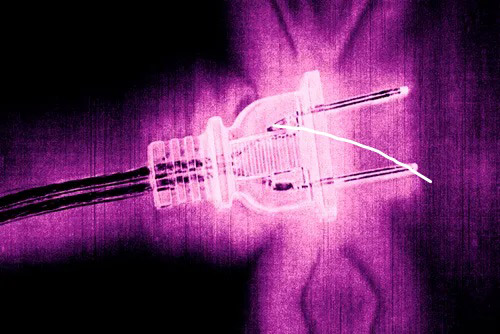
Here In Thurles we keep street lights on for 24 hours each day, but after all Thurles is considered the Dubai of the Midlands. At the price of electricity in Ireland, the collective lamp posts in Liberty Square are now basically a single chandelier. Sure with lights blazing morning, noon and night, tourists, the few we attract, must think Thurles has struck oil sucked from the numerous existing potholes. Maybe the council just wants to prove Tipperary is rolling in money: “Can’t fix the roads lads, but by God you’ll be able to see every crack in them at 10:00am mid-morning.”
Seriously; all joking aside, Irish households are once again being hammered by some of the highest electricity costs in the European Union and ordinary families are right to ask: what exactly are we getting in return?
According to new figures from Eurostat, Ireland now has the highest household electricity prices in the EU, with consumers paying a staggering 40.42 cent per kilowatt-hour. That is almost 40% above the EU average of 28.96 cent. The average Irish household is now paying roughly €480 more per year than other families across Europe.
Government ministers and energy industry insiders continue to offer excuses, blaming geography, housing patterns, population growth, and even the war in Ukraine. But after years of soaring bills, the public deserves more than excuses. It deserves accountability.
Yes, Ireland is a relatively small island with a dispersed rural population. Yes, our electricity grid needs investment. But many of these issues have been known for decades. Instead of planning ahead, successive governments failed to build an energy system capable of supporting modern demand.
The result? Irish consumers are paying the price for years of poor infrastructure planning and political indecision.
One of the biggest failures has been Ireland’s overreliance on gas. More than 40% of our electricity is still generated using gas, leaving the country dangerously exposed to international price shocks. When gas prices surged following Russia’s invasion of Ukraine, Irish consumers were left uniquely vulnerable. Countries that invested heavily in nuclear, hydro, or long-term renewable infrastructure now enjoy far lower electricity costs. Ireland, meanwhile, continues to depend on expensive fossil fuels while talking endlessly about future green ambitions.
Even more frustrating is the pressure placed on the grid by the rapid expansion of energy-hungry data centres. While multinational tech companies benefit from Ireland’s favourable tax environment, ordinary households are left footing the bill for the extra strain on infrastructure. Families struggling to heat their homes should not be subsidising the energy demands of billion-dollar corporations.
Then there is the issue of interconnection. Ireland remains poorly connected to European electricity markets, with only limited links to the UK. A new interconnector with France is not expected until 2028. For years, experts warned that Ireland’s isolation would leave consumers exposed to higher prices, and once again, those warnings were ignored.
Meanwhile, energy companies continue to post strong profits while customers face relentless price hikes. The promises of “temporary increases” have become permanent reality. Even after multiple government energy credits and VAT reductions, Irish electricity remains among the most expensive in Europe.
The real scandal is not just the cost itself; it is the normalisation of these costs. Irish consumers are constantly told high prices are unavoidable, yet many other European countries manage to provide cheaper, more stable energy. Hungary, Malta, and Bulgaria all have dramatically lower household electricity costs.
At some point, the conversation must move beyond explanations and toward solutions. Ireland needs serious long-term investment in renewable generation, stronger energy security, faster grid upgrades, and far greater scrutiny of how energy policy impacts ordinary citizens.
Because right now, Irish households are not simply paying more for electricity; they are paying the price for years of failed energy policy.
This website uses cookies to improve your experience. We'll assume you're ok with this, but you can opt-out if you wish.AcceptRead More
Privacy & Cookies Policy
Privacy Overview
This website uses cookies to improve your experience while you navigate through the website. Out of these, the cookies that are categorized as necessary are stored on your browser as they are essential for the working of basic functionalities of the website. We also use third-party cookies that help us analyze and understand how you use this website. These cookies will be stored in your browser only with your consent. You also have the option to opt-out of these cookies. But opting out of some of these cookies may affect your browsing experience.
Necessary cookies are absolutely essential for the website to function properly. This category only includes cookies that ensures basic functionalities and security features of the website. These cookies do not store any personal information.
Any cookies that may not be particularly necessary for the website to function and is used specifically to collect user personal data via analytics, ads, other embedded contents are termed as non-necessary cookies. It is mandatory to procure user consent prior to running these cookies on your website.









Recent Comments