Pre-deceased by her parents Timmy and Birdie, sister Noeleen; the passing of Mrs Eaton is most deeply regretted, sadly missed and lovingly remembered by her sorrowing family. Loving sons Mark and Paul, daughter-in-law Julieanne, grandchildren Holly, Miles and Issy, sisters Kay and Angelina, brothers-in-law Denis and Vic, nephews, nieces, extended relatives, neighbours and friends.
For those persons who would wish to attend memorial Mass for Mrs Eaton, but for reasons cannot, same can be viewed streamed live online, HERE.
The extended Eaton and Harney families wish to express their appreciation for your understanding at this difficult time, and have made arrangements for those persons wishing to send messages of condolence, to use the link shown HERE.
Solas na bhflaitheas agus leaba i measc na n-aingeal di.
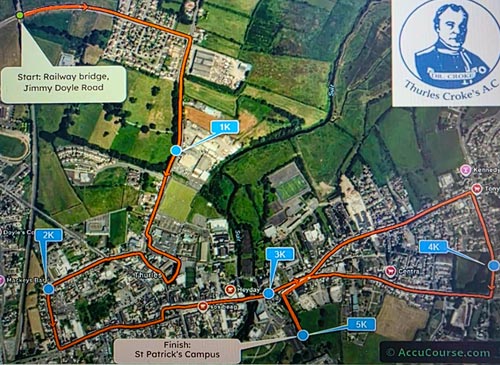
The Thurles Crokes A.C. Streets of Thurles 5K Road Race will take place on Sunday, 16th August 2026, from 10:00am to 11:30am.
Traffic Notice and Route: Streets of Thurles 5K Road Race.
Traffic restrictions and diversions will be in place throughout Thurles town for the duration of this popular event. Motorists should expect delays and are advised to allow extra time for their journeys or use alternative routes where possible.
Recall of specific batches of SuperValu Sesame Seeds due to the presence of Salmonella.
Alert Summary dated Wednesday, August 5th 2026.
Category 1: For Action. Alert Notification: 2026.48. Product Identification: SuperValu Sesame Seeds; pack size: 200g. Batch Code: 167 and 168; best before date: May 2027.
Message: The above batches of SuperValu Sesame Seeds are being recalled due to the presence of Salmonella. Recall notices will be displayed at point-of-sale in SuperValu stores.
Nature Of Danger: People infected with Salmonella typically develop symptoms between 12 and 36 hours after infection, but this can range between 6 and 72 hours. The most common symptom is diarrhoea, which can sometimes be bloody. Other symptoms may include fever, headache, and abdominal cramps. The illness usually lasts 4 to 7 days. Diarrhoea can occasionally be severe enough to require hospital admission. The elderly, infants, and those with impaired immune systems are more likely to have a severe illness.
Retailers: Same are requested to remove the implicated batches from sale and display recall notices at point-of-sale. Consumers: Consumers are advised not to eat the implicated batches.
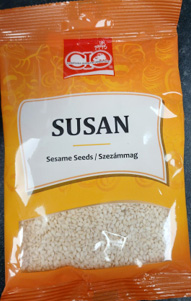
Recall of a batch of Compania Indilor Orientale Susan Sesame Seeds due to the presence of Salmonella.
Alert Summary dated Wednesday, August 5th 2026
Category 1: For Action. Alert Notification: 2026.47. Product Identification: Compania Indilor Orientale Susan Sesame Seeds; pack size: 50g. Batch Code: L1312242; best before date: 31/07/2026. Country Of Origin: India.
Message: The above batch of Compania Indilor Orientale Susan Sesame Seeds is being recalled due to the presence of Salmonella. Although it has passed its best before date, consumers are advised to check their cupboards for the implicated batch. Recall notices will be displayed at point-of-sale.
Nature Of Danger: People infected with Salmonella typically develop symptoms between 12 and 36 hours after infection, but this can range between 6 and 72 hours. The most common symptom is diarrhoea, which can sometimes be bloody. Other symptoms may include fever, headache, and abdominal cramps. The illness usually lasts 4 to 7 days. Diarrhoea can occasionally be severe enough to require hospital admission. The elderly, infants, and those with impaired immune systems are more likely to have a severe illness.
Retailers: Same are requested to remove the implicated batch from sale and display recall notices at point-of-sale. Wholesalers / Distributors: Same are requested to contact their affected customers and recall the implicated batch and provide a point-of-sale recall notice to their retailer customers. Consumers: Consumers are advised not to eat the implicated batch.
Serious questions must be answered about the Government’s decision to exclude the FalconEye enhanced-vision system from Ireland’s new €53 million Dassault Falcon 6X.
Delivered shortly before Christmas 2025, the aircraft replaced the increasingly unreliable Learjet. It is not merely a ministerial transport. The State acquired it as a multi-purpose Strategic Reach Aircraft capable of undertaking long-distance medical evacuations, repatriating Irish citizens and Defence Forces personnel, and supporting operations in hostile or hazardous locations.
Ireland’s new €53 million Dassault Falcon 6X.
While I haven’t been on board myself; inside the cabin fit-out is understood to show cream coloured executive-style seating, polished wood panelling, cabin tables, and sofa-style seating.
Multiple sources have now reported, that the FalconEye Enhanced-Vision System has been omitted because its acquisition would have required the Irish State to enter into an agreement with its Israeli manufacturer, Elbit Systems.
FalconEye uses cameras, infrared sensors and synthetic imagery to give pilots substantially greater situational awareness in darkness, fog and other low-visibility conditions. Dassault says the system can reveal runways, lighting, airport structures and potential obstacles during final approach. An Air Corps pilot has explained that its practical advantage is enabling landings in weather conditions in which aircraft without it may have to divert.
This does not mean the Falcon 6X is unsafe or incapable of operating in poor weather. The Department of Defence insists that there are “no current limits on the operational capability of the aircraft.” Nevertheless, aviation sources say the omission reduces the options available to pilots in difficult conditions. That distinction demands examination, not evasive wording.
Political and ethical procurement policies are legitimate matters for government. But where a decision may affect the capability of an aircraft used for medical evacuation, emergency transport and the rescue of citizens, operational requirements and expert safety advice must be transparent and demonstrably paramount.
The Government should now disclose who authorised the omission, what operational and safety assessments were obtained, what alternatives were considered, and whether the consequences for emergency missions were fully evaluated. It should also explain the apparent inconsistency whereby other recently acquired Air Corps aircraft reportedly contain Israeli-manufactured technology considered integral to their operation.
Claims that this decision breaches EU procurement law should now be examined independently. Any decision regarding the aircraft’s procurement specification, including the reported request to exclude FalconEye, would have arisen within the Department of Defence procurement process during Mr Micheál Martin’s tenure. (Contract dated December 18th 2024). However, we are unable to establish which individual minister or government official personally authorised that particular exclusion.
This is not principally an argument about Israel. It is about responsible procurement, public safety and democratic accountability. On those matters, the Government owes the public clear answers not carefully constructed silence.
This website uses cookies to improve your experience. We'll assume you're ok with this, but you can opt-out if you wish.AcceptRead More
Privacy & Cookies Policy
Privacy Overview
This website uses cookies to improve your experience while you navigate through the website. Out of these, the cookies that are categorized as necessary are stored on your browser as they are essential for the working of basic functionalities of the website. We also use third-party cookies that help us analyze and understand how you use this website. These cookies will be stored in your browser only with your consent. You also have the option to opt-out of these cookies. But opting out of some of these cookies may affect your browsing experience.
Necessary cookies are absolutely essential for the website to function properly. This category only includes cookies that ensures basic functionalities and security features of the website. These cookies do not store any personal information.
Any cookies that may not be particularly necessary for the website to function and is used specifically to collect user personal data via analytics, ads, other embedded contents are termed as non-necessary cookies. It is mandatory to procure user consent prior to running these cookies on your website.






Recent Comments