Gardaí have confirmed that an investigation is under way following the discovery of a man’s body in the Galtee Mountains in County Tipperary.
The body was found on Monday morning, July 27th, and was subsequently removed from the scene.
The local coroner has been notified, and a post-mortem examination is due to take place. Gardaí said they are investigating all the circumstances surrounding the man’s death.
The results of the examination are expected to help establish what happened.
The incident is currently understood to have been a tragic accident, with no foul play suspected at this stage.
Pre-deceased by his infant son Jamie and his grandparents; Mr Ryan sadly passed away tragically, following an accident.
His passing is most deeply regretted, sadly missed and lovingly remembered by his sorrowing family; heartbroken and loving partner Marie, daughter Isabelle and twin sons Tommy and Danny, parents Tommy and Anne, brothers T.J. and Brendan, sisters Noelette, Anita, Carol, Patricia and Sinéad, Marie’s parents Mike and Breda and her brothers and sisters, brothers-in-law, sisters-in-law, aunts, uncles, nieces, nephews, extended relatives, neighbours and a wide circle of friends.
Rest in Peace.
Funeral Arrangements.
The earthly remains of Mr Ryan will repose at Hayes Funeral Chapel, Clonoulty, Co. Tipperary, (Eircode E25 TX26), on Thursday afternoon, July 30th, from 5:30pm until 8:00pm, same evening. His remains will be received into the Church of Jesus Christ our Saviour, Rossmore, Co. Tipperary, on Friday morning, July 31st, to further repose for Requiem Mass at 11:30am, followed by interment, immediately afterwards, in the adjoining graveyard.
For those persons who would wish to attend Requiem Mass for Mr Ryan, but for reasons cannot, same can be viewed streamed live online, HERE.
The extended Ryan family wish to express their appreciation for your understanding at this difficult time, and have made arrangements for those persons wishing to send messages of condolence, to use the link shown HERE.
Pre-deceased by his parents Jim and Aileen (Glenmorgan House, Thurles), sisters Aileen and Maree; Mr Lambe passed away unexpectedly in Monterey, California, surrounded by his loving family.
His passing is most deeply regretted, sadly missed and lovingly remembered by his sorrowing family; loving wife Maren, sons Owen and Connor. sisters Carol and Annette, brother Jim, mother-in-law Judy, brothers-in-law Terry, Seamus, Steve, Pete and Brian, sister-in-law Maggie, daughter-in-law Isabel, extended relatives, neighbours and many friends.
Rest in peace.
Funeral Arrangements.
The remains of Mr Lambe will repose for a ‘Celebration of Life Service’, on Sunday next, August 2nd, at 22:30(British Summer Time).
The extended Lambe family wish to express their appreciation for your understanding at this difficult time, and have made arrangements for those persons wishing to send messages of condolence, to use the link shown HERE.
Rain has returned to Thurles this evening, Monday, July 27th 2026, after an unusually long dry spell.
Met Éireann’s provisional summer records show that much of County Tipperary experienced sustained dry conditions through the first three weeks of July, while the nearby Gurteen weather station had recorded a notably wet June. On the available evidence, the last proper measurable rain in the Thurles area appears to have fallen around June 30th, making this evening’s rainfall the first significant rain for almost four weeks.
“Singin’ In The Rain”.
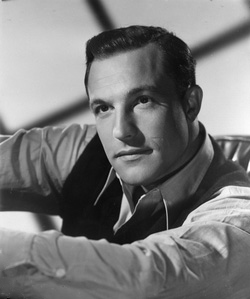
Lyrics: American lyricist and a Hollywood film producer, the late Arthur Freed[Grossman](1894–1973). Vocals: American dancer, actor, singer, director and choreographer, the late Gene Kelly(Eugene Curran Kelly)(1912–1996) latter whose parents were both of second generation Irish decent. [Derry on his mother’s side (Harriet Catherine Curran), and possibly Co. Clare (but not conclusively) on his father’s side (James Patrick Joseph Kelly)]
Late GreatGene Kelly. (Eugene Curran Kelly)(1912–1996).
Few songs capture the pleasure of a rainy evening as perfectly as “Singin’ in the Rain,” famously performed by Gene Kelly in the 1952 musical film of the same name. First introduced decades earlier, the song became immortal through Kelly’s joyful performance as he dances along a rain-soaked street, splashing through puddles and turning an ordinary downpour into an expression of happiness and romance. The sequence remains one of the most recognisable moments in cinema history.
I’m singin’ in the rain, just singin’ in the rain, What a glorious feelin’, I’m happy again. I’m laughin’ at clouds so dark up above, The sun’s in my heart and I’m ready for love. Let the stormy clouds chase everyone from the place, Come on with the rain, I’ve a smile on my face. I walk down the lane with a happy refrain, Just singin’, singin’ in the rain.
Dancing in the rain, I’m happy again.
I’m singin’ and dancin’ in the rain. I’m dancin’ and singin’ in the rain.
Mr Perdue passed away peacefully at Tipperary University Hospital, Clonmel, South Tipperary, surrounded by his loving family.
His passing is most deeply regretted, sadly missed and lovingly remembered by his sorrowing family; loving wife Ann, sons Michael and Patrick, daughters Anne Marie and Amy, grandchildren James and Darragh, sister Teresa and nephew Patrick, his children’s partners Eoghan, Katy and James, nieces, extended relatives, neighbours and a wide circle of friends.
Requiescat in Pace.
Funeral Arrangements.
The earthly remains of Mr Perdue will repose at O’Connell’s Funeral Home, Killenaule, Thurles, (Eircode E41 HH66) on tomorrow afternoon, Tuesday, July 28th, from 5:00pm until 7:00pm, same evening. His remains will be received into the Church of the Assumption, Ballingarry (SR), Thurles, (Eircode E41 X523) on Wednesday morning, July 29th, to further repose for Requiem Mass at 11:30am, followed by interment, immediately afterwards in adjoining old graveyard.
The extended Perdue family wish to express their appreciation for your understanding at this difficult time, and have made arrangements for those persons wishing to send messages of condolence, to use the link shown HERE.
Note:“The Perdue family wish to express their heartfelt thanks to the doctors, nurses and all the staff at Tipperary University Hospital Clonmel, for the exceptional care, kindness and compassion shown to the deceased throughout his time there.”
This website uses cookies to improve your experience. We'll assume you're ok with this, but you can opt-out if you wish.AcceptRead More
Privacy & Cookies Policy
Privacy Overview
This website uses cookies to improve your experience while you navigate through the website. Out of these, the cookies that are categorized as necessary are stored on your browser as they are essential for the working of basic functionalities of the website. We also use third-party cookies that help us analyze and understand how you use this website. These cookies will be stored in your browser only with your consent. You also have the option to opt-out of these cookies. But opting out of some of these cookies may affect your browsing experience.
Necessary cookies are absolutely essential for the website to function properly. This category only includes cookies that ensures basic functionalities and security features of the website. These cookies do not store any personal information.
Any cookies that may not be particularly necessary for the website to function and is used specifically to collect user personal data via analytics, ads, other embedded contents are termed as non-necessary cookies. It is mandatory to procure user consent prior to running these cookies on your website.






Recent Comments