Archives

A Nation In The Dock: When Drugs Fill Our Courts, Something’s Broken.

  • Ireland’s Daily Drug Docket: Punish the Profiteers, Treat the Addicted.
  • Hard on Supply, Human on Use: Time for Common Sense in Irish Drug Policy.

Spend any time around a District Court and you quickly get the sense of a system carrying a weight it was never designed to hold. Day after day, more people find themselves before the courts on drug-related charges; possession, small-scale supply, probation breaches linked to use, and the petty crimes that trail behind addiction, like a shadow.

The scale is not anecdotal. In 2023, the courts made 21,907 orders in relation to drug offences in the District Court alone, involving 15,858 defendants.
The wider crime picture is hardly reassuring either: the CSO recorded 16,119 incidents of controlled drug offences in 2024, and noted that the decline that year included falls in both possession for sale/supply and personal use incidents.
Even if the trend line moves up or down in a given year, the reality in communities is constant: drugs are an everyday presence, and the courts are one of the last public services left standing at the point of crisis.

Against that backdrop, it infuriates decent people to see what looks like “soft” sentencing for dealers, especially when the damage is so visible. Families are burying loved ones. The Health Research Board recorded 343 drug poisoning deaths in 2022, a grim number behind which sit real kitchens, real bedrooms, real unanswered phones.

So why, people ask, does someone caught dealing sometimes receive a shorter sentence because they have no previous convictions and plead guilty early?

The first uncomfortable answer is that sentencing in Ireland is not a simple “one crime, one fixed penalty” system. Judges set a sentence based on the seriousness of the offence, then adjust it for aggravating and mitigating factors. Two of the most common mitigating factors are (a) no previous convictions, and (b) an early guilty plea.

The logic of the guilty plea is not mysterious, even if it sticks in the throat. A timely plea saves court time, shortens lists, avoids a contested trial, and often spares witnesses the ordeal of giving evidence.
Citizens Information says plainly that you can generally expect a reduced sentence for pleading guilty, because it saves time and can be seen as remorse.
The Director of Public Prosecutions’ own guidelines also recognise that a guilty plea is a factor to be taken into account in the mitigation of a sentence.

A clean record is treated as relevant because courts look not only backwards at wrongdoing, but forwards to the likelihood of rehabilitation and reoffending. It doesn’t mean “good character” cancels out harm. It means the system is trying, sometimes clumsily, to calibrate punishment to a person as well as to an act.

None of this means the law is blind to serious trafficking. Ireland’s Misuse of Drugs Act has a specific high-value supply offence, the well-known €13,000 threshold, aimed at commercial dealing and importing.
Citizens Information summarises the core idea: for importing drugs at that level, there is a very severe sentencing framework, with limited scope to depart where the court finds exceptional circumstances.
In other words, at the top end, the law’s intent is deterrence and long sentences.
If the public perception is that dealers “walk free”, the more likely explanation is that many of the cases clogging lower courts are not kingpins, but street-level, low-level, or messy hybrid cases where addiction and dealing overlap, and where the headline seriousness is assessed differently.

But the deeper question is not really about discounts for pleas. It is about who we choose to blame.
In the public conversation, users are often spoken about as if they are simply reckless, selfish adults who should carry full moral responsibility for every ripple of harm that follows. Yet, as anyone who has watched addiction up close knows, dependence is not a lifestyle accessory.
It is frequently bound up with trauma, mental ill-health, homelessness, coercion, and despair. That reality is precisely why the Citizens’ Assembly on Drugs Use recommended that the State introduce a comprehensive health-led response to possession of drugs for personal use, responding primarily as a public health issue rather than a criminal justice issue, even while possession remains illegal.

This matters because criminalising users can make the problem worse. A conviction narrows employment, housing, and education options. Shame drives people away from services. Fear keeps people silent when they should be calling for help. Meanwhile, organised supply adapts, recruits, and replaces. If we’re honest, the criminal courts are often being asked to do the work of health, housing and social care, at the wrong end of the pipeline.

That doesn’t mean turning a blind eye to crime. It means recognising different roles in the drug economy and responding accordingly. A person in addiction who possesses a small amount is not the same as the person profiting from others’ dependence. The law already distinguishes, but our rhetoric often doesn’t.

There are also practical models that point in a better direction. The Drug Treatment Court in Dublin is explicitly designed as a supervised treatment and rehabilitation programme for offenders with problem drug use, as an alternative to custody in suitable non-violent cases. It is not soft. It is structured. It requires engagement, monitoring, and consequences for non-compliance. But it is at least an admission of reality: that for some offenders, reducing harm and reoffending means treating addiction rather than simply warehousing it.

So where does that leave the public anger, the very real anger, at dealers and the devastation around them?
We should direct it with precision. The profiteers, the organisers, the coercers, the groomers of teenagers, the ones who intimidate communities and treat addiction as a business model, they deserve the full force of law and sustained policing pressure. The legislation exists to impose very serious sentences in the higher-end cases, and it should be applied firmly where the evidence supports it.

But if we keep pouring users through the courts as if punishment alone will cure dependency, we will continue to fill lists, fill cells, and fill graveyards, while congratulating ourselves on being “tough”.
A country can be hard on the trade and humane to the addicted at the same time. In fact, if we want fewer victims, it is the only approach that makes any sense.

Man Remanded After Murder Charge In Death Of Tipperary Town Pensioner.

A 31-year-old man has appeared before a District Court sitting in Thurles, charged with the murder of Timothy (“Teddy”) Murnane, aged 81, a retired bus driver from St Michael’s Avenue, Tipperary Town.

Thurles Courthouse.

The accused, Mr Sean Harding, of Marian Terrace, Tipperary Town, had previously faced a charge of assault causing harm to Mr Murnane at the same address on September 12th 2025.
On Wednesday, that assault charge was withdrawn on the direction of the Director of Public Prosecutions (DPP), and Mr Harding was charged with murder.

The court heard Mr Murnane was discovered with head injuries at his property at about 9.35pm on September 12th 2025.
Paramedics attended before the victim was taken to University Hospital Limerick, where he died on September 14th 2025.

Det Garda Conor Gleeson, of Cashel Garda Station, gave evidence of arrest, charge and caution. The court was told that when the charge was put to Mr Harding after caution, he replied “No.”

Sgt Cathal Godfrey told the court the DPP had directed that Mr Harding be tried on indictment on the murder charge at a sitting of the Central Criminal Court.

The court also heard Mr Harding had previously been charged with three counts of burglary, with the DPP directing that he be sent forward on two of those charges, while clarification was being sought in relation to the third.

Mr Harding, represented by solicitor Mr Colin Morrissey, was remanded in custody to appear at Tipperary Town District Court (sitting in Thurles) on February 4th 2026 for service of the book of evidence and to address outstanding directions relating to the burglary charges.

Thurles Planning Alerts From Tipperary County Council.

Application Ref: 2561181.
Applicant: John Ryan (Ned).
Development Address: Wolfe Tone Place, Thurles, Co. Tipperary.
Development Description: the construction of an extension (south of existing structure) and undertaking of alterations to a property adjoining and within the curtilage of a protected structure (TRPS2503) E41 PX09. Permission for completion of works relating to this extension – decision made.
Status: Conditional.
Application Received: 19/11/2025.
Decision Date: 20/01/2026.
Further Details: http://www.eplanning.ie/TipperaryCC/AppFileRefDetails/2561181/0.

Application Ref: 2461122.
Applicant: Board of Directors, Thurles Lions Trust.
Development Address: Croke Street, Thurles, Co. Tipperary.
Development Description: (1) a two storey apartment building fronting onto Croke Street, comprising of 1 number one-bed apartment at ground floor level and 1 number one-bed apartment at first floor level and (2) a two storey apartment building located to the rear of the site.
Status: Planning Permission Granted – Conditional.
Application Received: 19/12/2024.
Decision Date: 20/01/2026.
Further Details: Further Details: http://www.eplanning.ie/TipperaryCC/.

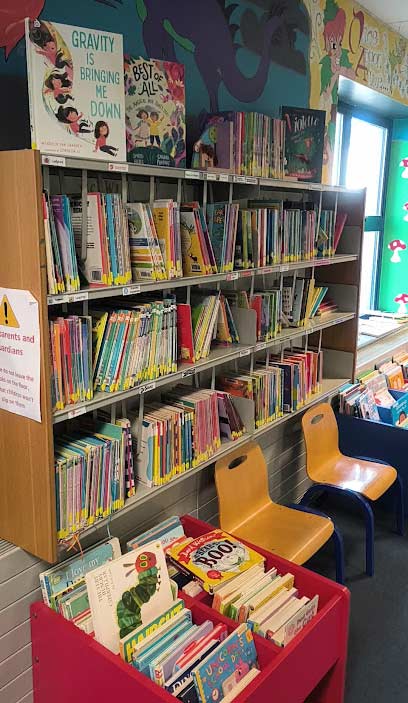
Become a Fáilte Isteach Volunteer Tutor At Cashel Library.

Ms Maura Barrett, (Cashel Library) Reports:

Our free conversational English classes are starting again next Month, February, and we’re hoping to welcome new volunteer tutors to our team!

No teaching experience is needed – Fáilte Isteach provides full online training.

If you enjoy meeting people, supporting your community, and sharing everyday English,
this is a wonderful and rewarding opportunity.

New volunteers will feel very welcome and will be learning alongside an experienced, supportive team.

Time: Tuesdays, 10:30 AM – 12:30 PM

If you’re interested in volunteering we’d love to hear from you!

Death Of Jonathan Whyte, Formerly Thurles, Co. Tipperary.

It was with great sadness that we learned of the death, on Thursday 22nd January 2026, of Mr Jonathan Whyte, Surrey, England, and formerly of Ballyvadlea, Drangan, Thurles, Co. Tipperary.

Pre-deceased by his parents Sonny and Bonny; Mr Whyte passed away peacefully on Thursday, 22nd January, surrounded by his loving family and friends, while in the care of staff at London Bridge Hospital, 27 Tooley St, London SE1 2PR, United Kingdom.

His passing is most deeply regretted, sadly missed and lovingly remembered by his sorrowing family; loving son and daughters, their partners, cherished grandchildren, sister, nephews, extended relatives, neighbours and many friends.

Requiescat in Pace.

Funeral Arrangements.

Funeral arrangements in England to follow.

A memorial Mass will be held in Church of the Visitation, Cloneen, Church, Kilburry West, Ballyhomuck, Co. Tipperary, at 12:00 noon on Friday February 20th next.

The extended Whyte family wish to express their appreciation for your understanding at this difficult time, and have made arrangements for those persons wishing to send messages of condolence, to use the link shown HERE.