Unmonitored private drinking water supplies are a potential risk to public health, says Environmental Protection Agency (EPA).
Many people in Ireland get drinking water from small private supplies which are not registered or monitored and may therefore be putting their health at risk.
Only 1,665 small private supplies are registered with local authorities across the country. Unregistered supplies are not being monitored by local authorities.
The number of private group schemes with E. coli failures increased in 2023, impacting approximately 4,600 people.
21 private group schemes, supplying 22,000, people failed the standard for Trihalomethanes (THMs) – up from 16 schemes serving 16,000 people in 2022.
€38.5 million of available Government funding that could have been invested in improvements to private supplies between 2019-2023 was not used.
There are over 370 group water schemes supplying drinking water to 190,000 people across rural communities in Ireland today.
In addition, many commercial and public premises supply water to the public from their own drinking water well. These are called small private supplies and can include schools, creches, nursing homes, self-catering accommodation and sports clubs. Only 1,665 small private supplies are registered nationally, and the total number remains unknown. Unregistered supplies are not being monitored by local authorities, creating a potential public health risk for consumers.
E. coli: One in twenty small private supplies and private group schemes failed to meet E. coli standards in 2023. Twenty-two private group schemes failed the standard for E. coli, putting the health of approximately 4,600 consumers at risk.
E. coli failures were recorded in 71 small private supplies, that were monitored by local authorities, posing a risk to consumers that use these supplies. Meeting E. coli standards is a minimum requirement in the provision of safe drinking water and failures indicate a lack of proper disinfection.
Trihalomethanes (THM) In 2023, 21 private group schemes supplying 22,000 people failed the standard for Trihalomethanes (THMs), up from 16 schemes serving 16,000 people in 2022. There is a legal limit for THMs which suppliers must meet in order to protect public health. Greater effort is needed by these private group schemes to improve treatment systems and minimise exposure to THMs.
Launching the report, Dr Tom Ryan, EPA Director said: “All drinking water produced in Ireland, whether it comes from a public or private supply, should be of high quality. Urgent action is needed by suppliers and local authorities to address these failings, in order to protect the public health of consumers. Local authorities must take proactive steps to identify and register small private supplies in their areas and the legislation needs to be amended to make it an offence for a supplier not to be registered, in the interests of public health.”
The Department of Housing, Local Government and Heritage’s review of the rural water sector, completed in January 2023, identifies key issues that must be addressed to improve water quality. While some issues have been progressed, such as simplifying the application process for funding of upgrades for groups schemes; remaining issues must be tackled if improvements in private water quality are to be achieved.
Mr Noel Byrne, Programme Manager of the EPA’s Office of Environmental Enforcement said: “It is very disappointing to see an underspend of €38.5 million of Government support when there are ongoing water quality issues in group water schemes. The EPA welcomes recent improvements to the application process which should make it easier for group water schemes to access funding and deliver improved drinking water quality. However, every effort is needed by suppliers, local authorities, and the Department to get funding to the schemes that need it most.”
The EPA report on Drinking Water Quality in Private Group Schemes and Small Private Supplies – 2023 is available on the EPA website.
Pre-deceased by his sisters Peig, Biddy and Anna, brothers Tom, Pat, Ailbe and Joe; Mr Carr passed away peacefully, surrounded by his family, while in the care of staff at University Hospital Limerick.
His passing is most deeply regretted, sadly missed and lovingly remembered by his sorrowing family; wife Eithne, daughters Maria, Joan and Theresa, sons Brendan and Declan, sons-in-law Colm, Donough and Ian, daughters-in-law Miriam and Catherine, grandchildren Daniel, Conor, Orlaith, Maria, Tessa, Cillian, Ann, Katie and John, brother Ned, sisters Josie, Kathleen, Mary, Teresa, Sr. Nora and Betty, sisters-in-law, brothers-in-law, nieces, nephews, extended relatives, neighbours and friends.
The extended Carr family wish to express their appreciation for your understanding at this difficult time, and have made arrangements for those persons wishing to send messages of condolence, to use the link shown HERE.
Robust, fair and proportionate legislation will meet the challenges of an increasingly complex media landscape.
Abolition of juries in High Court defamation actions will reduce disproportionate and unpredictable awards.
Protections against SLAPP proceedings, which are recognised internationally as a threat to press freedom and democracy.
Range of provisions to support agreed resolution of defamation cases and reduce high legal costs.
The Irish Government have granted approval to publish the Defamation (Amendment) Bill 2024. The full text of the Bill will be published on the website of the Houses of the Oireachtas next week.
The Bill provides for a range of reforms to address concerns raised by stakeholders during the public consultation on review of the Defamation Act 2009. Its publication marks significant progress on the Programme for Government commitment to review and reform Irish defamation laws.
The main purposes of the Bill are to:
Tackle disproportionate awards, and support more consistent, proportionate and predictable redress in defamation cases, including the abolition of juries in High Court defamation cases.
Support easier access to justice for individuals whose reputations are unfairly attacked.
Provide that, if a person is defamed, the correction must be the same or similar prominence to the defamatory publication.
Provide enhanced and clearer protection for responsible public interest journalism.
Reduce legal costs and delays for all parties, by supporting the use of alternative dispute resolution (ADR) and by measures to encourage prompt correction and apology, where mistakes are made.
Deter abusive use of unfounded defamation proceedings, particularly SLAPPs*.
*SLAPPs are unfounded and abusive legal actions that aim to silence those working in the public interest on matters such as fundamental rights, the environment, and public access to information.
Several further key reforms are being finalised, during the Bill’s passage through the Oireachtas. These include the clearer and simpler defence of fair and reasonable publication in the public interest, which is particularly important to protect responsible public interest journalism. They also include a statutory power for the Circuit Court to issue a ‘Norwich Pharmacal’* order, directing a digital services provider to identify an anonymous poster of defamatory online material, thus significantly reducing the legal costs for a person subjected to such comments. Work on a power for the courts to award damages for harm suffered by a person targeted by SLAPP proceedings is already in the pipeline.
* A Norwich Pharmacal order is an order made by the court which compels the respondent to disclose certain information or documents to the applicant. This form of order is primarily sought as a means of identifying the appropriate defendant to an action. It is commonly sought against an innocent intermediary who, although not directly involved in the offending activity, holds information or documentation required for the issuing of proceedings.
The Bill will introduce a new statutory defence in ‘retail defamation’ cases, which is in response to stakeholder concerns about a large recent increase in claims of verbal defamation made against retail businesses, particularly against SMEs.
The Circuit Court has repeatedly held that it is not defamatory, for example, simply to ask a person who walks past the checkout to leave the shop with goods, to produce a receipt for them; or to explain that a banknote cannot be accepted in payment, if it does not seem to be legal tender. Nevertheless, defamation claims in such cases are now generating significant extra legal and insurance costs for these businesses.
The Bill addresses the problem by providing a new statutory defence for the retailer, which builds on the defence of qualified privilege. The new defence does not apply if the retailer is acting with malice, or if the retailer’s comments are publicised excessively, when discretion could have been used.
The Bill gives effect to the General Scheme for a Defamation Amendment Bill which was approved and published by Government on 28th March 2023. It responds to the Report of the Review of the Defamation Act, published in March 2022, which was informed by an extensive public consultation.
The Bill also takes account of the pre legislative scrutiny report on the General Scheme, published by the Oireachtas Joint Committee on Justice on 27 th September 2023.
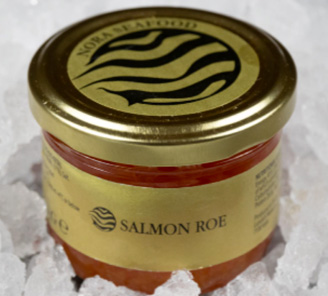
Food Safety Authority of Ireland confirm recall of a batch of Nora Salmon Roe, due to possible presence of pieces of glass.
Alert Summary dated today, Thursday, July 25th 2024.
Category 1: For Action. Alert Notification: 2024.34. Product Identification: Nora Salmon Roe; jar size: 100g. Batch Code: L4074; best before date: 14/09/2025.
Message: The above batch of Nora Salmon Roe is being recalled due to the possible presence of pieces of glass. Recall notices will be displayed at point-of-sale.
Action Required: Inspectors: Distribution details will be provided to relevant official agencies. Please notify the FSAI of any concerns.
Manufacturers, wholesalers, distributors, caterers & retailers: Retailers are requested to remove the implicated batch from sale and display recall notices at point-of-sale.
Consumers: Consumers are advised not to eat the implicated batch.
Parnell Street (formerly New Street)at the junction (right) withCúchulainn Road (formerly Nicholas Street).
To correct this; Under section 6.3.4 of the proposed Phase 2 plans, now at discussion state, we read: [Note in all quotes herewith, same are taken exactly as stated on the Phase 2 Report]. “There is to be the introduction of double yellow lines, prohibiting parking on Parnell Square, north and south of the Parnell Street car park.”
Full prohibited parking on Parnell Street is indeed most welcome, same having been sought time and time again and refused by council officials. Same will be seen as a blessing, especially by HGV drivers and all on-coming vehicles they met, thus removing the frustration experienced by all, especially those servicing 3 large schools in this area. The referred‘Parnell Square’ of course does not exist as an area in Thurles, (possibly mistaken copied from Dublin’s national plan), however, we now understand that this proposal refers to the full length of both sides of Parnell Street in Thurles town, which extends certainly to Thurles Railway bridge and possibly ends at the junction with Bohernanave, before it joins Castlemeadows, on the R498, at Semple Stadium. Here double yellow lines already exist fully on the left-hand-side, as vehicles travel slowly north over sunken collapsing drain covers. Same yellow lines also partially exist on the right-hand-side of the narrower sections of this medieval roadway; when travelling in the same direction.
Under section 6.3.5of this proposed Phase 2 plan we read:- Quote:“To counter the reduction in the parking spaces in the Square, [Liberty Square], Tipperary County Council, as part of a separate project, is developing a new car park, which is to be located within the Parnell Street Car Park, to the northwest of Liberty Square. This new car park will consist of a total of 50 new parking spaces and is to be delivered prior to the Liberty Square Phase 2 scheme. This leads to a net gainof 30 spaces, for public parking, when combined with this scheme.
In our report of July 22nd found HERE and entitled “Proposed Liberty Square Layout Phase 2”, readers will be aware of a loss of 19 car parking spaces, including a Taxi Rank, under this proposed, long overdue, Phase 2 upgrade. The 19 car parking spaces lost in Liberty Square, when added to the 21 car parking spaces, due to be axed on Parnell Street, as part of this new planning proposal, we calculate as a loss of 40 lost/removed spaces in total. This figure calculated, immediately calls into question the figures supplied by the authors of this poorly prepared report, which they claim is a net gain of 30 spaces.[50-40=10 not 30] Where these extra 50 car parking spaces can be provided ‘northwest of the Liberty Square car park’ is not disclosed. But it has been suggested that an announcement by councillors of the purchase of new land, may be ‘being currently kept under tight wraps’.
This website uses cookies to improve your experience. We'll assume you're ok with this, but you can opt-out if you wish.AcceptRead More
Privacy & Cookies Policy
Privacy Overview
This website uses cookies to improve your experience while you navigate through the website. Out of these, the cookies that are categorized as necessary are stored on your browser as they are essential for the working of basic functionalities of the website. We also use third-party cookies that help us analyze and understand how you use this website. These cookies will be stored in your browser only with your consent. You also have the option to opt-out of these cookies. But opting out of some of these cookies may affect your browsing experience.
Necessary cookies are absolutely essential for the website to function properly. This category only includes cookies that ensures basic functionalities and security features of the website. These cookies do not store any personal information.
Any cookies that may not be particularly necessary for the website to function and is used specifically to collect user personal data via analytics, ads, other embedded contents are termed as non-necessary cookies. It is mandatory to procure user consent prior to running these cookies on your website.








Recent Comments