Please find herewith attached Tipperary County Council’s response to my EPA Complaint (Re: COM021813), which highlighted the ongoing 13 year old neglect of the River Suir in Thurles town centre, by the responsible body, namely Tipperary County Council.
The attached response, penned by Robert O’Brien (Executive Scientist, Environment & Climate Action), outlines the measures being implemented by Tipperary County Council in relation to the serious matters raised with the EPA.
Re: River Suir, Thurles EPA Complaint COM021813 15-09-2026 Dear Mr. Willoughby I have been tasked by the EPA to contact you to respond to the complaint received by them No:COM021813 Alleged Pollution of River Suir and how Tipperary County Council are to respond. I want to acknowledge your longstanding interest in water quality issues within the Thurles area and the information you have provided regarding observations along the River Suir including photographs and descriptions of conditions observed at various locations. Tipperary County Council appreciates the importance of the River Suir as a valuable environmental and community resource and recognises the concerns raised regarding water quality, litter and the overallcondition of the watercourse. The Council takes all reports of potential water pollution seriously and recognises the importance of protecting and improving the water quality of the River Suir and its catchment. Currently, Tipperary County Council implements a range of water quality protection measures around the Suir catchment which includes, farm inspections, discharge monitoring and licencing, septic tank inspections, Water Framework Directive monitoring, and investigation of environmental complaints. Through these activities, the Council has consistently taken its water quality responsibilities seriously. In recognition of the challenges affecting water quality within the catchment, Tipperary County Council has commenced the preparation and implementation of an Upper River Suir Catchment Management Plan. The purpose of this initiative is to develop and implement a coordinated strategy to protect, improve and restore water quality and aquatic ecosystems throughout the Upper River Suir Catchment, including the Thurles area.
The preparation of the plan is being led by Tipperary County Council and involves collaboration between:
Thurles Municipal District;
The River Basin Management Service(formerly LAWPRO);
The Environment and Climate Action Section;
Other relevant stakeholders and agencies as necessary.
A Steering Group has been established to guide the development of the plan and to identify and address the range of pressures that may be impacting water quality in the catchment. It is considered that a catchment-based approach provides the most effective framework for identifying causes of water quality pressures, coordinating actions between relevant agencies and implementing long- term measures to deliver environmental improvements. The concerns and observations raised in your correspondence will be taken into consideration as part of Tipperary County Council’s ongoing work within the catchment. We remain committed to improving water quality outcomes and to working with relevant stakeholders to protect and enhance the River Suir. Thank you for taking the time to report your concerns. Yours sincerely Signed Robert O’Brien Executive Scientist.
Please see my immediate reply, today, to Mr Robert O’Brien.
Dear Mr. O’Brien, Thank you for your response, dated today September 15th 2026, regarding EPA Complaint Ref: COM021813.
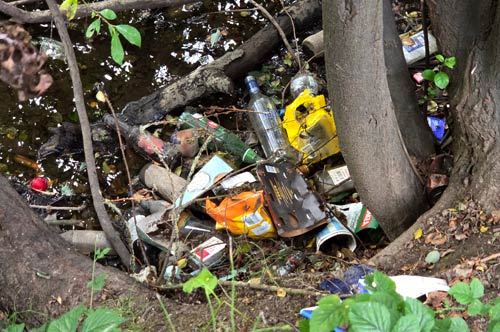
A check by myself this morning, (September 15th 11:30am), exactly one month following my EPA complaint, shows that absolutely no effort has been undertaken to remove even one solitary piece of this litter by either Thurles Municipal District Council, or by Refresh Thurles, latter who possibly receive funding for such projects.
Neither has there been the installation of even one litter bin being provided in the affected areas.
While I welcome the proposed Upper River Suir Catchment Management Plan and acknowledge the importance of coordinated work to improve water quality, I must express my deep disappointment at the Council’s failure to address the immediate, visible problems raised in my complaint.
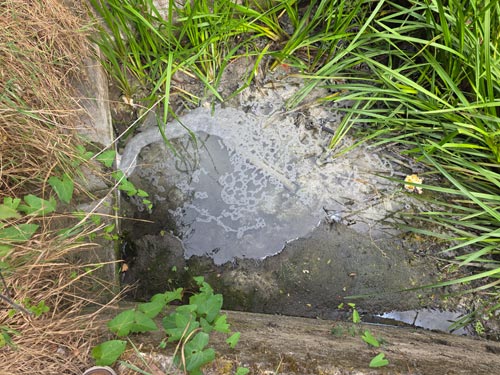
Over the past month, I have observed no action to remove the litter, bottles, discarded clothing, supermarket trolleys and other rubbish from the locations concerned. These items remain in and along the River Suir despite the concerns and photographic evidence already supplied.
Your response outlines the Council’s general activities and plans, but provides no account of any inspection of the reported locations, no commitment to remove the rubbish, and no timetable for doing so. A steering group and a catchment management plan may support longer-term improvements, but they do not resolve the immediate problem of waste remaining in the river over the past two years.
I respectfully condemn this continued lack of visible action. The Council’s stated commitment to protecting the River Suir must be demonstrated through practical measures. Residents who take the time to document and report these conditions deserve a response that addresses the specific problems they have identified.
Please provide:
Details of any inspections undertaken in response to my complaint, including dates and findings.
A clear timetable for the safe removal and appropriate disposal of the reported rubbish, including the supermarket trolleys.
The name of the section or officer responsible for coordinating this work.
An explanation of any barriers delaying removal and the steps being taken to resolve them.
Details of measures to prevent further dumping and monitor the affected locations
If removal requires coordination with another body, appropriate permissions or environmental precautions, please identify these requirements and explain how the Council will progress them.
I request a substantive written response within 10 working days, setting out specific actions and target dates. I also ask that this correspondence be included in the record of EPA Complaint COM021813 and that the EPA be informed that the reported litter remains unresolved.
My purpose is to secure a cleaner, better-protected River Suir. I remain willing to assist by identifying the affected locations, but the information already supplied should now be followed by prompt and accountable action.
Yours sincerely, George Willoughby.
As is always the case, no reply is anticipated in further communications from Tipperary Co. Council.
A man, understood to be in his 60s has died following a collision involving a van and three cars at Cooper’s Lot on the R688 in Cashel, Co Tipperary, at approximately 5:40pm yesterday afternoon Monday, 14th September.
The man, who was driving one of the cars, was pronounced dead at the scene. A post-mortem examination is due to take place at University Hospital Waterford.
The van driver, a man in his 40s, suffered serious injuries and was taken to Tipperary University Hospital in Clonmel. No other injuries were reported.
The road was reported closed this morning for a forensic examination, with local diversions in place.
Gardaí are appealing for witnesses and dash-cam footage from anyone travelling in the Cooper’s Lot area between 5:00pm and 6:00pm on Monday.
This fatal Cashel collision, yesterday, brings to 8 the number of people killed on Tipperary roads so far this year.
Anyone with information is asked to contact Cahir Garda Station on Tel: 052 7445630, the Garda Confidential Line Tel: 1800 666 111, or indeed any Garda station.
Pre-deceased by her beloved parents Nora and Paddy, sister Patricia and brothers Jack and Patsy; Mrs Shaw Shanahan passed away peacefully, while in the care of staff at Tipperary University Hospital Clonmel, South Co. Tipperary.
Her passing is most deeply regretted, sadly missed and lovingly remembered by her sorrowing family; loving husband Thomas, son James, daughter-in-law Aoife, grandsons Iarlaith and Caolán, sisters Maggie, Mary, Nora and Theresa, brothers Georgie, Sylvester and William, brothers-in-law, sisters-in-law, extended relatives, neighbours and friends.
For those persons who would wish to attend Requiem Mass for Mrs Shaw Shanahan, but for reasons cannot, same can be viewed streamed live online, HERE.
The extended Shaw Shanahan family wish to express their appreciation for your understanding at this difficult time, and have made arrangements for those persons wishing to send messages of condolence, to use the link shown HERE.
Oasis are set to return to Slane Castle for two huge shows on Saturday 4th and Sunday 5th September 2027, with special guest English musician, singer, and songwriter Richard Ashcroft. (Latter who formed the alternative rock band the “Verve” in 1990, before embarking on a solo career, releasing six UK top-three solo albums, including ‘Alone with Everybody’, ‘Keys to the World’ and ‘These People’).
The Verve – The Drugs Don’t Work.
The concerts form part of the band’s newly announced 38-date world tour, following their successful 2025 reunion.
Ticket registration is now open. Fans must register by Thursday 17th September at 4:00pm Irish time for a chance to access ticket sales.
Tickets will go on sale in allocated windows across 25th –27th September, with successful registrants receiving a unique, non-transferable access code. Standard tickets range from €181.25 to €501.25, with a limit of four tickets per person.
There will be no general public sale, and registration does not guarantee tickets.
Registration is through the official Oasis website located HERE
The proportion of adults in Ireland who said they had experienced personal crime rose from 10% in 2019 to 19% in 2025, according to the Central Statistics Office (CSO).
Over the same period, the share of personal crime victims who reported incidents to gardaí fell from 39% to 30%. Published today, September 14th 2026, the Crime and Victimisation 2025 report also found increases in household, farm and vehicle crime, compared with the previous survey.
Fraud affected 11% of respondents, up from 4% in 2019. Card payment fraud was the most common form, affecting 45% of fraud victims. Non-violent theft affected 8% of adults, twice the 2019 proportion, with Dublin recording the highest rate at 11%. Violent theft increased from 2% to 3%, while physical assault rose from 2% to 4%. These categories can overlap because respondents may have experienced more than one type of crime.
Households also reported more experiences of burglary or vandalism, including attempts. The proportion affected increased from 4% to 5%, while the share reporting household crime to gardaí declined from 59% to 47%. Among households that did not report some or all incidents and gave a reason, 40% considered the incident insufficiently serious or said they had suffered no loss. That was down from 47% in 2019. A belief that Gardaí could not or would not act was cited by 56%; with respondents selecting more than one reason.
Farm crime affected more than a quarter of farming households. Some 26% said their farm had experienced crime, compared with 21% in 2019. Incidents included trespassing, stolen farm goods and damage to property.
For vehicle owners and users, 4% experienced theft or attempted theft of their vehicle, up from 3%. Dublin had the highest rate at 10%, while the corresponding rates in the Border, Midland and West regions were no higher than 2%. Bicycle theft and attempted theft, including incidents involving e-bikes, remained unchanged nationally at 5%. Dublin’s rate was substantially higher at 12%.
Concern about personal safety increased. In 2025, 23% of adults worried often or all the time about becoming a victim of crime causing physical injury or harm, compared with 15% in 2019. This concern was expressed by 29% of women and 17% of men. Nevertheless, 85% of respondents felt very or fairly safe walking in their local area, alone or accompanied.
Assessments of policing and justice also weakened. The proportion who considered Gardaí very or quite effective at tackling local crime fell from 68% to 57%. Confidence in the wider justice system’s ability to bring offenders to justice declined from 46% to 43%.
The survey collected 7,654 valid responses from a selected sample of 15,000 households, a response rate of 51%. Interviews took place during the second and third quarters of 2025.
The figures reflect adults’ experiences during the 12 months before their interview, rather than the calendar year alone. They provide survey estimates of victimisation that complement Garda-recorded crime statistics.
This website uses cookies to improve your experience. We'll assume you're ok with this, but you can opt-out if you wish.AcceptRead More
Privacy & Cookies Policy
Privacy Overview
This website uses cookies to improve your experience while you navigate through the website. Out of these, the cookies that are categorized as necessary are stored on your browser as they are essential for the working of basic functionalities of the website. We also use third-party cookies that help us analyze and understand how you use this website. These cookies will be stored in your browser only with your consent. You also have the option to opt-out of these cookies. But opting out of some of these cookies may affect your browsing experience.
Necessary cookies are absolutely essential for the website to function properly. This category only includes cookies that ensures basic functionalities and security features of the website. These cookies do not store any personal information.
Any cookies that may not be particularly necessary for the website to function and is used specifically to collect user personal data via analytics, ads, other embedded contents are termed as non-necessary cookies. It is mandatory to procure user consent prior to running these cookies on your website.






Recent Comments