Payments to Tipperary’s 40 county councillors climbed to almost €1.83 million during 2025, with Thurles representative Mr Sean Ryan, (Fianna Fáil), finishing among the five highest-paid elected members in the county.
Figures published through Tipperary County Council’s public payments register show that councillors across the county’s five municipal districts received a combined €1,828,735.43 during the year. That represents an increase of €86,658 compared with the corresponding total for 2024.
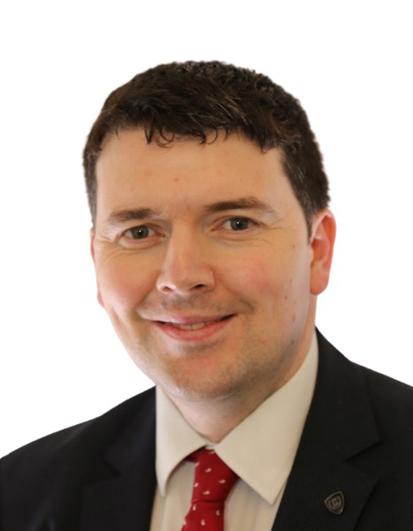
Fianna Fáil Cllr Mr Sean Ryan
The published amount covers more than expenses in the everyday sense. The council’s register includes councillors’ basic remuneration, annual allowances, vouched local-representation expenses, additional payments for holding senior council positions, training and conference costs, and payments from external bodies.
Fianna Fáil councillor Mr Sean Ryan was the highest-placed Thurles representative in the countywide rankings. He received €54,226.22 in total during 2025, making him Tipperary’s fourth-highest-paid councillor. His overall payment included the standard councillor’s salary of €30,932, together with the various allowances and expenses available to elected representatives. Cllr Mr Ryan also received an additional €6,000 for serving as Chair of one of Tipperary County Council’s strategic policy committees. Strategic policy committees (SPC), help develop and review council policy in areas such as housing, roads, planning, economic development and community services. Their Chairs take on responsibilities beyond the ordinary workload of a councillor and consequently qualify for an additional allowance. The prominent position of Thurles councillor Mr Sean Ryan in the rankings, reflects the additional payment attached to his SPC chairmanship, as well as the security allowance recorded during the year. His total was almost €3,000 higher than that of the councillor immediately below him in the top five.
Cllr Mr Ryan was also one of only two Tipperary councillors recorded as receiving a security-related allowance during the year, claiming €2,750 in the third quarter of 2025.
Note:“Security allowances”are intended to help local representatives pay for measures designed to improve their personal safety. Eligible measures can include CCTV systems, intruder alarms and panic buttons installed at a councillor’s home.
The other recipient was Clonmel Fine Gael councillor Mr John Fitzgerald, who received a security payment of €2,777.75 during the final quarter. Cllr Fitzgerald ranked fifth overall, with total payments of €51,971.83.
Tipperary’s highest-paid councillor in 2025 was Fianna Fáil’s Mr John Carroll, who received €60,644.22. Cllr Carroll became Cathaoirleach of Tipperary County Council in June and received €6,923.10 in connection with that office during the year. His total also included the basic annual remuneration of €30,932, annual allowances of €6,958 and €1,577.23 through the Local Representation Allowance, (LRA). The LRA is a vouched scheme through which councillors can recover qualifying costs incurred while carrying out their work as public representatives.
Fine Gael councillor Mr Declan Burgess was narrowly behind Cllr Mr Carroll, receiving €60,580.61. Cllr Burgess, who had been the county’s highest-paid councillor in 2024, received €13,846.20 in Cathaoirleach allowances relating to his period in the Chair before Cllr Mr Carroll’s election. His 2025 payments also included almost €31,000 in basic remuneration, annual expenses of €5,834 and €3,248 under the LRA scheme. His total increased from €59,114.09 in 2024.
Ms Mary Hanna Hourigan occupied third place, with payments totalling €55,201.47. Alongside her €30,932 basic remuneration, she received €6,253 under the LRA, annual expenses of €6,549 and a €6,000 allowance for Chairing a strategic policy committee.
At the opposite end of the table, Carrick-on-Suir Fianna Fáil councillor Ms Amy Goldsboro received the lowest total, at €34,388.39.
Independent councillor Mr Micheál Lowry was the second-lowest recipient, with €37,743.48. Ms Pamela Quirke O’Meara received €38,635, Ms Louise Morgan Walsh was paid €39,019, and Mr Joe Hannigan received €39,205.
Fine Gael’s Ms Peggy Ryan, representing the Thurles Municipal District, received €42,076.44 in total payments during 2025. The council’s quarterly registers show the total included her basic remuneration, annual and local-representation allowances, payments connected with chairing the Thurles Municipal District from June, and payments from the Southern Regional Assembly. For example, she received €1,384.62 as an MD chair allowance in Q3 and €1,615.39 in Q4. She also recorded external-body payments of €474.58 in Q3 and €794.15 in Q4. Note:“External-body payments” are payments councillors receive from organisations outside Tipperary County Council on which they serve as council representatives. They generally relate to attendance, travel or subsistence, rather than additional council salary.
That places her outside the five highest-paid councillors but above several representatives at the lower end of the countywide table.
Motorists are advised that temporary traffic management measures will operate on the R659 through Stradavoher and Ballycarrane, Thurles, Co. Tipperary, from tomorrow, Thursday, 13th August, until Friday, 14th August 2026.
A Stop/Go traffic-control system will be in place for the duration of the works. Delays are expected, and road users should allow additional travel time when passing through the area.
Drivers are asked to approach with caution, follow all traffic-management signage and cooperate with personnel on site.
“Look up at the stars, not down at your feet. Try to make sense of what you see, and be curious.” Quote: late Stephen Hawking [1942 – 2018]. “We are all in the gutter, but some of us are looking at the stars.” Late Irish author Oscar Wilde, [1854 – 1900], (Lady Windermere’s Fan).
Residents across Tipperary are being encouraged to look skyward this evening as Ireland prepares for one of its most memorable astronomical displays in decades.
A deep partial solar eclipse will unfold between approximately 6.10pm and 8.10pm, reaching its maximum shortly after 7pm. Exact timings and the amount of the Sun covered will vary slightly from place to place as the Moon’s shadow travels across the country.
Although Ireland lies outside the path of totality, the spectacle will still be dramatic. The Moon is expected to hide well over 90 per cent of the Sun from Irish observers. Only a thin, bright crescent will remain visible at the height of the event, producing an unusual change in daylight and possibly a noticeable dip in temperature.
The eclipse is especially important because Ireland will not experience another comparable solar event until 2090. It offers families, schools and amateur astronomers a rare opportunity to witness the movements of the Sun, Moon and Earth directly.
People in Tipperary should choose a viewing location with a clear outlook facing towards the western sky. Open countryside and elevated areas may provide better prospects, provided they can be reached safely. Clouds are forecast in parts of the Premier County, but even brief breaks could reveal the shrinking solar crescent.
Eye protection is essential throughout the eclipse. Looking directly at the Sun, even when most of it is hidden, can cause permanent damage to eyesight. Ordinary sunglasses, smoked glass and homemade filters are not safe. Observers should use undamaged eclipse glasses meeting the ISO 12312-2 safety standard or watch indirectly with a pinhole projector. Cameras, binoculars and telescopes require purpose-made solar filters attached securely to the front. Eclipse glasses alone do not make magnifying equipment safe.
Ireland will see a partial eclipse because the narrow path in which the Sun is completely concealed passes through areas including Greenland, Iceland and northern Spain. Nevertheless, the Royal Observatory Greenwich says roughly 90 to 96 per cent of the Sun will be covered across Ireland and the UK, making this the deepest partial eclipse seen from these islands in almost 27 years. Royal Observatory Greenwich
The entertainment will not end at sunset. During the night of August 12th into the morning of August 13th, the annual Perseid meteor shower will reach its peak. The Perseids occur when Earth passes through debris left behind by Comet 109P/Swift-Tuttle. Tiny particles strike the atmosphere at tremendous speed, heat up and produce the bright streaks commonly called shooting stars. Under ideal dark-sky conditions, observers may see dozens of meteors in an hour, although actual numbers can vary.
Conditions are unusually favourable in 2026 because the shower coincides with a new Moon. Thus, with virtually no strong moonlight washing out the fainter meteors, cloud cover and artificial lighting will only be the main obstacles. The strongest viewing window is expected between midnight and dawn.
No telescope is needed for the Perseids. Viewers should find a safe, dark location away from street lights; allow at least 20 minutes for their eyes to adjust and watch as much of the sky as possible. A reclining chair and patience will make the experience more comfortable.
If Tipperary’s clouds cooperate, residents could witness two remarkable spectacles within a matter of hours; an almost vanished Sun in the evening and a stream of meteors after midnight.
Pre-deceased by his brother Richie, sister Abina and nephew Jerry; Mr Cotter passed away peacefully, surrounded by his loving family.
His passing is most deeply regretted, sadly missed and lovingly remembered by his sorrowing family; loving wife Eileen, daughters Aimeé and Katherine, sons James and Shane and their partners, grandchildren, Casey, Daniel, Dawn, Seàn, Dean and Willow, brothers Gerry and Willie, sisters Mary, Anne and Catherine, godchildren, nieces, nephews, extended relatives, neighbours and friends.
For those persons who would wish to attend Requiem Mass for Mr Cotter, but for reasons cannot, same can be viewed streamed live online, HERE.
The extended Cotter family wish to express their appreciation for your understanding at this difficult time, and have made arrangements for those persons wishing to send messages of condolence, to use the link shown HERE.
Note please: Family flowers only please, donations in lieu, if desired, to Our Lady’s Hospice, Harold’s Cross, in memory of Mr James (Jimmy C) Cotter.
Pre-deceased by her parents Mattie and Eileen, brother-in-law John (Fitzgerald); Ms Ryan passed away peacefully, after a long illness most bravely borne, while in the care of staff of St Anthony’s Nursing Home, Glenconnor Road, Clonmel, Co. Tipperary.
Her passing is most deeply regretted, sadly missed and lovingly remembered by her sorrowing family; sisters Mary (O’Dwyer), Noeleen (Kelly), Geraldine (Fitzgerald) and Tina (Britton), nephews, nieces, brothers-in-law Benny, Noel and Michael, aunts Mary (Mockler) and Irene (Mockler), cousins, former colleagues in M.F. Kent and Slievenamon Golf Club, the St. Anthony’s Nursing Home community, extended relatives, neighbours and friends.
Requiescat in Pace.
Funeral Arrangements.
The earthly remains of Ms Ryan will repose in Hugh Ryan’s Funeral Home, Slievenamon Road, Thurles, (Eircode E41 CP59), on Thursday afternoon, August 13th, from 5:00pm until 7:00pm, same evening. Her remains will be received into the Church of Our Lady and St Kevin, Littleton, Thurles, (Eircode E41 HD90) on Friday morning, August 14th, at 11:00am to further repose for Requiem Mass at 11:30am, followed by interment, immediately afterwards, in the adjoining graveyard.
For those persons who would wish to attend Requiem Mass for Ms Ryan, but for reasons cannot, same can be viewed streamed live online, HERE.
The extended Ryan family wish to express their appreciation for your understanding at this difficult time, and have made arrangements for those persons wishing to send messages of condolence, to use the link shown HERE.
This website uses cookies to improve your experience. We'll assume you're ok with this, but you can opt-out if you wish.AcceptRead More
Privacy & Cookies Policy
Privacy Overview
This website uses cookies to improve your experience while you navigate through the website. Out of these, the cookies that are categorized as necessary are stored on your browser as they are essential for the working of basic functionalities of the website. We also use third-party cookies that help us analyze and understand how you use this website. These cookies will be stored in your browser only with your consent. You also have the option to opt-out of these cookies. But opting out of some of these cookies may affect your browsing experience.
Necessary cookies are absolutely essential for the website to function properly. This category only includes cookies that ensures basic functionalities and security features of the website. These cookies do not store any personal information.
Any cookies that may not be particularly necessary for the website to function and is used specifically to collect user personal data via analytics, ads, other embedded contents are termed as non-necessary cookies. It is mandatory to procure user consent prior to running these cookies on your website.







Recent Comments