Application Ref: 2660611. Applicant: Mary Hosty. Development Address: Beakstown, Thurles, Co. Tipperary. Development Description: an extension to the front of the dwelling house, extensions to the rear of the dwelling house consisting of a sunroom and two open-sided shelters, an extension and open-sided shelter to the rear of the garage, a glasshouse and all associated site works. Status: Conditional. Application Received: 22/06/2026. Decision Date: 06/08/2026. Further Details:http://www.eplanning.ie/TipperaryCC/AppFileRefDetails/2660611/0
Pre-deceased by his parents Edmond and Kitty, his brother Michael and his brothers-in-law Jimmy Arrigan and Noel McNulty; Mr Hennessy passed away peacefully, after a short illness, while in the care of staff at The Oak Ward, University Hospital Waterford
His passing is most deeply regretted, sadly missed and lovingly remembered by his sorrowing family; loving wife Bridie, sons Paul and David, grandson Evan, brother Eamon, sisters Connie, Moira, Rose and Ann, brothers-in-law, sisters-in-law, nieces, nephews, extended relatives, neighbours and a wide circle of friends.
The extended Hennessy family wish to express their appreciation for your understanding at this difficult time, and have made arrangements for those persons wishing to send messages of condolence, to use the link shown HERE.
“The extended Hennessy family would also like to express their sincere thanks and gratitude to everyone who cared for John during his illness”.
Pre-deceased by her husband George, her parents Mary and Jack, brothers Mattie and Dickie, sisters Carmel and Rita; Mrs Buckley, sadly, passed away while in the care of staff at Tipperary University Hospital, Clonmel, South Tipperary.
Her passing is most deeply regretted, sadly missed and lovingly remembered by her sorrowing family; loving daughters Edel and Miriam, sons Frank and Paul, son-in-law Finbarr, grandchildren Emma and John, nieces, nephew, extended relatives, neighbours and many friends.
For those persons who would wish to attend Requiem Mass for Mrs Buckley, but for reasons cannot, same can be viewed streamed live online, HERE.
The extended Buckley family wish to express their appreciation for your understanding at this difficult time, and have made arrangements for those persons wishing to send messages of condolence, to use the link shown HERE.
Pre-deceased by her brother Billy and grandmother Kathleen, Ms Cawley, sadly, passed away unexpectedly.
Her passing is most deeply regretted, sadly missed and lovingly remembered by her sorrowing family; loving daughters Heidi and Kathleen, father William, mother Liz (Cody), sisters Christine, Lucia, Megan, Brianna and Suzanne, brothers PJ, Tyler, Kyle and Logan, grandfather Bill, nieces, nephews, brothers-in-law, sisters-in-law, aunts Noreen, Sheena and Catherine, uncles PJ, Gerard and John, cousins, extended relatives, neighbours and friends.
Requiescat in Pace.
Funeral Arrangements.
The earthly remains of Ms Cawley will repose at Hugh Ryan’s Funeral Home, Slievenamon Road, Thurles, (Eircode E47 CP59), on Friday afternoon, August 14th, from 5:00pm until 7:00pm, same evening. Her remains will be received into the Church of Our Lady and St. Kevin’s Church, Littleton, Thurles, on Saturday morning, August 15th at 11:00am to further repose for Requiem Mass at 11:30am, followed by interment, immediately afterwards, in the adjoining graveyard.
For those persons who would wish to attend Requiem Mass for Ms Cawley, but for reasons cannot, same can be viewed streamed live online, HERE.
The extended Cawley family wish to express their appreciation for your understanding at this difficult time, and have made arrangements for those persons wishing to send messages of condolence, to use the link shown HERE.
Approximately 150 fish, mostly brown trout, have died in a stretch of the River Suir in the Templemore area.
The incident is understood to have been discovered around August 10th, 2026 during the week ending August 12th, 2026, reportedly by a staff member of the River Basin Management Service, latter the organisation formerly known as the Local Authority Waters Programme, or LAWPRO. The change of name is confirmed HERE.
At the time of writing, no official report establishing the cause of the deaths has been published. However, an initial examination reportedly suggested that the fish may have died from oxygen depletion, same associated with extensive aquatic vegetation and restricted flow. Dense reed growth is clearly visible along sections of the upper Suir, including from Barry’s Bridge in the heart of Thurles town centre. Nevertheless, visible vegetation does not prove what killed the fish.
The public requires evidence; dissolved-oxygen records, water and fish sample results, the extent of the affected stretch and an assessment of any pollution, temperature, flow or habitat factors.
Could dense vegetation deplete oxygen? It is scientifically plausible that excessive aquatic growth could contribute to dangerously low dissolved-oxygen levels. Plants, algae and microorganisms respire continuously, consuming oxygen. During daylight, photosynthesis can replace or exceed that consumption. At night, photosynthesis stops while respiration continues, causing dissolved oxygen to fall. Surveys undertaken confirms that plant, microbial and algal respiration reduces dissolved oxygen at night, while daylight photosynthesis increases it.
The risk is greatest where vegetation is abundant and the water is warm, shallow, slow-moving or stagnant. Dense growth can restrict mixing, while bacteria and fungi decomposing dead plant material consume additional oxygen, as observed when Thurles Municipal District undertook the strimming of rushes last year, leaving same in the water to rot. Warm water also holds less dissolved oxygen.
We can confirm that the above public meeting will take place, as stated above. Perhaps Minister of StateMr Kevin Moran, Independent TD Mr Michael Lowry, together withCouncillor Mr Micheál Lowry should receive invitations.
The US Environmental Protection Agency identifies excessive plant growth, nighttime respiration, decomposition, high temperatures and reduced flow as possible contributors to oxygen depletion. Emergent reeds can transport atmospheric oxygen through their stems, so their direct withdrawal of oxygen from the water may be less significant than that of submerged vegetation or algae. A dense reed bed may still create locally oxygen-poor conditions by slowing the flow and trapping decomposing organic material.
A healthy, fast-flowing river is continually re-aerated by turbulence. If oxygen depletion caused this fish kill, the investigation must determine what combination of vegetation, nutrient enrichment, low flow, temperature and decomposition produced it.
Testing must occur at the correct timeand a single daytime oxygen reading would be inadequate. Dissolved oxygen generally reaches its lowest level shortly before sunrise, following a night of respiration without photosynthesis. Monitoring should therefore be continuous or conducted immediately before dawn. Measurements should be taken inside dense vegetation, in nearby open water and both upstream and downstream. Temperature, flow, pH, weather conditions and readings close to the sediment should also be recorded.
Salmonids, including brown trout, are particularly sensitive to low oxygen. The investigation must establish whether oxygen depletion caused this incident rather than merely presenting it as a possibility.
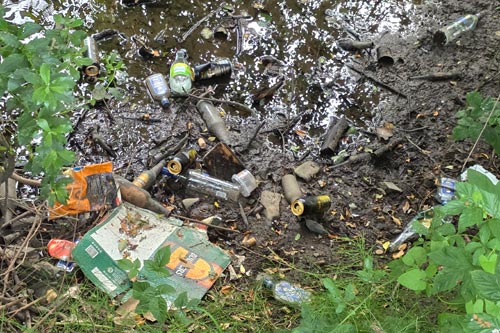
Thirteen years of warnings As stated in a recent post on Thurles.Info, the deterioration of the River Suir cannot credibly be described as sudden or unforeseeable. For more than a decade, residents, anglers and environmental campaigners have raised concerns about pollution, excessive vegetation, restricted flow, sediment, litter and neglect. These concerns were documented in “River Suir Crisis—Thirteen Years of Warnings, But Still No Coordinated Action”.
Section ofUpper River Suir, viewed from Thurles Park in the heart of Thurles town centre, last week. Picture: G. Willoughby
13 years to late; the Minister of State Mr Kevin “Boxer” Moran recently visited sections of the Suir in Thurles and Holycross following representations from Independent TD Michael Lowry. It was stated that the Office of Public Works would support an application by Tipperary County Council under the enhanced Minor Flood Mitigation Works Scheme. Support for an application is welcome, but it is not a restoration programme. The public has not been shown the precise work proposed, the scientific evidence supporting it, the environmental assessments required, the anticipated cost and timetable or the body responsible for delivery and monitoring.
Political videos, visits and announcements cannot substitute for accountable work. Councillor Micheál Lowry, Deputy Michael Lowry and every other representative addressing the issue must be judged by measurable results. The same standard must apply to Tipperary County Council.
Reeds may be a symptom-not the underlying cause. The problem cannot be reduced to reeds, bulrushes or appearance. Previous catchment assessments have identified excess phosphorus from sources including wastewater, animal waste and fertilisers as a significant pressure. Nutrient enrichment can encourage excessive plant growth, while respiration and decomposition may subsequently reduce oxygen.
Low summer flows, high temperatures, pollution, sediment, obstructions and vegetation may interact. Removing reeds without identifying why they proliferated risks treating a symptom, while leaving the underlying causes untouched. Clearance without ecological assessment could also damage habitat or transfer problems downstream.
Any intervention must therefore be based on catchment science and agreed with the relevant environmental and fisheries authorities.
Too many agencies and too little accountability
Responsibility is divided among Tipperary County Council, the River Basin Management Service, Inland Fisheries Ireland, the EPA, the OPW, Uisce Éireann, the National Parks and Wildlife Service, Landowners and Angling organisations. That complexity cannot provide cover for delay or buck-passing.
The public should now be told:
which organisation is leading the investigation;
when and where the fish were discovered;
how many fish and species were affected;
when oxygen, temperature and flow were measured;
what samples were collected;
whether pollution sources were investigated;
when laboratory results will be available;
and which agency will publish the findings.
Community initiatives, including proposals to remove bulrushes or establish a River Suir trust, may make a valuable contribution. However, volunteers and anglers cannot be expected to replace statutory responsibility.
Publish the findings This fish kill must mark a turning point. The responsible agencies should provide a published scientific assessment, laboratory and monitoring results, continuous oxygen and temperature monitoring at vulnerable locations, investigation of pollution and nutrient sources, an environmentally assessed vegetation-management programme and a costed river restoration plan.
Responsibilities, deadlines and progress reports must be made public. The cause of this fish kill should not be prejudged; but uncertainty cannot become an excuse for inaction. After thirteen years of warnings, the questions are who will take responsibility, what the evidence shows and how quickly a credible recovery programme will begin.
This website uses cookies to improve your experience. We'll assume you're ok with this, but you can opt-out if you wish.AcceptRead More
Privacy & Cookies Policy
Privacy Overview
This website uses cookies to improve your experience while you navigate through the website. Out of these, the cookies that are categorized as necessary are stored on your browser as they are essential for the working of basic functionalities of the website. We also use third-party cookies that help us analyze and understand how you use this website. These cookies will be stored in your browser only with your consent. You also have the option to opt-out of these cookies. But opting out of some of these cookies may affect your browsing experience.
Necessary cookies are absolutely essential for the website to function properly. This category only includes cookies that ensures basic functionalities and security features of the website. These cookies do not store any personal information.
Any cookies that may not be particularly necessary for the website to function and is used specifically to collect user personal data via analytics, ads, other embedded contents are termed as non-necessary cookies. It is mandatory to procure user consent prior to running these cookies on your website.







Recent Comments