Rise In Assaults On Healthcare Workers Raises Urgent Safety Questions.
New figures show that 2,373 assaults against healthcare workers have already been recorded this year, including 23 sexual assaults.
The data, provided by the HSE, confirms that up to June 4th there were: ► 1,765 direct physical assaults. ► 585 verbal assaults. ► 23 sexual assaults. ► 103 incidents classified as “moderate”.
Thankfully, no incident so far this year has been classified as “major”, but that should not hide the seriousness of what frontline staff are facing every day.
A “moderate” incident can mean a significant injury requiring medical treatment, counselling, a report to the Health and Safety Authority, more than three days off work, or a hospital stay of several days. Healthcare workers should not have to accept violence, intimidation or sexual assault as part of their job.
One question that now needs to be examined more openly is whether alcohol and illegal drug use are contributing to some of these incidents. The current figures do not break down how many assaults involved intoxication, but the HSE’s own safety guidance recognises that people under the influence of alcohol or drugs can create sudden risks for staff.
If substance misuse is part of the problem, it must be part of the solution too, alongside safer staffing levels, proper security, better reporting, staff supports, and a zero-tolerance approach to violence in healthcare settings.
Our healthcare workers care for us in our most vulnerable moments. They deserve to be protected in theirs.
Weird history from 100 years ago – Father’s Day was still fighting to be taken seriously in the 1920s, but the gift industry had already found its angle.
Ms Kate Richardson Swineford, (later Kate Burgess), helped push the idea in Virginia, USA. In 1921 she founded the National Fathers’ Day Association, wrote letters, organised a charter, and lobbied governors to give fathers a day of recognition. She even helped shift the proposed date to the third Sunday in June.
Then, in 1933, she secured trademark status for “Fathers’ Day” from the U.S. Patent Office. Not a patent, exactly, more a trademark, but still a strange little footnote; where for a time, someone had legal protection over the very phrase itself.
The funny part is that by June 1926, long before Father’s Day became a permanent U.S. national holiday in 1972, newspapers were already full of Father’s Day gift ads. And the gift they kept pushing was the same one that became the cliché; namely “Ties”. So the Fathers’ Day holiday began as a sincere campaign to recognise fathers. Within a few years, retailers had translated that sentiment into neckwear.
Ireland came to the modern June version later. The best evidence points to Father’s Day arriving here just after the Second World War, before becoming familiar by the 1950s. Today it falls on the third Sunday in June, the same as in the U.S. and UK, though in Ireland it is not a bank holiday.
So in the name of history, go ahead and buy Dad another tie. No, for once, maybe don’t.
Online shoppers in Ireland who regularly buy low-cost items from websites outside the European Union may soon face extra costs at delivery or checkout.
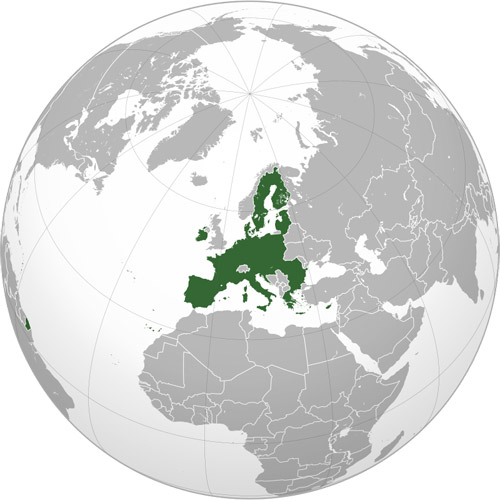
From 1st July 2026, a new €3 Customs Duty charge per item will apply to many e-commerce parcels valued at €150 or less coming into Ireland from outside the EU. This includes goods bought from websites based in Britain, Asia, the United States and other non-EU countries. This change is part of the EU’s wider Customs Reform and is designed to make online imports fairer, safer and easier to monitor.
What Is Changing? At present, there is no Customs Duty on e-commerce goods entering the EU, where the value of the goods is €150 or less, although VAT and delivery-related charges may still apply.
From 1st July 2026, that duty-free rule will change. A flat €3 Customs Duty will apply to each distinct item in a qualifying parcel sent directly to consumers from outside the EU. This means the charge is not simply applied once per package. It depends on what is inside the package. For example, if a parcel contains one notepad, one pen and one keyring, these are three different items. Each item would attract a €3 charge, bringing the Customs Duty to €9, plus VAT where applicable. However, if a parcel contains two identical cotton t-shirts, they are treated as one distinct item type. In that case, the Customs Duty would be €3, plus VAT where applicable.
Why Is The EU Introducing The Charge? The EU says the current system no longer reflects the scale of modern online shopping. The existing duty-free rule for low-value imports was originally introduced to reduce administrative pressure on businesses and customs authorities. However, customs systems are now far more digital, meaning electronic data is available for imported goods. The European Commission has also highlighted the huge growth in low-value imports into the EU. In 2025, almost 5.9 billion low-value items were shipped directly from non-EU countries to consumers in the EU without customs duties being paid. EU authorities say this has created unfair competition for European and Irish retailers, who must comply with EU tax, safety, labour and environmental standards. The reform is also aimed at improving consumer protection by helping customs authorities identify unsafe or non-compliant goods before they reach shoppers.
How Shoppers Will Pay. In many cases, the €3 charge may be collected at the online checkout. Larger platforms and retailers may include the duty in the final price before the customer pays. However, not every website will be ready or able to collect the charge upfront. Where the duty is not paid at checkout, the delivery company may collect the charge before the parcel is delivered. This could mean shoppers have to pay the Customs Duty, VAT and any relevant administration fee before receiving their order. Therefore consumers are being advised to check the website’s terms and conditions before buying, especially when ordering from smaller non-EU retailers.
Extra Delivery Admin Fees May Apply. Where customs charges are not paid at checkout, the delivery company may apply its own administration fee for processing the payment and holding the parcel until charges are paid. An Post already applies an administration fee in certain customs cases. This is separate from the new EU Customs Duty and applies to the parcel rather than to every individual item inside it. This means shoppers could face more than one extra cost if charges are not collected at checkout; the new €3 Customs Duty per distinct item, VAT where applicable, and a delivery company administration fee.
NOTE: A “.ie” Website Does Not Always Mean EU Shipping. Irish shoppers are also being urged to check where goods are actually shipped from. A website may use a “.ie” domain, show prices in euro or appear to be aimed at Irish customers, but the goods may still be shipped from outside the EU. If the goods are located in Ireland or another EU country at the time of purchase, the new Customs Duty will not apply. But if the goods are shipped from outside the EU, the charge may apply even if the website looks local. Before buying, shoppers should check the retailer’s “About Us”, delivery information and terms and condition pages to confirm where the goods are dispatched from.
Returns Could Also Cost More These new rules may also affect returns. Revenue has warned that the €3 Customs Duty will generally not be refunded if a customer returns an item, unless the goods are faulty. VAT refunds may also vary depending on the retailer and how that business handles VAT. This means returning cheap items bought from outside the EU could become less attractive, especially where the original purchase involved multiple low-cost products.
Beware Of Scam Texts And Fake Payment Links. With the new customs rules coming into effect, shoppers should also be alert to scam messages. An Post has warned that it will never ask customers to pay Irish customs charges through a link in an SMS or email. If a message asks you to click a link to pay customs charges on an item coming into Ireland, it should be treated as suspicious. Customers who need to pay a genuine customs charge should do so through the official An Post website, the An Post app or at a post office.
What Shoppers Should Do Before Buying. Before placing an order from a non-EU website, shoppers should check:
where the goods are being shipped from;
whether customs duty is included at checkout;
whether VAT is included;
whether the delivery company may charge an administration fee;
what the retailer’s returns policy says about VAT and customs refunds;
whether the final price still represents good value.
The change will not stop people buying from non-EU websites, but it may make very cheap online orders less appealing, particularly when several different low-cost items are included in the same parcel.
For Irish consumers, the message is clear: from July 1st 2026, the price shown beside a cheap online item may not be the final cost of getting it delivered.
A Government That Protects Childhood But Discards Human Life Has Lost Its Moral Authority.
Ireland’s Government now speaks of protecting children from social media. An Taoiseach Mr Micheál Martin has called social media “the public health issue of our time,” and ministers are currently considering a ban for those aged under-16 years.
But before the State appoints itself guardian of the child, it should answer a harder question; “What value does this Irish State place on life in the first place?” This same Irish political system, that now wants to shield teenagers from algorithms, has just voted to advance the removal of the three-day waiting period before abortion. Under current Irish law, abortion is available up to 12 weeks, with a mandatory three-day wait between the first consultation and access to abortion medication. Our Dáil has now voted 86 to 70 to progress same legislation that would remove that short waiting period.
That is not a minor administrative change. It is a strong moral statement. A society that cannot tolerate even three days of reflection before ending unborn life should be very slow to lecture parents about their responsibility. A government that treats a three-day waiting period as an obstacle, while presenting social media regulation as child protection, is not showing any moral consistency. Rather it is showing moral confusion. Shame on us if we have reached the point where the unborn child is spoken of mainly as a problem to be processed instantly, while the State congratulates itself for protecting older children from their mobile phones.
This is especially hard to justify in a country where contraception is widely available and increasingly funded by the public. The HSE’s free contraception scheme covers GP consultations, prescriptions, long-acting reversible contraception such as implants and coils, the contraceptive patch and ring, oral contraceptive pills, injections, emergency contraceptionfor eligible age groups and abortion made available free through the HSE for eligible residents.
So we must ask plainly; “How did a society with so many ways to prevent conception become so casual about ending life after conception?“ This is not about denying the complexity of crisis pregnancies. It is not about lacking compassion for women in fear, in poverty, in abandonment, illness or distress. A truly pro-life society must be pro-mother, pro-family, pro-housing, pro-care, pro-disabilitysupport, pro-adoptionreform and pro-real help. But compassion cannot mean pretending there is no second life involved. Nor should compassion become a political costume worn only when same is convenient.
When it comes to social media, government says children must be protected because platforms are powerful, addictive and harmful. Fair enough. But parents cannot fight global technology companies alone. Here the Irish State has a legitimate role in regulating platforms that profit from children’s attention. But when it comes to unborn life, many of the same political voices from all political parties insist that the Irish State should step back, speed up access, remove pauses, and call such action “progress“.
The old model, where “parents decided what children watch, read, and do”, made more sense when the risks were local, visible, and interruptible; television in the sitting room, a phone line, a shop, a playground, a magazine. Social media is different because parents are not just dealing with content; they are dealing with algorithmic feeds, infinite scroll, recommendation systems, private messaging, behavioural targeting, peer pressure, age misrepresentation, and devices carried everywhere.
Coimisiún na Meán’s Online Safety Framework already reflects that shift: it says digital services must be made accountable for protecting people, especially children, from online harm. That does NOT mean Ireland is a nation of failed parents. The call for regulation is partly an admission that even good parents are being put in an unfair contest against platforms with far more data, design expertise, money, and behavioural leverage. Calling parents “failed” risks letting platforms and policymakers off the hook. To leave parents to fight the consequences individually, then to introduce State-managed verification, surveillance, and bureaucratic controls as being the remedy, is not a healthy social contract.
That contradiction is glaring.The State SHOULD NOT become the parent. Ireland’s Constitution recognises the family as the primary and natural educator of the child, and parental authority should not be casually displaced by government decree. The role of the State should be to defend the conditions in which families can flourish, through safe communities, accountable platforms, decent housing, proper healthcare, and a culture that honours life rather than managing its disposal.
But this coalition government guided by Sinn Féin, a party that supports terrorism, increasingly behaves as though family authority is optional; moral tradition is embarrassing, and life itself is negotiable. That is why the proposed under-16 social media ban should be treated with caution. Not because children do not need protection; indeed they do. Not because platforms should be left alone; they most definitely should not. But because a government that has lost moral seriousness about the beginning of life, cannot simply be trusted to become the moral guardian of childhood.
Ireland is NOT a nation of failed parents. We are a nation whose parents are being undermined from both sides: by technology companies that commercialise childhood, and by political leaders who too often replace moral responsibility with managerial control. The answer is not State parenthood, but it is NOT Silicon Valley parenthood either. The answer is a renewed culture of life and responsibility; parents first, families respected, platforms restrained, mothers supported, children protected, and unborn life recognised as something more than an inconvenience.
A government that wants to protect children online should begin by recovering reverence for children everywhere; including the child not yet born.
Pre-deceased by her parents Christopher and Ellen, daughter Ellen-Mary, sisters Maggie and Eileen, brothers Peter, John, Paddy, Seamus, Christy and Phil, brothers-in-law Jim and John; Mrs Lahart passed away peacefully surrounded by her loving family, while in the care of staff at Tipperary University Hospital, Clonmel; Community Hospital of the Assumption, Thurles; St Mary’s Health Center, Thurles, and Cameo Care, Thurles.
Her passing is most deeply regretted, sadly missed and lovingly remembered by her sorrowing family; loving husband Billy, sons John, Liam and Seamus, daughters Helen (Dowling) and Geraldine (Ryan), grandchildren Natasha, Maria, Laura, Megan, Rachael, Eimear, Emma, Jimmie, Patrick, Jim, Jack, Kate, Ellen and Molly, great-grandchildren Emily and Cian, sons-in-law Stephen and Jim, daughters-in-law Catherine and Catherine, Liam’s partner Theresa, nephews, nieces, brothers-in-law, sisters-in-law, extended relatives, neighbours and friends.
The extended Lahart and Mooney families wish to express their appreciation for your understanding at this difficult time, and have made arrangements for those persons wishing to send messages of condolence, to use the link shown HERE.
This website uses cookies to improve your experience. We'll assume you're ok with this, but you can opt-out if you wish.AcceptRead More
Privacy & Cookies Policy
Privacy Overview
This website uses cookies to improve your experience while you navigate through the website. Out of these, the cookies that are categorized as necessary are stored on your browser as they are essential for the working of basic functionalities of the website. We also use third-party cookies that help us analyze and understand how you use this website. These cookies will be stored in your browser only with your consent. You also have the option to opt-out of these cookies. But opting out of some of these cookies may affect your browsing experience.
Necessary cookies are absolutely essential for the website to function properly. This category only includes cookies that ensures basic functionalities and security features of the website. These cookies do not store any personal information.
Any cookies that may not be particularly necessary for the website to function and is used specifically to collect user personal data via analytics, ads, other embedded contents are termed as non-necessary cookies. It is mandatory to procure user consent prior to running these cookies on your website.







Recent Comments