The latest developments in Ireland’s public-sector pay dispute raise serious questions about industrial relations, Government responsibility and whether last week’s nationwide strike could have been avoided.
More than 300,000 public-sector workers took strike action on Wednesday, October 14th, resulting in widespread school closures, cancelled hospital appointments and major disruption to essential public services. Yet, within days of that strike, Government and trade union representatives agreed to enter formal negotiations at the Workplace Relations Commission (WRC).
Following Monday’s discussions, Fórsa General Secretary Mr Kevin Callinan indicated that a new pay agreement could potentially be reached within days.
This raises one very important question; If meaningful negotiations can now take place so quickly, why was it necessary for hundreds of thousands of workers to strike in the first place?
The previous public-sector pay agreement expired on June 30th 2026. Its expiry date was known years in advance, yet meaningful negotiations on a successor agreement had failed to progress. Trade unions argued that rising living costs, inflation and the erosion of purchasing power needed to be addressed at the beginning of negotiations. The Government, meanwhile, insisted and possibly rightly so, that any new agreement must also consider productivity, reform, workplace flexibility and the responsible management of public expenditure.
Both positions surely deserve consideration. Public servants have legitimate concerns about maintaining their living standards, while the Government has a responsibility to ensure that taxpayers receive value for money.
However, these differences should surely have been capable of being discussed long before industrial action became a reality. The central issue is not simply who was right or wrong. It is whether the dispute was managed effectively enough to protect workers and the public.
There is also the question of funding. The Government allocated €1.2 billion in Budget 2027 towards public-sector pay, while reports suggest that additional resources could potentially be considered during negotiations. If further financial flexibility exists, it is reasonable to ask whether an earlier, more constructive engagement could have prevented the disruption. At the same time, the trade unions and opposition parties must recognise that negotiating a national pay agreement involves more than securing the largest possible percentage increase. Affordability, service delivery and longer-term public finances are also legitimate considerations. But public-service reform should not become an excuse to overlook genuine cost-of-living pressures or outstanding commitments from previous agreements. The suspension of the second planned strike is welcome news. It demonstrates that both sides are capable of finding common ground when sufficient effort is made. Nevertheless, reaching an agreement now will not erase the inconvenience experienced by patients, parents, pupils and the wider public.
Several questions deserve answers: Why were substantive negotiations not established before the previous agreement expired? Could the Government and unions have agreed the current negotiating framework before the strike? Will any new agreement protect lower-paid public servants against inflation? Will pay increases be backdated to reflect the period since the previous agreement expired? What lessons will be learned to prevent another national dispute of this scale?
Ireland depends on the dedication of its nurses, doctors, teachers, civil servants and many other public-service workers. Their contribution deserves recognition and fair treatment. Equally, the public deserves continuity in essential services and an industrial relations system capable of resolving disagreements before they escalate into national disruption. A successful pay agreement would be welcome, but the greater achievement would be restoring trust and ensuring that similar disputes are handled earlier and more effectively in future.
The Government and trade unions now have an opportunity not only to resolve the immediate pay dispute but also to demonstrate that constructive negotiation can deliver fair outcomes without the disruption of another nationwide strike.
The Irish Government has confirmed the removal of 24 Romanian nationals from Ireland following criminal convictions, as part of its ongoing efforts to strengthen immigration enforcement and protect public safety.
Minister for Justice, Home Affairs and Migration Mr Jim O’Callaghan announced that the operation was successfully completed on Sunday, October 18th, 2026, with all 24 men returned to Romania on a specially chartered flight. The individuals, aged between 24 and 57, had previously received custodial sentences for various criminal offences in Ireland.
The aircraft departed Dublin Airport at 4:25pm and arrived in Bucharest at 8:00pm Irish time. All 24 men have been issued re-entry bans of up to 10 years, preventing them from returning to Ireland for the periods specified in their exclusion orders. The operation was carried out under the EU Free Movement Directive, which allows member states to restrict the residence rights of EU citizens whose personal conduct represents a genuine, present and sufficiently serious threat to public policy or security.
Of those removed, 18 were transferred directly from prison custody, while the remaining six had been arrested and detained before their removal. Garda personnel, medical professionals, interpreters and a human rights observer accompanied the passengers throughout the operation. The charter aircraft cost €182,270, excluding VAT, according to figures released by the Department of Justice. The latest removal brings the total number of people removed from Ireland, under the Free Movement Directive, to 148 so far in 2026, compared with 56 in 2025. Across seven charter flight operations Ireland has removed 245 individuals, including 91 EU citizens, removed on grounds of criminality.
Minister O’Callaghan reaffirmed the Government’s commitment to enforcing immigration legislation and taking action against individuals whose criminal behaviour poses a risk to public safety. The operation was conducted through cooperation between An Garda Síochána, the Irish Prison Service and the Department of Justice, Home Affairs and Migration.
The Government continues to use removal and exclusion orders as part of its approach to immigration enforcement, while recognising the freedom of movement rights afforded to EU citizens.
Pre-deceased by his wife Maureen (nee Costello), brothers Billy and John and sister Eileen; Mr Lawlor passed away peacefully, surrounded by his loving family, while in the care of staff at St. Luke’s Hospital Kilkenny.
His passing is most deeply regretted, sadly missed and lovingly remembered by his sorrowing family; Gary, Steve, Caroline, Jamie, Karina and Sarah, much loved grandchildren Josh, Kate, Billy, Luke, Séan, Sophia, Alex, David, Emma, Grace, Odhrán and Rían, sons-in-law Leonard and Gabriele, daughters-in-law Sara Jane and Edel, sisters Bernadette and Geraldine, brother Frances, brothers-in-law, sisters-in-law, extended relatives, neighbours and friends.
For those persons who would wish to attend Requiem Mass for Mr Lawlor, but for reasons cannot, same can be viewed streamed live online, HERE.
The extended Lawlor and Costello families wish to express their appreciation for your understanding at this difficult time, and have made arrangements for those persons wishing to send messages of condolence, to use the link shown HERE.
Turn your love of baking into real skills with our Baking and Patisserie Course this November, in FET College, Archerstown, Thurles, Co. Tipperary!
► Learn to make delicious breads, scones, pastries and desserts ► Master the art of the perfect Victoria sponge and cake decoration ► Build your confidence with hands-on baking experience. ► Develop practical skills in food safety, presentation and more.
Whether you’re baking for fun, building your confidence or exploring future opportunities in baking and hospitality, this course is a great place to start!
New Committee, New Season, Same Wonderful Community Spirit!
Suzie Connors (Club PRO) Reports.
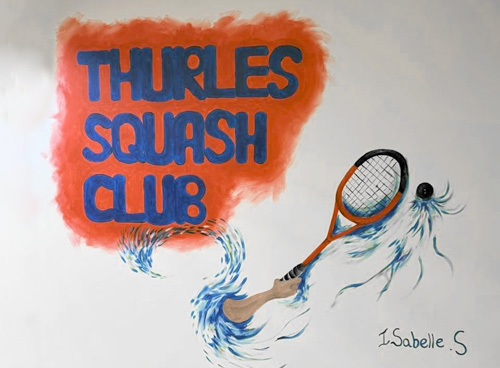
There is something very special about a sporting club that combines a passion for its game with a genuine sense of friendship, community and belonging. Thurles Squash Club is one such club, and with a flourishing membership of over 150 players, it is certainly making its mark on the sporting landscape of Thurles and beyond.
Located at Thurles Golf Club in Turtulla, this vibrant and welcoming club has been part of the local sporting community for over four decades. Over those years, it has developed a proud tradition of encouraging participation, nurturing talent and, perhaps most importantly, bringing people together through a shared love of squash.
One of the club’s greatest strengths is its wonderfully inclusive approach. Whether you are an experienced player, someone returning to the game after years away, or a complete beginner who has never held a squash racket, the welcome is exactly the same. There is a place for everyone at Thurles Squash Club!
Squash itself is a fantastic sport, offering an exhilarating combination of fitness, speed, skill and enjoyment. It provides a tremendous cardiovascular workout while also sharpening reflexes, coordination and concentration. But at Thurles, the benefits extend well beyond the squash court. Friendships are forged, laughter is shared, and a tremendous sense of camaraderie runs through the club. The facilities include two excellent squash courts, while coaching, challenge matches and tournaments offer players opportunities to develop their abilities and enjoy some friendly competition. The club has also built a proud reputation for encouraging young players, recognising that the future of any sporting organisation depends on inspiring the next generation.
A New Committee Takes the Helm. As the club embarks on another exciting season, a newly appointed committee is ready to build upon these strong foundations and help steer Thurles Squash Club towards an even brighter future. John Keane takes up the position of Chairman, bringing leadership and a commitment to the continued success of the club. Olivia Kennedy assumes the important role of Secretary, while Gerry Connaughton takes responsibility as Treasurer. Gerry is already a familiar and respected figure in Thurles squash circles, having contributed enormously to the development and coaching of young players over the years. Jamie Ryan steps into the role of Men’s Captain, while myself, Suzie Connors takes on the dual responsibilities of Ladies’ Captain and Public Relations Officer(PRO), helping to promote the club and spread the word about everything it has to offer.
Together, this enthusiastic committee will play a vital role in maintaining the club’s welcoming atmosphere, encouraging participation and ensuring that Thurles Squash Club continues to flourish. Of course, no successful club is built by committee members alone. Its strength lies in the dedication of its members, the generosity of volunteers and the countless individuals who contribute their time and energy to keeping the sporting spirit alive.
Why Not Become Part of Something Special? With over 150 members and a reputation for friendliness, enthusiasm and sporting enjoyment, Thurles Squash Club has every reason to look forward to yet another successful season. And to anyone contemplating taking up a new sport, improving their fitness or simply meeting new people, the message could not be clearer:- You don’t need experience. You don’t need to be an athlete. You simply need the willingness to give it a go!
The club welcomes players of all abilities, and there is no better time to discover the tremendous enjoyment that squash can bring. Congratulations and best wishes to Chairman John Keane and his fellow committee members as they begin their new term. Here’s to another fantastic season of great squash, great friendships and great sporting memories at Thurles Squash Club!
Thurles Squash Club – More than just a game, it’s a community. Everyone welcome!
This website uses cookies to improve your experience. We'll assume you're ok with this, but you can opt-out if you wish.AcceptRead More
Privacy & Cookies Policy
Privacy Overview
This website uses cookies to improve your experience while you navigate through the website. Out of these, the cookies that are categorized as necessary are stored on your browser as they are essential for the working of basic functionalities of the website. We also use third-party cookies that help us analyze and understand how you use this website. These cookies will be stored in your browser only with your consent. You also have the option to opt-out of these cookies. But opting out of some of these cookies may affect your browsing experience.
Necessary cookies are absolutely essential for the website to function properly. This category only includes cookies that ensures basic functionalities and security features of the website. These cookies do not store any personal information.
Any cookies that may not be particularly necessary for the website to function and is used specifically to collect user personal data via analytics, ads, other embedded contents are termed as non-necessary cookies. It is mandatory to procure user consent prior to running these cookies on your website.






Recent Comments