The Teachers’ Union of Ireland (TUI) is preparing to ballot its members for industrial action, amid a dispute over an unpaid salary increase linked to Senior Cycle reform.
The union says a 1% pay rise—part of the Senior Cycle Redevelopment Implementation Support Measures accepted by members in May 2025, remains outstanding. TUI members subsequently began fulfilling their commitments under the agreement.
If members endorse industrial action, the initial response will be to suspend participation and co-operation in Additional Assessment Components (AACs), including the practical and project-based assessments introduced under the redeveloped Senior Cycle.
TUI President Mr Anthony Quinn said members had honoured the agreement in good faith and expected the Department of Education and Youth to do the same. He described the delayed payment as a serious breach of trust that calls the Government’s commitment to Senior Cycle redevelopment into question.
The Department said it remains committed to implementing the Public Service Agreement, including its local-bargaining provisions. It added that discussions with the relevant parties remain ongoing and confidential and declined to comment further, while that process continues.
Lyrics and Vocals: Ms Dolly Rebecca Parton Dean(née Parton) [1946–2026].
“In remembrance of the late Dolly Parton, we turn to one of her most moving gospel songs, ‘When Jesus Comes Calling for Me’. Written by Dolly and released on her 1998 album Hungry Again, the song tells of approaching death not with fear, but with faith, peace, and the assurance of going home. In light of her passing at age 80, its message feels especially poignant; a tender reflection from an artist whose music, generosity, and spirit touched generations”.
When Jesus Comes Calling For Me.
When Jesus Comes Calling For Me.
When I was a child I recall an old man, everybody loved old Zeke He was all alone, his family was gone; one day he said to me.
I’m just sittin’ here thinkin’ about Jesus, rockin’ as my old chair creaks. Some glad day I’ll fly away when Jesus comes calling for me. It might be today, it might be tomorrow, maybe one day next week. I’ll soon be done with trouble and sorrow when he comes calling for me. When Jesus comes calling for me, When I die don’t grieve and cry, Lordy, don’t feel sorry for me. Oh what a day, what a mighty fine day, When Jesus comes calling for me. When he comes calling for me. I might be in the graveyard walking talking to my family, Or I might be plowing in the field down yonder, just old Muley and me. Wherever I am, whatever I’m a doing, some sweet day I’ll see, A band of angels in a cloud of glory when Jesus comes calling for me. When he comes calling for me. When I die just close my eyes, And lay me ‘neath the willow tree. Oh what a day, what a mighty fine day, When Jesus comes calling for me. When Jesus comes calling for me. I’m just sittin’ here watchin’ for Jesus, rockin’ as my old chair creaks. Some sweet day I’ll fly away when Jesus comes calling for me. When he comes calling for me.
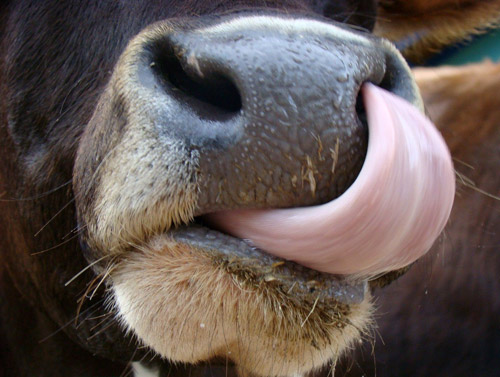
A midge-borne livestock virus previously reported mainly in Africa and Japan has now reached Europe.
During summer 2026, the Shamonda virus; or a closely related European variant, was identified in cattle in France, Germany, Switzerland, Liechtenstein, the Netherlands and Austria. Scientists expect further spread to be possible while blood-feeding Culicoides midges* remain active.
* A Culicoides midge is a tiny biting fly, usually only 1–3 millimetres long. Female midges feed on the blood of cattle and other animals and can carry viruses from one animal to another, much like mosquitoes. They are especially active during warm, damp conditions and around dusk; some species transmit livestock diseases such as Shamonda and the already identified bluetongue virus.
Plausible routes for entry into Europe include infected midges being transported long distances by wind or inadvertently through trade and transport, or the movement of an infected animal.
In adult cattle, infection generally causes short-lived illness, including: High fever. Diarrhoea and appetite loss. Lethargy. A sudden, sometimes severe, reduction in milk yield.
Although most adult cattle appear to recover, affected dairy farms could face lost production, veterinary expenses and additional monitoring costs. The greatest concern involves pregnant animals. The virus can cross the placenta and has been detected in aborted bovine foetuses in Switzerland. Shamonda and related viruses may cause abortion, stillbirth or calves with serious limb, spinal and brain abnormalities when infection occurs during a vulnerable stage of pregnancy. Researchers are still determining how frequently this happens with the European variant.
The virus is thought to spread mainly through biting midges; not through ordinary direct contact between cattle. There is currently no specific treatment or vaccine, although sick animals can receive supportive veterinary care. Reducing exposure to midges may lower the risk but cannot provide complete protection.
Farmers should watch closely for clusters of fever, diarrhoea or abrupt milk loss and contact their veterinarian immediately. Early blood sampling is important because the virus may remain detectable in adult cattle for only a short time. Abortions, stillbirths and malformed calves should also be investigated.
There is currently no evidence that Shamonda virus causes disease in humans. It has not been identified as a food-safety threat from milk or meat.
The situation is evolving, and the virus’s origin, complete geographic distribution and long-term reproductive impact remain uncertain. Farmers should follow updates from their veterinarian and national animal-health authority rather than relying on social-media rumours.
It is with profound sadness that we mark the death of Dolly Parton, the beloved singer, songwriter, actress, philanthropist and cultural icon, who passed away peacefully in Nashville today August 25th, 2026. She was aged 80 years.
Born on January 19th, 1946, in a one-room cabin in rural Tennessee, Dolly Rebecca Parton was the fourth of 12 children. From those humble beginnings, she built an extraordinary career spanning nearly six decades; bringing warmth, wit and an unmistakable voice to audiences around the world.
As a songwriter, Dolly had a rare gift for turning deeply personal experiences into universal stories. She wrote thousands of songs, including “Jolene,” – “Coat of Many Colors,” – “9 to 5” and “I Will Always Love You.” Her music crossed the boundaries of country, pop, rock and gospel, while her honesty and humanity enabled her to connect with people from every generation and background.
“Coat of Many Colors” Autobiographical song, based on one of her most vivid childhood memories.
The above song tells the story of when her family could not afford a new winter coat, her mother stitched one together from donated scraps of fabric. While sewing, she told Dolly the biblical story of Joseph and his coat of many colors. Dolly proudly wore her coat to school, where other children mocked her for wearing rags. The experience inspired her song about poverty, a mother’s love and recognising wealth in forms other than money.
Her talents extended far beyond music. Dolly brought her characteristic humour and heart to films including “9 to 5“ and “Steel Magnolias”. She also became a successful businesswoman, establishing ‘Dollywood’ in her native Tennessee and creating opportunities for the community that had shaped her.
Perhaps her most meaningful legacy can be found in the lives she changed through her generosity. The Imagination Library, founded in 1995, has placed hundreds of millions of books into the hands of young children. She also supported disaster relief, medical research and numerous community causes; often helping quietly and without seeking recognition.
Among her many honours were 11 Grammy Awards and induction into both the Country Music Hall of Fame and the Rock & Roll Hall of Fame. Yet awards alone cannot measure the joy, comfort and hope she gave to millions.
Her husband of nearly 60 years, Carl Dean, died in 2025. Our deepest sympathies are with Dolly’s family, friends, colleagues and the countless admirers mourning her loss.
Dolly Parton leaves behind far more than a remarkable body of work. She leaves a legacy of kindness, courage, humor and songs that will continue to speak for generations.
Australia’s current social media experience offers Ireland an important warning.
More than 80% of Australian children aged 10–15 were still using social media three months after its under-16 restrictions took effect. Some retained existing accounts, supplied false ages or shifted towards messaging and gaming services. Parental awareness of children’s online activity also declined.
Ireland is considering age restrictions while developing a digital age-verification mechanism. However, copying Australia’s blanket ban could reproduce the same problems: circumvention, displacement to less-regulated services, intrusive identity checks and reduced communication between teenagers and parents. Ireland should instead build upon its existing regulatory system, which combines the EU Digital Services Act, the Online Safety and Media Regulation Act 2022 and Coimisiún na Meán’s Online Safety Code.
Ireland should undertake several connected measures:
Expand digital and media literacy throughout primary and secondary education, including lessons on algorithms, misinformation, cyberbullying, privacy and reporting harmful material.
Require social-media companies to make minors’ accounts private by default and prevent unknown adults from contacting them.
Prohibit targeted advertising, location sharing and commercial profiling involving children.
Restrict addictive design features such as endless scrolling, autoplay, streaks and overnight notifications.
Give minors a chronological-feed option instead of automatically placing them under engagement-maximising recommendation systems.
Require independent audits of platforms’ algorithms, age-assurance measures and child-safety outcomes.
Introduce privacy-preserving age checks that confirm an age bracket without revealing a child’s full identity or retaining identification documents.
Provide accessible guidance for parents while involving young people directly in policy design.
Ireland already requires certain platforms serving under-16s to offer parental controls, including tools for screen time, privacy, content and contact management. The next step is to ensure that these protections are switched on automatically and independently tested, rather than leaving families to locate and configure them.
Young people should also be treated as participants in the solution. Ireland’s 2026 Youth Forum on Online Safety brought together approximately 100 people aged 10–17, offering a useful model for continuing consultation. Government of Ireland Policies developed with children are more likely to reflect how they actually use technology and how they might evade ineffective controls.
Australia currently shows that an age barrier alone cannot eliminate young people’s social-media use. Ireland’s more appropriate course is therefore regulated, progressively independent access; strong default safeguards for younger users, increasing autonomy with age, sustained education and enforceable duties placed on the companies that design and profit from these platforms.
This website uses cookies to improve your experience. We'll assume you're ok with this, but you can opt-out if you wish.AcceptRead More
Privacy & Cookies Policy
Privacy Overview
This website uses cookies to improve your experience while you navigate through the website. Out of these, the cookies that are categorized as necessary are stored on your browser as they are essential for the working of basic functionalities of the website. We also use third-party cookies that help us analyze and understand how you use this website. These cookies will be stored in your browser only with your consent. You also have the option to opt-out of these cookies. But opting out of some of these cookies may affect your browsing experience.
Necessary cookies are absolutely essential for the website to function properly. This category only includes cookies that ensures basic functionalities and security features of the website. These cookies do not store any personal information.
Any cookies that may not be particularly necessary for the website to function and is used specifically to collect user personal data via analytics, ads, other embedded contents are termed as non-necessary cookies. It is mandatory to procure user consent prior to running these cookies on your website.






Recent Comments