RTÉ confirm that it has only temporarily withdrawn the RTÉ Investigates, “The Gardaí: Full Disclosure”, from its Player following correspondence from the Office of the Director of Public Prosecutions about an upcoming court case referenced to in the programme.
The documentary, broadcast on Wednesday night last, examined allegations of mistreatment of Garda whistleblowers.
According to press reports, RTÉ has not identified the court case, but says the programme will remain unavailable until the proceedings conclude.
The broadcaster says it will restore the documentary in due course and continue reporting on the public-interest issues it raised.
Primary school teachers represented by the Irish National Teachers’ Organisation (INTO) are set to begin industrial action on October 5th, amid delays in securing a new public sector pay agreement.
The action will begin with a work-to-rule, with members also due to join other public sector workers in a proposed nationwide strike on Wednesday, October 14th next.
According to the INTO, members in primary and special schools will restrict their work to contracted daily teaching hours. They will withdraw co-operation with additional hours, including those introduced under the Croke Park Agreement, until further notice.
The decision follows a ballot in which 99.5% of participating members supported industrial action. Turnout stood at 57.5%. INTO General Secretary Mr John Boyle said the result demonstrated a strong mandate from teachers facing financial pressures. He said uncertainty over salaries, alongside the cost-of-living crisis, was fuelling members’ frustration. The INTO is the latest public sector union to support industrial action, accusing the Government of failing to put forward a meaningful pay offer.
The previous public sector pay agreement expired on June 30th, and formal negotiations on a replacement have yet to begin. Responding to the announcement, the Department of Public Expenditure expressed disappointment that unions had not taken opportunities to engage in recent weeks.
A spokesperson urged both sides to return to negotiations, saying progress towards a new agreement would require constructive, sustained engagement without preconditions.
Recall of a batch of Dunnes Stores Potato Waffles 680g due to elevated levels of mineral oil aromatic hydrocarbons (MOAH)
Alert Summary dated Friday, 18th September 2026
Category 1: For Action. Alert Notification: 2026.59. Product Identification: Dunnes Stores Potato Waffles, pack size: 680g. Batch Code: Best before: July 2028.
Message: Dunnes Stores are recalling the above batch of Potato Waffles 680g due to elevated levels of mineral oil aromatic hydrocarbons (MOAH)
Recall notices will be displayed at point-of-sale in Dunnes stores.
Nature Of Danger: Mineral oil hydrocarbons comprise a wide range of chemical compounds obtained mainly from petroleum distillation and refining. They are categorised into two main groups referred to as mineral oil saturated hydrocarbons and mineral oil aromatic hydrocarbons. Mineral oil hydrocarbons can be present in food in many ways, such as through environmental contamination; use of lubricants for machinery during harvesting and food production; processing aids; food or feed additives; and migration from food contact materials. Some substances in the mineral oil aromatic hydrocarbons group are of possible health concern. Although the consumption of the contaminated product does not pose an immediate risk to health, continuous consumption over a long period of time may pose a potential risk to health. Therefore, exposure to mineral oil aromatic hydrocarbons needs to be minimised.
Action Required: Consumers: Consumers are advised not to eat the implicated batch.
It was with great sadness that we learned of the death, today Friday 18th September 2026, of Mrs Mary Tierney(née Duggan), Templetuohy, Thurles and formerly of Rearcross, Co. Tipperary.
Pre-deceased by her parents Mary and Daniel, brothers Paddy and John; Mrs Tierney passed away peacefully surrounded by her loving family, while in the care of staff at the Community Hospital of the Assumption, Thurles, Co. Tipperary.
Her passing is most deeply regretted, sadly missed and lovingly remembered by her sorrowing family; loving husband Alan, daughter Gina, sons Alan and Mark, daughter-in-law Linda, son-in-law John, Alan’s partner Marie, grandchildren Shannon, Lee, Niall, Abigail, Noreen, Jeffrey, Gregory and Grace, great-grandson Grayson, sisters Nancy, Peggy, Biddy, Kathleen and Winnie, brother Dan, sister-in-law Margaret, brother-in-law Gerry, nieces, nephews, cousins, extended relatives, neighbours and friends.
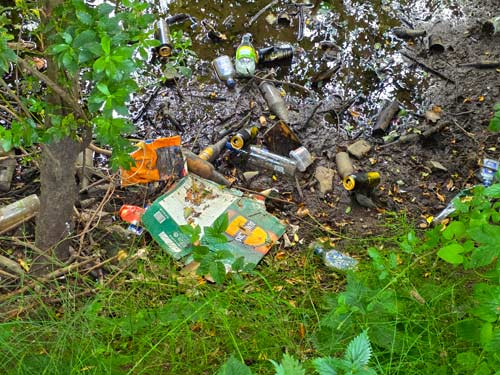
The summer foliage is dying back, unveiling more of the uncollected rubbish along the banks and in the River Suir in central Thurles. Bottles, cans, flower pots and other litter remain, while fallen trees and uncontrolled shrubbery continue to obstruct the river, as the stench persists.
After more than 13 year, the problems remain unresolved. Certainly over the past six weeks, despite my contact with the Environmental Protection Agency and Tipperary County Council, there have been no meaningful progress on the continuing litter, obstructions and overall pollution. The installation of litter bins also still remains unaddressed.
Two Years On – Bed Of River Suir At Low Tide.
Dear Mr Willoughby, Further to previous correspondence and responding to your concerns, the EPA wrote to Tipperary County Council seeking a written response from them on actions taken or planned on this matter. The Council responded to the EPA on 15/09/2026. However, the response did not provide sufficient information. The EPA has therefore requested further information from the Council. We will provide you with an update in three weeks. In the interim, we recommend you continue to report any further issues relating to this matter to the Council. Please use the reference number above in any further communication with the EPA regarding this matter. Trusting this is of assistance to you. Kind regards, Signed:Ms Shelly Laffan (Complaints Unit | Office of Environmental Enforcement) (Aonad Gearán na hOifige Forfheidhmithe i leith cúrsaí Comhshaoil)
Now, a response to my initial complaint from Ms Shelly Laffan, of the EPA’s Complaints Unit, Office of Environmental Enforcement, raises further questions about the Council’s handling of this matter.
The EPA confirms that it sought a written response (See above) from Tipperary County Council on actions taken or planned. The Council replied on September 15th 2026, but the EPA states: “However, the response did not provide sufficient information.”
The EPA has now requested further information and says it will update me in three weeks. In the meantime, it advises me to continue reporting further issues to the Council and to use my complaint reference [Ref: COM021813], in future correspondence with the EPA.
Thurles residents deserve to know what action if any is being actually taken, and when visible work will begin.
The Stench Continues. Where Is the Public Accountability?
The accompanying video hereunder records what appears to be effluent entering the river. It also shows a flat flagstone positioned over one pipe outlet, raising questions about whether the discharge is being obscured. Who placed it there, and why, requires investigation. The discharge itself needs to be identified and its source established.
I have also received reports of fish found floating near ‘The Willows’ housing estate in the recent past. The account relayed to me attributes this to an accidental chemical spill washed into the Suir through a connected surface-water drainage pipe. That explanation remains unconfirmed. The relevant authorities should establish what happened and publish their findings, including any available sampling results.
These concerns have a history. Local reporting in May described dumped shopping trolleys, plastic debris and suspected effluent along this same town-centre river.
Despite a political promotional video, 13 years too late, same highlighting the river’s condition, no subsequent update has come from same hand holding politicians, with the sole exception of local councillor Mr Jim Ryan who has taken up the cause. His communication on local radio over past months is acknowledged. Others,, if any, who have publicly expressed concern should explain what further follow-up they have undertaken.
Tipperary County Council should also now publish a dated programme for litter removal, for required bin provisions and assessment of the fallen-tree obstructions. The relevant authorities must investigate the discharges, explain their findings and identify who is responsible for each next step. Every further week of delay leaves the rubbish, the smell and the unanswered questions with the people of Thurles.
A copy of today’s updated report has been forwarded to all those responsible for this crime of neglect.
The River Suir deserves urgent care, sustained maintenance and public accountability. When will that work become visible?
This website uses cookies to improve your experience. We'll assume you're ok with this, but you can opt-out if you wish.AcceptRead More
Privacy & Cookies Policy
Privacy Overview
This website uses cookies to improve your experience while you navigate through the website. Out of these, the cookies that are categorized as necessary are stored on your browser as they are essential for the working of basic functionalities of the website. We also use third-party cookies that help us analyze and understand how you use this website. These cookies will be stored in your browser only with your consent. You also have the option to opt-out of these cookies. But opting out of some of these cookies may affect your browsing experience.
Necessary cookies are absolutely essential for the website to function properly. This category only includes cookies that ensures basic functionalities and security features of the website. These cookies do not store any personal information.
Any cookies that may not be particularly necessary for the website to function and is used specifically to collect user personal data via analytics, ads, other embedded contents are termed as non-necessary cookies. It is mandatory to procure user consent prior to running these cookies on your website.






Recent Comments