Climate Change Advisory Council warns that government measures are not enough to prevent industrial emissions rising again.
Industry is projected to be Ireland’s second worst-performing sector after transport, with emissions set to rise again between now and 2030
Ireland is significantly off track on biomethane production, while delays in approving low-carbon cement technologies are holding back progress.
Ireland generated 16.7 million tonnes of waste in 2024, while 37% of municipal waste was exported for final treatment highlighting significant gaps in Ireland’s ability to manage its own waste.
Ireland has the second-lowest circularity rate in the EU.
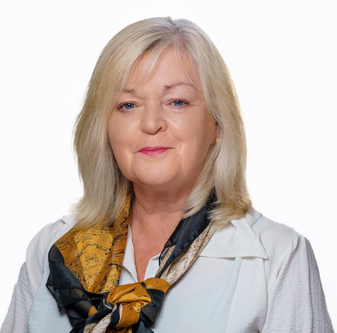
Ms Jillian Mahon. (Climate Change Advisory Council).
Launching the Industry and Waste chapter of its Annual Review 2026 today, the Climate Change Advisory Council has warned that much stronger Government action is needed to reduce industrial emissions, which are projected to rise again over the coming years.
The Council said that while industrial emissions have fallen for four consecutive years and are now 15.9% below 2018 levels, emissions from this sector are now expected to stagnate until 2030. Industry has already provisionally exceeded its emissions ceiling for 2021–2025 by 9.1% and is projected to be the second worst-performing sector after transport against its next emissions ceiling. By 2030, emissions are projected to be just 11.6% below 2018 levels, well short of the Government’s 35% reduction target.
The Council said it is particularly concerning that EPA projections show almost no difference between projected industrial emissions under existing Government measures and those including additional planned measures, demonstrating that there is an absence of clear additional Government measures to meet 2030 decarbonisation targets.
A key priority for the sector is electrification and fuel switching away from fossil fuels to renewables such as biomethane, which can provide a renewable energy for industrial processes that are difficult to electrify. However, Ireland remains significantly off track against its target to produce 5.7 TWh of biomethane by 2030. Just seven projects, worth €19 million, were approved under the first €40 million Biomethane Capital Grant Scheme.
With up to €200 million in further capital supports planned between 2026 and 2030, the Council says lessons must be learned from the first scheme. It is calling for the Renewable Heat Obligation to be finalised urgently, alongside a separate support scheme to accelerate indigenous bio-methane production.
The Council has also warned that a growing backlog in the approval of low-carbon cement and concrete technologies is holding back emissions reductions in the sector. Some proposed solutions have been awaiting decisions from the National Standards Authority of Ireland’s Concrete Committee for several years.
The Review also finds that Ireland’s progress towards a circular economy is stalling. Ireland generated 16.7 million tonnes of waste in 2024 – around 8.5kg per person every day – with annual waste generation increasing by more than 20% over the past decade. A significant reduction in the generation of waste is required to meet Ireland’s EU commitments, supported by increased recycling rates and spending on new circular economy infrastructure. More than a third (37%) of municipal waste was exported for final treatment, highlighting significant gaps in Ireland’s ability to manage its own waste.
Ireland’s circularity rate – a measure of how much material is recycled back into the economy – was just 2% in 2024, the second lowest in the EU and significantly below the EU average of 12.2%. The municipal recycling rate has also remained largely unchanged over the past decade and Ireland will miss the EU target to recycle 55% of municipal waste.
The Council is calling on the Government to use Ireland’s Presidency of the Council of the EU to provide greater leadership on the circular economy. The
Government should translate this into decisive national action and accelerate the delivery of the Whole of Government Circular Economy Strategy 2026–2028.
Ms Jillian Mahon, Member of the Climate Change Advisory Council, said:“Industry has made real progress in reducing emissions in recent years, but we cannot assume that progress will continue. The projections are a clear warning that the measures currently planned are not enough to deliver the change needed by the end of this decade.“
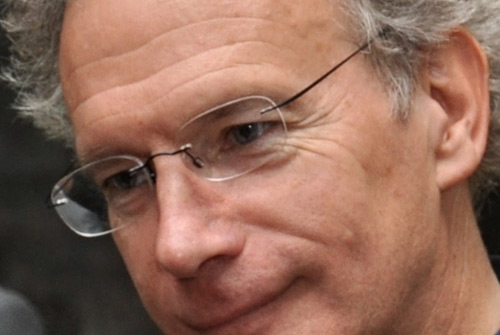
Irish journalist, literary editor, and drama criticMr Fintan O’Toole.
The fifth annual “Circling The Square”, Poetry and Music Festival gets underway in Thurles, Co. Tipperary, this coming Friday evening, 16th October 2026, at 6:30pm.
The much-anticipated three-day festival, running from Friday 16th to Sunday 18th October, promises yet another wonderful celebration of poetry, literature and live music in the heart of Thurles Town.
Established to honour the life and literary legacy of the late Thurles poet and critic Dennis O’Driscoll(1954–2012), the festival has grown into one of Ireland’s most highly regarded literary gatherings, attracting acclaimed poets, writers and musicians.
Saturday’s programme continues at The Source Arts Centre, Cathedral Street, Thurles, (Eircode E41 A4E8), featuring an impressive line-up of poets and musicians, together with a special discussion entitled Fieldwork: ‘The Public Life of Seamus Heaney‘, involving Mr Fintan O’Toole, (Latter biographer of Seamus Heaney), Mr Mick Heaney(Latter son of poet Seamus Heaney), and Mr Declan O’Driscoll(Latter brother of the late poet Dennis O’Driscoll).
This will be followed by readings from poets Maija Mäkelä, Adam Wyeth, Katie Donovan, Stephen Sexton and Catriona O’Reilly, plus music by classical flautist Emma Roche.
With a rich combination of poetry, music and warm Tipperary hospitality, “Circling The Square” promises to be yet another memorable cultural occasion for Thurles and its environs. Everyone is warmly invited to support this wonderful celebration of literature and the arts in Thurles, Co. Tipperary.
Further information and ticket details for Saturday’s events are available HERE – {Tel- 0504 90204}
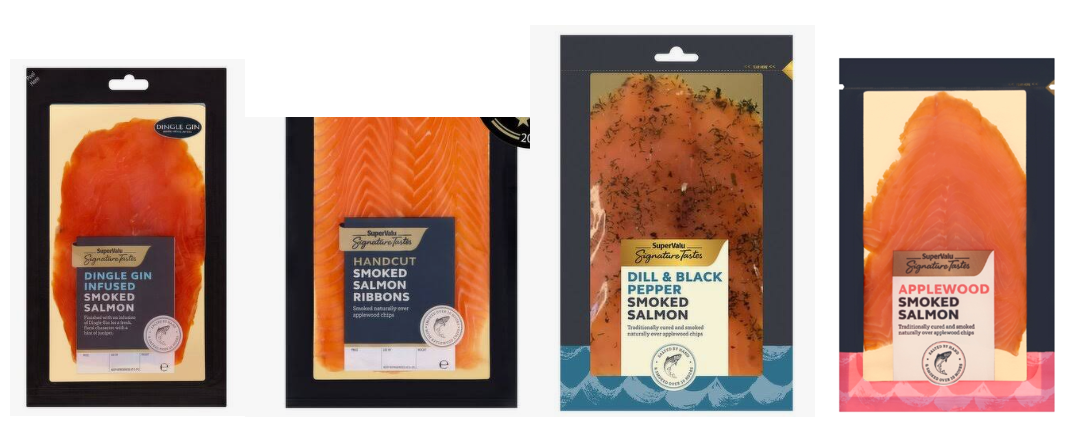
Recall of Centra Inspired By & SuperValu Smoked Salmon products due to the presence of Listeria monocytogenes.
Alert Summary dated Wednesday, October 14th 2026.
Category 1: For Action. Alert Notification: 2026.66. Product Identification: Please see table below. Batch Code: Please see table below. Country Of Origin: Ireland.
Message: The below batches of Centra and Supervalu Smoked Salmon products are being recalled due to the presence of Listeria monocytogenes.
Recall notices will be displayed at point-of-sale.
SuperValue Signature Taste Dill and Black Pepper Smoked Salmon.
100g.
04/11/2026.
Inspired By Centra Applewood Smoked Salmon. .
80g.
31/10/2026.
Nature Of Danger: In healthy people, symptoms of Listeria monocytogenes infection can include mild flu-like symptoms, or gastrointestinal symptoms such as nausea, vomiting, and diarrhoea. However, in people who are more vulnerable, the infection can be severe and can lead to serious complications. People who are more vulnerable to Listeria monocytogenes infections include pregnant women, infants, older adults, and people with weakened immune systems. The incubation period, the time between initial infection and first symptoms appearing, is on average 3 weeks but can range between 3 and 70 days.
Action Required:Manufacturers, wholesalers, distributors, caterers & retailers: Retailers: Same are requested to remove the implicated batch from sale and display recall notices at point-of-sale. Wholesalers/Distributors: Same are requested to contact their affected customers and recall the implicated batch and provide a point-of-sale recall notice to their retailer customers. Consumers: Consumers are advised not to eat the implicated batch.
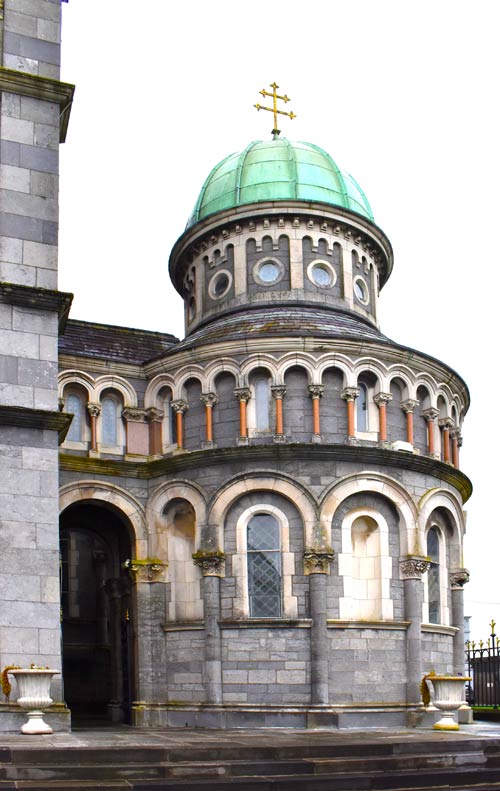
The historic Cathedral of the Assumption here in Thurles, Co. Tipperary will take centre stage on this Sunday, October 18th 2026, when the 11:00am Mass is scheduled to be broadcast live on RTÉ One, to mark the centenary of World Mission Sunday. Archbishop Kieran O’Reilly SMA, Archbishop of Cashel and Emly, will be the chief celebrant for this special occasion, which brings together the local faith community and viewers throughout Ireland. This year’s World Mission Sunday theme is “One in Christ, United in Mission”, reflecting the universal Church’s shared commitment to faith, solidarity and missionary service.
Archbishop Will Recall His Own Missionary Experience. The occasion has particular personal significance for Archbishop Kieran O’Reilly SMA, who reflects on his own experience as a missionary priest. Following his ordination on 17th June 1978, he travelled to Liberia in West Africa, where he served in the Archdiocese of Monrovia from 1978 to 1980. During those formative years, he lived and worked among the communities he served, sharing in their daily lives, their faith and their experiences. His time in Liberia formed an important part of his missionary journey and was followed by further missionary service in Nigeria, where he taught Sacred Scripture at the major seminary in Ibadan.
Supporting Missionaries Across the World. World Mission Sunday is Pope Leo XIV’s annual appeal for spiritual and financial support for missionaries and the communities they serve around the world. The annual collection, held at Masses throughout Ireland and the universal Church, supports developing dioceses in Africa, Asia and Latin America. Funds raised contribute towards essential infrastructure, including churches, medical clinics, nurseries and schools, as well as supporting education, healthcare and the training of future religious leaders. Ireland’s 2025 World Mission Sunday collection has been reported at approximately €1.3 million.
Cathedral Preparing for Its 150th Anniversary in 2029. The televised Mass also comes at an important time for Thurles Cathedral, which is preparing to celebrate its 150th anniversary in 2029. An ongoing fundraising campaign is seeking to raise €2.5 million for a new Cathedral roof, a major restoration project intended to preserve this important landmark for future generations. The appeal, entitled “In Our Hands – Preserving Our Cathedral”, highlights the responsibility of the local community and supporters to protect the Cathedral’s architectural and spiritual heritage.
Next Sunday’s national broadcast will be an opportunity not only to celebrate the worldwide missionary tradition of the Church but also to showcase Thurles Cathedral and its place at the heart of the Archdiocese of Cashel and Emly.
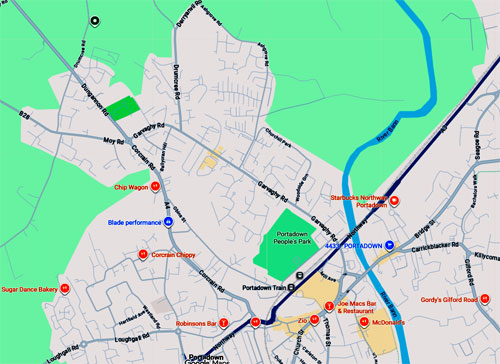
Garvaghy Road: Two Natures, One Choice – What Are We Feeding?
There is a short but powerful poem, attributed to an unknown author, which seems particularly relevant to the recent events surrounding Garvaghy Road and Drumcree.
“TWO NATURES” — Anonymous
“Two natures beat within my breast, The one is foul, the one is blessed, The one I love, the one I hate, The one I feed will dominate.”
The above four simple lines contain a profound truth about human nature, personal responsibility and the choices we make. Perhaps they also offer a timely lesson for everyone involved in the continuing Garvaghy Road dispute.
For nearly thirty years, Drumcree has represented far more than a disagreement over a parade route. It has become entangled with identity, religious tradition, community rights, historical grievances and painful memories. The recent decision by the Parades Commission to permit a restricted Orange Order parade, the opposition of local residents supported by Sinn Féin, and the subsequent intervention by the Secretary of State have demonstrated how easily old wounds can be reopened.
But beyond the legal decisions, political statements and protests lies a deeper moral question. What kind of society are we choosing to feed? Are we feeding resentment, suspicion, bitterness and the determination to defeat the other? Or are we feeding understanding, restraint, compassion, mutual respect and the courage to seek reconciliation?
The Orange tradition carries deep historical, cultural and religious significance for those who belong to it. That deserves recognition. Equally, the people of Garvaghy Road have their own history, identity, dignity and deeply held concerns about what happens within their community. That deserves recognition too. Recognising one does not require dismissing the other. Sinn Féin, like every political party, has a legitimate responsibility to represent its supporters. But political leadership also requires ensuring that strong convictions do not become obstacles to understanding or deepen the fears of others.
The same responsibility applies to unionist representatives and the leadership of the Orange Order. The Parades Commission faces the difficult task of balancing competing rights, responsibilities and public concerns. Its decisions may properly be supported, criticised or legally challenged.
Yet an important distinction remains: The law may determine what is permitted, but conscience must also ask what is wise, compassionate and conducive to peace. That question applies to everyone. Surely Christian faith calls us to something better than continuing confrontation. The Apostle Paul reminds us (in Galatians Chapter 5) of the struggle between the flesh and the Spirit. Among the fruits of the Spirit are love, peace, patience, kindness, gentleness and self-control. These are not simply admirable words to proclaim on a given Sunday. They must be demonstrated in our relationships with neighbours, especially those with whom we disagree. After all, if we claim to uphold Christian principles, they should be visible in how we treat others. A Christian witness is not strengthened by provoking fear, humiliating neighbours or insisting that one community’s dignity must come at another’s expense. Nor is lasting peace built through threats, intimidation or inflammatory language from any quarter. Peace requires more than the absence of violence. It requires the presence of mutual respect.
There is a particular responsibility upon Sinn Féin, Unionist Political Leaders, the Orange Order, the Parades Commission, Churches and Community Representatives to contribute constructively to a more peaceful society. Words matter. Attitudes matter. The examples we set matter. Every inflammatory statement feeds something. Every gesture of understanding feeds something else and over time, what we repeatedly feed becomes stronger.
The lesson of Garvaghy Road should not be that one community must triumph over another. Neither can build a better future while remaining imprisoned within the divisions of the past. That does not mean abandoning convictions, ignoring historical wrongs or dismissing genuine fears. It means recognising that conviction without compassion can become stubbornness, tradition without sensitivity can become provocation, and rights without corresponding responsibilities can damage relationships. There is no dishonour in listening, no disgrace in compromise and no weakness in choosing reconciliation over confrontation. Sometimes the greatest demonstration of strength is the willingness to refrain from something because we recognise the hurt it may cause another.
Garvaghy Road presents a choice reaching far beyond Portadown. Do we genuinely want a shared future, or merely a continuation of old divisions? The poet leaves us with a warning: “The one I feed will dominate.” That is true of individuals, political parties, institutions, churches and communities. It is true of Northern Ireland. If we continue feeding division, division will flourish. But if we nurture understanding, humility, mutual respect and reconciliation, something better may finally take root. And for those professing Christian faith, loving our neighbour was never intended to mean loving only those who share our traditions, politics or interpretation of history. It means loving our neighbour even when we disagree.
So perhaps the most important question concerning Garvaghy Road is not who will prevail. It is simply this; Which nature are we feeding? Are we feeding the divisions of yesterday, or the reconciliation that tomorrow so desperately needs?
This website uses cookies to improve your experience. We'll assume you're ok with this, but you can opt-out if you wish.AcceptRead More
Privacy & Cookies Policy
Privacy Overview
This website uses cookies to improve your experience while you navigate through the website. Out of these, the cookies that are categorized as necessary are stored on your browser as they are essential for the working of basic functionalities of the website. We also use third-party cookies that help us analyze and understand how you use this website. These cookies will be stored in your browser only with your consent. You also have the option to opt-out of these cookies. But opting out of some of these cookies may affect your browsing experience.
Necessary cookies are absolutely essential for the website to function properly. This category only includes cookies that ensures basic functionalities and security features of the website. These cookies do not store any personal information.
Any cookies that may not be particularly necessary for the website to function and is used specifically to collect user personal data via analytics, ads, other embedded contents are termed as non-necessary cookies. It is mandatory to procure user consent prior to running these cookies on your website.



Recent Comments