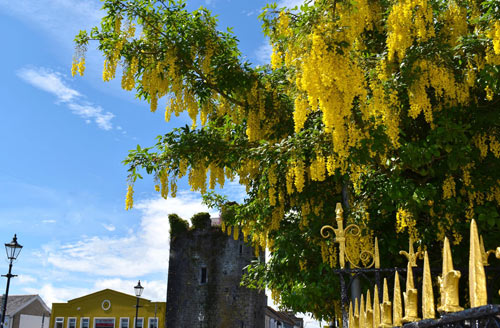
The cheerful online mischief-makers (View “Meanwhile in Ireland” Here), Ireland’s digital equivalent of a lad leaning over a pub counter saying, “I’m only telling you what everyone else is thinking”, have declared Thurles “a quiet railway town that feels dead on non-match days.”
This is precisely the sort of reckless investigative journalism we feared. For generations, the people of Thurles have worked tirelessly to create the impression that absolutely nothing happens here. It is one of Ireland’s most successful covert operations, surpassed only by the mystery of where county councils store road signs before deploying eleven thousand of them around a tiny pothole.
Now meanwhile in Ireland, that lovable online hornet with a laptop, has come dangerously close to exposing the entire scheme. Yes, Thurles looks quiet. That is the point. The objective is simple: keep excessive tourism at bay.
We have seen what happens when a perfectly pleasant Irish town is discovered by lifestyle journalists. First come the travel bloggers. Then come the ring lights. Before long, somebody is charging €19 for avocado on a roofing slate and describing Liberty Square as “Thurles’s answer to Montmartre*.” [*Montmartre, for the benefit of “Meanwhile in Ireland” website, is a historic hilltop neighbourhood in northern Paris known for its steep cobblestone streets, artistic heritage, and the iconic Sacré-Cœur Basilica.]
We cannot allow this. Every resident therefore receives extensive anti-tourism training. When an unfamiliar car enters town, locals are instructed to look mildly inconvenienced. Anyone asked, “Is there much to do around here?”, must stare thoughtfully into the middle distance and reply: “Depends what you’d call doing.” This is not rudeness. It is perimeter security.
The Traffic Is a Defensive Installation. “Meanwhile in Ireland” website; our nation’s premier supplier of lists designed to start arguments in family WhatsApp groups, also mentions traffic congestion and poor road surfaces. Again, allow me to inform you this is deliberate. Those cars are not stuck. They have been strategically positioned by the Thurles Tourism Deterrence Unit. The road surfaces, meanwhile, are calibrated to shake loose anyone carrying a selfie stick, a drone or a notebook containing the phrase “ten authentic experiences.” If your suspension survives Liberty Square, you may proceed, but you will be monitored. The cleverest part of the operation is that nobody can prove the congestion was planned, because even the people allegedly planning it, have been trapped in the traffic since 2017.
“Dull and Dated,” Says “Meanwhile in Ireland” Correct. Absolutely. Please tell everyone. Do not notice that Liberty Square has witnessed centuries of Irish life. Ignore Hayes’ Hotel, where the GAA was founded in 1884. Pay no attention to the architecture, history or independent businesses. Most importantly, do not enter the building containing the official Thurles visitor-information point. That would only give you ideas.
The apparently vacant buildings are decoys. Behind one of them are six musicians, a retired county hurler, two women organising a fundraiser, a committee discussing another committee and a man capable of explaining the entire history of Tipperary politics without even drawing breath. We cannot disclose which building. National security.
“Meanwhile in Ireland” website, having peered briefly over the digital hedge with all the forensic rigour of a man reviewing a pub through its letterbox; has declared the place empty. Excellent. The camouflage is working.
“Nothing to Do After Dark” This is our favourite accusation. Yes, there is allegedly nothing to do after dark, apart from theatre, comedy, music, dance, cinema and exhibitions at The Source Arts Centre, which describes itself as Tipperary’s cultural and entertainment venue. But apart from all the entertainment, there is no entertainment.There are also pubs, restaurants, community events, racing and the occasional conversation that begins with the weather and ends four hours later with a frame-by-frame analysis of the 2001 Munster hurling championship. If you hear laughter coming from a crowded pub, it is probably a recording. If you see people leaving a performance, they are actors portraying an audience. If thousands turn up for the Liberty Music Festival, kindly assume they are commuters whose train has been severely delayed. “Meanwhile in Ireland” may be Ireland’s cheekiest electronic parish newsletter, but even it cannot expect us to believe several thousand people accidentally wandered into a music festival.
Cold and Unwelcoming? Naturally, Thurles people are exceptionally friendly, which is precisely why they must sometimes pretend otherwise. A genuinely warm welcome could trigger a catastrophic chain reaction: A visitor enjoys Thurles. The visitor tells friends. The friends arrive. A travel magazine publishes “Ten Secret Irish Towns You Must Visit.” Liberty Square acquires an oat-milk queue visible from space.
Consequently, friendliness must be rationed.
A local may give you directions, recommend somewhere to eat, explain the history of the GAA and ask who your people are, but this should not be mistaken for hospitality. They are gathering intelligence. If somebody buys you a pint, you have penetrated the inner defences. Do not mention it to “Meanwhile in Ireland”. They will turn it into “Ten Irish Towns Where Strangers Recklessly Purchase Beverages.”
Semple Stadium: The Approved Distraction We admit that maintaining the dead-town illusion becomes difficult on match days, when Semple Stadium fills and Thurles temporarily produces enough noise to alter migratory bird patterns. That is why outsiders are encouraged to believe the stadium is our only attraction. While everyone is watching the hurling, residents quietly enjoy everything else: the River Suir, local walks, cafés, shops, arts, history and the reassuring absence of tour guides waving umbrellas. There is even Lár na Páirce, the museum of Gaelic games, in the town where the GAA began. Naturally, we tell tourists it is merely a sophisticated warehouse for elderly sliotars.
The wider tourism authorities describe Thurles as a town blending sporting heritage, culture, scenery and history. But what would they know? They have presumably never assembled a slideshow entitled Ireland’s Most Miserable Places while rubbing their hands together like cartoon landlords.
A Warning About the Surrounding Area. Under no circumstances should visitors use Thurles as a base for exploring Holycross Abbey, Cabragh Wetlands or the wider Tipperary countryside. The scenery is terribly scenic. The history is excessively historic. The wetlands contain birds that refuse to perform on demand and have shown no interest whatsoever in becoming Instagram influencers. You would hate it.
Our Official Response to Meanwhile in Ireland So, to our friends at website “Meanwhile in Ireland” that delightful digital gobshite, forever throwing verbal fireworks into quiet towns and running away giggling we say this:- You are completely correct. Thurles is miserable. There is nothing here. Please encourage your readers to continue directly to somewhere with a souvenir leprechaun every nine metres. Do not stop for coffee. Do not attend a show. Do not explore the town. Do not enter a good pub. Above all, do not ask a local about hurling unless you have cleared the remainder of your afternoon and possibly the following morning. And definitely do not discover that Thurles is a warm, lively, historic and deeply characterful Irish town that simply has no interest in dressing itself up like a theme park for anyone’s approval. Nothing to see here. Move along for God’s sake now; before somebody offers you a pint.
A very powerful El Niño is developing in the Pacific Ocean. Experts believe it could be one of the strongest recorded in modern times.
But what exactly does that mean for Ireland?
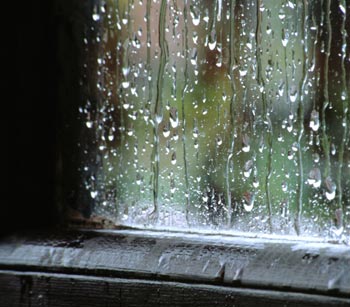
El Niño happens when part of the Pacific Ocean becomes much warmer than usual. This extra heat can change winds, rainfall and weather patterns around the world. The present event is expected to strengthen later in 2026 and could continue into early 2027. For Ireland, it may increase the chance of a mild, wet and stormy autumn or early winter. However, this is not guaranteed.
Met Éireann says El Niño’s effect on Ireland is weaker and less predictable than in many other parts of the world. Our weather is mainly controlled by the Atlantic Ocean, the jet stream and nearby areas of high and low pressure. These can change quickly and may either strengthen or cancel out El Niño’s influence.
In simple terms: Temperatures may be milder than normal. We could have more periods of heavy or persistent rain. There may be a greater chance of unsettled or stormy weather. Cold snaps and frost can still happen. Some other countries face a much clearer risk of drought, flooding or extreme heat.
El Niño will also add a temporary burst of natural warmth to the long-term warming caused by climate change. Because of this combination, experts believe 2027 could become the world’s hottest year on record. The important word is “chance.” A seasonal outlook tells us what type of weather has become more likely, it cannot tell us exactly when storms will arrive or how much rain every part of Ireland will receive. So, there is no need to panic. People should simply keep an eye on Met Éireann’s regular forecasts and weather warnings, particularly those living in places that are vulnerable to flooding.
The bottom line: A major El Niño is happening, and Ireland may experience a milder, wetter and stormier season. However, press headlines claiming that this weather is certain are going just a bit too far, but time will tell.
New safety regulations for e-scooters will take effect on Friday next, September 4th 2026.
Under the regulations, anyone using an e-scooter in a public place must:
Wear a helmet.
Wear high-visibility clothing.
Continue to comply with the existing minimum age of 16.
Follow existing rules governing speed, equipment, passengers and where e-scooters may be used.
The measures follow a rise in serious injuries involving e-scooters, particularly head injuries among children. Gardaí will be able to identify breaches of the protective-equipment rules through roadside enforcement.
A €100 fixed-charge fine for offences including riding without a helmet is expected to be introduced separately in the coming weeks. It is therefore important not to describe that fine as taking effect on September 4th next.
The Government also plans to raise the minimum riding age from 16 years to 18 years. That change is not yet in force because it must first complete the European Union’s Technical Regulation Information System process. The process can take up to 12 weeks, with implementation expected before the end of 2026.
Charges associated with seized e-scooters are also due to increase in early October. Further proposals under consideration to possibly include insurance, licensing and registration requirements.
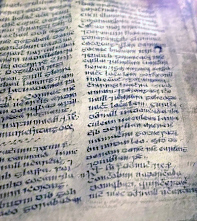
One of Ireland’s most important medieval manuscripts; a chronicle of the medieval history of Ireland, has returned to public display in Ireland and it carries a fascinating connection to Emly, Co. Tipperary.
Nearly 1,000 years old, the Annals of Inisfallen comprise 57 vellum leaves handwritten in Irish and Latin. The manuscript preserves a remarkable account of Irish history, from the legendary Tuatha Dé Danann and the arrival of St Patrick, to Viking raids, kings, poets, warfare and the coming of the Normans.
Scholars believe the manuscript was initially copied at the monastery of Lismore, Co. Waterford, using earlier source material created at the great monastic centres of Emly, Co. Tipperary, and Clonmacnoise, Co. Offaly. This connection highlights Emly’s important role as an early centre of religious learning, scholarship and historical record-keeping.
During the 12th century, the manuscript was probably brought to Inisfallen Island in Killarney, where successive scribes continued recording events. Its extraordinary entries include the Viking raids on Skellig Michael in 823, the arrival of a group believed to be Ireland’s first Jewish community in 1079, the great snow of 1047 and the gift of a camel from the King of Scotland to a great-grandson of Brian Boru in 1105. Now preserved by the Bodleian Libraries at the University of Oxford, the manuscript is being exhibited in Ireland for the first time since 1983.
Recording the Past: The Annals of Inisfallen and the Making of Irish History is on display at the Glucksman, University College Cork, until November 1st, 2026.
For the people of Emly and Co. Tipperary, the exhibition offers a welcome opportunity to recognise the contribution their ancient monastic centre is believed to have made to one of Ireland’s greatest written treasures.
When Does Somebody Else’s Pollution Become Our Responsibility?
Since yesterday September 1st 2026, Ireland’s fixed, on-the-spot fine for littering has increased from €150 to €250. This includes rubbish thrown from cars; whether it is a cigarette butt, bottle, food container or takeaway wrapper.
But fines raise a bigger question: At what point does somebody else’s pollution become our responsibility, especially when it enters a local river or waterway?Responsibility begins with the person who discarded the waste. Irish law prohibits causing or permitting polluting matter to enter waterways. Local authorities can investigate pollution, require remedial action and prosecute offenders.
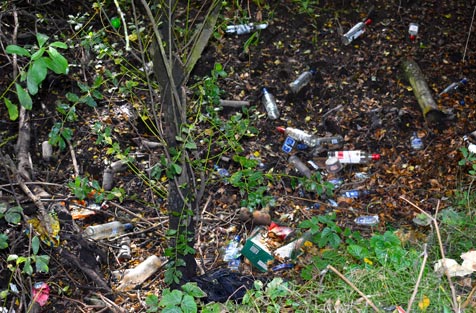
Suir Riverbed Thurles town centre, mainly caused by failure to provide a nearby litter bin.
However, responsibility cannot end with the individual. Many communities like Thurles town, point to too few conveniently located litter bins, or bins that are full or poorly maintained, in town centres, recreational areas and beside popular walking routes. Public-bin provision and maintenance are local-authority services, so councils also have a role in supplying suitable infrastructure where litter is regularly generated.
However, a lack of bins is never an excuse to throw rubbish from a car or throw it in or beside a river. If no bin is available, we must take our waste home. Nevertheless, enforcement works best when it is accompanied by adequate bins, regular collections, public education and convenient recycling facilities. Fining people without addressing obvious gaps in infrastructure tackles only part of the problem.
Once discarded, litter rarely remains where it falls. Rain washes roadside waste into drains, streams and rivers often promoted by Co. Councils. Currents carry it through neighbouring communities and towards lakes and the sea, where it can harm wildlife, obstruct waterways and leave the public paying for its removal. Ordinary residents are not legally responsible for another person’s offence. But once we see pollution threatening a shared waterway, we acquire a civic responsibility; report it, refuse to ignore it and support safe efforts to protect the area.
In the Republic of Ireland, litter, illegal dumping, overflowing public bins and local water pollution can be reported to the relevant city or county council. The EPA also recommends its “See It? Say It!” app, which sends photographs and location details to the appropriate authority.
The person who pollutes should pay. Councils must provide sensible disposal facilities and enforce the law. Communities should not be expected to continually clean up after repeat offenders, but silence allows the damage to travel downstream.
The litter may belong to somebody else, but the river belongs to all of us. Personal responsibility, proper infrastructure and effective enforcement must work together.
This website uses cookies to improve your experience. We'll assume you're ok with this, but you can opt-out if you wish.AcceptRead More
Privacy & Cookies Policy
Privacy Overview
This website uses cookies to improve your experience while you navigate through the website. Out of these, the cookies that are categorized as necessary are stored on your browser as they are essential for the working of basic functionalities of the website. We also use third-party cookies that help us analyze and understand how you use this website. These cookies will be stored in your browser only with your consent. You also have the option to opt-out of these cookies. But opting out of some of these cookies may affect your browsing experience.
Necessary cookies are absolutely essential for the website to function properly. This category only includes cookies that ensures basic functionalities and security features of the website. These cookies do not store any personal information.
Any cookies that may not be particularly necessary for the website to function and is used specifically to collect user personal data via analytics, ads, other embedded contents are termed as non-necessary cookies. It is mandatory to procure user consent prior to running these cookies on your website.




Recent Comments