Ten charter deportation operations carried out from Ireland between February 2025 and June 2026 returned 377 people at a combined departmental cost of just over €3.9 million.
The flights, which travelled to destinations including Georgia, Nigeria, Pakistan, Romania, Poland, Lithuania and South Africa, involved 988 Garda escorts. Based on the Department of Justice’s detailed expenditure figures, the operations cost an average of approximately €10,355 for each person returned.
The figures were provided to the Oireachtas Public Accounts Committee by Department of Justice, Home Affairs and Migration Secretary General Doncha O’Sullivan in correspondence dated July 2nd, 2026.
The Department said escort numbers were determined by the assessed risks associated with each operation. Factors included the number of adults travelling, whether passengers had criminal backgrounds, the likelihood of resistance and the need to maintain a reserve team in case of injury, illness or another unexpected incident.
Garda escort leaders receive training through the EU border agency Frontex and follow its operational guidance. Their role is to ensure that forced returns are completed safely and professionally, with particular care required when children or family groups are among the passengers. The largest Garda deployment was recorded on a flight to South Africa on February 28, 2026, when 133 officers accompanied 63 returnees. A further 119 Garda members escorted 34 people on a flight to Poland and Lithuania on May 24, 2026.
Aircraft charter costs accounted for most of the expenditure, totalling €3.55 million. The single most expensive operation was a South Africa flight on June 19, 2026, for which the aircraft cost €904,050. Other departmental expenditure included almost €162,917 for doctors and paramedics, €106,348 for commercial return travel and €60,165 for flight-management services. Additional charges of €21,740 included €8,653 associated with an emergency landing during a Nigeria operation in June 2025 and €13,087 for de-icing the aircraft used for a Poland and Lithuania flight in January 2026.
Each group was also accompanied by a human-rights observer. The observer service cost €36,307 for nine of the operations, with the cost relating to the most recent flight unavailable when the Department prepared its response. Routine Garda escort duties are generally funded through the annual Garda budget. However, the Department has also awarded funding to the Garda National Immigration Bureau through the EU Asylum, Migration and Integration Fund to support non-EU deportation operations. The funding agreement covers the period from January 2025 until the end of 2027. Two payments worth a combined €1.84 million had been made to the GNIB at the time of the Department’s correspondence. Eligible expenses include additional Garda pay, accommodation, travel, subsistence and interpreter services.
Up to 75 per cent of qualifying expenditure may be recovered through the EU fund. The Department expects the overall repayment to the Exchequer to be in the region of €3.45 million and is seeking reimbursement for eligible charter and commercial-flight costs.
Pre-deceased by his beloved parents, Jackie and Peggy, and nephew Jason; Mr Rochford sadly passed away following a long illness, most bravely borne, while in the care of staff at Tipperary University Hospital, Clonmel, surrounded by his loving family.
His passing is most deeply regretted, sadly missed and lovingly remembered by his sorrowing family; loving sisters, Joan and Mary, brothers, Tommy and Paddy, brother-in-law Thomas (Hamilton), sisters-in-law Breda and Yvonne, nephews, John, Darren, Seán, Daniel and Adrian, nieces, Margaret, Noelle, Aishling, Denise and Gráinne, grandnieces, grandnephews; extended relatives, neighbours and a wide circle of friends.
For those persons who would wish to attend Requiem Mass for Mr Rochford, but for reasons cannot, same can be viewed streamed live online, HERE.
The extended Rochford family wish to express their appreciation for your understanding at this difficult time, and have made arrangements for those persons wishing to send messages of condolence, to use the link shown HERE.
“The Rochford family wish to express their sincere gratitude to all those who cared for John throughout his illness, and to everyone who has shown such kindness, support and sympathy during this difficult time. Your thoughtfulness is deeply appreciated.“
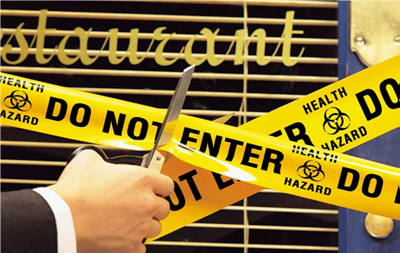
The Food Safety Authority of Ireland (FSAI) today reported that Environmental Health Officers in the Health Service Executive (HSE) and officers in the Food Safety Authority (FSAI) served 13 Closure Orders and one Prohibition Order on food businesses during the month of June for breaches of food safety legislation, pursuant to the FSAI Act, 1998 and the European Union (Official Controls in Relation to Food Legislation) Regulations, 2020.
Eight Closure Orders were served under the FSAI Act, 1998 on:
Navan Asian Store(Closed activities: butcher counter and area including coldroom)(Butcher Shop), 4 Metges lane, Navan, Meath. Meat Stall Vehicle registration 172-C-2476 (Retailer), trading at Balbriggan Market, County Dublin. M&M Meat (Retailer), trading at Balbriggan Market, County Dublin. Foodstall – Vehicle registration 222-D-9510 (Retailer), trading at Balbriggan Market, Balbriggan, County Dublin. Branza Foodstall – Vehicle registration 131-D-40171 (Retailer), trading at Balbriggan Market, County Dublin. The establishment, trading as Liviu Lacatus, Coolnacon, Clonroche, Wexford. The establishment, trading as Adina Fusteac, Coolnacon, Clonroche, Wexford. Premises occupied by Aleksej Kardasev, warehouse at Shercock Road (Retailer), Carrickmacross, Monaghan.
Five Closure Orders were served under the European Union (Official Controls in Relation to Food Legislation) Regulations, 2020 on:
RAHA Indian Cuisine(Closed activities: The preparation and sale of ready-to-heat meals and onion bhajis to other food businesses) (Restaurant/Café), 32 Park Street, Dundalk, Louth Esquires Coffee(Closed activity: Closure of any activity requiring the storage of ready to eat high risk perishable foods) (Restaurant/Café), Unit 1F, Navan Town Centre, Kennedy Road, Navan, Meath Atlantic Chinese Restaurant, East End Ballybunion, Kerry Al Huda Grocery(Wholesaler/Distributor), 72A Summerhill, Dublin 1 Asian Delights(Take Away), Dublin Industrial Estate, 106 Lagan Road, Glasnevin, Dublin 11
One Prohibition Order was served under the FSAI Act, 1998 on:
Meat Stall, Vehicle registration 172-C-2476 (Retailer), trading at Balbriggan Market, County Dublin.
Among the reasons for the Enforcement Orders in June are: failure to notify the competent authority of the establishment of a food business; evidence of a pest infestation in food preparation areas, including live cockroaches, slugs, spiders and woodlice; evidence of rodent activity, including rodent droppings on shelving used to store food and on food packaging and food contact equipment; absence of suitable hand washing facilities; food not protected from the risk of contamination; absence of basic cleaning including chopping boards black with mould, cooking equipment congealed with heavy black grease and food debris; plastic wall sheeting placed around a premises including in the food rooms and the staff toilet to act as doorways; unsuitable layout and design of a premises preventing hygienic food preparation, with no designated food preparation areas; food stored at incorrect temperatures; lack of effective food traceability system in place; food worker wearing an unclean uniform that was heavily stained and covered in old food debris.
Commenting today, Mr Greg Dempsey, Chief Executive, FSAI, said: “It is unacceptable that we continue to see enforcement action being required due to basic and repeated breaches of food safety standards. Effective food safety management systems, proper hygiene practices, pest control and staff training are fundamental legal obligations of every food business. Consumers have a right to safe food, and it is the legal responsibility of food businesses to ensure that food is produced, handled and served safely. It is also concerning that, we have found instances of unregistered food businesses, operating illegally without notifying the competent authority, therefore bypassing essential food safety controls and putting consumers health at risk. Food law requires all food businesses to be notified to the relevant competent authority irrespective of the size or type of food business. This requirement ensures that food businesses will be registered and/or approved with the appropriate inspection agency to ensure food safety and protect consumer health,” added Mr Dempsey.
Details of the food businesses served with Enforcement Orders are published on the FSAI’s website. Closure Orders and Improvement Orders will remain listed in the enforcement reports on the website for a period of three months from the date of when a premises is adjudged to have corrected its food safety issue, with Prohibition Orders being listed for a period of one month.
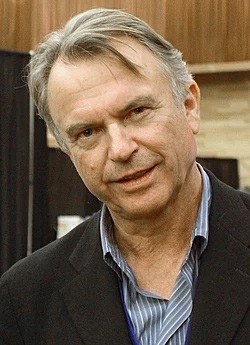
Sam Neill remembered – From Omagh to Hollywood, with a memorable Tipperary visit.
Sir Sam Neill, the acclaimed actor whose career moved effortlessly between Hollywood blockbusters, unsettling psychological dramas and warm-hearted comedies, has died at the age of 78. His family said that Mr Neill died in Sydney on Monday, July 13th 2026, surrounded by loved ones. His death was described as sudden and unexpected. Although he had previously been treated for a rare form of blood cancer, his family confirmed that he remained cancer-free at the time of his passing.
For millions of cinema-goers, Neill will always be Dr Alan Grant, the practical and quietly courageous palaeontologist who found himself pursued by dinosaurs in Steven Spielberg’s Jurassic Park. Released in 1993, the film transformed Neill into an international star. He later returned to the role in ‘Jurassic Park III‘ and ‘Jurassic World Dominion‘, introducing the character to new generations of viewers. However, concentrating solely on dinosaurs would overlook the remarkable range of an acting career that lasted for more than five decades.
The Late Sam Neill – In ár gcroíthe go deo.
Mr Neill could be charming, threatening, romantic, vulnerable or wonderfully dry. He appeared opposite Meryl Streep in ‘A Cry in the Dark‘; playing a Soviet submarine officer in ‘The Hunt for Red October’ and delivered one of his most disturbing performances in the cult horror film ‘Possession’. In the same year that Jurassic Park reached cinemas; Mr Neill appeared in Jane Campion’s ‘The Piano’. He later earned another generation of admirers through ‘Hunt for the Wilderpeople’, directed by fellow New Zealander Mr Taika Waititi. His television work was equally memorable. In ‘Peaky Blinders’, he played the ruthless Major Chester Campbell, a Belfast police officer, determined to destroy Tommy Shelby and his criminal organisation.
Mr Neill was born Nigel John Dermot Neill, in Omagh, County Tyrone, in 1947. His father, a New Zealander serving with the British Army, was stationed in Northern Ireland at the time. The family later lived in County Armagh before moving to New Zealand when Sam was seven. Although New Zealand became his home and the foundation of his professional life, Neill retained a strong affection for Ireland. He held an Irish passport and spoke warmly about the country’s literature, history and culture. He once described himself as quietly proud of his Irish connections, while rejecting the exaggerated stereotypes often associated with Irish-ness.
Was There a Tipperary Connection? There was, nevertheless, a real and memorable Tipperary connection. In November 2012, Mr Neill travelled to Cork and to Co. Tipperary to promote wines from ‘Two Paddocks‘, the vineyard he established in Central Otago, New Zealand. During the visit, he discussed his Irish identity, his love of wine and his preference for an ordinary life away from the excesses of celebrity. Wine was far more than a commercial sideline for Mr Neill. He took enormous pride in his vineyard, its Pinot Noir and the animals living on the property. ‘Two Paddocks’ offered him a retreat from filming and a connection with the land that appeared to matter deeply to him.
His visit to Tipperary may have been brief, but it provides the county with its own small place in the story of an actor whose life stretched from Northern Ireland to New Zealand, Australia and the great film studios of the world. Mr Neill became internationally famous relatively late. By the arrival of Jurassic Park, he had already spent years building a respected career in New Zealand, Australia and Britain. That experience gave his performances a grounded quality. Even when surrounded by computer-generated dinosaurs, supernatural forces or larger-than-life characters, he rarely appeared overwhelmed by the spectacle. He remained believable, restrained and entirely human.
Following his death, New Zealand Prime Minister Mr Christopher Luxon described Mr Neill as “one of the greats” and credited him with helping bring New Zealand stories and film-making talent to international audiences. That is perhaps the most fitting way to remember him. Mr Sam Neill was the star of one of the biggest films ever made, but he was never defined by a single role. He was an Irish-born New Zealander, an actor, writer, farmer and winemaker, whose curiosity and understated humour remained evident throughout his life. Mr Neill is survived by children; Andrew, Tim, Elena, Maiko, and several grandchildren.
Tipperary sadly cannot claim him as one of its own, but it can recall the occasion when one of cinema’s most distinctive gentlemen came to this county, raised a glass and spoke proudly of his enduring Irish connection.
Justice Minister Mr Jim O’Callaghan must surely deserve full support for refusing to abandon the Government’s new criminal legal aid payment system, simply because it has encountered organised opposition.
This reform replaces the previous payment-per-appearance arrangement with a flat fee of €520 for representing one accused person from the beginning to the conclusion of a District Court case. Under the former model, solicitors received €239.38 for an initial appearance and €59.86 for each subsequent hearing.
The minister’s central argument is reasonable; a public payment system should not financially reward cases for remaining before the courts longer than necessary. That does not mean solicitors deliberately seek adjournments. Court delays arise for many legitimate reasons, including difficulties with evidence, prosecution readiness and overcrowded lists. Nevertheless, the State is entitled to remove a fee structure that links additional payments directly to additional appearances.
The Department of Justice says the reform is intended to improve efficiency by paying one fee from the beginning to the end of a case. It also forms part of a wider Government commitment to restore and reform criminal legal aid fees.
Mr O’Callaghan has already demonstrated a willingness to compromise. The original proposed fee of €455 was increased to €520 before the new system took effect. This was a substantial movement by the minister and should be recognised by those accusing him of refusing to engage.
Ireland’s former criminal legal aid system, which paid solicitors an initial fee followed by another payment for each subsequent District Court appearance, differed from the more structured approach used in much of Europe. England and Wales generally use standard fees for categories and stages of lower-court work, Scotland combines fixed payments with scheduled and supplementary fees, while Germany regulates lawyers’ remuneration through statutory fee frameworks. Ireland’s new €520 payment for representation from the beginning to the end of a District Court case therefore brings the country closer to the European preference for case-based or fixed remuneration and removes the direct link between State payments and repeated adjournments. However, many European systems also provide supplements or separate assessment for unusually complex or demanding cases, suggesting Ireland should retain the reform while allowing additional payments in genuinely exceptional circumstances.
The concerns raised by solicitors should, of course, be taken seriously. The Law Society argues that a single payment may not adequately reflect cases involving numerous hearings or exceptional complexity. Its survey also indicated that many practitioners feared the model would make criminal legal aid work financially unattractive. Those concerns justify continued monitoring and carefully targeted adjustments. They do not justify immediately reversing a reform before there has been sufficient time to assess its operation.
Withdrawing from legal aid panels and disrupting court business risks placing defendants, victims and the wider justice system under additional pressure. Public policy cannot be decided by whichever professional group can create the greatest disruption.
Mr O’Callaghan must be seen as therefore correct to keep the regulations in place while reviewing their impact. If unusually long or complicated cases require supplementary payments, sensible exceptions can be introduced.
But the basic principle remains sound;taxpayers should fund fair legal representation, not an outdated payment structure that can increase costs as cases are repeatedly adjourned. The minister is right to pursue greater efficiency and right not to surrender reform in response to political pressure.
This website uses cookies to improve your experience. We'll assume you're ok with this, but you can opt-out if you wish.AcceptRead More
Privacy & Cookies Policy
Privacy Overview
This website uses cookies to improve your experience while you navigate through the website. Out of these, the cookies that are categorized as necessary are stored on your browser as they are essential for the working of basic functionalities of the website. We also use third-party cookies that help us analyze and understand how you use this website. These cookies will be stored in your browser only with your consent. You also have the option to opt-out of these cookies. But opting out of some of these cookies may affect your browsing experience.
Necessary cookies are absolutely essential for the website to function properly. This category only includes cookies that ensures basic functionalities and security features of the website. These cookies do not store any personal information.
Any cookies that may not be particularly necessary for the website to function and is used specifically to collect user personal data via analytics, ads, other embedded contents are termed as non-necessary cookies. It is mandatory to procure user consent prior to running these cookies on your website.







Recent Comments