|
|
A large crowd turned out on Saturday evening last, May 19th 2018, in Cabragh Wetlands Thurles, to welcome two visiting guests; the President of Ireland, Mr Michael D. Higgins and his wife, Ireland’s First Lady, Mrs Sabina Higgins. President Higgins was visiting to officially open the Trust’s new and recently erected Visitor Centre, situated on the property.
The President and his wife was formally welcomed by Mr Tom Grace (Wetlands Trust Chairperson); Mr Michael Long; Independent TD Deputy Mr Michael Lowry, and Fianna Fáil TD Deputy Mr Jackie Cahill.
The building was officially blessed by the Archbishop of Cashel and Emly, His Grace Kieran O’Reilly, [(SMA) Society of African Missions].
Addressing the assembled gathering President Higgins spoke of global changes seeming overwhelming. “We are now witnessing the most negative manifestations of human influence: the catastrophic effects of climate change produced by the emission of greenhouse gases and changes in land-use, such as the drainage of bogs and wetlands; the alteration of the phosphorus, sulphur, and as we know so well in Ireland, the nitrogen cycles, each one an ecological process vital to life on our planet; disruptions to the terrestrial water cycle, so vital to rain-fed agriculture in a pastoral economy such as our own; and of course, most tragically, the onset of the sixth great mass extinction event in the history of our planet, in which so much biodiversity has already been lost.”
Yet, despite global changes he pointed out that the Wetlands Trust project here in Thurles, was born at a challenging time for the then workforce in Thurles and the beet farming producers of Tipperary when, in 1989, Comhlucht Siúicre Éireann decided to close the sugar factory, which had been “such a fixture of the economic life of the area since 1934”.
Praising the challenges faced and dealt with by the organisation, the President concluded, “This Visitor Centre is a fitting testament to your efforts over the many years. It comes in the midst of our planetary emergency, and is more urgently required than ever before, for it provides us with hope for a better, more socially just and ecologically sustainable future.
May I then pay tribute once again to all those who brought this vision into being, in particular the Chairman of the Trust, Tom Grace, and wish you all the very best in the future”.
The President and his wife were later taken on an educational tour of this very fine local facility.
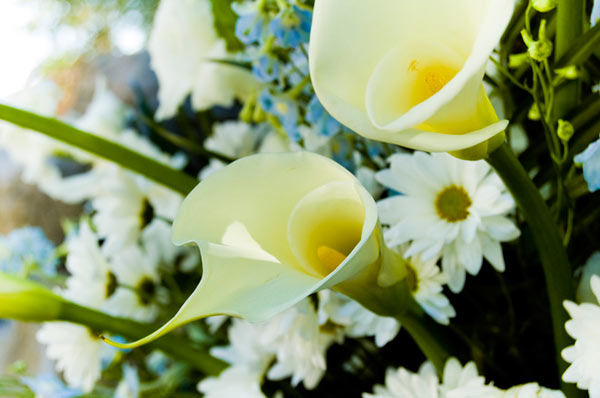 It was with great sadness that we learned of the death today, May 21st 2018, of Mr Liam (Willie) Maher, Gouldavoher, Dooradoyle, Co. Limerick and formerly of Gortnagloona, Templederry, Nenagh, Co. Tipperary.
Mr Maher passed away peacefully at University Hospital Limerick. His passing is most deeply regretted by his loving wife Carmel (nee Boland); son Stephen; daughter Lorna; sisters Mary and Sally; brothers Michael, Tommy and Paddy; daughter-in-law Anastasia; granddaughter Adelaide; aunt Sr. Dorothy; brothers-in-law; sisters-in-law; nieces; nephews; cousins; extended relatives and friends.
Funeral Arrangements
The earthly remains of Mr Maher will lie in repose at his home, on Wednesday evening next, May 23rd, [V94 C52T], from 4.00pm until 7.00pm.
Arriving on Thursday morning to St. Paul’s Church, Dooradoyle, for funeral Mass at 11.30am, followed by interment immediately afterwards in Templederry Old Cemetery, Templederry, Nenagh, Co. Tipperary at 2.15pm approximately.
Go ndéana Dia trócaire ar a anam dílis.
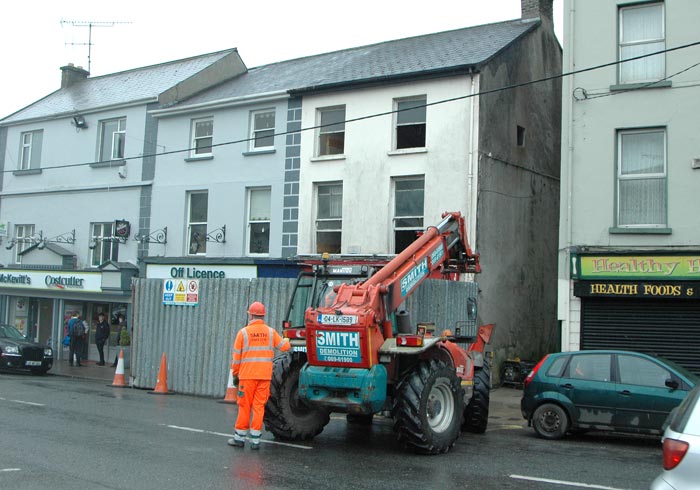
The opening of the proposed new car park to the rear of Jackie Griffin’s shop, here in Thurles central, moves yet another step closer, as a steel hoarding is erected to the front of the building on Liberty Square.
The erection of the hoarding began at 8.15am this morning.
The demolition of the shop building behind the protective barrier is expected to take place over the coming days, creating an opening into the new proposed car park, from the Liberty Square side.
Same, it is hoped, will bring new life to the businesses within the centre of Thurles town, and further progress the long promised revitalisation of the Liberty Square area.
More on the background to this news during the week.
 It was with great sadness that we learned of the death today, Sunday 20th May 2018, of Mr Edward (Ned) Carr, Ria, Monadreen, Thurles, Co. Tipperary.
Mr Carr passed away peacefully at his home, surrounded by his loving family.
His passing is most deeply regretted by his wife Imelda; son Michael; daughters Mary-Cecilia and Imelda; grandchildren Laura, Mike, Damien, Eimear, Adam and Jamie; great-grandchildren Scott, Levi and Tadgh; sisters Nora (D’Estelle Roe) and Breda (Ryan, Mason), daughter in law Brid; son in law Pat; and Mary-Cecilia’s partner Joe; nephews; nieces; brother in law; sister in law; cousins; extended relatives; neighbours and many good friends.
Funeral Arrangements
The earthly remains of Mr Carr will lie in repose at Hugh Ryan’s Funeral Home, Slievenamon Road, Thurles, on tomorrow Monday, 21st May, from 5.00pm to 7.00pm, to arrive at the Church of St. Joseph and St. Brigid, Bothar na Naomh, Thurles, at 7.30pm.
Requiem Mass will be held on Tuesday morning, May 22nd, at 10.00am, followed by burial immediately afterwards in St Patrick’s Cemetery, Thurles, Co. Tipperary.
Note Please: Family flowers only, donations in lieu, if desired, to Milford Hospice.
Go ndéana Dia trócaire ar a anam dílis.
Today, Sunday 20th May, marks the first ever global “World Bee Day”, and Bee experts are expected to highlight the need for an EU ban on certain insecticides, same which are knowingly, together with other avoidable factors, linked to a drastic decline in our Bee populations.
Why is our Honey Bee so important?
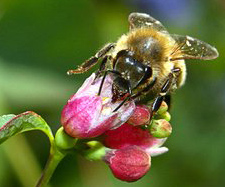 Honey bees collect pollen and nectar from a variety of wild and garden flowering plants and trees. These plants and trees, include Milkweed, Dandelion, Clover, Goldenrod, Sunflowers, Roses, Catmint, etc. together with Buddleja, and a variety of garden fruit trees.
Only workers in the colony forage for food, and while consuming as much nectar from each flower as they can, they then return to the hive and pass collected nectar to others. The worker holds this nectar on its tongue until the liquid evaporates, thus creating honey. The honey is then stored within the colony for winter consumption.
Pollen remains one of the purest and richest natural foods, containing all of the nutritional requirements for a Honey Bee, i.e. sugar, carbohydrates, protein, enzymes, vitamins and minerals.
These same Bees become the pollinators vital to our own food chain. Imagine that at least one third (⅓) of the food we eat today would not remain available, were it not for the existence of these, our busy Bees.
Today these flying insects, who are closely related to wasps and ants are in serious danger of disappearing completely from our environment. Farming practices continue to disturb their natural habitats, and over ⅓ of our Irish Bee species are being threatened with extinction, with the Bumblebee population also continuing to decline each year.
This drop in population is due mainly to three factors; the unnecessary removal of ditches and hedgerows; the use of pesticides (Used In the killing of insects, small animals, unwanted plants, fungi, bacteria and viruses), and insecticides (latter includes snail bait, ant killer and wasp killer), and lastly through climate change, also attributed to mankind. Bees require food all year round, and this means we are required to allow a diversity of flowering plants to grow on our landscape.
Our farming community can help Bees and their own crops by intervention through good husbandry, by simply allowing space for a diversity of wild flowers to grow and more importantly to flower. This can happen when:-
- Field margins can be fenced off from livestock, then allowed to either be cut or grazed after flowering.
- Do not use fertilisers or sprays on non-farmed areas around the farmyard, e.g. in field corners, along farm roadways. Again here, do not consider cutting until after the period of flowering.
- If you are spraying Pesticides or Insecticides, consider spraying in the early morning or late evening, when our Honey and Bumble Bee populations are less active. Such spraying can kill Bees quickly or slowly through carrying contaminated pollen back to their particular colony, (Latter which could hold 45,000 to 75,000 individual bees), where it will becomes entered into the food chain to slowly kill the assembled insects.
- Plant Whitethorn and Blackthorn hedging, whose early blooms are valuable to Bees, and stop removing natural hedgerows.
- Our Government, our Local Authorities (Ministers, TD’s, Councillors take note), and we as home owners, can also assist by planting Bee-friendly bulbs and plants, in our gardens, including Snowdrops, Crocuses (or Croci), Wallflowers and Lavender etc. etc..
Our present attitude to our environment must needs be changed and our new growing generations of humans, through our schools, must be educated on the value of Bees and the unnecessary threat currently to their very existence.
|
Support Us Help keep Thurles.info online by donating below. Thank you.
Total Donated 2026: €300.00
Thank You!
Daily Thurles Mass Livestream
|



Recent Comments