Two-Mile-Borris /Littleton district correspondent Mr Gerry Bowe reports:-
On Wednesday August 29th 2018 last, cross-roads in Littleton Village, Thurles, Co. Tipperary has gained an original six to seven-thousand-year-old unique, work of art.
Local butcher Mr Paudie Fitzpatrick has presented to Littleton village; a piece of rare bog-oak which he has been restoring and preserving over many months.
Bog-wood, in this case Oak, is a material from trees that have been buried in peat bogs and preserved from decay by the acidic and anaerobic bog conditions, sometimes for thousands of years. The wood is usually stained brown by tannins dissolved in the bog’s acidic water. Bog-wood may come from any tree species naturally growing near or in bogs, including oak; Quercus – “bog oak”; Pine – “Pinus”; Yew – “Taxus”; Swamp Cypress – “Taxodium”, and Kauri, latter regarded as the most exotic wood in the world – “Agathis”. Such bog preserved timber remains comparable to some of the world’s most expensive tropical hard woods.
Pictured Centre L to R: Mr Tom Ryan, Mr Paudie Fitzpatrick, Mr Dan Fitzpatrick, & Mr John Darmody taking time out to relax having successfully erected the Bog Oak Art piece in Littleton village, Co. Tipperary.
For the past twenty-eight years, Mr Fitzpatrick together with his wife Karen and family, has been providing a quality meat service, which also includes home deliveries, not just to the village itself but also to the surrounding area. But surely his most unique delivery to date, must be the conveyance of a large, ancient, seven-foot-high oak tree trunk with roots attached; same now perfectly preserved with numerous coatings of Danish oil, followed by intense and passionate sandpapering, to extract its ancient, bog preserved, hidden colours.
What was once left to the elements to decay, has now become a visible symbol and a real reminder of the rich, bog-land chronicle that is Tipperary’s biodiversity. This visible symbol must surely challenge us to try to fully comprehend and preserve our local bogs for environmental, recreational and inspirational purposes. The heathers, ferns and fir tree, planted alongside, are but a trivial reminder of this rich variety of rural bog vegetation.
An artistic and wood-working gene is most definitely ingrained within the Fitzpatrick family. Proof, as if proof was needed, can be quickly observed in the ‘butcher’s block’ that was so patiently and lovingly assembled, piece by piece, from maple wood, by Mr Paudie Fitzpatrick’s son Shane; same undertaken as part of his Leaving Cert woodwork project at Colaiste Mhuire here in Thurles. Shane has rightly been granted an award for this work, with the project remaining on display in the school, to further inspire and encourage new incoming students and school visitors alike.
A massive ‘Thank You’ also to Mr John Darmody, Mr Dan Fitzpatrick and Mr Thomas Ryan; all who helped pour the concrete base and secure the bog oak piece with iron stays, having delivered it safely on a tractor loader.
Positive comments are now pouring in from the many who pass through Littleton village on a daily basis and so to from the villagers who are grateful to Mr Fitzpatrick and family for the patient work and generosity in the donating of this artistic creation to further beautify the already picturesque village. With a new Tidy Towns Committee in formation, this feature makes a most excellent beginning to all future work planned.
In his book (P.58), “The Bogs of Ireland” (John Feehan), the author tells us that “bog is an Irish word, derived from the word for soft; ‘bogach’ means in Irish -‘soft ground.’ As roads become busier and life becomes a constant rush, we might recall that another Irish phrase: “Tog go bog è “, means literally “Take it easy”, or “Slow down”, or “Breathe deep”. So why not“Tog go bog è “, and take a look around and admire this ancient and unique piece of bog-oak art, which has full certified Littleton, Co. Tipperary origins?
Mr Doherty passed away peacefully while in the loving care of the Matron and Staff of Ardeen Nursing Home.
Predeceased by his brother Billy, sisters Kitty and Peggy; his passing is most deeply regretted by his loving and devoted wife Jane; brothers Paddy, Jack and Martin; sister Mary (UK); nephews; nieces; brothers-in-law; sisters-in-law; grand nephews; grand nieces; great-grand nephews; great-grand nieces; extended relatives; neighbours and friends.
Requiem Mass will take place on Saturday morning, September 8th, at 11.00am. Interment will take place immediately afterwards to St Patrick’s Cemetery, Moyne Road, Thurles, Co. Tipperary.
RTE’s journalist and presenter Ms. Caitríona Perry in Conversation
Date: Saturday September 15th. Time: 7.30p.m.
Tipperary Library will presents a 60-minute discussion with Ms. Caitríona Perry based on her publication – ‘In America: Tales from Trump Country’, which will take a look at the current political landscape of America, with particular reference to the businessman; television personality and current 45th President of the United States, latter who is expected to visit Ireland towards the end of this year.
In the BBC news video shown above, our readers will remember that US President Mr Donald Trump was on the phone to our then newly-elected Irish Taoiseach, (Prime Minister), Mr Leo Varadkar, when RTE’s Washington correspondent, the very lovely Ms Caitríona Perry, caught his roving eye.
This discussion will examine why and how President Donald Trump won the 2016 American election and whether he can succeed in getting re-elected for yet another term, again in 2020.
Ms. Perry will attempt to answer the question “Has America changed its mind and fallen out of love with Mr. Trump or is it the case that he is actually delivering on his promises?”
It will look at the Trump administration’s style of government, its successes and its failures thus far and ask; “What now for America on the world stage?”
The presentation will be followed by a ‘Question & Answer Session’ with her audience in attendance.
Note Please: Advance booking is required, so do please contact the Source Box Office at Tel No:(0504) 90204. Special access and wheelchair users should also inform the box office, at the time of booking, that they may need accessibility seating.
Remember the Date: – Saturday September 15th. Time: 7.30p.m. sharp.
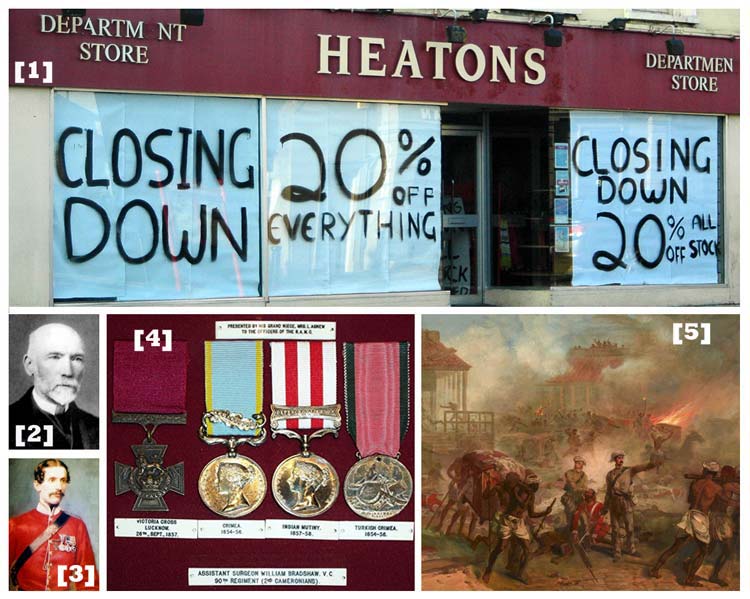
As we mentioned in our daily news report of yesterday, some five assorted clothing retail outlets, all situated within the area of Liberty Square, here in Thurles, [e.g. Heatons, Dempsey’s, Joanne’s Boutique, Elverys and First Editions] worryingly have either closed, moved or are about to shut shop, and all within a 12-month period.
The building suitably positioned in the very heart of the town and within a good viewing position, has an asking price of €300,000 being quoting.
The premises for sale is positioned on the ground and first floor, while an overhead apartment with separate entrance is not being included in this sale presently. [See red outline in picture overhead.]
Meanwhile, Elverys Intersport, have moved to take over 3 retail units here in Thurles Shopping Centre, a short distance away. One of the units will become a dedicated Tipperary GAA store, to be operated by the sports giant.
The Lár na Páirce GAA shop formerly positioned at Slievenamon Road, Thurles will now continue to gain revenue from the sale of all Tipperary GAA products, and is seen as a commercial opportunity, by the GAA County Board, who will no longer run their shop premises themselves.
Witness the death and strangulation, first hand, of a rural town centre.
Parking costs and other parking restrictions are seen as mainly responsible for retail outlets moving from the Thurles town centre area; to an zone where parking charges and restrictions are totally free and non existent.
In 2018, we rightly condemn the closure of rural Post Offices, but take note, some five assorted clothing retail outlets, all situated within the area of Liberty Square, here in Thurles, [e.g. Heatons, Dempsey’s, Joanne’s Boutique, Elverys and First Editions] worryingly have either closed, moved or are about to shut shop, and all within a 12-month period. [Those that claim they rule over us, should perhaps please pay attention.]
Heatons
Established some 70 years ago, one such premises, ‘Heatons’ fast became one of Ireland’s largest group of department stores, providing the latest in men’s, women’s and kid’s fashions; as well as retailing contemporary home wares and home textiles. March 2016 saw the sale of this Irish chain store to Mike Ashley’s ‘Sports Direct’ for a reported €47.5m, following the eventual settlement of a bitter legal dispute.
The Heatons department Store building here in Thurles, which had allowed its outer appearance to greatly deteriorate, has however a rich, past, local, associated history.
Picture [1] – Heatons Liberty Square, Thurles. Picture [2] – Senior Surgeon Sir Anthony Dickson Home. Picture [3] – Assistant-Surgeon Dr. William Bradshaw. Picture [4] – Dr. William Bradshaw’s medal display. Picture [5] – Painting by the VC Artist Louis William Desanges (1822–1906), depicting Surgeon (later Surgeon General) Sir Anthony Dickson Home (1826–1914), VC (Victoria Cross), KCB (Knight Commander of the Bath), and Assistant Surgeon Dr. William Bradshaw (1830–1861), VC (Victoria Cross), Lucknow (Lakhnau), 1857.
The Heatons building once occupied the Medical Hall in Thurles and was the home of Dr. George Bradshaw and his son Dr. William Bradshaw; former who died on the 14th Aug 1867, aged 68 years and who was a member of the Thurles / Rahealty Famine Food committee, (1846/1847), contributing not only his medical skills, but also his family’s finances; and the latter, William, who died on March 9th 1861 aged just 31 years.
An assistant surgeon; Dr. William Bradshaw served in the 50th regiment (West Kents) during the Crimean war. This war was a military conflict fought from October 1853 to February 1856, in which the Russian Empire lost to an alliance of the Ottoman Empire, France, Britain and Sardinia. Dr Bradshaw was a recipient of the Victoria Cross (VC), won while serving with the 90th (The Cameronians) Scottish Rifles, at the relief of Lucknow, latter the capital and largest city of the Indian state of Uttar Pradesh.
A Victoria Cross remains the highest and most prestigious medal awarded for valour in the face of the enemy granted to British and Commonwealth armed forces of any military rank. The VC was first introduced on the 29th of January 1856 by Queen Victoria to honour acts of valour during the Crimean War. Since that day, the medal has been awarded 1,358 times to 1,355 individual recipients. Only 15 medals, (11 to members of the British Army, and four to the Australian Army), have been awarded since the Second World War. The source of the metal from which the medals were struck / manufactured, was derived from Russian cannon guns captured at the Siege of Sevastopol, an important and historical port on the Black Sea. Metal for most of the medals struck since December 1914 are understood to originate from two Chinese cannon. Owing to its rarity, the Victoria Cross is highly prized, with medals fetching figures in excess of some €600,000 at auction.
An assistant surgeon in 1857 and then just 27 years old, Dr. Bradshaw’s VC was presented two years later by Queen Victoria at Buckingham Palace, London, England on June 8th 1859. His Victoria Cross today is on display at the Royal Army Medical Corps Museum, Keogh Barracks, Mytchett Place Road, Ash Vale, Aldershot, Hampshire, England.
The London Gazette, the official journal of record of the British government, on June 18th, 1858 stated, “Her Majesty has also been graciously pleased to signify Her intention to confer the Decoration of the Victoria Cross on the undermentioned Officers of Her Majesty [Later to be Surgeon General Sir Anthony Dickson Home (1826-1914) and Assistant-Surgeon Dr William Bradshaw] and of the East India Company’s Armies, who have been recommended to Her Majesty’s Warrant for that Decoration, in accordance with the rules & regulations laid down in Her Majesty’s Warrant before referred to on account of Acts of Bravery performed by them in India.
Citations Surgeon General Sir Anthony Dickson Home “For persevering bravery and admirable conduct in charge of the wounded men left behind the column, when the troops under the late Major-General Havelock, forced their way into the Residency of Lucknow, on the 26th September, 18o7. The escort left with the wounded had, by casualties, been reduced to a few stragglers, and being entirely separated from the column, this small party with the wounded were forced into a house, in which they defended themselves till it was set on fire. They then retreated to a shed a few yards from it, and in this place continued to defend themselves for more than twenty-two hours, till relieved. At last, only six men and Mr. Home remained to fire. Of four officers who were with the party, all were badly wounded, and three are since dead. The conduct of the defence during the latter part of the time devolved therefore on Mr. Home, and to his active exertions previously to being forced into the house, and his good conduct throughout, the safety of any of the wounded, and the successful defence, is mainly to be attributed.”
Assistant-Surgeon William Bradshaw
Date of Act of Bravery, 26th September, 1857
“For intrepidity and good conduct when, ordered with Surgeon Home, 90th Regiment, to remove the wounded men left behind the column that forced its way into the Residency of Lucknow, on the 26th September, 1857. The doolie bearers had left the doolies, (Latter a Hindi word for a ‘litter’ or covered stretcher), but by great exertions, and notwithstanding the close proximity of the sepoys; Surgeon Anthony Dickson Home Home, and Assistant Surgeon Bradshaw got some of the bearers together, and Assistant-Surgeon Bradshaw with about twenty doolies, becoming separated from the rest of the party, succeeded in reaching the Residency in safety by the river bank.”
The British Residency at Lucknow saw some of the bloodiest fighting of the Indian Mutiny (1857–1859). Under siege from July 1857, a relief force fought its way into the city in September 1857, but the siege could not be lifted until November. Surgeon Sir Anthony Dickson Home, and Assistant-Surgeon Dr. William Bradshaw were both part of this relief force.
Sir Anthony Dickson Home gave his own account of the action in ‘Records of the 90th Regiment’: “Here our men fell thickly and all the doolies (covered stretchers) were deserted”.
Some of the doolies did manage to reach safety. William Bradshaw was sent back with Mr Hurst, latter an Apothecary (Chemist), to the rear of the column and after managing to round up some of the doolie bearers, they then succeeded in getting the wounded away from the area and along the river to the Residency. Bradshaw became wounded in during this evacuation.
The remaining doolies; with their wounded still with them, were scattered about the street and square with the doolie bearers themselves sheltering from grapeshot fire. When the mutineers began to make their entry into the square; fearing for the safety of the wounded left stranded in the doolies, Sir Anthony Dickson Home rushed out into the open and with the help of some of the escort, they dragged the wounded into a doorway. The mutineers now turned their attention on this doorway. Using the bodies of dead mutineers and any other objects available; a barricade was erected against the mutineers increasing fire power. Further attempts continued in the rescuing of the wounded from the doolies, resulting in wounds to both the rescuers and the rescued. When not treating the wounded Sir Anthony Dickson Home found himself involved in the fighting.
Eventually the mutineers gained access to the roof with the intention of setting it alight and burning out the party below. The able bodied rushed to another building, however the mutineers followed followed and again set fire to the roof. Desperate for water and on constantly alert to the fighting in their vicinity, at daybreak the party were finally relieved and were led to safety.
Dr. William Bradshaw died on March 9th 1861 and today his ashes can be found buried in St Mary’s graveyard, here in Thurles, Co. Tipperary.
This website uses cookies to improve your experience. We'll assume you're ok with this, but you can opt-out if you wish.AcceptRead More
Privacy & Cookies Policy
Privacy Overview
This website uses cookies to improve your experience while you navigate through the website. Out of these, the cookies that are categorized as necessary are stored on your browser as they are essential for the working of basic functionalities of the website. We also use third-party cookies that help us analyze and understand how you use this website. These cookies will be stored in your browser only with your consent. You also have the option to opt-out of these cookies. But opting out of some of these cookies may affect your browsing experience.
Necessary cookies are absolutely essential for the website to function properly. This category only includes cookies that ensures basic functionalities and security features of the website. These cookies do not store any personal information.
Any cookies that may not be particularly necessary for the website to function and is used specifically to collect user personal data via analytics, ads, other embedded contents are termed as non-necessary cookies. It is mandatory to procure user consent prior to running these cookies on your website.

 It is with great sadness that we learned of the death today, Wednesday 5th September 2018, of





Recent Comments