In 1845 this building, hereunder shown, situated on the left hand side of Mitchel Street, (then known as Quarry Street) Thurles, Co. Tipperary, [as you travel eastward closer to theMoyne Road area] was the then Thurles local Dispensary. Same is easily identified by its flat arch doorway, with its rare, detailed, ornamental relief surround; all be it in miniature form, reminiscent of what surrounds the bronze gates of Saint Isaac’s Orthodox Cathedral in Saint Petersburg, Russia.
In more recent years, residents will remember it was part of Ryan’s galvanized roof public house. Today is stands, like so many other buildings within the town of Thurles, vacant, boarded-up and decaying, long before the COVID-19 epidemic.
As you face the building today, note the premises on the left side of this Dispensary (formerly Ryan’s Pub) was John Mullany’s corn store in 1845, latter who also sold candles and soap, etc..
Continuing left and westward, the building next door, today currently occupied by Thurles Municipal District / Co. Councillor Mr Jim Ryan, was then the home of Denis Mullany.
On the right, again while facing the Dispensary building; previously in 1845, existed a right-of-way / lane-way, which has long since been built across. Next travelling east of this former lane was the home of James Kerwick, who was neighboured by John Carroll, latter a shoemaker.
In 1845 and right through the Great Famine years, in this dispensary the poor and dying came, seeking medicine and medical treatment, which was offered free of charge.
The treatments being offered here in 1847 is today a matter of public record, which saw patients being sent from here to the Thurles Fever Hospital, latter then run by Dr. George Bradshaw Esq M.D.. [Latter was the father of Dr. William Bradshaw V.C.]
Who was the doctor in the Thurles local Dispensary in Quarry Street, I hear you ask?
I suspect some of you may have already guessed. Yes, it was Dr. Robert Charles Knaggs, the same man who identified the project known as the “Double Ditch” which in turn gave employment to a large number of men 175 years ago, in 1846, putting bread into the mouths of starving Thurles families.
If you believe that Ireland in 2021 has too few ‘Intensive Care Unit (ICU) beds; read about our towns problems in March of 1847, transcribed from a meeting attended by the same Dr. Robert Charles Knaggs, who described conditions at the Thurles fever hospital; quote “Destitution and sickness are on the increase. The Fever Hospital is full. In the female ward there are two patients in every bed. The funds are nearly exhausted and it is with the deepest regret that we have to announce that the Hospital must be closed on the 13th April (1847) from want of funds.”
Then in 1845, as indeed now in 2021, little has changed; we the electorate, are still unable to get support from our elected politicians.
Perhaps now Thurles elected Co. Councillor Mr Jim Ryan, with his known established associations with this same building, together with all the other local lazy councillors and self-promoting politicians, might decide to answer the question, “Will the planned Thurles inner relief road impinge, in a negative way, on the 1846 Thurles “Double Ditch”, which has been a right of way and a Mass Path for 175 years and which is the property of the people of Thurles and a national monument?
By the way, when you our elected councillors and politicians; of all political groupings, assume a particular position for photographers; (anxious that latter photographic captured material be used to build your delusionary public profiles), while you lay wreaths at 1916 commemorative events; realise it was the Great Famine (1845-1849), which truly engendered the 1916 rising, undertaken by unselfish individuals “the latchet of whose shoes you are not worthy to unloose,” [Apologies toSt. Luke Ch.3: V.16.], and who eventually, at their great personal expense, brought about the freedom we all enjoy today; free from our colonial enslaving neighbours.
We promise you more startling news on the ‘Double Ditch’, coming very soon.
Pre-deceased by her husband Michael, sisters Anne and Peggy and her brother Jim; Mrs Murphy passed away peacefully while in the care of staff at Waterford University Hospital.
Her passing is most deeply regretted by her sons Declan and Micheál, daughter Lucia, brothers Pat (Ballyduff Road, Two-Mile-Borris, Thurles), Denny and Joe, grandchildren Summer, Patrick and Kelsie, daughters in law Bernie and Karen, sisters in law, brother in law, nephews, nieces extended family and friends.
Requiescat in Pace.
Funeral Arrangements.
The funeral cortège bearing the earthly remains of Mrs Murphy will be received into the Church of the Holy Family, Ardfinnan, on Sunday morning, January 31st, at 10:30am, to repose for Requiem Mass at 11:00am, attended by private family members only. (Note: Cortège will past Ardfinnan Health Centre en route to the Church). Following Requiem Mass, interment will take place in St. Finnian’s cemetery Castlequarter, Ardfinnan, Co. Tipperary.
For the many persons who would have liked to have attended Requiem Mass for Mrs Murphy, but are unable to do so, due to the current coronavirus pandemic, same funeral service can be viewed online HERE.
Suaimhneas síoraí dá h-anam dílis.
[NB: Due to National Public Health Guidelines, regarding Covid-19 virus restrictions; those attending within the church building (limited to 10 family members), will continue to observe strict adherence to social distancing and face covering.]
The extended Murphy family wish to express their appreciation for your understanding at this difficult time and have made arrangements for those wishing to send messages of condolence, to use the link shown HERE.
Only YOU can stop the current chain of transmission.
This evening the Department of Health have confirmed that, sadly, there have been 48 further deaths caused by the Covid-19 pandemic; leaving the overall death toll, here in the Republic of Ireland, remaining at 3,214.
We further learn that there have been 1,254 new additional virus cases reported in the republic today. This leaves the current total number of confirmed cases, since conception, here in the Irish Republic, at 193,892.
With transmission in the Tipperary community remaining high, there have been 717 killer Covid-19 cases confirmed in Tipperary in the past 14 days, to yesterday, (January 28th). There have also been 14 further cases in the 24 hour period, to midnight yesterday, (January 28th). There have been 4,237 confirmed cases to date in Tipperary since the pandemic began.
Of today’s cases nationally; 437 are in Dublin, 146 in Cork, 76 in Meath, 69 in Wexford, 62 in Kildare; with the remaining 464 cases located across all other counties.
There are over 1,552 people with Covid-19 in hospital, and of that number, 211 people are in ICU’s, according to Ireland’s COVID-19 Data Hub.
Europe’s medicines regulator has recommended approving AstraZeneca and Oxford University’s Covid-19 vaccine for all people over the age of 18. Ireland is expected to receive some 300,000 fewer doses of the AstraZeneca vaccine as a direct result of a shortfall in deliveries to the EU. However, same will start arriving here a week earlier than originally planned.
Total global cases up to 5.30pm this evening, are now standing at almost 102 million confirmed cases, with global deaths at over 2.19 million.
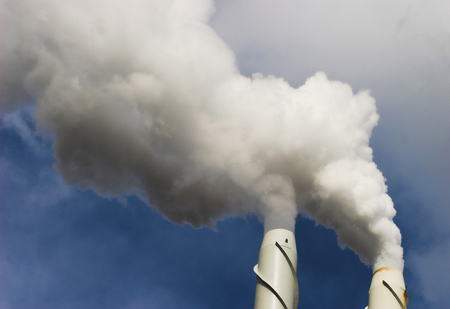
Ireland’s 2020 greenhouse gas emissions estimated almost 6% lower due to the pandemic
Short term emissions reductions due to the Covid 19 pandemic do not negate the need for targeted and sustained action across all sectors
Early estimates of 2020 greenhouse gas emissions indicate a significant impact of COVID-19.
Emissions from the transport sector are estimated to be over 2 million tonnes of CO2 equivalent (Mt CO2eq) lower than last year, a fall of almost 17%.
Residential sector emissions (mainly home heating) are estimated to have increased by 9% (0.6 Mt CO2eq) in 2020 as many people have been working extensively from home.
Emissions from the energy industries sector are estimated to be 14% lower (1.3 Mt CO2eq less) than in 2019. This was most significantly due to substituting coal and peat use with renewable energy in power generation, with the pandemic measures playing a smaller part.
The Environmental Protection Agency (EPA) and Sustainable Energy Authority of Ireland (SEAI) have jointly released an analysis of the impact of COVID-19 restrictions on greenhouse gas (GHG) emissions in 2020. The estimates show a reduction in greenhouse gas emissions of almost 6% in 2020 compared to 2019. The estimates are based on monthly indicator data, allowing for earlier estimation – compared to the more comprehensive annual data used by the EPA to produce Ireland’s GHG Inventory.
There were significant changes in energy-related emissions, particularly transport and residential sector emissions, as a result of new living and work practices brought about by Covid-19. The overall reduction is comparable to that seen following the global financial crisis. However, the economic rebound from the Covid- 19 crisis is estimated to bring emissions back to previous levels, unless additional action is taken.
Commenting on the figures Ms Laura Burke, (Director General, EPA) stated:
“We are at a pivotal point for our economy, and the recovery steps we take now will shape Ireland for the next decade. While these early estimates show a reduction in greenhouse gas emissions for 2020 as a result of Covid restrictions, this level of emission reductions, at a minimum, will be required annually. Ireland needs a ‘green recovery’ to rebuild our economy, generate new jobs and respond to climate change. As we emerge from the global pandemic, a ‘green’ stimulus and implementation of ambitious policies and measures can deliver Ireland’s current and future commitments to a climate-neutral economy and climate-resilient society by 2050. The emissions reductions in 2020 must be built on to achieve continual, substantial, year-on-year reductions, making the 2020’s the decade of climate action.”
Commenting, Mr William Walsh, (CEO, SEAI) stated:
“The Programme for Government and the Climate Action Plan are very clear on the scale of ambition necessary to achieve Ireland’s clean energy transition. This will require a national conversation to find solutions and innovate, changing way we live, work and rebuild our economy to give us a chance of achieving our collective mission. The investment needed in all sectors to address the climate crisis provides tremendous opportunities for warmer and cheaper to run homes and businesses, a growth in green jobs in Ireland, cleaner air in our towns and cities and more open spaces for us all to enjoy. Climate action has to be a national priority at all levels of society, led by Government, and supported by businesses, communities and individuals all working together. The public health emergency has made us all think about what’s important. I hope that, in time, people can find that same connection and resolve when it comes to taking climate action.”
Full detail on the 2020 estimates is available on the EPA and SEAI websites.
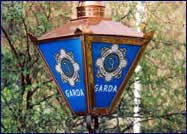
Tipperary Gardaí continue to appeal for witnesses following a single vehicle collision in County Tipperary.
At around 10:00pm on Wednesday January 27th, Gardaí in Cahir received a report of a road traffic collision at Boolahallagh, Newcastle, Co. Tipperary.
Gardaí located a grey Ford Focus which had gone off the road. However when they attended the accident scene nobody was found present in or around the vehicle.
Subsequently however, two male teenagers presented themselves at South Tipperary General Hospital in Clonmel. Both youths displayed injuries consistent with having been involved in a serious road traffic collision.
One of the young men, we understand, had serious injuries and was, following assessment, transferred to University Hospital Waterford, while the other is believed to have minor injuries.
The road remained closed to traffic yesterday with diversions in place.
Gardaí have appealed for witnesses, especially motorists who may have dash-cam footage, latter travelling on the Newcastle to Cappoquin Road on last Wednesday evening, between 5:00pm and 10:00pm. Same are asked to contact Gardaí on Tel: (052) 7445630 or on the Garda Confidential Line on Tel: 1800 666 111.
This website uses cookies to improve your experience. We'll assume you're ok with this, but you can opt-out if you wish.AcceptRead More
Privacy & Cookies Policy
Privacy Overview
This website uses cookies to improve your experience while you navigate through the website. Out of these, the cookies that are categorized as necessary are stored on your browser as they are essential for the working of basic functionalities of the website. We also use third-party cookies that help us analyze and understand how you use this website. These cookies will be stored in your browser only with your consent. You also have the option to opt-out of these cookies. But opting out of some of these cookies may affect your browsing experience.
Necessary cookies are absolutely essential for the website to function properly. This category only includes cookies that ensures basic functionalities and security features of the website. These cookies do not store any personal information.
Any cookies that may not be particularly necessary for the website to function and is used specifically to collect user personal data via analytics, ads, other embedded contents are termed as non-necessary cookies. It is mandatory to procure user consent prior to running these cookies on your website.






Recent Comments