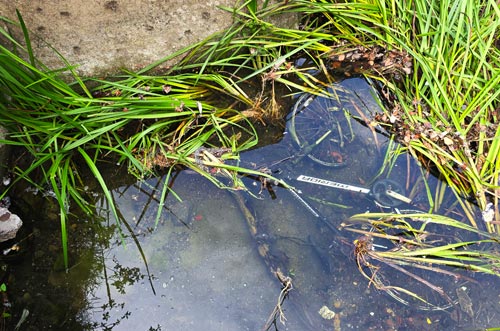
Anyone looking for a ride in Thurles, tonight, then an unwanted, submerged Crossway Merida bicycle could be your best bet.
Local wildlife was left baffled this week after a bicycle was discovered taking an unscheduled bath in the River Suir.
The bike, believed to be a Crossway Merida variety, was found lying beneath the water with all the dignity of a cyclist who had confidently shouted, “Watch this!” moments before disaster. As yet no body has been located.
Competition – Spot the Bike. Pic: G. Willoughby.
Witnesses say the bicycle may have entered the river after misunderstanding Ireland’s new transport policy. “It heard everyone talking about greener travel,” one duck explained, “and apparently decided to join the actual green overgrown rush bed.”
The River Suir is already famous for its salmon and brown trout. Now it can add mountain bikes to the list, although anglers are reminded that bicycles must be returned to the water if they are under eighteen gears. Fishing in Ireland has yet to confirm the correct bait, but experts recommend using a fluorescent jacket and shouting, “Who left this here?” The bicycle itself declined to comment, although one wheel appeared distinctly tired. Its chain is reportedly rusty, its brakes are feeling pressured, and the saddle has requested immediate relocation to somewhere less damp.
Thurles Municipal Council officials and local Councillors are considering several explanations; illegal dumping, a dramatic relationship breakup, or an ambitious attempt to cycle directly to France without paying ferry charges. Environmental campaigners “Refresh Thurles” have stressed that rivers are no place for unwanted bicycles. Anyone wishing to dispose of an old bike should use a proper recycling facility, or give it to someone who promises not to test whether it can swim.
At press time, and for several months previous the bicycle has remained submerged at low tide, awaiting rescue, repair, and a very stern lecture about not wearing its water wings.
Now with public transport prices being increased by 15% from January, an immediate rescue could be advantageous.
Percy French celebrated the County Limerick village of Dromcollogher in his comic song Drumcollier, [ Vocals:- The late Irish Tenor Brendan O’Dowda, (1925–2002 ) ], also recorded under spellings such as Dromcolliher. After receiving a particularly warm welcome there during a visit in the 1890s, the songwriter immortalised the village and its famously compact main street.
That same street was to become the setting for one of the darkest episodes in modern Irish history. On Sunday, September 5th, 1926, 100 years ago today, a fire in a makeshift cinema above Mr Patrick Brennan’s hardware store killed 48 men, women and children. The catastrophe would thereafter be remembered locally by two words: “The Burning.”
The upstairs loft normally functioned as an informal community hall, hosting meetings, dances and theatrical performances. It was an L-shaped timber structure, approximately 50 feet long and 15 feet wide, positioned about 12 feet above the store floor. Access was through a single narrow door reached by a steep wooden staircase. Small windows at the back were fitted with bars, while much of the roof, internal partitioning and wall covering was made from combustible materials.
The film show was organised by local hackney driver Mr William “Babe” Forde in association with Mr Patrick Downing, a projectionist employed at a Cork cinema. The films had reportedly been removed from the Cork venue, which did not open on Sundays, and brought to Dromcollogher without their protective metal cans.
Around 150 spectators paid nine pence each and crowded onto benches in the loft. The screening was scheduled for after Sunday-night Benediction in nearby St Bartholomew’s Church. The programme began with a short film called “False Alarm”, followed by the main feature, “The Decoy”.
At approximately 9:50pm, shortly after the second film began, a candle, being used near the projector, fell and ignited exposed cellulose-nitrate film. The nitrate film was extraordinarily flammable and, once alight, burns with fierce intensity.
The fire rapidly spread from the projection area to the timber floor, partitioning and wall covering. A burning reel was reportedly carried towards the entrance during the initial panic and fell near the wooden stairs, obstructing the loft’s only normal exit. People rushed towards the opposite end of the room. Someone eventually forced apart the bars on one of the rear windows, allowing several spectators to jump onto piles of hay below. That escape route was soon blocked, however, and many remained trapped inside.
Within approximately 10 to 15 minutes, the roof fell in and the loft floor collapsed into the hardware store beneath it. Forty-six people died at the scene. Two more who escaped subsequently died from their injuries, bringing the final death toll to 48; almost one person in every ten then living in Dromcollogher. Fifteen of the victims were children, while more than half were under the age of 25. The youngest, James Kenny and Thomas Noonan, were both seven years old; the oldest victim, Ms Mary Turner, was 68. An entire household was also among the dead; retired national schoolteacher Mr Jeremiah Buckley; his wife, Ellen; their ten-year-old daughter, Bridie; Ellen’s sister Mrs Kate Wall; and the family’s maid, Ms Nora Kirwan.
An Post have issued a commemorative stamp (September 3rd, 2026) marking the centenary of the Dromcollogher Cinema Fire.
A vigil was maintained through the night as the remains were recovered from the ruins. Identification was extremely difficult, and many victims could not be recognised. Forty-six of the dead were subsequently buried together in an enormous communal grave in the grounds of St Bartholomew’s Church.
President of the Executive Council W. T. Cosgrave attended the funeral. Messages of sympathy arrived from King George V, religious leaders, local authorities, trade unions and organisations throughout Ireland and abroad. Cosgrave established a national relief fund for those affected by the catastrophe; remarkably, its final payments were not made until 1958. The disaster immediately raised questions about responsibility. Although existing legislation required commercial film venues to be licensed and to observe fire-safety precautions, temporary screenings in rural halls, stores and other improvised premises were relatively common.
Downing and Forde were arrested and charged with manslaughter, but the State ultimately decided not to proceed with the prosecution. No public inquiry was held, despite Cosgrave’s initial promise of one. Regulations governing film screenings in unofficial premises were subsequently tightened. The site of the fire remained derelict for more than two decades. A local committee later acquired it, and in 1953 a public library was opened there as a permanent memorial. The library still occupies the site today, while a large Celtic cross over the communal grave bears the names and ages of those who died.
For decades, many families spoke little about the catastrophe. Survivors and relatives described a silence born from grief, trauma and the belief that such events had to be accepted as God’s will. Yet the memory has endured.
Now, a century later, the tragedy remains Ireland’s deadliest cinema fire. The National Library of Ireland preserves contemporary newspapers and photographs documenting its aftermath, while Dromcollogher’s memorial library and communal grave ensure that the 48 victims of “The Burning” are not forgotten.
The Environmental Protection Agency has confirmed that it is awaiting a written response from Tipperary County Council before deciding whether further EPA action is warranted concerning continuing complaints about the River Suir.
In correspondence received following a further complaint submitted on August 27th, 2026, the EPA’s Office of Environmental Enforcement stated:
Dear Mr Willoughby, The Environmental Protection Agency (EPA) acknowledges receipt on 27/08/2026 of your further correspondence below relating to the issue referenced above. Our Ref: COM021813.
As previously advised, with respect to the scope of your concerns as listed below, we note that the majority of the concerns and questions raised relate to matters that fall within the remit and functions of Tipperary County Council as the competent authority for these matters.
We have requested a written response from the Council on any actions taken or planned on this matter. Until we have reviewed the response from Tipperary County Council, we will then assess any appropriate actions that may be required by the EPA and communicate our decision to you.
We trust this outlines the approach undertaken by the EPA with regard to this matter and, as advised, we will contact you again in due course.
Kind regards, Mary Murphy (Programme Officer, Office of Environmental Enforcement, Wexford.)
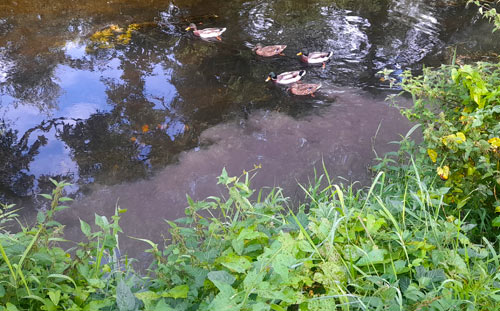
Effluent flowing into River Suir, at Thurles Town centre. Pic: G. Willoughby.
The reply is important because it confirms that the complaint remains under consideration. It also places Tipperary County Council firmly at the centre of the response: the EPA has asked the Council to account in writing for what it has done and what it proposes to do.
However, the correspondence provides no deadline for the Council’s response, no timetable for the EPA’s assessment and no indication of what evidence or remedial programme has been requested. “In due course” is not an adequate substitute for a transparent schedule, particularly after concerns about pollution, excessive vegetation, restricted flow and the condition of the river have been raised repeatedly for more than a decade.
Another River Suir organisation proposed. Meanwhile, NoreVision has been consulting communities, landowners, river users and businesses about establishing a River Suir Trust. The proposed organisation would seek to improve the river’s ecological health, develop practical projects and increase public understanding of the river ecosystem. Consultation invitations concerning the proposed trust were publicly circulated in May 2026 through local community channels, including Holycross/Ballycahill.
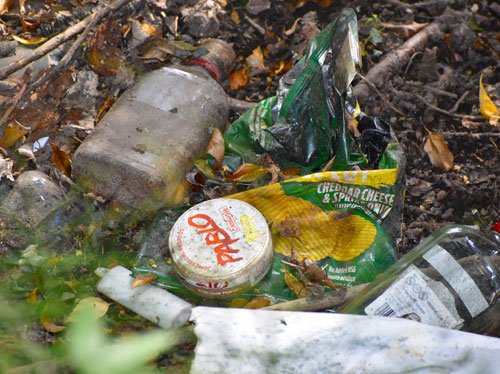
Suir Riverbed, Thurles town centre. Pic: G. Willoughby.
A properly constituted trust, supported by qualified scientific staff and sustainable funding, could provide valuable coordination, education and practical restoration work. It might also offer communities a stronger voice when dealing with public authorities.
Nevertheless, a trust remains a proposal until its governance, funding, staffing and work programme are published. Its success should eventually be judged by measurable ecological improvements, not by the number of consultations held, partnerships announced or aspirations expressed.
Most importantly, a community trust must supplement statutory action, not become a substitute for it. Volunteers and charitable organisations cannot be expected to assume the legal responsibilities of local authorities, regulators, public utilities or other State agencies.
“Save Our Suir” also established.
A separate community initiative, “Save Our Suir”, emerged following a public meeting held at Cahir House Hotel on August 26th. Contemporary notices from the Cashel, Golden and Tipperary Anglers Association and local social-media accounts confirm that the meeting took place, with a packed attendance.
This mobilisation demonstrates the depth of public concern. It could also help maintain pressure for disclosure, investigation and action. However, the appearance of several overlapping initiatives now creates a risk of fragmented effort unless their respective objectives and responsibilities are clearly defined.
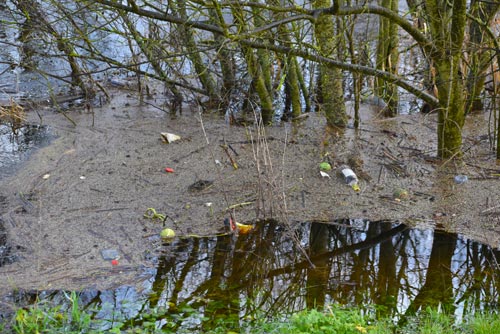
A static River Suir, Thurles, Town Centre. Pic: G. Willoughby.
The River Suir does not require another layer of meetings in which every organisation participates, but no single body accepts responsibility for delivery.
Responsibilities must not become blurred. It is also important to describe the agencies’ roles accurately. The Local Authority Waters Programme was officially renamed the River Basin Management Service in July 2026. It works on behalf of Ireland’s 31 local authorities, providing catchment science, community engagement, funding and coordination. The renaming did not create a new enforcement authority or change the organisation’s underlying purpose. The official announcement expressly states that its purpose, services and commitments remain the same.
The EPA coordinates national water-quality monitoring, assessment and reporting. It also regulates EPA-licensed activities and oversees local-authority environmental performance. Tipperary County Council remains the competent authority for many local pollution, drainage, maintenance and enforcement matters, the position now restated in the EPA’s reply.
Inland Fisheries Ireland has responsibilities relating to fisheries protection, habitat and fish passage. Its national barrier programme has funded five projects in County Tipperary, but the published list does not by itself establish that these projects will resolve the particular problems reported in the River Suir at Thurles. Cooperation among these bodies is necessary and essential, but cooperation without named responsibility, deadlines and published outcomes can too easily become a mechanism for delay.
The public now needs answers. The EPA’s intervention is welcome, as are the River Suir Trust proposal and the formation of Save Our Suir. Yet none of these developments, by itself, amounts to river restoration.
After some 13 years of documented local complaints and warnings, the public should now be given:
Tipperary County Council’s complete written response to the EPA;
A published scientific assessment of the affected sections of the river;
Identification and investigation of pollution and nutrient sources;
Relevant water-quality, flow, oxygen and ecological-monitoring results;
A costed programme of remedial and maintenance work;
A clear allocation of responsibility among the Council and State agencies;
Environmental assessment of any proposed vegetation or obstruction removal;
Firm commencement, completion and public-reporting dates.
The proposed River Suir Trust and Save Our Suir may become constructive forces. They should be supported where their work is evidence-based, transparent and properly coordinated.
But the critical question remains unchanged:-What practical work will now be undertaken, who will be responsible for it, and by what date will the public see measurable improvement in the River Suir?
Livestock farmers across Tipperary are being advised to watch their cattle and sheep closely, following confirmation of a new bluetongue virus serotype 3 (BTV-3) infection in County Wexford.
The Department of Agriculture has confirmed that an unvaccinated 16-month-old heifer tested positive during a postmortem examination. The animal had shown no obvious clinical signs before its death. This is the first Irish case identified as an infection acquired during 2026. It does not mean that a case has been detected in Tipperary.
Bluetongue is transmitted mainly by biting midges and is not normally spread through direct contact between animals. It affects ruminants, including cattle, sheep, goats and deer. Sheep can be particularly severely affected, although illness and deaths can also occur in cattle.
Tipperary farmers should watch for:
Fever, lethargy or loss of appetite
Sudden fall in milk production
Lameness
Swelling around the face, mouth or tongue
Drooling or discharge from the eyes or nose
Sores around the nose and mouth
Abortions, stillbirths or deformed newborns
Any sudden or unexplained death
The virus poses no risk to human health or food safety. Vaccination is regarded as the most effective protection, but it must target the relevant virus strain. Farmers with unvaccinated livestock should contact their veterinary practitioner promptly to discuss BTV-3 vaccination. Any suspicious illness or unexplained mortality should also be reported without delay.
It was with great sadness that we learned of the death, today 4th September 2026, of Mrs Josephine Cantwell (née Gleeson), Lisaticy, Moyne, Thurles Co. Tipperary.
Pre-deceased by her parents, Tom and Hanora, husband Tony, son John, grandson John, three sisters Mary, Ciss and Statia and brother Jack; Mrs Cantwell sadly passed away, while surrounded by her loving family and while in the care of staff at Fennor Hill Nursing Home, Co. Kilkenny.
Her passing is most deeply regretted, sadly missed and lovingly remembered by her sorrowing family; loving daughters Catherine, Nora, Mary, Teresa, Anne Marie and Jackie, sons Thomas and Pat, 20 grandchildren, 12 great grandchildren, sons-in-law, daughters-in-law, nieces, nephews, Ethna Cantwell (USA), extended relatives, neighbours and friends.
This website uses cookies to improve your experience. We'll assume you're ok with this, but you can opt-out if you wish.AcceptRead More
Privacy & Cookies Policy
Privacy Overview
This website uses cookies to improve your experience while you navigate through the website. Out of these, the cookies that are categorized as necessary are stored on your browser as they are essential for the working of basic functionalities of the website. We also use third-party cookies that help us analyze and understand how you use this website. These cookies will be stored in your browser only with your consent. You also have the option to opt-out of these cookies. But opting out of some of these cookies may affect your browsing experience.
Necessary cookies are absolutely essential for the website to function properly. This category only includes cookies that ensures basic functionalities and security features of the website. These cookies do not store any personal information.
Any cookies that may not be particularly necessary for the website to function and is used specifically to collect user personal data via analytics, ads, other embedded contents are termed as non-necessary cookies. It is mandatory to procure user consent prior to running these cookies on your website.






Recent Comments