Pre-deceased by his partner Brid; Mr Buckley passed away following a long illness most bravely borne. His passing is most deeply regretted by his sons Christopher and Michael, grandchildren George and Niamh, daughter-in-law Hayley, sister Patricia, cousins, his great friend Joe, carers especially Ann and Sandra, neighbours and many friends.
Requiescat in Pace.
Funeral Arrangements.
Reposing in Hugh Ryan’s Funeral Home, Slievenamon Road, Thurles on tomorrow evening, Wednesday July 28th, from 5:00pm to 7:00pm. Arriving at St. Patrick’s Cemetery, Moyne Road, Thurles on Thursday July 29th at 12:00 noon for interment.
[NB: Due to Public Health Guidelines, regarding C-19 virus restrictions; those attending (limited to 50 mourners) will continue to observe strict adherence to social distancing and face covering.]
The extended Buckley family wish to express their appreciation for your understanding at this difficult time and have made arrangements for those wishing to send messages of condolence, to use the link shown HERE.
The Department of Health has confirmed 1,120 new cases of Covid-19 in the RepubliC Of Ireland today, with 142 people in hospitals; some 27 of whom are in ICU’s. Irish Chief Medical Officer, Dr. Tony Holohan, has strongly urged anyone eligible to register for vaccine to do so as soon as possible.
In Northern Ireland, there were 1,473 new virus infections reported today, with sadly three further related deaths, bringing the total of confirmed cases on our island of Éire to 2,593.
The Minister for Health, Mr Stephen Donnelly, has confirmed that the Covid-19 vaccination programme will be extended to all those aged 12 to 15, with the online portal to register, to be opened sometime next week.
Earlier, this week a recommendation by the National Immunisation Advisory Committee (NIAC) was made to the Government, confirming that all children in this age category should be offered an mRNA vaccine.
In other news; the number of people permitted to attend weddings will rise to 100 after August 5th, according to Minister for Foreign Affairs Mr Simon Coveney. Minister Coveney stated that the Government had made an exception for weddings, but their future message remains one of continued caution.
Booster Covid-19 shots combined with possibly flu vaccine are expected to be offered first to nursing home residents, vulnerable groups, those aged over 80 years and to frontline health workers, in the coming months.
Two sisters, named as Kelly Hannon and Sarah Hannon have lost their claims for compensation, over what was alleged trip-and-fall accidents in Greenane Drive, Tipperary town, where they resided.
Judge Michael Twomey noted in the High Court that four other members of the same family had made similar claims, which defendant Tipperary County Council calculated had a one-in-26 million chance of having actually ever happened.
Judge Twomey praised the council for fighting the cases, even though the taxpayer, will be left to foot the council’s legal bill, since the plaintiffs have insufficient funding money to pay the court costs.
Judge Twomey, noting that four other members of the same family had made similar claims said that the Councils actions might discourage further similar claims, thus easing the backlog in the courts, if plaintiffs ‘find it more difficult to persuade lawyers to spend their valuable time on “nuisance claims” with the knowledge that outcomes will have little chance of success.
Judge Twomey said Kelly Hannon had claimed that on August 17, 2015, she suffered soft-tissue injuries when she got her right foot caught in an uncovered drain, which was 25cm square in the council estate in which she has lived for her entire life, namely Greenane Drive, Tipperary town. Her claim was heard at the same time as an almost identical claim by her sister, Sarah Hannon, who lives in the same estate, and claimed she suffered soft-tissue injuries when she caught her right foot on an uncovered drain at the side of a pavement on June 7, 2016, about 30 metres from the drain in which her sister tripped.
The Circuit Court heard that the sisters were part of a family that had made a total of six claims against Tipperary County Council relating to trip-and-fall accidents in Tipperary town, most of which were around the Greenane estate.
Past claims by Hannon family members included:- Sarah Hannon’s half-brother John Price, who alleged he suffered a ‘trip and fall’ in Tipperary town on February 21st, 2013; her half-brother Billy Price alleged he suffered a ‘trip and fall’ in Tipperary town on October 12th, 2015; her mother Geraldine Hannon alleged she suffered a ‘trip and fall’ on a pothole in the vicinity of the Greenane estate on September 27th, 2015; and her sister Keisha Hannon, who alleged she suffered a ‘trip and fall’ in a pothole in the vicinity of the same Greenane estate, on April 13th, 2016.
Judge Twomey dismissed the appeals of both Sarah and Kelly Hannon against the previous loss of their cases in the Circuit Court.
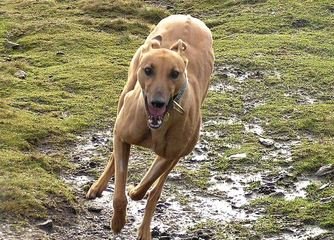
The significant contribution made by the greyhound racing industry to the Irish exchequer and rural employment is highlighted in a new report published today by Greyhound Racing Ireland (GRI).
The report, compiled by consultant economist Jim Power, contains a county-by-county breakdown of the 6,211 active owners across the island of Ireland with Cork leading the way, accounting for 890 or 15% of the overall number followed by Tipperary (669, 11.3%), Kerry (599, 10.1%), Limerick (540, 9.1%), Wexford (314, 5.3%) and Kilkenny (286, 4.8%.). Tipperary accounts for 12.5% (50) of the 400 active trainers in Ireland followed by Cork (38, 9.5%), Kerry (34, 8.5%), Limerick (30, 7.5%), Wexford (21, 5.25%) and Tyrone (19, 4.75%).
The report shows the industry made a net contribution to the Irish economy of €132.3 million in 2019 and supported 4,150 full-time and part-time jobs. An additional 6,211 active greyhound owners derived economic benefit from the industry in 2019, the last full year of activity before the pandemic. An investment of a further €117.8 million was made by greyhound owners in 2019 in preparing and racing greyhounds.
While Covid-19 restrictions have resulted in a significant decrease in activity and revenue during 2020 and 2021, GRI expects to return to pre-pandemic activity and attendances in 2023.
The report also contains details on the care and welfare initiatives progressed by GRI during the past two years, including the provision of care and foster care centres, the introduction of an expanded inspection programme for greyhound establishments, the operation of a Greyhound Injuries Support Scheme, and the commissioning of the Rásaíocht Con Éireann Traceability System. 3,995 greyhounds also have been rehomed (2019 – 974; 2020 – 1,775; 2021 to 30 June – 1,246) with the support of GRI and the Irish Retired Greyhound Trust.
Frank Nyhan, (Chairman of Greyhound Racing Ireland), commented, “The greyhound industry is going through a very challenging period, but the economic, financial, and employment contribution remains significant.”
“The challenges experienced in recent years by the industry include declining attendances, the closure of some tracks for economic reasons, Brexit and adverse publicity in relation to welfare and other practices within the industry,” added Mr. Nyhan. “The ongoing challenge for GRI is to continue the development of a commercial greyhound racing industry built on a consumer-focused, and high-quality entertainment product, which meets the highest possible international regulatory and welfare standards.”
Mr. Nyhan says COVID-19 has represented a significant challenge for the industry, but as restrictions are eased, activity levels are expected to recover.
“In 2019, 462,709 patrons attended race meetings, and it is difficult to see that total being surpassed in 2022. However, provided the public and private greyhound stadia are put on a sound commercial footing, and there is a continuance of the aggressive approach to regulating the sector it is anticipated that attendance levels will reach or exceed pre-pandemic levels in 2023,” he explained.
Gerard Dollard, CEO of Greyhound Racing Ireland, says government support for the sector is “very important”, and in the absence of such support, there would be “considerable implications” for rural employment and economic activity.
In 2019 and 2020, the Department of Agriculture, Fund and the Marine paid €16.8 million to the greyhound industry through the Horse and Greyhound Racing Fund, and it increased the allocation to €19.2 million in 2021 to provide general support to the industry and to enable it deal with Covid.
“The greyhound industry is an important part of the social and economic fabric of rural Ireland. It supports considerable employment directly and indirectly down through the supply chain, and it is an important way of life for greyhound owners around the country. For stakeholders in the sector, it is an important economic and social activity,” explained Mr. Dollard.
Highlights from the Greyhound Racing Ireland report:
The total cost to greyhound owners each year of keeping the ‘greyhound pipeline’ in operation is around €117.79 million. This is a significant amount of expenditure, and much of it is injected into local economies and supports thousands of local jobs.
Wagering activity on greyhounds contributes to the overall betting levy collected by the Exchequer. This levy was increased from 1% to 2% in 2019 resulting in a return to the Exchequer of €95 million in 2019.
In 2019, the total prize money granted was €9.58 million, of which GRI contributed 82.4 per cent, which works out at €7.89 million. The remainder came from race entry fees and sponsorship contributions. In 2020, the total prize money granted was €6.11 million, of which GRI contributed 81 per cent, which works out at €4.95 million. Between 2006 and 2020, prize money totalling €129.9 million was paid out, with GRI contributing 74.4 per cent, which works out at €96.6 million.
An estimated €8 million per year was raised at greyhound meetings for worthy causes. In a post-Covid world, greyhound racing will re-establish itself as a significant vehicle for fundraising for sporting organisations such as GAA clubs and charitable causes.
While much has been made in media reports of withdrawal of sponsors from support of greyhound racing, this is not borne out in reality. Three sponsors withdrew from sponsorship due to targeted and significant campaigns from those opposed to greyhound racing. GRI has seen some new sponsors emerge and other sponsors are willing to continue to support the industry but have asked for a lesser public profile than heretofore.
An area of growth for GRI has been the sale of media rights for its greyhound racing activities. An agreement has been entered into with Sports Information Services (SIS) who transmit Irish greyhound racing to UK bookmaker outlets and international markets. The 8 meetings incorporate 2 early morning meetings (Waterford and Kilkenny) which are aimed towards the international wagering market. Total income from SIS in 2019 was €2.1M.
“Jigsaw”, latter the national centre for youth mental health, began dealing with referrals from its new Tipperary headquarters in Thurles yesterday, (July 26th), that’s according to Tipperary County Council.
The Tipperary Director of Services Mr Patrick Slattery confirmed earlier that initially consultations would be dealt with, only by phone and online. Face-to-face consultations would not begin until possibly next August, once training of staff had been fully completed.
Mr Slattery also confirmed that there was no further update as yet regarding outreach hubs, however he further stated that he understood that Jigsaw were first committed to rolling out the service from Thurles, before opening the promised and badly needed two hubs in the towns of Nenagh and Clonmel, in Co. Tipperary.
This website uses cookies to improve your experience. We'll assume you're ok with this, but you can opt-out if you wish.AcceptRead More
Privacy & Cookies Policy
Privacy Overview
This website uses cookies to improve your experience while you navigate through the website. Out of these, the cookies that are categorized as necessary are stored on your browser as they are essential for the working of basic functionalities of the website. We also use third-party cookies that help us analyze and understand how you use this website. These cookies will be stored in your browser only with your consent. You also have the option to opt-out of these cookies. But opting out of some of these cookies may affect your browsing experience.
Necessary cookies are absolutely essential for the website to function properly. This category only includes cookies that ensures basic functionalities and security features of the website. These cookies do not store any personal information.
Any cookies that may not be particularly necessary for the website to function and is used specifically to collect user personal data via analytics, ads, other embedded contents are termed as non-necessary cookies. It is mandatory to procure user consent prior to running these cookies on your website.







Recent Comments