Gardaí, covering the Clonmel area of Co. Tipperary, are appealing for immediate assistance from the public, in relation to the theft of 4 different Catalytic Converters stolen from vehicles in the the areas of Clonmel, Drangan and Cloneen, between the 10th and 11th of August 2021 last.
It is believed that 4 male individuals travelling in a Blue Skoda Octavia (sports type) may have been involved in these 4 thefts.
Gardaí, today, are appealing to people with CCTV or Dashcam footage to make contact with them on Tel: 052 6177640. Clonmel Gardaí are also appealing for people to be vigilant of their property and that of their community and to report immediately any suspicious activity to your local Garda Station.
The Department of Health has confirmed a further 1,903 confirmed cases of Covid-19 here in the Irish Republic . The number of people in our hospitals with the virus, today stands at 219, up 13 patients on yesterday, of whom 37 are in our ICU’s, an increase of 1 on yesterday’s figures.
The Department of Health in Northern Ireland have confirmed a further 1,610 cases of coronavirus today, up from 1,467 on Wednesday. There are 341 patients with Covid-19 in hospitals in Northern Ireland, with 42 patients with Covid-19 in their intensive care units.
Both the above confirmed figures bring to 3,513 the number of new Covid-19 cases confirmed on the whole island of Ireland, just over the past 24 hours; an increase of 228 on yesterday’s figures.
Here in the republic of Ireland, there have been, sadly, a total of 169 Covid-19 deaths since the beginning of April 2021. Note: While some of those who died would have had underlying conditions, including 7 persons who were fully vaccinated; 94 deaths occurred in April 2021; 37 in May 2021; 14 in June 2021; 16 in July 2021 and to-date in August sadly a further 8 deaths.
The risk of ending up seriously unwell for the vast majority of people is now preventable because of the implemented vaccination programme. In relation to death reporting; since mid-May, there has been a difficulty in reporting figures for Covid-19 deaths, due to the Russian cyber-attack on the HSE’s outdated IT systems.
It has been confirmed that more than three million people have been to-date fully vaccinated in Ireland and by this weekend 90% of adults will be at least partially vaccinated while 80% will be fully vaccinated.
News on the positive side.
Irish citizens and businesses have so far donated more than one million Covid vaccines to poorer countries, through a UNICEF campaign. The ‘Get a Vaccine, Give a Vaccine’ campaign has raised more than €2.5 million since it was launched last June.
The HSE Health Service Executive have, since last night, opened registration for vaccination for children aged 12 to 15 years. Already by mid-morning today, over 42,000 non vaccinated children had signed-up according to HSE figures, with many having already received appointments for this coming weekend. Around 280,000 children will be eligible for immunisation with either the Pfizer or Moderna vaccines.
Parents and guardians are being asked to keep in the forefront of their minds that the Covid virus remains a risk to anyone who has not suffered from the virus or who remains unvaccinated.
As North Tipperary politicians congratulate themselves, via social media, in relation to the “welcoming” of progress on projects for which they personally have had no hand, act or part in; staff at University Hospital Limerick (UHL) are being totally ignored. Latter medical facility, which serves the residents of North Tipperary, are today treating the highest number of Covid-19 patients (16) and patients with suspected cases of the virus (13) in the Irish Republic.
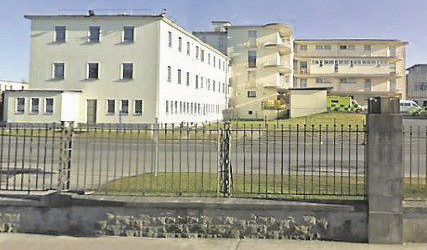
University Hospital Limerick (UHL)
Not surprisingly, due to this same political abandonment and parliamentary shabbiness, same UHL staff are also left caring for the largest number of seriously ill patients within the Irish State; same resigned to lie for days on trolleys.
Management at UHL were recently, and not for the first time, forced to introduce visiting restrictions in an effort to manage an outbreak of the Covid-19 virus, on a number of wards within the facility.
In the past fortnight, there were some 732 cases of Covid-19 virus in the mid-west region alone, the majority being in Co.Limerick (469 cases), followed by Co. Clare (163 cases), and North Co. Tipperary (100 cases); same numbers confirmed by the Department of Public Health Mid West region.
The availability of general beds at UHL has improved somewhat, from zero beds available (August 8th 2021) to 14 available beds yesterday, according to figures provided by HSE . As at that date, there were 4 ICU beds remaining at the Limerick hospital facility, with 1 Covid patient being treated in intensive care.
Yesterday at UHL, there were 43 patients assigned to trolleys, awaiting for admission to a bed, including 31 in the Limerick emergency department, and 12 on hospital wards; again confirmed figures published by the Irish Nurses and Midwives Organisation (INMO).
Previously on August 3rd there were 55 patients on trolleys in the Limerick hospital’s emergency department and on wards; same the highest number reported in any hospital within the Irish State, so far in the month of August.
Some 98 single beds opened at UHL, just last January 2021, have not yet been used to offset overcrowding at UHL emergency department. The reason for this is mainly because they were being used for seriously-ill patients, all deemed to be at highest-risk of death, should they contract Covid-19 which had already broken out within the overcrowded UHL facility.
The recent recorded surge of patients, which was experienced in UHL last July was due mainly to a wave of older people attending, who had experienced delayed care because of the Covid-19 pandemic, and were acutely ill due to same unavoidable neglect. Same patients, when attending were quite ill, so there was a greater need for longer hospital stop overs.
So Tipperary politicians please, enough of this old fashioned self-congratulatory “welcoming” and “calling for” nonsense, which we are fully aware you have had no hand, act or part in personally; rather address current problems which your electorate elected you to undertake.
Long term observations in Ireland provide important insights on the causes and consequences of Climate Change; Increases in atmospheric levels of carbon dioxide, methane and nitrous oxide have been observed in Ireland, and reflect the increasing global levels of these key drivers of global warming; Global warming has resulted in Ireland’s climate becoming warmer and wetter; Sea level rise, increased ocean acidity, and higher ocean temperatures are also observed in our oceans and coastal areas; Ireland’s ocean and terrestrial ecosystems are responding to these changes, resulting in changes in ocean species and a longer growing season on land.
For the benefit of ill informed and misled Tipperary politicians.
Why the use of Peat Moss is being correctly reduced for sale/use in horticulture, here in Ireland!
Under natural conditions, peat accumulates in an active peat forming layer known as the acrotelm (living). Same overlies the catotelm (dead), at a rate of about 1 mm per year. These layers act as a source or sink for the greenhouse gases CO2 and CH4. The main peat forming plants sphagnum mosses actively grow in the spring and summer, removing CO2 from the atmosphere and converting it to biomass through photosynthesis.
Watch Video hereunder.
The Environmental Protection Agency (EPA), Met Éireann (MÉ) and the Marine Institute (MI) have published a report on “The Status of Ireland’s Climate”. This is the second comprehensive analysis of “essential” climate data collected in Ireland. It confirms and updates findings from the 2012 report and details how global changes are being reflected in our atmosphere, oceans and our landscape. The report was prepared by MaREI, University College Cork and funded by The Environmental Protection Agency (EPA), Met Éireann (MÉ) and the Marine Institute (MI).
Welcoming the publication of the report Ms Laura Burke, (EPA Director General), said: “Climate observations provide the basis for our understanding of the realities of climate change here in Ireland, in Europe, and globally. As a Party to the UN Framework Convention on Climate Change, and the Paris Agreement, Ireland has committed to carry out the range of climate observations outlined in this report. These data enable bodies such as the IPCC to carry out their analysis of global changes. Importantly, they are needed to inform effective responses to the changes that are happening here in Ireland. Today’s report brings together the evidence of the changes that have occurred across Ireland’s environment, from both long term detailed measurements on our land and in our oceans and atmosphere and from linked data from satellite observations from programmes such as Copernicus.’ The scientific data monitored and collated by GCOS Ireland represents Ireland’s long- standing contribution to the international scientific effort of providing the fundamental data needed to monitor our changing climate. GCOS Ireland collects scientific data on more than 40 Essential Climate Variables, identified by the UNFCCC, across atmospheric, oceanic, and terrestrial domains.”
Highlighting the importance of the Status of Ireland’s Climate report Mr Eoin Moran, (Director, Met Éireann) said: “As citizen’s in Ireland and around the world are now seeing the impacts of Climate Change, through evermore extreme weather events, fires and flooding etc; high quality observations of the climate are crucial to help inform society’s response to the Climate Emergency. Scientific long-term monitoring of the climate underpins climate research and the development of climate services which support policy making and decision making in the face of the urgency of the climate crisis. The Status of Ireland’s Climate report not only includes invaluable data provided to GCOS as Ireland’s contribution to the global climate monitoring effort but also informs development and improvement of national climate monitoring infrastructure to provide ever better understanding of our climate system and to optimise national climate monitoring capacity. This long-term climate monitoring allows us to best compare changes occurring in Ireland’s climate to those across Europe and the rest of the world and to tailor our national response into the future”.
Commenting on the findings, Mr Mick Gillooly, (Interim CEO, Marine Institute), said: “Long term climate monitoring programmes are needed to provide the evidence required to support national climate policy and action. It is through sustainable long term monitoring networks that we can measure the current state of our climate, and how much it has changed by, which in turn gives us an indication of how much more it is likely to change by into the future.”
Key findings from the report.
Atmosphere
The annual average surface air temperature in Ireland has increased by over 0.9oC over the last 120 years, with a rise in temperature being observed in all seasons. Annual precipitation was 6 per cent higher in the period 1989 to 2018, compared to the 30-year period 1961 to 1990. The concentration of the main Climate driver: greenhouse gases – carbon dioxide, methane and nitrous oxide – measured in Ireland, continued to increase since 2012 with long term implications for our climate.
Oceans
Satellite observations indicate that the sea level around Ireland has risen by approximately 2-3mm per year since the early 1990s. Measurements in the surface water to the west of Ireland indicate an increase in ocean acidity which is comparable to the rate of change in oceans around the world. The average sea surface temperature measured at Malin Head has been 0.47ºC higher over the last ten years compared to the period 1981-2010.
Land
There is an increase in river flows across most of Ireland since the early 70s. However, there is evidence in recent years of an increase in potential drought conditions especially in the east. Land cover observations since 1990 show increases in the areas covered by artificial surfaces and forest whilst there is a decrease in wetland areas.
The report also identified that progress has been made in several areas of Ireland’s observation infrastructure, resourcing, analyses and co-ordination, since the 2012 Climate status report. Nonetheless, further action is needed to ensure the national climate observation system is fit for purpose for the coming decades. This includes continued maintenance of existing climate monitoring programmes and infrastructure, the transition of climate observations to long-term sustainable programmes, and investigate potential to monitor essential climate variables not currently observed in Ireland.
“Come unto me, all ye that labour and are heavy laden, and I will give you rest” – St. Matthew Chapter 11: Verse 28.
The annual Solemn Novena from Holycross Abbey, Thurles, Co. Tipperary, will be broadcast, as normal, on Tipp Mid-West Radio next month; September 2021.
The Solemn Novena begins on Wednesday, September 8th; concluding on Thursday, September 16th, inclusive.
Regrettably, similar to last year; the Holycross Abbey 2021 Novena will be held behind closed doors, due to the ongoing Covid-19 pandemic. Dates and times of live radio broadcasts will be announced closer to the scheduled date.
[Note:- Tipperary Mid West Community Radio Station can be accessed on wavelengths 104.8fm, 106.7fm and online.]
This website uses cookies to improve your experience. We'll assume you're ok with this, but you can opt-out if you wish.AcceptRead More
Privacy & Cookies Policy
Privacy Overview
This website uses cookies to improve your experience while you navigate through the website. Out of these, the cookies that are categorized as necessary are stored on your browser as they are essential for the working of basic functionalities of the website. We also use third-party cookies that help us analyze and understand how you use this website. These cookies will be stored in your browser only with your consent. You also have the option to opt-out of these cookies. But opting out of some of these cookies may affect your browsing experience.
Necessary cookies are absolutely essential for the website to function properly. This category only includes cookies that ensures basic functionalities and security features of the website. These cookies do not store any personal information.
Any cookies that may not be particularly necessary for the website to function and is used specifically to collect user personal data via analytics, ads, other embedded contents are termed as non-necessary cookies. It is mandatory to procure user consent prior to running these cookies on your website.





Recent Comments