There were 5,622 coronavirus cases confirmed in the Republic of Ireland over the past 24 hours.
There remain 487 patients currently being treated for COVID-19 in our hospitals across the Republic; of which 114 remain in intensive care units.
Tipperary now has the highest 14-day rate of Covid infections followed by Waterford and Cork in the province of Munster. Tipperary’s rate of infection stands at 1528.6 over a 14 day period, with 2,439 new cases identified.
The 14 Day Incidence of confirmed COVID-19 cases by Local Electoral Areas (LEA), in Co. Tipperary, between November 16th, 2021 and November 29th, 2021, reads as follows: – Nenagh: 378; Carrick-on-Suir: 314; Clonmel: 307; Roscrea-Templemore: 257; Cashel-Tipperary: 254; Cahir: 249; Thurles: 241; Newport: 199.
With a national infection rate of 1357.8 cases per 100,000 of population, our Republic remains among the worst-affected areas in Europe, despite a total of 7,422,467 vaccines for Covid-19 having been administered as of Wednesday last, together with a total of 878,780 booster jabs having also been administered.
A further 1,642 new cases of coronavirus have been confirmed in Northern Ireland today, down from 1,908 on yesterday.
As of yesterday also, the number of positive cases confirmed in the past seven days was at 12,426, compared with 11,684 in the previous seven days.
Sadly, 9 Covid-19-related deaths have been reported in northern hospitals today, bringing the total number of deaths linked to Covid-19 in Northern Ireland, since the start of the pandemic, to 2,894.
It is essential that we continue to listen to science and keep ourselves and our families safe by regularly washing our hands; wearing a mask when appropriate, and cut down on unnecessary social contacts.
Recall of Boots Own Brand Food Supplements due to Detection of 2-Chloroethanol, a Recognised Reaction Product of Ethylene Oxide.
Boots Ireland, latter who have one retail pharmacy outlet in Thurles Shopping Centre, are recalling batches of the food supplements (Shown hereunder) due to the presence of 2-chloroethanol, which is a recognised reaction product of ethylene oxide.
Ethylene oxide is a pesticide that is not permitted for use in foods sold in the EU, but is approved for use by other countries outside the EU. Although the consumption of the contaminated product does not pose an acute risk to health, there is an increased risk if there is continued consumption of contaminated food over a long period of time. Therefore, exposure to this substance needs to be minimised. Point-of-sale recall notices will be displayed in all Boots stores, which supplied the implicated batches
EPA calls for urgent action to address Ireland’s rising waste volumes and falling recycling rates.
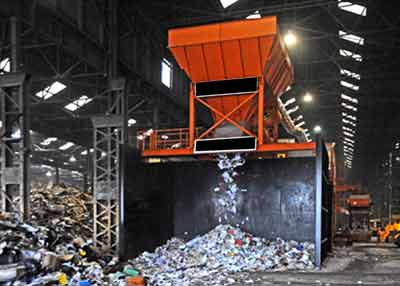
Waste Recycling Station
Waste generation in Ireland increased significantly in 2019.
Municipal waste increased by 6% to 3.1 million tonnes,
packaging waste increased by 11% to 1.1 million tonnes,
hazardous waste increased by 10% to 0.6 million tonnes and
construction waste increased by 2.6 million tonnes to 8.8 million tonnes.
Ireland’s recycling rates for municipal waste and packaging waste have declined, with more waste being sent for energy recovery. Ireland faces a widening gap to meet ambitious new EU recycling targets from 2025 onwards.
To address Ireland’s rising waste volumes and falling recycling rates, we need to transform existing business models into circular ones, that promote waste reduction, reuse and recycling. Circularity roadmaps are needed for key economic sectors, including the construction, manufacturing and food processing sectors, supported by clear policy, legislation, and national targets.
Waste generation in Ireland continues to rise while recycling rates are falling, according to the Environmental Protection Agency’s (EPA) National Waste Statistics Summary Report for 2019, which publishes the most recent official data on waste generation and management in Ireland. The report reveals some worrying trends. Waste generation in Ireland increased significantly in 2019. Municipal waste increased by 6% to 3.1 million tonnes, packaging waste increased by 11% to 1.1 million tonnes and hazardous waste increased by 10% to 0.6 million tonnes. Ms Sharon Finegan, (Director of the EPA’s Office of Environmental Sustainability), said, “A circular economy is one that is based on less waste and more reuse of materials; these trends show Ireland is going in the wrong direction. Our rising levels of waste are unsustainable and need to stop. Systemic change is needed across all economic sectors to shift the focus to designing out waste and promoting reuse and recycling.”
The past decade in Ireland has seen dramatic changes in waste management. Only 15% of municipal waste was landfilled in 2019, compared with 61% a decade earlier. There has been a significant increase in the share of municipal waste sent for incineration with energy recovery over the same period, from 4% in 2009 to 46% in 2019. Ireland’s recycling rates for municipal and packaging waste have been in gradual decline for a number years, as efforts to improve recycling have been outstripped by the growth in waste being generated and the amount being sent for energy recovery. Our recycling rate for municipal waste has fallen from 41% in 2016 to 37% in 2019, while the recycling rate for packaging waste has declined from 70% in 2013 to 62% in 2019. The trends show that Ireland is facing a widening gap to meet ambitious new EU recycling targets from 2025 onwards.
Commenting on the trends, Dr Tara Higgins, (EPA Senior Scientist) said, “Ireland’s declining recycling rates are a significant cause for concern. Recent moves to allow soft plastics such as films and wraps into our recycling bins, continued expansion of brown bin services to households, new requirements for all packaging to be reusable or recyclable by 2030 and a levy on waste recovery are among the suite of measures needed to increase recycling and close the gap to new EU recycling targets”.
Ireland also continues to have some significant waste infrastructure deficits and relies on export for a number of key waste streams, including municipal, packaging and hazardous waste. These trends point to the need for expansion of Ireland’s waste treatment and recycling capacity in order to extract the maximum value from waste materials here in Ireland and reduce the emissions associated with transporting waste over long distances.
A once-in-a-generation scheme will be open to those who don’t have a current permission to reside in Ireland.
Scheme will open online for applications in January with applications accepted during 6 month window.
Applicants must have a period of 4 years undocumented residence in the State, or 3 years in the case of those with children.
Successful applicants will receive immigration permission, access to the labour market and can begin path to citizenship.
The Minister for Justice, Mrs Helen McEntee TD, has today announced that the Government has approved a scheme to regularise thousands of undocumented migrants and their families who are living in Ireland.
The scheme, which is a key part of Minister McEntee’s Justice Plan 2021, will be for long-term undocumented migrants and their eligible dependents, where the specific criteria is met.
It will enable eligible applicants to remain and reside in the State and to regularise their residency status.
There is no reliable data on the number of undocumented persons in the State but studies suggest there could be up to 17,000 undocumented persons including up to 3,000 children and that many could be in employment, although likely low paid employment.
Announcing the scheme, Minister McEntee said,
“I’m delighted that the Government has approved my proposal for this momentous, once-in-a-generation scheme. Given that those who will benefit from this scheme currently live in the shadows, it is difficult to say how many will be eligible, but we are opening this scheme for six months from January to allow people come forward and regularise their status. It will bring some much-needed certainty and peace of mind to thousands of people who are already living here and making a valuable contribution to our society and the economy, many of whom may be very vulnerable due to their current immigration circumstances. As a result, they may be reluctant to seek medical assistance when ill, assistance from An Garda Síochána when they are the victim of a crime, or a range of other supports designed to assist vulnerable people in their times of need. I believe that in opening this scheme, we are demonstrating the same goodwill and generosity of spirit that we ask is shown to the countless Irish people who left this island to build their lives elsewhere.”
People who are eligible under the scheme will:
Have a period of 4 years residence in the State without an immigration permission, or 3 years in the case of those with children on the date the Scheme opens for applications;
Be granted an immigration permission that allows for unrestricted access to the labour market; and
Have years of residence with that permission reckonable for the purposes of pursuing citizenship by way of naturalisation.
Those with an existing Deportation Order can apply, if they meet the minimum undocumented residence requirement.
Applicants must meet standards regarding good character and criminal record/behaviour and not pose a threat to the State.
Having convictions for minor offences will not, of itself, result in disqualification.
People with expired student permissions will also be able to apply.
Minister McEntee added,
“We know that regularisation programmes can yield import social benefits and improvements in economic living conditions and a reduction in the potential for exploitation in employment. There are also economic benefits, both for the beneficiaries who are granted access to the labour market and who can benefit from a wider range of job opportunities, and for the State in terms of increased tax yields and social security contributions. The scheme will include a parallel process to implement the recommendation included in the report of the Expert Advisory Group, led by Dr Catherine Day, by allowing international protection applicants who have an outstanding application for international protection and have been in the asylum process for a minimum of 2 years to apply.”
Outlining the rationale for this approach, Minister McEntee said:
“I am conscious of the recommendation made by the Expert Advisory Group, led by Dr Catherine Day, regarding people who have been in the protection process for two years or more. In regularising those who are long-term undocumented in the State, the Government is keen to also ensure that we address any legacy asylum cases so that the new system envisaged under the White Paper can come into operation in 2024 I am committed to reducing processing times of both first instance decisions and appeals to 6 months respectively, which will ultimately benefit everyone in the protection process.”
The scheme was developed following a consultation process with key stakeholders including NGOs that work directly with people and families, who are in vulnerable immigration-related circumstances, as well as inter-Departmental and operational stakeholders.
The time-limited scheme will open for online applications in January 2022 and applications will be accepted for 6 months.
The Department of Health has confirmed 5,419 new cases of Covid-19 within the past 24 hours here in the Irish Republic.
There remain 528 people in hospital who have tested positive for the virus, down 17 on yesterday’s figures and of these 110 remain in ICU’s, down seven on yesterday.
While the new variant Omicron has now been detected in some 38 countries including Ireland, to date there are no reported deaths so far according to the World Health Organisation,(WHO).
The Health Amendment Bill, which includes a return of Mandatory Hotel Quarantine has passed all stages in the Dáil tonight.
NPHET has advised the Government that cultural, entertainment, community and sporting events should operate at 50% capacity over the coming weeks, while indoor hospitality should be brought back to where it stood before October 22nd last; nightclubs will close, with restrictions remaining in place until January 9th at least. Covid passes will be required for gyms, leisure centres, hotel bars and restaurants. Accepting NPHET’s recommendations Mr Martin has stated that he understood the frustration felt by people with the reintroduction of these restrictions. With the level of disease in the community still a concern, a limit is expected to be recommended on household gatherings. However, An Taoiseach Mr Micheál Martin has stated that NPHET acknowledge that there was a need for flexibility on household visits.
The Pandemic Unemployment Payment (PUP) is to be reinstated for all those who lose jobs as a result of restrictions announced tonight.
Elsewhere Belgium has tightened its coronavirus restrictions for the third consecutive week today to fight one of Europe’s worst spikes of Covid-19 cases. With cases among children rising, mask mandates will apply to children from age six. Primary schools will shut for Christmas holidays a week earlier and secondary schools will shift to a hybrid system, with half of classes operating from home.
A further 1,908 new cases of coronavirus have been reported in Northern Ireland today down from the 2,272 cases reported yesterday.
There remain 326 patients with Covid-19 in northern hospitals, up 2 on yesterday, with 30 patients with Covid-19 remaining in hospital intensive care units. Sadly 4 Covid-19-related deaths have also been reported in Northern Ireland today.
Please do continue to listen to science and do keep yourself and your family safe by regularly washing your hands; wearing a mask when appropriate, and cut down on unnecessary social contacts.
This website uses cookies to improve your experience. We'll assume you're ok with this, but you can opt-out if you wish.AcceptRead More
Privacy & Cookies Policy
Privacy Overview
This website uses cookies to improve your experience while you navigate through the website. Out of these, the cookies that are categorized as necessary are stored on your browser as they are essential for the working of basic functionalities of the website. We also use third-party cookies that help us analyze and understand how you use this website. These cookies will be stored in your browser only with your consent. You also have the option to opt-out of these cookies. But opting out of some of these cookies may affect your browsing experience.
Necessary cookies are absolutely essential for the website to function properly. This category only includes cookies that ensures basic functionalities and security features of the website. These cookies do not store any personal information.
Any cookies that may not be particularly necessary for the website to function and is used specifically to collect user personal data via analytics, ads, other embedded contents are termed as non-necessary cookies. It is mandatory to procure user consent prior to running these cookies on your website.







Recent Comments