The Department of Health has confirmed, over the past 24 hours, 4,235 new cases of Covid-19 her in the Irish Republic.
There remain 470 people in hospital with the disease, down 23 on yesterday’s reported figures; of whom 105 are in ICU, a further reduction of 4 over the same time period. There have also, sadly, been 47 deaths directly attributed to the disease, within the last 7 day, here in the Irish Republic.
In the Republic, also the Health Service Executive (HSE) has informed medical practitioners that they can offer booster mRNA vaccines to pregnant women aged 16 and older, people aged 40 to 49, and people aged 16-39 in descending order by age. Persons aged 16 to 29 who got a single dose Janssen vaccine can now be offered a booster vaccine, in parallel with those aged 30-39.
Republic of Ireland’s Chief Medical Officer, Dr Tony Holohan, has warned that today marks 10 days before Christmas, and if residents contract Covid-19 today, their isolation period will include Christmas Day.
The European Centre for Disease Prevention and Control has also warned that vaccinations alone cannot and will not stop the rise of the new Omicron variant of coronavirus, adding that strong action was urgently required. This Omicron Covid-19 variant has now been detected in 77 countries, since it was first identified three weeks ago.
An Tánaiste Mr Leo Varadkar has stated that he expects the National Public Health Emergency Team (NPHET) to make further recommendations tomorrow with regard to managing social contacts and the decreasing of social mixing.
A further 2,156 new cases of coronavirus has also been confirmed in Northern Ireland today, up from 1,581 cases reported yesterday.
There were 315 patients with Covid-19, in northern hospitals, same down from 326 reported yesterday and of these 32 patients were in hospital intensive care units, up 1 on yesterday. Sadly, 4 Covid-19-related deaths have also been reported in Northern Ireland over the past 24 hours.
Please, Please do take all measures necessary to ensure a safe Christmas in Co. Tipperary.
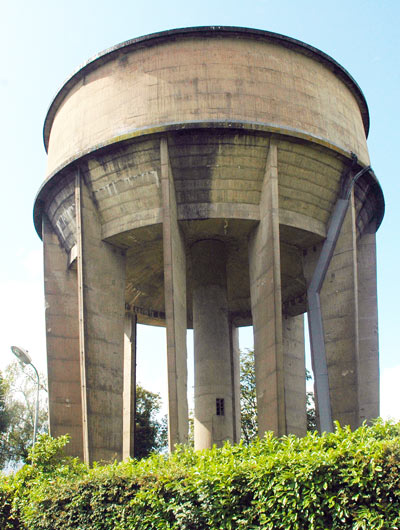
Vulnerability of Ireland’s drinking water supplies must be urgently addressed by Irish Water.
The quality of drinking water from public supplies is high, with over 99.7% of samples compliant with bacterial and chemical limits.
At the end of 2020, 46 vulnerable water supplies – serving 1 million people – required significant works, with over half experiencing delays.
Over 15,500 people were on boil water notices for longer than one month.
It will take decades for Irish Water to remove all lead connections at their current rate of replacement.
The EPA Drinking Water Quality in Public Supplies Report 2020 released today, shows that the quality of drinking water in public supplies remains high, with over 99.7% compliance with bacterial and chemical limits. The continued high levels of water quality being achieved are positive for consumers and indicate that the water is safe to drink. However, improvements are needed in our drinking water infrastructure to protect public health. Delays in the delivery of these improvements at water treatment plants by Irish Water means that water supplies remain vulnerable for longer, posing a risk to the health of a large portion of the population.
The EPA’s Remedial Action List identified 46 vulnerable supplies (serving 1,000,000 consumers) with significant issues to be addressed by Irish Water at the end of 2020. This figure is down from 77 supplies in 2017. Through EPA targeted enforcement, Leixlip has since been removed from the list, after works there resulted in a more secure water supply for over half a million people. However, improvement works at almost half of these supplies will now take longer to complete than was anticipated at the end of 2019.
Launching the report, Dr Tom Ryan, EPA Director said:
“It is good news that our water is safe to drink today, but we cannot say with confidence that it is resilient into the future. The EPA remains concerned about the vulnerability of many drinking water supplies nationally. Irish Water needs to fix the remaining supplies on the EPA’s Remedial Action List without further delay. Recent incidents at Gorey and Ballymore Eustace water treatment plants have highlighted the absolute necessity for Irish Water to ensure our public water supplies are properly and effectively operated, and managed, to protect public health.”
The EPA has also found deficiencies in the national disinfection programme, and a continued lack of focus by Irish Water and the Department of Housing, Local Government and Heritage on plans to remove lead from supply connections and assessments of the extent of lead pipework in public buildings on lead in public buildings.
Mr Noel Byrne, EPA Programme Manager, said:
“15,500 consumers were on Boil water notices for over a month in 2020, and 145,000 households still have lead connections from water mains, which highlights the vulnerabilities that exist in drinking water supplies.
Irish Water must expedite lead connection replacements and progress improvements to disinfection systems – including addressing the issues with the disinfection programme identified by the EPA – to ensure that the quality of drinking water is adequately safeguarded.”
The EPA Drinking Water Quality in Public Supplies Report 2020 and the complete list of public water supplies currently on the Remedial Action List – including details of the proposed remedial measures and associated timeframes – are available on the EPA website.
Minister McEntee welcomes the latest Policing Authority report on the performance by An Garda Síochána, during the COVID-19 health crisis.
The Policing Authority reflects on the performance of An Garda Síochána and their frontline contribution to supporting the public health guidelines
The Report covers the period from July 2021 to December 2021, when the majority of health protection restrictions were relaxed .
The Minister for Justice, Mrs Helen McEntee TD, has today welcomed the sixteenth Report from the Policing Authority on the performance by An Garda Síochána of its policing role in the support of the COVID-19 public health restrictions.
Minister McEntee stated,
“I am grateful to the Policing Authority for the valuable work they have undertaken over the course of the pandemic. The Reports on the performance of An Garda Síochána in policing the public health regulations have provided an independent and transparent assessment of the Garda response to the pandemic.
Thanks to the work of the Authority, we can all be confident that An Garda Síochána will continue to serve our communities, continue to employ the graduated response which has achieved so much, and continue to adapt to the evolving situation.”
Over the course of the pandemic, the Poling Authority have maintained contact with a broad cross-section of civil society organisations to gauge the reception and attitude to An Garda Síochána and the public health guidelines. In preparing the current report, the Policing Authority have reflected on these consultations and how the experience of communities has evolved over the course of the emergency public health measures to the present time.
Minister McEntee continued,
“There is much from the Policing Authority’s Reports that will inform the future direction of policing in Ireland and much to reflect upon for maintaining and enhancing the public confidence across all communities that has been garnered during the pandemic.
I welcome in particular the focus in this report on the role of policing as a public service. This is very much at the heart of the policing reforms that we are working with An Garda Síochána to implement.
The relationship between An Garda Síochána and the communities it serves has been strengthened during the pandemic. I am confident that bond can be maintained and built upon. I also know that An Garda Síochána is committed to ensuring that its relationship with all our communities is as strong as possible.”
The Minister concluded by stating,
“I would like to congratulate An Garda Síochána on the very valuable work they have undertaken in reaching out to vulnerable victims of domestic abuse and I acknowledge the very real challenges for Garda members in maintaining public confidence during the period of public health restrictions, and beyond.
However, I have seen how Gardaí have constantly addressed the challenges, how they have adapted to the evolving situation and how they have been resilient in delivering for the public in the face of risk and uncertainly. I would like to thank the women and men of An Garda Síochána for their continued exemplary public service”
There have been 3,887 new cases of Covid-19 confirmed by the Department of Health, in the Irish Republic; reported in the past 24 hours.
Of these 493 patients are in our hospital’s having tested positive for Covid-19, down 25 from on yesterday’s reported total and of these 109 are receiving treatment in intensive care units, an increase of 1 on yesterday.
Earlier today, An Taoiseach Mr Micheál Martin said the Government needs everyone on board in relation to the booster roll-out, as the new Omicron variant is of a serious concern.
The National Public Health Emergency Team (NPHET) estimates that 11% of Covid-19 cases in Ireland currently are now due to the new, more transmissible, Omicron variant.
Dr Mike Ryan, head of the World Health Organization’s Health Emergency Programme, has stated that we can’t vaccinate our way out of this pandemic nor can we lockdown our way, what we have to do is have coherent, multilayered strategies that get us through to the end of this pandemic. Mr Ryan also warned the public to expect that rising numbers and force of infection would generate more hospitalisations within the coming weeks.
In possibly more encouraging news, results based on trials of more than 2,200 people and other back-up findings announced last month by Pfizer; the drugs company has stated today that clinical trials confirmed its new anti-Covid pill reduced hospitalisations and deaths among at-risk people by almost 90%, when it was taken in the first few days after Covid symptoms had appeared. The company further stated that this oral treatment appears to be effective against the new Omicron variant.
A further 1,581 new cases of coronavirus were reported in Northern Ireland today, up from 1,431 reported yesterday.
There are 326 patients with Covid-19 in hospitals in Northern Ireland, up from 309 yesterday, and of these, 31 patients with Covid-19 are in northern hospital intensive care units. Sadly, 4 further Covid-19-related deaths have also been reported in Northern Ireland today.
In Northern Ireland also, persons wishing to patronise nightclubs, pubs, restaurants and other licensed premises will now need to provide proof of vaccination or a negative lateral flow test result or evidence of a previous Covid-19 infection.
Take measures today to ensure a safe Christmas in Co. Tipperary.
Programme will open for applications on December 16th for eight weeks.
Up to 500 places available on the Programme.
Current or former Afghan nationals living in Ireland can apply for temporary residence for 4 close family members.
Priority will be given to those most vulnerable including: older people, children, women and girls and people with disabilities.
Helen McEntee TD
The Minister for Justice, Mrs Helen McEntee TD, has today confirmed that the Afghan Admission Programme will open for applications this Thursday, 16th December 2021.
The Programme will enable current or former Afghan nationals living legally in Ireland to apply to have their close family members, who are living in Afghanistan or who have recently fled to territories bordering Afghanistan, to apply for temporary residence in Ireland.
Up to 500 places will be available on the Programme, which is a key part of the Government’s response to the evolving humanitarian situation in Afghanistan.
Outlining the Programme, Minister McEntee said:
“I am delighted to now be able to confirm that we are opening the Afghan Admission Programme for applications. I am very conscious of the plight faced by the Afghan people following the collapse of the former Afghan government and the takeover by the Taliban.
A reversal of human rights, increased violence and fear of reprisals has led to a large number of displaced people seeking help. Understandably, it has also been a very worrying time for the Afghan community living in Ireland as they fear for the safety of their family members in Afghanistan or displaced to neighbouring countries.
In processing applications, we will be prioritising those who are especially vulnerable and whose freedom and safety is most at risk, like older people, children, single female parents, single women and girls and people with disabilities. We will also give priority to people whose previous employment exposes them to greater risk, for example UN and EU employees and people who worked for civil society organisations.”
The Programme is part of a co-ordinated national response, in conjunction with the Department of Foreign Affairs and the Department of Children, Equality, Disability, Integration and Youth, to the crisis in Afghanistan.
Welcoming the announcement, Minister of State at the Department of Justice, Mr James Browne TD, said,
Mr James Browne TD.
“In opening the Programme for applications we are delivering on the commitment made by the Government on behalf of the Irish people. I want to thank the Afghan community in Ireland for their patience while we worked to finalise the details of the Programme.
Our objective is to ensure that applications can be processed as quickly as possible and the criteria have been developed with this in mind. I look forward to welcoming the first family members to Ireland under the Programme in the near future”.
As part of this response, an additional 500 places have been made available through the Irish Refugee Protection Programme for refugees from Afghanistan since August 31st 2021. The Department of Justice has provided the visa waivers to facilitate their travel to Ireland.
The Department has also provided assistance to Afghan nationals through the statutory family reunification provisions.
Minister McEntee concluded,
“Family reunification avenues have already enabled many Afghan nationals to join their families here in Ireland. So far this year, 110 Afghan nationals have been granted a statutory Family Reunification permission under the International Protection Act 2015. My Department has also issued 102 Join Family visas to Afghan citizens since August 2021.
Combined with the 500 available places on the Programme that we are announcing today, this represents a very high level of support for the 1,200 strong Afghan community currently living in Ireland.’’
The Afghan Admission Programme is guided by the previous Syrian Humanitarian Assistance Programme (SHAP) and the IRPP Humanitarian Assistance Programme (IHAP) schemes, which also provided for the nomination of limited numbers of close family members.
The Programme will open for applications on December 16th 2021 and applications will be accepted for a period of eight weeks until 10 February 2022. The application form and guidance material to help with completing an application will be available on the Department’s Irish Immigration website [www.irishimmigration.ie] on December 16th 2021.
This website uses cookies to improve your experience. We'll assume you're ok with this, but you can opt-out if you wish.AcceptRead More
Privacy & Cookies Policy
Privacy Overview
This website uses cookies to improve your experience while you navigate through the website. Out of these, the cookies that are categorized as necessary are stored on your browser as they are essential for the working of basic functionalities of the website. We also use third-party cookies that help us analyze and understand how you use this website. These cookies will be stored in your browser only with your consent. You also have the option to opt-out of these cookies. But opting out of some of these cookies may affect your browsing experience.
Necessary cookies are absolutely essential for the website to function properly. This category only includes cookies that ensures basic functionalities and security features of the website. These cookies do not store any personal information.
Any cookies that may not be particularly necessary for the website to function and is used specifically to collect user personal data via analytics, ads, other embedded contents are termed as non-necessary cookies. It is mandatory to procure user consent prior to running these cookies on your website.







Recent Comments