Delighted to read that, at last, the National Parks and Wildlife Service (NPWS) have gotten up from their office seats, to secure convictions against persons responsible for the destruction of hedgerows and woodland, during this same bird-nesting season.
Separate cases have been heard recently in Ballina District Court and in Nenagh District Court, both taken under section 40 of the Wildlife (Amendment) Act of 2000, with the NPWS stating that a number of similar cases are also before the courts.
At a recent sitting of Ballina District Court, a Mayo farmer has been fined €4,000, and received a 20% penalty to his farm payments, for the destruction of vegetation over an area of around 1.9 acres, during the bird-nesting season. At Nenagh District Court, Co. Tipperary, yet another Galway farmer was also convicted and fined €3,000 for destroying 755 metres of hedgerows, and 0.7 acres of scrub woodland, at a farm here in Co. Tipperary.
NPWS has stated that it has noted an increase in the number of such reports of the complete removal of hedgerows and vegetation on lands not cultivated, during the statutory bird-nesting season. NPWS now state it is fully committed to investigating such areas, where this destruction is reported.
In Nenagh District Court, the remarks made by Judge Ms Elizabeth McGrath, should be heralded throughout this island. She stated that “section 40 is not a bureaucratic law, and exists to protect birds and their habitat.”
Tipperary Co. Council are withdrawing their phone numbers, that start with 0761 and 1890, due to changes being introduced by COMREG, (Commission for Communications Regulation).
From November 1st, 2021, the current customer services number 0761 06 5000 and the out of hours emergency number 1890 923 948 will be withdrawn.
From November 1st, customers are being requested to please use the telephone number 0818 06 5000 to reach customer servives; telephone number 0818 06 5003 for emergency out of hours, and telephone number 0818 06 5004 for Tipperary eParking.
“Remarkable” project officially launched in Thurles, Co Tipperary.
A €1.7m “Remarkable” project has been proposed by the development unit at Technological University of the Shannon: Midlands Midwest (TUS) and is to be funded by the EU’s Horizon 2020 programme.
Ireland’s newest technological university is leading a collaborative project that will aim to address the goal of achieving carbon neutrality by 2050, as set out in the EU’s Green Deal.
Partners from a mix of universities, government and energy agencies involving Austria, Croatia, France, Sweden, Slovenia and Spain travelled to Tipperary recently to officially launch the project here in Thurles, Co Tipperary.
Mr Seamus Hoyne, (Dean of flexible learning and work-based learning) at TUS, stated that the project is particularly timely with the upcoming UN Climate Change Conference, which is being held in Glasgow within the next three weeks; thus placing the climate crisis “to the very forefront of everyone’s agenda”.
Predeceased by his father, mother, brothers and sisters; Mr O’Rourke passed away peacefully at his place of residence.
His passing is most deeply regretted by his nieces, nephews, grandnieces, grandnephews, extended relatives, neighbours and friends.
Requiescat in Pace.
Funeral Arrangements.
The earthly remains of Mr O’Rourke, will repose at O’Connell’s Funeral Home, Killenaule, Thurles, on Thursday evening, October 21st, from 5:00pm with prayers at 7:00pm. His body will be received into the Church of the Assumption, Ballingarry (SR), Thurles, on Friday morning, October 22nd, at 11:15am to further repose for Requiem Mass at 11:30am, followed by interment immediately afterwards in the adjoining graveyard.
[NB: Due to Public Health Guidelines, regarding C-19 virus restrictions; those attending will continue to observe strict adherence to social distancing and face covering.]
The extended O’Rourke family wish to express their appreciation for your understanding at this difficult time and have made arrangements for those wishing to send messages of condolence, to use the link shown HERE.
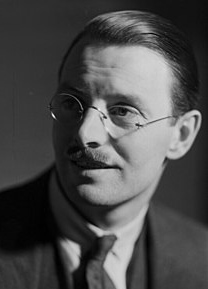
Cork born, John Francis Whelan [1900 -1991] possibly better known as Sean O’Faolain was one of the most influential figures in 20th-century Irish culture. A short-story writer of international repute; he was also a leading commentator and critic.
Sean O’Faolain
In his book “An Irish Journey”(from the Liffey to the Lee), latter published first in 1940, he reflects on his visit to Liberty Square, here in Thurles, Co. Tipperary.
Sean O’Faolain writes,
“Wild or not, these Thurles people have much more edge to them than the easy-going Clonmel folk. Their town shows it. The great wide square, concrete from pavement to pavement, the bright shops, every one of them well-dressed, the busy air of the streets even on an ordinary afternoon and the almost total absence of antiquities, marks this out as a modern business-town, “with no nonsense about it.”
And it has gone on improving every year. Old residents tell me that their fathers have handed to them a very different picture of an older Thurles, when as one of them said to me, “you could step from dung-heap to dung-heap in the square”. Hovels surrounded the centre of the town. The elder Dr. Callanan, the father of the present Dispensary doctor, told me he once handled 175 cases of fever in a single epidemic and he had handled typhus as well as typhoid.
Older traditions can revive the famine days, when people died in the fields by the ditches, their mouths green from eating nettles, even as Spencer records from an earlier period; while, in those unions which Dan O’Connell opposed so inexplicably, the dying were laid in rows upon rows on the floor.
An old man I met on the bridge told me he recalls the time when the town might have been thought of as composed of six shopkeepers, who made “pots of money” out of the Big Houses all about, and who were so many Gombeen-men, or tight-fisted, hard-screwing middle-men to the farmers. But he said they are gone now with the froth of the river.
(The River, by the way, is still the Suir: it rises not that much more than a mile away from the Nore up near the Devil’s Bit).
“They’re gone with the big houses on which they relied”, and he waved his hand over the river, past the old 12th century castle, the town’s only relique, down towards Fethard and up the river towards Templemore. “Archerstown House, Lanespark House, Killeen House, Ballysheehan, New Park, Mobarnane, Coolmore, Derryluskan, Brownstown House, Ballyronan , Lloydsboro, Inch…. How many of them are left now?. Ah, ‘tis a pity. For they were fine houses and gave great employment.”
“But surely the beet factory“, I protested, “must employ as many as the whole lot of them put together.” “Tisn’t alike”, he insisted, morosely. “Tisn’t alike, what’s a factory? Here to-day, gone tomorrow. What am I to a factory? No more than that shtone”, as he slapped the bridge parapet as if he wanted to crack his hand.
“They were dacent people – or the most of them were – and they attinded to the min that was working for ‘um. If a man got sick they’d give him the besht of the attention. If you get sick in the factory, what happens you, only to lie up and lose your wages, or maybe your job. Ah, tisn’t alike! There’s no nature in a factory.”
Nobody regrets more than the artist the passing of that old hierarchical form of society, so complete in its gradations of human order, still humanized in Ireland by contact with the natural life for the land, long after it had become dehumanized in England by the industrial revolution. But it had many faults even here. Its fatal weakness was that the Big House people felt themselves here, not merely of a different class to the worker and the farmer – which was natural since it happened to be true – but of a different race or religion or life mode and they took their political philosophy from England, whose problems were of a quite different nature. Master and man were not one entity, with right and proper distinctions between them, but two separate entities. And that does not work”.
To Be Continued. [Note: Part 2, the final part can be read HERE.
This website uses cookies to improve your experience. We'll assume you're ok with this, but you can opt-out if you wish.AcceptRead More
Privacy & Cookies Policy
Privacy Overview
This website uses cookies to improve your experience while you navigate through the website. Out of these, the cookies that are categorized as necessary are stored on your browser as they are essential for the working of basic functionalities of the website. We also use third-party cookies that help us analyze and understand how you use this website. These cookies will be stored in your browser only with your consent. You also have the option to opt-out of these cookies. But opting out of some of these cookies may affect your browsing experience.
Necessary cookies are absolutely essential for the website to function properly. This category only includes cookies that ensures basic functionalities and security features of the website. These cookies do not store any personal information.
Any cookies that may not be particularly necessary for the website to function and is used specifically to collect user personal data via analytics, ads, other embedded contents are termed as non-necessary cookies. It is mandatory to procure user consent prior to running these cookies on your website.








Recent Comments