Mr Maher passed away peacefully, surrounded by his loving family, while in the care of staff at Our Lady’s Hospice, Harold’s Cross, Dublin.
Forever loved and very sadly missed by his loving family; son Phillip, grandchildren Max and Sophie, daughter-in-law Sabela, Max’s mam Geraldine and her partner Paul, sister Anne, brothers Jim, Philip, Richard, Anthony and Martin, brother-in-law, sisters-in-law, nieces, nephews, extended relatives, neighbours and friends, especially Liam and Robert.
Requiescat in Pace.
Funeral Arrangements.
Funeral arrangements will be announced later.
The extended Maher family wish to express their appreciation for your understanding at this difficult time and have made arrangements for those wishing to send messages of condolence, to use the link shown HERE.
Pre-deceased by his adored wife Mary, brothers John and Jim, sister Mary; Mr Doran passed away peacefully following a short illness, while in the care of staff at St Luke’s Hospital, Kilkenny City, Co. Kilkenny.
His passing is most sadly missed by his loving family, sons Seamus, David and Laurence, granddaughter Saoirse, daughter-in-law Catherine, David’s partner Julie, sister Josie, brother Tom, nephews, nieces, brothers-in-law Larry and John, sisters-in-law Ann (Doran), Alice (Murphy) and Ann (Dunphy), the Flanagan’s of St Mary’s Galbertstown, cousins, great neighbours and many good friends.
Requiescat in Pace.
Funeral Arrangements.
The earthly remains of Mr Doran will repose at his residence (E41 EA25) on Monday evening, December 6th, from 4:00pm to 7:00pm. His body will be received into the Cathedral of the Assumption, Cathedral Street, Thurles on Tuesday morning, December 7th, at 10:30am to further repose for Requiem Mass at 11:00am. Interment will follow immediately afterwards in St Patrick’s cemetery, Moyne, Road, Thurles, Co. Tipperary.
For the many persons who would have liked to have attended Requiem Mass for Mr Doran, but are unable to do so; same can be viewed online HERE.
[NB: Due to Public Health Guidelines, regarding C-19 virus restrictions; those attending Requiem Mass will continue to observe strict adherence to social distancing, face covering, with no hand shaking.]
The extended Doran family wish to express their appreciation for your understanding at this difficult time and have made arrangements for those wishing to send messages of condolence, to use the link shown HERE.
There were 5,622 coronavirus cases confirmed in the Republic of Ireland over the past 24 hours.
There remain 487 patients currently being treated for COVID-19 in our hospitals across the Republic; of which 114 remain in intensive care units.
Tipperary now has the highest 14-day rate of Covid infections followed by Waterford and Cork in the province of Munster. Tipperary’s rate of infection stands at 1528.6 over a 14 day period, with 2,439 new cases identified.
The 14 Day Incidence of confirmed COVID-19 cases by Local Electoral Areas (LEA), in Co. Tipperary, between November 16th, 2021 and November 29th, 2021, reads as follows: – Nenagh: 378; Carrick-on-Suir: 314; Clonmel: 307; Roscrea-Templemore: 257; Cashel-Tipperary: 254; Cahir: 249; Thurles: 241; Newport: 199.
With a national infection rate of 1357.8 cases per 100,000 of population, our Republic remains among the worst-affected areas in Europe, despite a total of 7,422,467 vaccines for Covid-19 having been administered as of Wednesday last, together with a total of 878,780 booster jabs having also been administered.
A further 1,642 new cases of coronavirus have been confirmed in Northern Ireland today, down from 1,908 on yesterday.
As of yesterday also, the number of positive cases confirmed in the past seven days was at 12,426, compared with 11,684 in the previous seven days.
Sadly, 9 Covid-19-related deaths have been reported in northern hospitals today, bringing the total number of deaths linked to Covid-19 in Northern Ireland, since the start of the pandemic, to 2,894.
It is essential that we continue to listen to science and keep ourselves and our families safe by regularly washing our hands; wearing a mask when appropriate, and cut down on unnecessary social contacts.
Recall of Boots Own Brand Food Supplements due to Detection of 2-Chloroethanol, a Recognised Reaction Product of Ethylene Oxide.
Boots Ireland, latter who have one retail pharmacy outlet in Thurles Shopping Centre, are recalling batches of the food supplements (Shown hereunder) due to the presence of 2-chloroethanol, which is a recognised reaction product of ethylene oxide.
Ethylene oxide is a pesticide that is not permitted for use in foods sold in the EU, but is approved for use by other countries outside the EU. Although the consumption of the contaminated product does not pose an acute risk to health, there is an increased risk if there is continued consumption of contaminated food over a long period of time. Therefore, exposure to this substance needs to be minimised. Point-of-sale recall notices will be displayed in all Boots stores, which supplied the implicated batches
EPA calls for urgent action to address Ireland’s rising waste volumes and falling recycling rates.
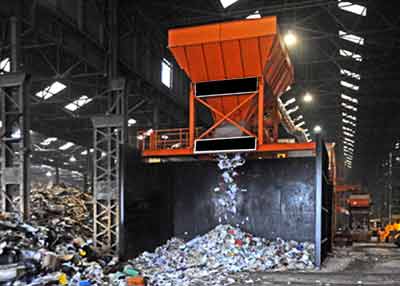
Waste Recycling Station
Waste generation in Ireland increased significantly in 2019.
Municipal waste increased by 6% to 3.1 million tonnes,
packaging waste increased by 11% to 1.1 million tonnes,
hazardous waste increased by 10% to 0.6 million tonnes and
construction waste increased by 2.6 million tonnes to 8.8 million tonnes.
Ireland’s recycling rates for municipal waste and packaging waste have declined, with more waste being sent for energy recovery. Ireland faces a widening gap to meet ambitious new EU recycling targets from 2025 onwards.
To address Ireland’s rising waste volumes and falling recycling rates, we need to transform existing business models into circular ones, that promote waste reduction, reuse and recycling. Circularity roadmaps are needed for key economic sectors, including the construction, manufacturing and food processing sectors, supported by clear policy, legislation, and national targets.
Waste generation in Ireland continues to rise while recycling rates are falling, according to the Environmental Protection Agency’s (EPA) National Waste Statistics Summary Report for 2019, which publishes the most recent official data on waste generation and management in Ireland. The report reveals some worrying trends. Waste generation in Ireland increased significantly in 2019. Municipal waste increased by 6% to 3.1 million tonnes, packaging waste increased by 11% to 1.1 million tonnes and hazardous waste increased by 10% to 0.6 million tonnes. Ms Sharon Finegan, (Director of the EPA’s Office of Environmental Sustainability), said, “A circular economy is one that is based on less waste and more reuse of materials; these trends show Ireland is going in the wrong direction. Our rising levels of waste are unsustainable and need to stop. Systemic change is needed across all economic sectors to shift the focus to designing out waste and promoting reuse and recycling.”
The past decade in Ireland has seen dramatic changes in waste management. Only 15% of municipal waste was landfilled in 2019, compared with 61% a decade earlier. There has been a significant increase in the share of municipal waste sent for incineration with energy recovery over the same period, from 4% in 2009 to 46% in 2019. Ireland’s recycling rates for municipal and packaging waste have been in gradual decline for a number years, as efforts to improve recycling have been outstripped by the growth in waste being generated and the amount being sent for energy recovery. Our recycling rate for municipal waste has fallen from 41% in 2016 to 37% in 2019, while the recycling rate for packaging waste has declined from 70% in 2013 to 62% in 2019. The trends show that Ireland is facing a widening gap to meet ambitious new EU recycling targets from 2025 onwards.
Commenting on the trends, Dr Tara Higgins, (EPA Senior Scientist) said, “Ireland’s declining recycling rates are a significant cause for concern. Recent moves to allow soft plastics such as films and wraps into our recycling bins, continued expansion of brown bin services to households, new requirements for all packaging to be reusable or recyclable by 2030 and a levy on waste recovery are among the suite of measures needed to increase recycling and close the gap to new EU recycling targets”.
Ireland also continues to have some significant waste infrastructure deficits and relies on export for a number of key waste streams, including municipal, packaging and hazardous waste. These trends point to the need for expansion of Ireland’s waste treatment and recycling capacity in order to extract the maximum value from waste materials here in Ireland and reduce the emissions associated with transporting waste over long distances.
This website uses cookies to improve your experience. We'll assume you're ok with this, but you can opt-out if you wish.AcceptRead More
Privacy & Cookies Policy
Privacy Overview
This website uses cookies to improve your experience while you navigate through the website. Out of these, the cookies that are categorized as necessary are stored on your browser as they are essential for the working of basic functionalities of the website. We also use third-party cookies that help us analyze and understand how you use this website. These cookies will be stored in your browser only with your consent. You also have the option to opt-out of these cookies. But opting out of some of these cookies may affect your browsing experience.
Necessary cookies are absolutely essential for the website to function properly. This category only includes cookies that ensures basic functionalities and security features of the website. These cookies do not store any personal information.
Any cookies that may not be particularly necessary for the website to function and is used specifically to collect user personal data via analytics, ads, other embedded contents are termed as non-necessary cookies. It is mandatory to procure user consent prior to running these cookies on your website.








Recent Comments